[pageLogInLogOut]

#Raw Materials

International Women’s Day: Cotton made in Africa strengthens equality for women through targeted investments
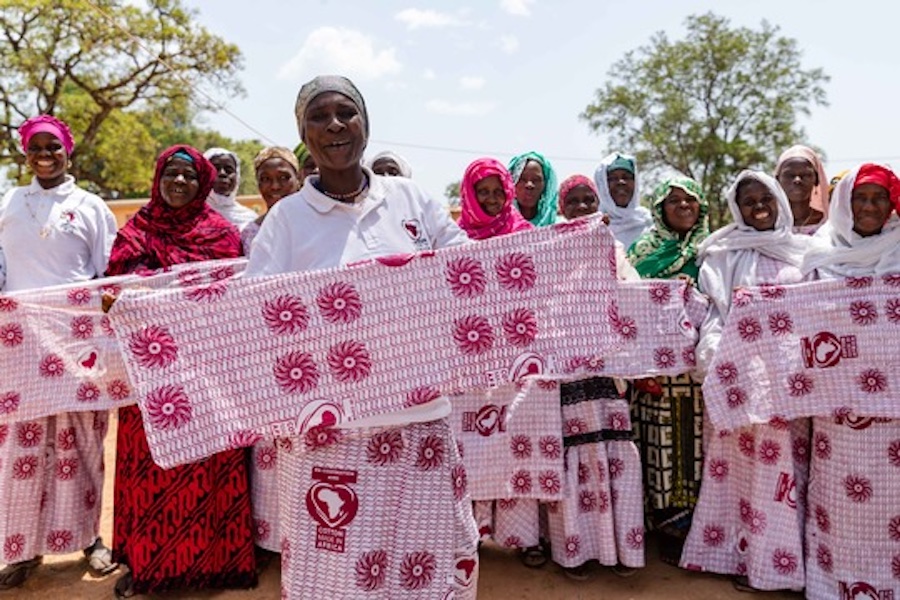
Women farmers from Côte d'Ivoire in custom-made dresses, crafted from CmiA-designed Kitenge fabrics, celebrating International Women's Day; Credit_Miléquêm Diarassouba for AbTF
On the occasion of International Women’s Day—which will be observed on 8 March under the motto “Rights. Justice. Action. For ALL Women and Girls”—the Aid by Trade Foundation (AbTF), which is responsible for Cotton made in Africa® (CmiA), underlines its long-standing and ongoing commitment to the equality of women in African cotton production areas.

The UN Food and Agriculture Organization (FAO) estimates that development programmes focussed on empowering women in rural areas could increase the incomes of 58 million more people and build up the resilience of 235 million people. Women’s structural disadvantage is a major cause of social and economic injustice and of missed opportunities for development worldwide. This manifests itself in unequal wages, limited access to resources, and the under-representation of women in decision-making processes.

The Hamburg-based Aid by Trade Foundation has made it a cornerstone of its work to provide women and girls with support in rectifying these disadvantages. For instance, criteria for equality between women and men are firmly anchored in its Cotton made in Africa Standard; these include equal access to training, resources, and decision-making processes. In addition, targeted projects for cotton farmers at Cotton made in Africa create long-term opportunities and ensure independence for women. Conducted together with partners through the CmiA Community Cooperation Programme (CCCP), these projects extend beyond cotton cultivation. In one example, smaller start-ups launched by women’s groups receive targeted funding as well as tailored business training in order to tap into sources of income that complement cotton cultivation. In another example, village communities learn about important topics, including women’s health, through innovative methods such as creative plays; this approach creates awareness and breaks taboos. Over 100 women’s clubs and other women-specific projects have already been funded through the CmiA Community Cooperation Programme.

“Commitment to fundamentally improving women’s economic and social position is part of Cotton made in Africa’s mission statement,” says Alexandra Perschau, the head of Standards & Outreach at the Aid by Trade Foundation, adding, “Securing the future of cotton cultivation requires equal income, equal access to resources and means of production, the creation of supplementary sources of income specifically for women, and women’s active participation in CmiA initiatives and training. This is the only way to achieve resilient agriculture.”
More News from Cotton made in Africa (CmiA)

#Natural Fibers

Cotton made in Africa partners receive top marks in independent verifications

Cotton made in Africa® (CmiA) and CmiA Organic are two internationally recognised standards that aim to promote sustainable development in the African cotton sector south of the Sahara. To ensure the standards’ credibility among brands, retailers, and consumers, independent verifiers evaluate compliance on the ground. The verification results for 2025, now published in the Aggregated Verification & Implementation Report, were very strong: The verifiers awarded consistently very good remarks regarding management, people, prosperity, and the environment.

#Raw Materials

New study shows low environmental impact by Cotton made in Africa Organic Cotton from Tanzania

Today, the Aid by Trade Foundation (AbTF) is announcing the results of a comprehensive life-cycle analysis (LCA) for cotton produced in Tanzania under the Cotton made in Africa Organic (CmiA Organic) standard. The study emphasises the small ecological footprint of CmiA Organic verified cotton. This can largely be traced back to the absence of synthetic pesticides, artificial fertilisers, and artificial irrigation. Consequently, CmiA Organic cotton can help the textile industry meet regulatory requirements as well as science-based targets. The results also show that the consequences of climate change threaten the livelihoods of these cotton farmers, even though the type of agriculture they practise barely contributes to climate change.

#Natural Fibers

Human Rights Day: Cotton made in Africa reinforces its commitment to ensuring respect for human rights in cotton production

The sustainable cotton standard Cotton made in Africa (CmiA) has always focussed on respect for human rights, including by prohibiting child labour and discrimination. With the new version of the CmiA standard coming into force, AbTF raises requirements for due diligence in the areas of human rights and risk management.

#Natural Fibers

Cotton made in Africa launches public consultation for standard revision

The Aid by Trade Foundation (AbTF) is opening public consultation on its Cotton made in Africa standard today. Interested parties will have 60 days to provide feedback, helping shape the future of one of the world’s largest standards for sustainable cotton. The latest update to the standard, Version 5.0, focusses on increasing Cotton made in Africa’s effectiveness and adapting its criteria and indicators to external factors, which currently include biodiversity loss and a growing set of reporting requirements for companies.

More News on Raw Materials

#Natural Fibers

Global cotton trade poised for recovery as India and China drive import demand

The July 2026 issue of Cotton This Month highlights a changing global cotton market, with consumption and trade expected to strengthen despite a modest decline in production during the 2026/27 season. The next issue of Cotton This Month will be released on August 1, 2026.

#Natural Fibers

Cotton ConneXions Insight to Impact brings supply chain leaders together around cotton innovation

Cotton Incorporated’s Cotton ConneXions Insight to Impact brought together more than 300 industry leaders from 140 companies across 10 countries, including more than 45 top global brands and sourcing organizations, underscoring strong global interest in cotton-rich product development, sourcing and supply chain collaboration.

#Natural Fibers

Bremen Cotton Exchange: Fritz A. Grobien re-elected as President

The members of the Bremen Cotton Exchange have re-elected Fritz A. Grobien as President during the association’s 152nd General Assembly on June 18, 2026. The election confirms the organization’s commitment to maintaining its role as a leading international platform for the cotton and fiber industry amid a period of geopolitical and economic uncertainty.

#Natural Fibers

Organic cotton at the crossroads: Ideology, evidence, and the road ahead

Organic cotton occupies one of the most contentious spaces in global agriculture. While praised by brands and consumers for its environmental ideals, it also faces persistent questions about yield stability, certification integrity, and scalability. The current edition of The ICAC Recorder cuts through the ideology to deliver a rigorous, evidence-based assessment of both sides of the debate.

Latest News

#Dyeing, Drying, Finishing

Ferraro S.p.A. acquires the “Finishing” business unit of Cibitex S.r.l.

Ferraro S.p.A. and Cibitex S.r.l. are pleased to announce the completion of the agreement pursuant to which Ferraro S.p.A. has acquired the “Finishing” business unit of Cibitex S.r.l., specialized in the development and manufacturing of technological solutions for textile finishing.

#Recycling / Circular Economy

Reju opens its first R&D Center in the U.S. in Conshohocken, Pennsylvania

Reju, the company specializing in textile regeneration, today announced the opening of a Research and Development (R&D) Center in Conshohocken, Pennsylvania, the company's first proprietary research center in North America. Located within Technip Energies' existing Advanced Materials and Catalysts research center, the lab will allow Reju to accelerate the rollout of its recycling technologies and develop its next-generation circular solutions.

#Weaving

Itema reaffirms its commitment to the Syrian textile industry at NasTex 2026

From July 18th to 21st, Itema will exhibit at NasTex at the Damascus Fairground (Hall 11 – Stand C02), marking its return to one of the Middle East’s historically significant textile markets. Itema will showcase advanced weaving technology designed to support the competitiveness and technological evolution of Syrian manufacturers and announces a new partnership with Growfast Agency as the sole agent of Itema in Syria.

#Knitting & Hosiery

KARL MAYER's HKS 2-SE Expands Possibilities for Premium Stretch WARP KNITS

Warp knitted fabrics with a woven look are more in demand than ever in the fashion and apparel industries. Stretch WARP KNITS, in particular, impress with their freedom of movement, breathability, and virtually wrinkle-free wear – thereby opening up new style worlds such as smart casual or business casual. When it comes to the highly efficient production of premium-quality stretch WARP KNITS, the HKS 2-SE has long been the machine of choice. KARL MAYER’s best-selling tricot machine produces standard elastic fabrics characterized by high gauges, smooth, delicate surfaces, and a soft hand feel.

TOP