[pageLogInLogOut]

#Natural Fibers

Human Rights Day: Cotton made in Africa reinforces its commitment to ensuring respect for human rights in cotton production
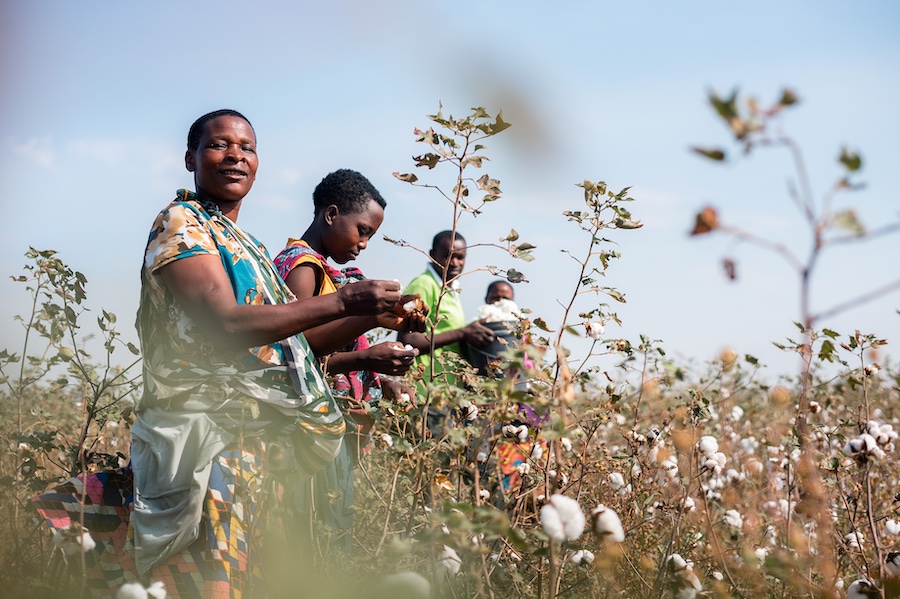
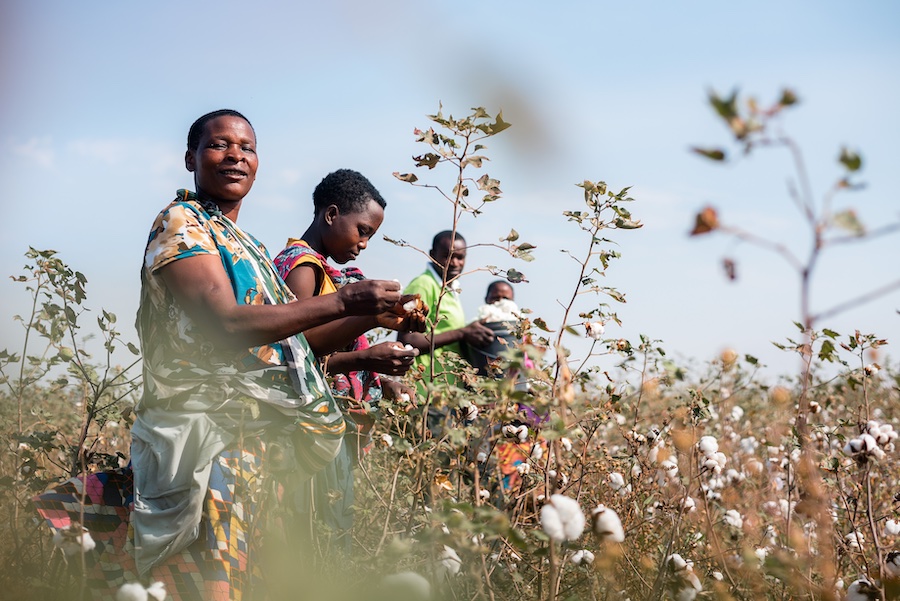
Cotton harvest in Tanzania © 2025 / Credit_Malicky Stanley Boaz
The sustainable cotton standard Cotton made in Africa (CmiA) has always focussed on respect for human rights, including by prohibiting child labour and discrimination. With the new version of the CmiA standard coming into force, AbTF raises requirements for due diligence in the areas of human rights and risk management.

Going forward, CmiA-verified cotton companies will be expected to comply with extensive obligations to monitor, report, and undertake corrective action with regard to both human rights and environmental protection. For fashion brands and textile companies that use CmiA cotton, this offers greater assurance in terms of due diligence and sustainability reporting.

For all partners in the production regions, human-rights compliance is evaluated as part of the independent verifications conducted for Cotton made in Africa at both the field and ginnery levels. With the new version of the CmiA Standard coming into force in 2026, the obligation to respect human rights is becoming an integral part of the standard’s requirements.

CmiA’s partner companies must ensure that training and other farm and ginnery level activities are inclusive and accessible to all. In future, training programmes will be designed and implemented in a way that promotes the participation of women, young people, and vulnerable groups and takes their needs into consideration.

Cotton companies will also be required to introduce a monitoring and reporting system to assess risks related to human rights, to production-related environmental damage, and to non-compliance with CmiA’s core indicators. As part of these efforts, cotton companies will engage with all relevant interest groups, such as farmers, workers, NGOs, and village communities.

Truly sustainable cotton production can only be achieved through consistent commitment to human rights and to the right to a healthy environment. In this way Cotton made in Africa is now reinforcing its more than two decades of commitment to promoting sustainable cotton production. “Especially today, on Human Rights Day, we are thrilled to note that Cotton made in Africa, through its intensive focus on human rights and environmental protection, will contribute even more to improving living conditions in the production regions in future,” says Alexandra Perschau, the head of standards and outreach at the Aid by Trade Foundation, adding, “We are pleased to be launching this upgrade after intensive and productive consultations, especially with our partners in the growing areas, and are convinced that the revised Cotton made in Africa Standard will provide valuable support for fashion brands and textile companies in meeting their reporting obligations.”
More News from Cotton made in Africa (CmiA)

#Natural Fibers

Cotton made in Africa partners receive top marks in independent verifications

Cotton made in Africa® (CmiA) and CmiA Organic are two internationally recognised standards that aim to promote sustainable development in the African cotton sector south of the Sahara. To ensure the standards’ credibility among brands, retailers, and consumers, independent verifiers evaluate compliance on the ground. The verification results for 2025, now published in the Aggregated Verification & Implementation Report, were very strong: The verifiers awarded consistently very good remarks regarding management, people, prosperity, and the environment.

#Raw Materials

New study shows low environmental impact by Cotton made in Africa Organic Cotton from Tanzania

Today, the Aid by Trade Foundation (AbTF) is announcing the results of a comprehensive life-cycle analysis (LCA) for cotton produced in Tanzania under the Cotton made in Africa Organic (CmiA Organic) standard. The study emphasises the small ecological footprint of CmiA Organic verified cotton. This can largely be traced back to the absence of synthetic pesticides, artificial fertilisers, and artificial irrigation. Consequently, CmiA Organic cotton can help the textile industry meet regulatory requirements as well as science-based targets. The results also show that the consequences of climate change threaten the livelihoods of these cotton farmers, even though the type of agriculture they practise barely contributes to climate change.

#Raw Materials

International Women’s Day: Cotton made in Africa strengthens equality for women through targeted investments

On the occasion of International Women’s Day—which will be observed on 8 March under the motto “Rights. Justice. Action. For ALL Women and Girls”—the Aid by Trade Foundation (AbTF), which is responsible for Cotton made in Africa® (CmiA), underlines its long-standing and ongoing commitment to the equality of women in African cotton production areas.

#Natural Fibers

Cotton made in Africa launches public consultation for standard revision

The Aid by Trade Foundation (AbTF) is opening public consultation on its Cotton made in Africa standard today. Interested parties will have 60 days to provide feedback, helping shape the future of one of the world’s largest standards for sustainable cotton. The latest update to the standard, Version 5.0, focusses on increasing Cotton made in Africa’s effectiveness and adapting its criteria and indicators to external factors, which currently include biodiversity loss and a growing set of reporting requirements for companies.

More News on Natural Fibers

Latest News

#Dyeing, Drying, Finishing

Ferraro S.p.A. acquires the “Finishing” business unit of Cibitex S.r.l.

Ferraro S.p.A. and Cibitex S.r.l. are pleased to announce the completion of the agreement pursuant to which Ferraro S.p.A. has acquired the “Finishing” business unit of Cibitex S.r.l., specialized in the development and manufacturing of technological solutions for textile finishing.

#Recycling / Circular Economy

Reju opens its first R&D Center in the U.S. in Conshohocken, Pennsylvania

Reju, the company specializing in textile regeneration, today announced the opening of a Research and Development (R&D) Center in Conshohocken, Pennsylvania, the company's first proprietary research center in North America. Located within Technip Energies' existing Advanced Materials and Catalysts research center, the lab will allow Reju to accelerate the rollout of its recycling technologies and develop its next-generation circular solutions.

#Weaving

Itema reaffirms its commitment to the Syrian textile industry at NasTex 2026

From July 18th to 21st, Itema will exhibit at NasTex at the Damascus Fairground (Hall 11 – Stand C02), marking its return to one of the Middle East’s historically significant textile markets. Itema will showcase advanced weaving technology designed to support the competitiveness and technological evolution of Syrian manufacturers and announces a new partnership with Growfast Agency as the sole agent of Itema in Syria.

#Knitting & Hosiery

KARL MAYER's HKS 2-SE Expands Possibilities for Premium Stretch WARP KNITS

Warp knitted fabrics with a woven look are more in demand than ever in the fashion and apparel industries. Stretch WARP KNITS, in particular, impress with their freedom of movement, breathability, and virtually wrinkle-free wear – thereby opening up new style worlds such as smart casual or business casual. When it comes to the highly efficient production of premium-quality stretch WARP KNITS, the HKS 2-SE has long been the machine of choice. KARL MAYER’s best-selling tricot machine produces standard elastic fabrics characterized by high gauges, smooth, delicate surfaces, and a soft hand feel.

TOP