[pageLogInLogOut]

#Raw Materials

New Cotton Review examines competitiveness, market risk, and opportunities
From moving record volumes of Brazilian cotton to market, to managing price volatility, unlocking Ethiopia’s production potential, and strengthening African textile trade, the latest edition of Cotton: Review of the World Situation examines some of the most consequential opportunities and challenges facing the global cotton industry.

The September 2026 edition features five articles spanning production, trade, logistics, market risk, and policy in Brazil, Ethiopia, Iran, Africa, and the broader global cotton market.

Brazil: Competitiveness moves beyond the farm

“After the Gin: Where Brazil’s Cotton Competitiveness Is Actually Decided,” by Jonathan Valério

Brazil has emerged as a global cotton export leader following major advances in productivity, seed technology, crop management, and quality. But Mr Valério, Sales and Marketing Director at Magna Logistics Solutions, argues that maintaining that position increasingly depends on what happens after cotton leaves the gin.

Brazil exported 3.027 million tonnes of cotton in 2025 and is expected to reach a record 3.418 million tonnes in 2026. About 95% of the country’s cotton export volume currently moves through the Port of Santos, requiring between 110,000 and 120,000 containers annually. That concentration leaves exporters exposed to competition for trucks, port capacity, container availability, vessel delays, and other logistics costs.

The article explores opportunities to reduce those risks through greater use of the Port of Salvador for cotton produced in Bahia, earlier logistics planning, and contract provisions that better allocate the costs associated with rebooking and detention. Salvador is undergoing an expansion expected to double its container capacity.

Cotton prices at a crossroads

“Cotton at the Crossroads: A Broker’s Perspective on Price Risk and the 2026–27 Outlook,” by Valentin Olah

A second article examines a cotton market confronting conflicting signals: a tightening global balance sheet alongside increasingly available physical supplies from multiple origins.

Ms Olah, Senior Broker with the Global Cotton Desk at StoneX Financial Inc., notes that December 2026 cotton futures climbed from a life-of-contract low near 66 cents per pound to nearly 93 cents before retreating by roughly nine cents. USDA’s September projections put 2026/27 world production at 117.3 million bales and consumption at 122.9 million bales — a gap of 5.6 million bales.

The analysis also examines the increasingly complex relationship between cotton and polyester. Higher oil and synthetic-fiber feedstock costs could provide relative support for cotton, but higher prices throughout the textile supply chain also can restrain demand. Meanwhile, Brazil’s emergence as a major supplier has increased year-round cotton availability and reduced some of the traditional seasonal scarcity associated with US cotton.

The result is a market in which tighter fundamentals may support prices, but crop conditions, export demand, mill purchasing, speculative positioning, and competition from alternative fibers will determine how that potential translates into the futures market.

Ethiopia looks to turn cotton potential into production

“Ethiopia’s Cotton Sector: Weaving a Future from Vast Potential,” by Tsegaye Abebe

Ethiopia possesses an estimated 3 million hectares of land suitable for cotton production, but only a fraction of that potential has historically been cultivated. An article by Mr Abebe, Executive Director of the Ethiopian Cotton Association, examines efforts to expand production while building stronger connections between growers, ginners, and the domestic textile industry.

The country faces a substantial productivity gap. Ethiopian researchers have released 45 cotton varieties over the past 30 years, with experimental seed cotton yields reaching as high as 5,433 kg/ha. Commercial smallholder productivity, however, averages approximately 726 kg/ha.

Closing that gap will require improvements in irrigation, certified seed availability, extension services, quality management, and processing infrastructure. Ethiopia’s domestic textile mills already consume an estimated 55,000 tonnes of lint annually, providing a potential market for increased domestic production and value addition.

AGOA extended, but questions remain

“AGOA to 2028: Extension Without Full Reform,” by Lorena Ruiz

ICAC Economist Lorena Ruiz examines the latest extension of the African Growth and Opportunity Act (AGOA), which would continue duty-free access to the U.S. market through December 31, 2028. The legislation received overwhelming bipartisan support in both chambers of Congress and, as described in the article, awaits the President’s signature.

The article looks beyond the extension itself to unresolved questions surrounding the program, including eligibility requirements, rules of origin, and the relationship between US trade policy and efforts to build stronger textile and apparel industries in Africa. AGOA currently provides eligible sub-Saharan African countries with duty-free access for more than 1,800 tariff lines beyond those covered by the Generalized System of Preferences, with apparel among its most significant benefits.

Iran confronts production challenges while pursuing innovation

“Challenges, Opportunities and Innovations of Cotton Cultivation and Production in Iran,” by Mohammadreza Ramazani Moghaddam

The issue concludes with an article from by Mohammadreza Ramazani Moghaddam, examining cotton cultivation and production in Iran, exploring the challenges facing the sector as well as opportunities to strengthen productivity and sustainability through improved technologies and production practices.

To read the September 2026 edition of Cotton: Review of the World Situation, please click here.


More News from International Cotton Advisory Committee (ICAC)

#Raw Materials

Redesigned World Cotton Day website offers tools, ideas and inspiration

With World Cotton Day just one month away, the International Cotton Advisory Committee (ICAC) has launched a completely redesigned www.WorldCottonDay.com, creating a new global home for everyone who wants to learn about, celebrate, and support cotton.

#Raw Materials

ICAC’s 84th Plenary Meeting to be held March 24-26, 2027, in Alexandria, Egypt

Registration will soon be open for the International Cotton Advisory Committee’s 84th Plenary Meeting, to be held March 24-26, 2027, in Alexandria, Egypt. The local Organizing Committee in Egypt has chosen “Building a Resilient and Competitive Future for Cotton and Textiles” as the theme for the event, which will be held at the Rixos Montaza Alexandria Resort.

#Raw Materials

Global cotton production projected to outpace consumption, but risks remain

Global cotton production is projected to reach 26.2 million tonnes in the 2026/27 season, marginally outpacing estimated consumption of 25.9 million tonnes. However, early-season production risks — including weather volatility and pest pressures — could narrow that buffer as the crop progresses, according to the September 2026 issue of Cotton This Month, published by the International Cotton Advisory Committee (ICAC).

#Natural Fibers

Global garment trade nears USD 550 billion as competition intensifies

The global garment industry has undergone a dramatic transformation over the past two decades, with knit and woven garments together accounting for nearly 60% of world textile exports in 2025, according to the August 2026 issue of The Textiles Observer, a free publication from the International Cotton Advisory Committee (ICAC).

More News on Raw Materials

#Raw Materials

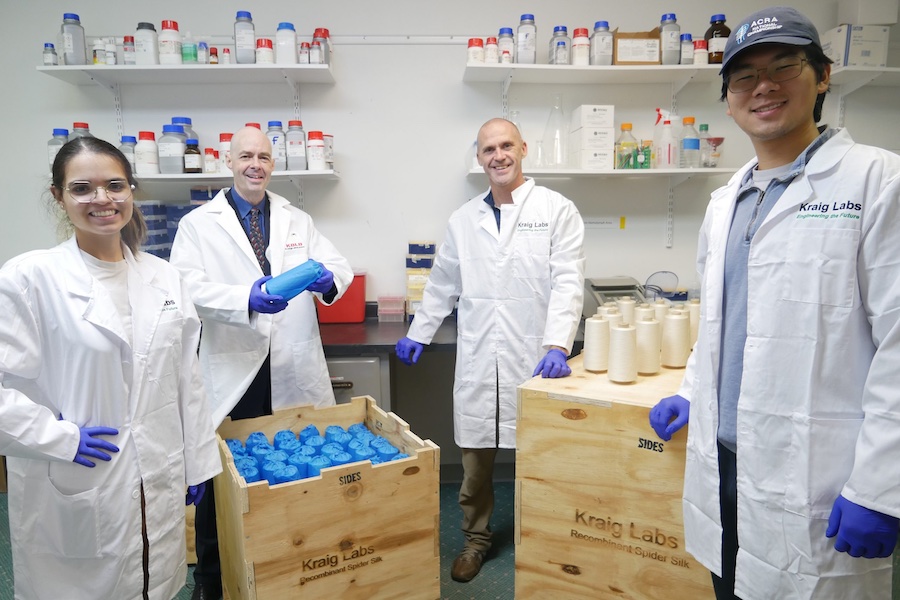
Kraig Labs ships first commercial spider silk yarn

Kraig Biocraft Laboratories, Inc. (OTCQB: KBLB) (“the Company”, “Kraig Labs”, or “Kraig’s”), a world leader in spider silk technology*, today announced the shipment of its first commercial order of recombinant spider silk yarn. The custom-engineered yarn was produced to fulfill a purchase commitment from a globally recognized performance sports brand and is slated for development into a first-of-its-kind performance textile.

#Raw Materials

ALLIED expands down traceability with lot-level carbon footprint data

ALLIED Feather + Down has expanded its TrackMyDown traceability platform to include validated cradle-to-gate carbon footprint data linked to individual down lots. The initiative is designed to provide brands and consumers with more detailed environmental information on the materials used in finished products and could also support future data requirements associated with Digital Product Passports.

#Raw Materials

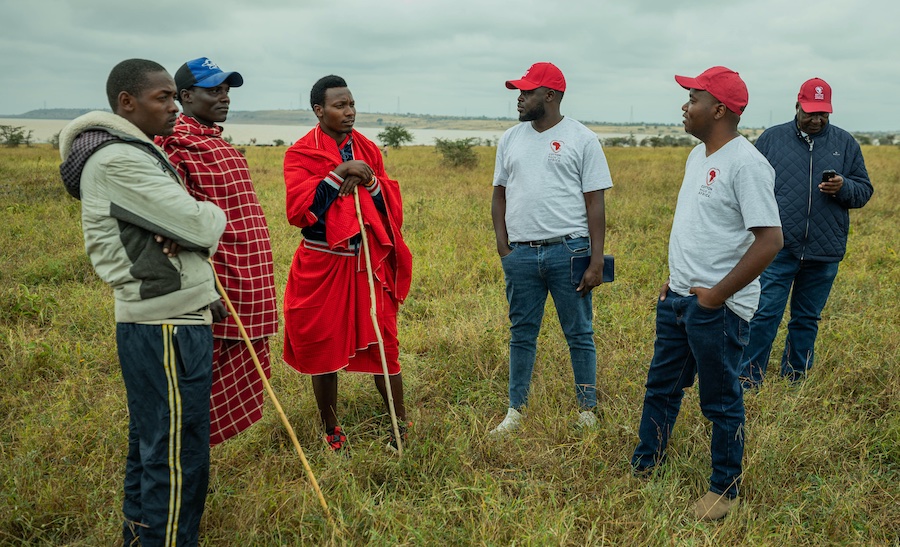
Cotton made in Africa puts farmer dialogue at the heart of agricultural training

A new manual created by the Aid by Trade Foundation and African People & Wildlife shows how Cotton made in Africa aims to transform cotton cultivation through dialogue rather than directives.

#Raw Materials

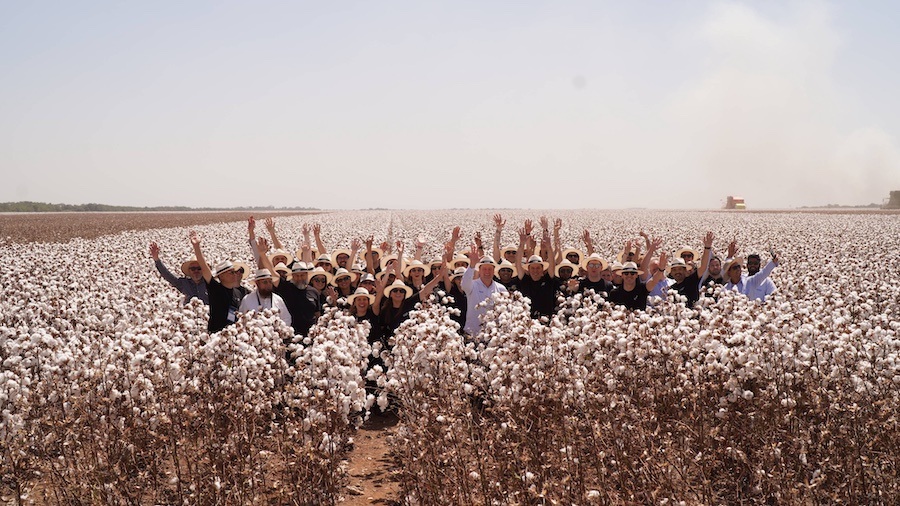
Cotton Brazil Dialogues 2026 concludes with 50 international participants immersed in Brazilian cotton production

The Cotton Brazil Dialogues concludes its 2026 edition after a series of technical visits to farms, cotton gins and reference centers, as well as workshops focused on Brazilian cotton production. A total of 50 participants from 14 countries took part in the field trips. The initiative is led by the Brazilian Association of Cotton Growers (Abrapa) and the National Association of Cotton Exporters (Anea), with support from the Brazilian Trade and Investment Promotion Agency (ApexBrasil).

Latest News

#Knitting & Hosiery

Long John puts KARL MAYER's RDJ 7/3 into operation and strengthens its position as a market leader

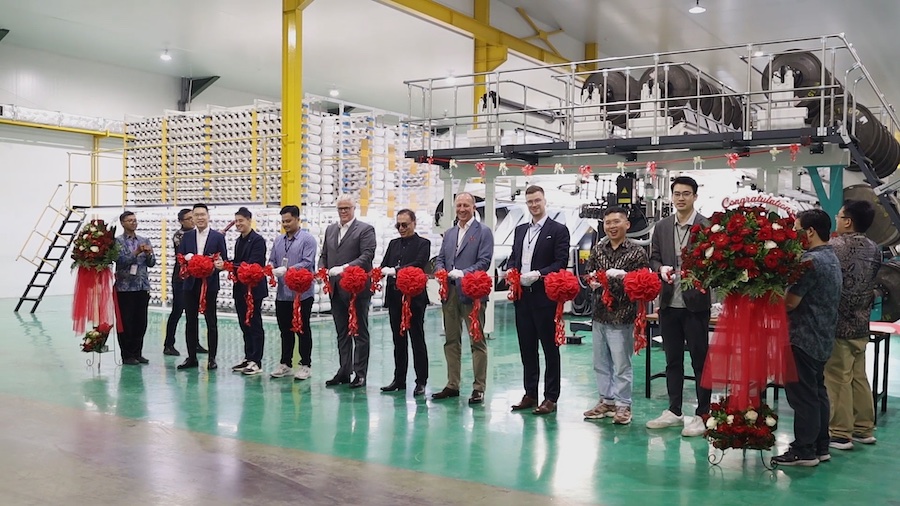
KARL MAYER has just unveiled its new RDJ 7/3 Jacquard Double Needle Bar Raschel Machine in the international trade press, and the innovation is already causing a stir in the market: The Long John Group, a leading manufacturer of performance footwear fabrics and a long-standing partner of renowned brands, was the first customer to invest in the new machine and celebrated its official launch at its Indonesian plant on August 20.

#Research & Development

An eco-friendly alternative to fluorocarbon treatments

Protective and outdoor clothing derives its durable water-, dirt- and oil- repellent properties from the application of fluorinated polymers or per- and polyfluorinated low-molecular- weight chemicals (PFCs). The beneficial properties thus achieved on textiles are offset by environmental and human health risks. For manufacturers of sports, medical, protective and automotive textiles, researchers at the Sächsisches Textilforschungsinstitut e.V. and the Leibniz Institute for Polymer Research have developed liquid-applied dispersions and solutions to functionalise textiles without the use of fluorine.

#ITMA Asia + CITME 2026

TMAS members drive textile technology innovation ahead of ITMA Asia

As the global textile machinery industry prepares to meet at ITMA ASIA in Shanghai this November, Swedish textile technology companies are responding to a rapidly changing market with investment, innovation and new solutions.

#Associations

VDMA Textile Machinery with new Executive Board

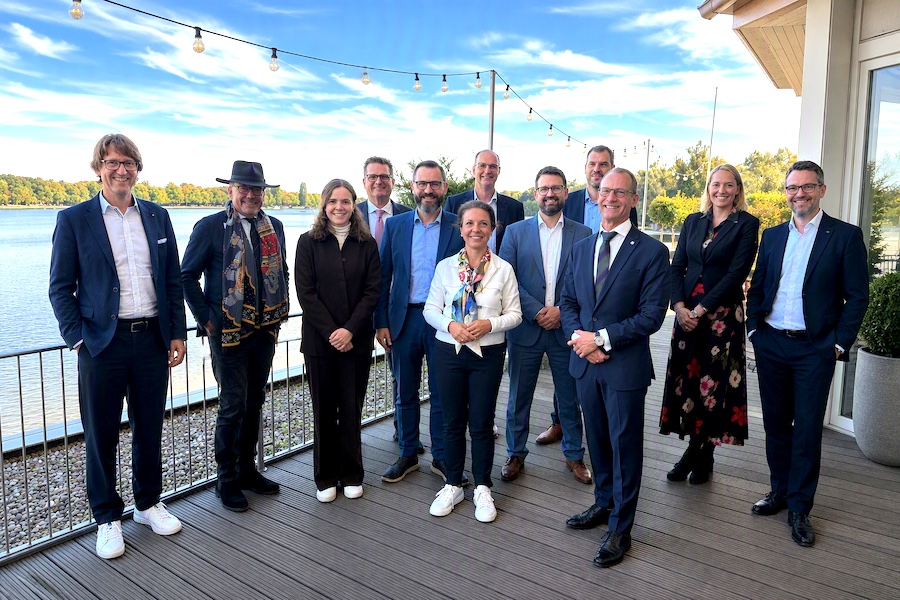
At the general meeting of VDMA Textile Machinery held in Hanover at the end of September, Dr Janpeter Horn, Managing Director of A. Herzog Maschinenfabrik, was re-elected as Chairman of the trade association. Regina Brückner, managing partner of Brückner Trockentechnik, and Verena Thies, managing partner of Thies Textilmaschinen, will once again serve as vice-chairs for the next four years.

TOP