[pageLogInLogOut]

#Natural Fibers

Global garment trade nears USD 550 billion as competition intensifies

The global garment industry has undergone a dramatic transformation over the past two decades, with knit and woven garments together accounting for nearly 60% of world textile exports in 2025, according to the August 2026 issue of The Textiles Observer, a free publication from the International Cotton Advisory Committee (ICAC).

World textile exports increased from approximately $560 billion in 2006 to $914 billion in 2025. Knit garment exports nearly doubled over the period, rising from $145.2 billion to $289.1 billion, while woven garment exports increased from $158.5 billion to $257.7 billion.

But the most significant change has not simply been the expansion of trade. It has been a fundamental redistribution of global competitiveness.

China remains the world’s dominant textile and garment exporter, but Bangladesh and Vietnam have emerged as major global suppliers. Bangladesh rose from 14th place among textile exporters in 2006 to second in 2025, while Vietnam climbed from 21st to third. Together with China, the three countries accounted for approximately 44% of world textile exports in 2025.

At the same time, demand has become increasingly geographically dispersed. The United States remains the world’s largest textile importer, but its share of global imports fell from 18.9% in 2006 to 13.7% in 2025. A wider range of markets in Europe and Asia have gained importance, creating an increasingly multi-destination global textile market.

Cotton remains a major force — but fiber competition is intensifying

The report finds that cotton continues to command some of the largest individual product markets in world apparel, including Cotton T-shirts, Cotton Jerseys, and Men’s and Women’s Cotton Trousers & Shorts.

However, competing fibers are growing more rapidly in many applications.

Cotton represented approximately 68.3% of global fiber demand in 1960, compared with 21.1% in 2025. Over the same period, synthetic fibers increased their share from 4.6% to 71.7%.

The shift is also visible within garment trade. Cotton-based knit garment exports increased from approximately US$69.9 billion in 2006 to US$128.3 billion in 2025, but their share declined from 48.3% to 44.5%. Man-made and synthetic knit garment exports grew more rapidly, increasing from US$35.6 billion to US$99.2 billion and raising their share from 24.6% to 34.4%.

The picture is even more pronounced in woven garments, where man-made and synthetic fibers overtook cotton in export value in 2021.

The findings do not indicate disappearing demand for cotton. Instead, they highlight a challenge of relative competitiveness: Cotton continues to participate in a growing global garment market, but competing fibers are capturing a larger share of that growth.

Cotton quality begins at the farm

The August issue also features an article by Dr Marinus (René) van der Sluijs examining two significant cotton contamination challenges: stickiness and seed-coat fragments.

Stickiness can interfere with cotton processing, increase costs, reduce product quality, and damage the commercial reputation of cotton from affected origins. A global study cited in the report found that 64% of participants rated stickiness as a major cotton-fiber defect affecting yarn properties, while cotton from origins associated with stickiness can face discounts of up to 50%.

Seed-coat fragments present a separate challenge because fibers remain attached to the fragments, making them difficult to remove during processing. They can contribute to spinning end-breakages, increase production costs, and appear as dark specks in dyed fabrics.

The report examines methods for detecting and measuring these problems as well as practical measures to reduce their impact throughout production and processing.

A global industry in transition

Taken together, the August Textiles Observer highlights an industry being reshaped simultaneously by changing centers of manufacturing, increasingly diverse consumer markets, stronger competition among fibers, and rising expectations for cotton quality and processing performance.

Cotton remains deeply embedded in the global garment economy. Its challenge is not simply maintaining demand, but strengthening its competitiveness and capturing a greater share of future growth.

The August 2026 issue of The Textiles Observer is available from the International Cotton Advisory Committee here:

The Textiles Observer August 2026


More News from International Cotton Advisory Committee (ICAC)

#Raw Materials

Redesigned World Cotton Day website offers tools, ideas and inspiration

With World Cotton Day just one month away, the International Cotton Advisory Committee (ICAC) has launched a completely redesigned www.WorldCottonDay.com, creating a new global home for everyone who wants to learn about, celebrate, and support cotton.

#Raw Materials

ICAC’s 84th Plenary Meeting to be held March 24-26, 2027, in Alexandria, Egypt

Registration will soon be open for the International Cotton Advisory Committee’s 84th Plenary Meeting, to be held March 24-26, 2027, in Alexandria, Egypt. The local Organizing Committee in Egypt has chosen “Building a Resilient and Competitive Future for Cotton and Textiles” as the theme for the event, which will be held at the Rixos Montaza Alexandria Resort.

#Raw Materials

Global cotton production projected to outpace consumption, but risks remain

Global cotton production is projected to reach 26.2 million tonnes in the 2026/27 season, marginally outpacing estimated consumption of 25.9 million tonnes. However, early-season production risks — including weather volatility and pest pressures — could narrow that buffer as the crop progresses, according to the September 2026 issue of Cotton This Month, published by the International Cotton Advisory Committee (ICAC).

#Raw Materials

ICAC International Seminar in Taipei to explore strategic synergies across the textile supply chain

The International Cotton Advisory Committee (ICAC) — together with the Taiwan Textile Federation (TTF), under the guidance of the Ministry of Economic Affairs and the Ministry of Foreign Affairs of Taiwan — will bring international cotton and textile leaders together in Taipei on September 10 for the ICAC International Seminar 2026.

More News on Natural Fibers

#Raw Materials

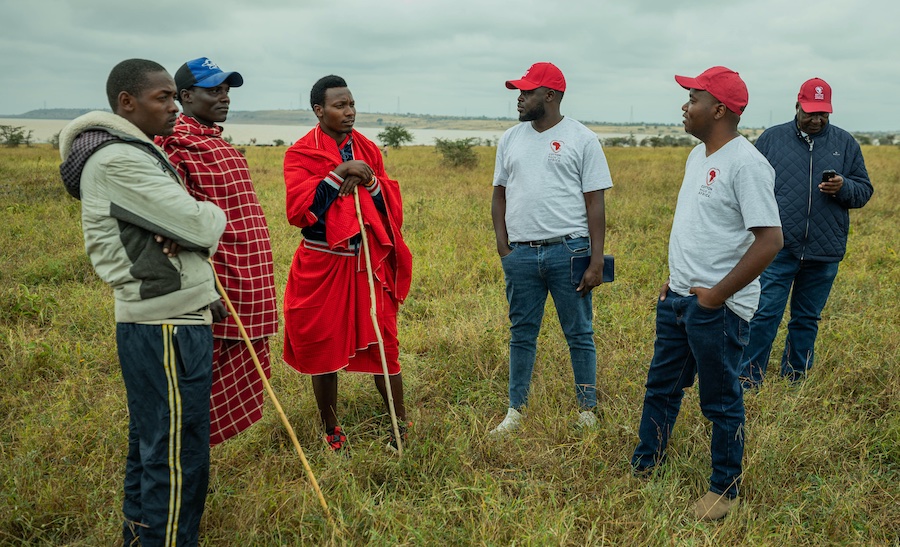
Cotton made in Africa puts farmer dialogue at the heart of agricultural training

A new manual created by the Aid by Trade Foundation and African People & Wildlife shows how Cotton made in Africa aims to transform cotton cultivation through dialogue rather than directives.

#Raw Materials

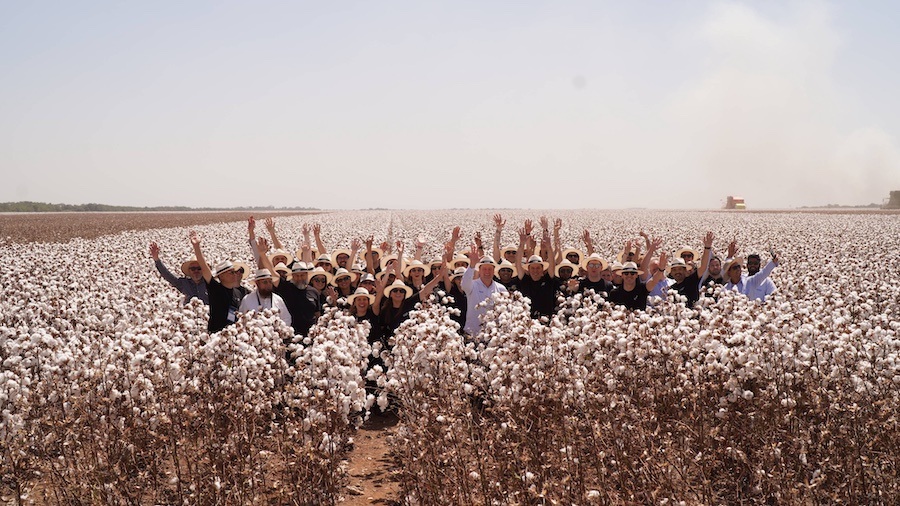
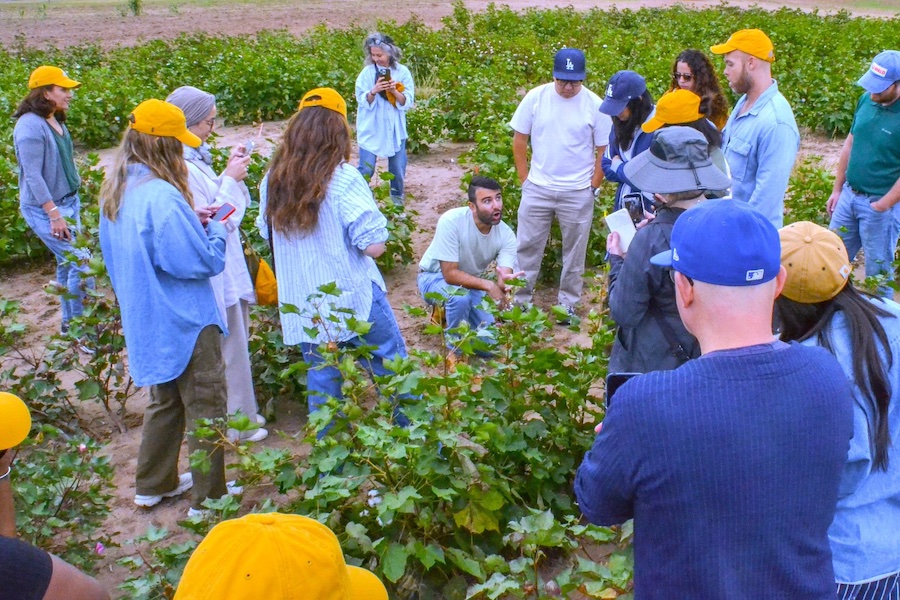
Cotton Brazil Dialogues 2026 concludes with 50 international participants immersed in Brazilian cotton production

The Cotton Brazil Dialogues concludes its 2026 edition after a series of technical visits to farms, cotton gins and reference centers, as well as workshops focused on Brazilian cotton production. A total of 50 participants from 14 countries took part in the field trips. The initiative is led by the Brazilian Association of Cotton Growers (Abrapa) and the National Association of Cotton Exporters (Anea), with support from the Brazilian Trade and Investment Promotion Agency (ApexBrasil).

#Raw Materials

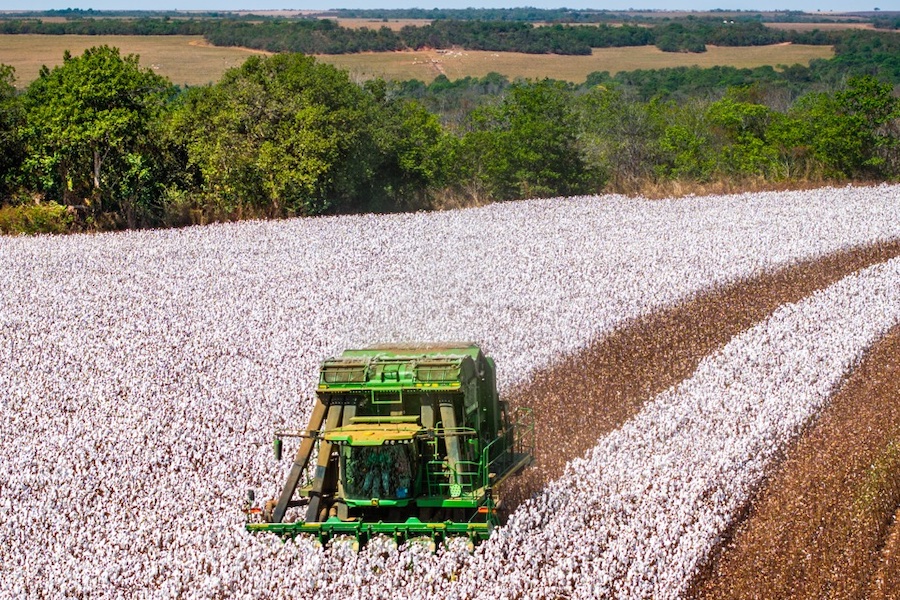
Brazil sets new cotton export record and consolidates global leadership

Brazil ended the 2025/26 commercial year with a new record, consolidating its position as the world’s largest cotton exporter. Between August 2025 and July 2026, the country shipped 3,373,941 tonnes of the fiber, 19% more than in the previous cycle, and reached record revenue of US$5.3 billion. The result represents a milestone in Brazil’s expansion in the international market and reinforces the country’s role as a strategic supplier to the global textile industry.

#Raw Materials

Better Cotton Initiative partners with Avalo in AI plant breeding for climate-resilient cotton

The Better Cotton Initiative (BCI) has partnered with agriculture solutions company Avalo, whose platform accelerates the speed at which plants with key resiliency traits may be developed.

Latest News

#Knitting & Hosiery

SHIMA SEIKI to showcase flat knitting and digital design solutions at Egypt Stitch & Tex

Leading Japanese computerized flat knitting technologist SHIMA SEIKI MFG., LTD. of Wakayama, Japan, together with its sales representative in Egypt, TTS (EL MASRIA FOR TRADE & TECHNICAL SERVICES), will participate in the upcoming 24th International Exhibition for Textile & Carpet Machineries, Printing Technologies and Accessories (Egypt Stitch & Tex) to be held in Cairo, Egypt this month.

#Sustainability

Wendy Woods named Chair of the Fashion for Good BV Board

Fashion for Good is pleased to welcome Wendy Woods as its new board chair, succeeding Jill Beraud as of 1 September 2026, who had led the board since 2022.

#Industry 4.0 / Digitalization

Coats Digital launches AI-powered GSD RealMotion for motion analysis

Coats Digital has launched GSD RealMotion, an AI-powered solution designed to provide apparel manufacturers with greater visibility into factory-floor operations. By analysing shop-floor video and applying Coats Digital’s GSD methodology, the solution turns video recordings into structured, motion-by-motion method studies.

#Textile chemistry

Archroma and Lameirinho partner in pioneering deployment of InOneGO single-step dyeing

Archroma, a global leader in specialty chemicals, and Lameirinho, a leading home textiles manufacturer based in Portugal, are collaborating to bring InOneGO by Archroma, a new single-step dyeing process, into commercial production. Lameirinho’s first InOneGo bedlinens collection is now available worldwide.

TOP