[pageLogInLogOut]

#Spinning

Uster Technologies marks 150 years of empowering quality excellence
Uster Technologies marks 150 years of excellence – a milestone that reflects continuous adaptation to customer needs and industry change. Over the decades, Uster has evolved from manufacturing quality testing instruments into a trusted partner shaping the future of textile production.
© 2025 Uster Technologies


From precision instruments to end-to-end solutions

Moving forward, Uster can be compared to a ‘family doctor’ with strategic advice and end-to-end solutions optimizing mill performance. With its ‘Think Quality – Next Level’ vision, Uster empowers customers beyond just data and devices towards intelligent decision-making. This transition sets the course for a more sustainable, efficient, and impactful textile industry.

Reaching 150 years is an achievement for any company, especially in the modern era of rapidly changing business conditions. For Uster Technologies, it has been a process of continuous development, shifting its core competence from origins manufacturing telegraphy equipment to its 21st Century role as global leader in textile quality systems and solutions.

Today, that progression sees Uster taking on a new mission – customer-focused, with a business model offering end-to-end solutions for quality management and business profitability.

The family doctor

A customer once said that Uster Technologies could be compared to a family doctor. It’s a powerful metaphor, and it suggests that Uster should go further than being a provider of instruments such as yarn clearers and evenness testers. Excellent as these are for measuring and controlling quality, their role typically ends at that point – comparable with the medic’s simple thermometer.

Taking the family doctor analogy further, Uster wants to understand in detail the context of each spinning mill – its operations, goals, and market environment – to advance from simply delivering data towards actively helping mills improve. In this way, Uster is evolving to make a much bigger impact, as a trusted partner – like the family doctor, who monitors health but also provides insights, guidance, and long-term care.

The trusted strategic partner

This concept opens the door to a new level of value creation. Rather than offering isolated instruments, Uster can empower mills to achieve more, by providing integrated, end-to-end solutions. This requires understanding the mill’s entire production chain, identifying opportunities for improvement, and aligning quality management with the mill’s broader business goals.

‘Think Quality – Next Level’ is Uster’s shift from product supplier to strategic partner. It's about helping customers move from reactive quality control to proactive quality assurance and optimization. This approach allows mills to unlock higher efficiency, better performance, and increased profitability.

The value chain manager

The ultimate goal is satisfaction for the customer’s customer, in a way that is profitable for the spinning mill. Uster has the preconditions available, with what’s called the ‘solution stack’. That means Uster has the sensing points connecting hardware and managing parameters across the spinning mill and along the value chain. These cloud-connected instruments feed data to the Uster 360Q platform. This is where the problem-solving happens, the ultimate enabler for decision-making, action and optimization with a comprehensive mill overview. Applying AI here, the result is greater automation and performance, uniquely combined with the support of top Uster textile advisors to integrate all the key data for the outcome the spinner wants. Superior sensors, intelligent analysis and unrivaled human expertise create the Uster magic that is greatly valued but rarely matched.

Uster is at the start of this transformation, but the direction remains clear and unchanged – as long as it continues to meet the needs of our customers. The Uster FiberQ raw material management solution has already been proven in practice – and another new solution will be introduced at ITMA Asia + CITME 2025. The full impact of ‘Think Quality – Next Level’ might be found in a mill in the year 2035, when a mill can correlate data from the bale laydown with fabric quality parameters. Collating all this information and even connecting the data with mills across the world, can be massively influential, giving spinners early optimization potential with a clear view of the ultimate quality impact. The sheer power of this ‘Next Level’ is amazing.

The pioneer

A sustainable textile industry should be part of a better planet for all. Stakeholders today expect Uster to take on the kind of pioneering role it had when launching the first evenness tester in 1948. While textile recycling is still in its infancy, there is a clear call for Uster to lead the way in developing innovative quality management approaches quality management approaches that support and accelerate recycling efforts in collaboration with stakeholders. The adoption and scale-up in use of recycled fibers will see this segment evolve from a 1% niche of production to something notably bigger. In that sense, sustainability is very important, so Uster is currently developing many technologies to fit with ongoing ecological trends.

As with all Uster policies, this goal is aligned with the company’s purpose statement: “We empower people to create a better future for the textile industry through quality and innovative end-to-end solutions. ”A purpose is of universal importance, driving and directing the company and focusing on the basic principles – especially in tough times. It’s the way to build resilience for the company and for its people, and is the foundation for the optimism that Uster will continue to achieve significant milestones on into the next 150 years.

More News from Uster Technologies AG

#ITM 2026

Uster’s new Recycling Opening Index guides spinners to the perfect blend

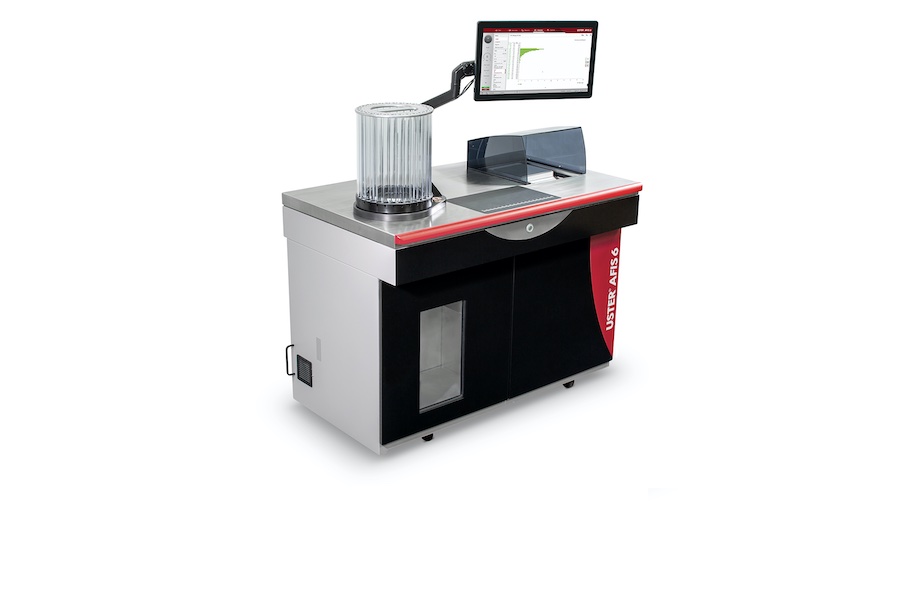
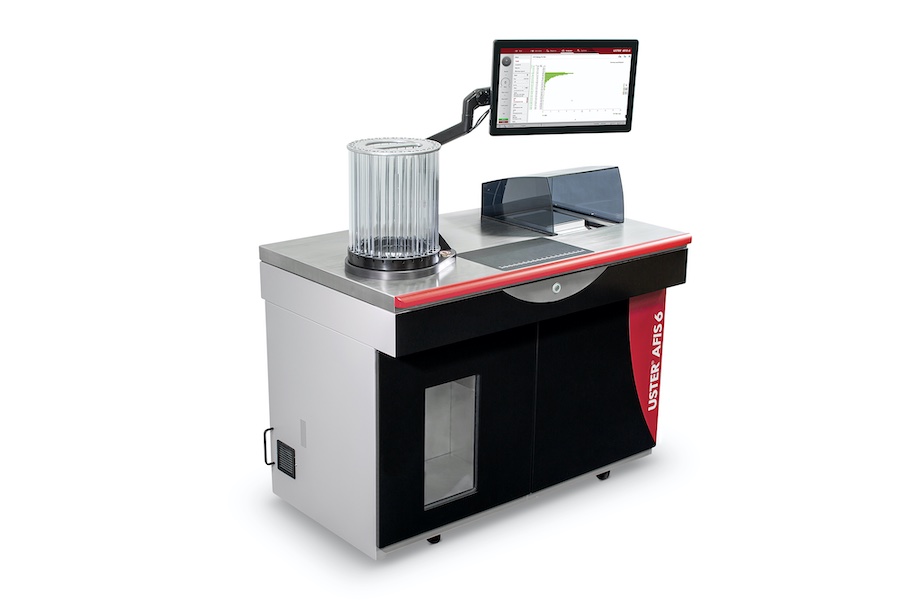
Uster AFIS 6 now offers the key data for better decisions when blending recycled fibers. Process control is decisive in determining the quality and economic outcome. The new R Recycling Module of AFIS 6 introduces the Recycling Opening Index (ROI), so spinners can optimize their circularity credentials. It was officially launched at ITM 2026 in Istanbul, Türkiye.

#Spinning

Measure and control the fiber – optimize yarn quality

Producing consistent yarn quality is an everyday challenge – and a very difficult one. Detailed knowledge and understanding of the fiber raw material is absolutely critical to achieving the best possible quality in the yarn. To help spinners, Uster experts have put together guidelines for avoiding yarn irregularity claims, in a special edition of the Uster News Bulletin.

#ITMA Asia + CITME Singapore 2025

Uster presents novelties at ITMA Asia + CITME 2025

There’s news from Uster Technologies to be announced for the industry’s upcoming event in Singapore. The Uster 360Q universe is growing with new products, solutions and services. Innovation developments can also be recorded in the fields of man-made fiber testing and fabric inspection. Uster innovations address the industry’s trending topics as mill management and process control, optimization of delivered fabric quality and yield.

#Recycling / Circular Economy

Challenges of making yarn from recycled fibers

What does it take to spin quality yarn from recycled fibers? Uster Technologies brought textile industry leaders together to discuss the role of technology, data and automation – as well as the current challenges in using recycled raw material. Experts from Rieter, Säntis Textiles, Otto Yarns, and TVU commented on the current situation and looked into the future of spinning in a panel discussion organized at Uster headquarters.

More News on Spinning

#Spinning

Object Carpet tests production of rPET BCF yarn on Neumag BCF line

In a joint project with Object Carpet GmbH, Denkendorf; the Institute for Textile Technology (ITA), Augsburg; and Next Generation Recyclingmaschinen GmbH (NGR), Feldkirchen, Austria, Barmag investigated the processing of recycled polyester for BCF yarn. The goal was to evaluate the fundamental suitability of 100% recycled carpet material for reuse in carpet yarn production to create a closed-loop system in carpet manufacturing. To date, commercial rPET BCF processes have been based solely on rPET from bottle pellets.

#Spinning

New spinning package with two-step filtration for recycled yarns and more

At the ITM in Istanbul, BB Engineering unveiled its new, patented ValuePack spinning package for the first time, which features a two-stage filtration system. This is particularly beneficial for re-cycling processes. Until now, spinning packs have used either metal powder (“sand”) or filter candles as filter media. Both options are suitable for differ-ent applications, and each has its own specific advantages and dis-advantages.

#Research & Development

GenuTrace client advisory: Is your cotton supply chain UFLPA ready?

U.S. Customs and Border Protection has released updated operational guidance (CBP Publication No. 5560-0526) expanding its forced labor enforcement framework. The guidance supersedes the original 2022 UFLPA Operational Guidance and now covers all forced labor enforcement authorities — UFLPA, CAATSA, and WROs/Findings — in a single unified document. For cotton importers, the enforcement posture has not softened. It has become more structured, more documented, and more demanding. Learn more about UFLPA.

Latest News

#Dyeing, Drying, Finishing

Ferraro S.p.A. acquires the “Finishing” business unit of Cibitex S.r.l.

Ferraro S.p.A. and Cibitex S.r.l. are pleased to announce the completion of the agreement pursuant to which Ferraro S.p.A. has acquired the “Finishing” business unit of Cibitex S.r.l., specialized in the development and manufacturing of technological solutions for textile finishing.

#Recycling / Circular Economy

Reju opens its first R&D Center in the U.S. in Conshohocken, Pennsylvania

Reju, the company specializing in textile regeneration, today announced the opening of a Research and Development (R&D) Center in Conshohocken, Pennsylvania, the company's first proprietary research center in North America. Located within Technip Energies' existing Advanced Materials and Catalysts research center, the lab will allow Reju to accelerate the rollout of its recycling technologies and develop its next-generation circular solutions.

#Weaving

Itema reaffirms its commitment to the Syrian textile industry at NasTex 2026

From July 18th to 21st, Itema will exhibit at NasTex at the Damascus Fairground (Hall 11 – Stand C02), marking its return to one of the Middle East’s historically significant textile markets. Itema will showcase advanced weaving technology designed to support the competitiveness and technological evolution of Syrian manufacturers and announces a new partnership with Growfast Agency as the sole agent of Itema in Syria.

#Knitting & Hosiery

KARL MAYER's HKS 2-SE Expands Possibilities for Premium Stretch WARP KNITS

Warp knitted fabrics with a woven look are more in demand than ever in the fashion and apparel industries. Stretch WARP KNITS, in particular, impress with their freedom of movement, breathability, and virtually wrinkle-free wear – thereby opening up new style worlds such as smart casual or business casual. When it comes to the highly efficient production of premium-quality stretch WARP KNITS, the HKS 2-SE has long been the machine of choice. KARL MAYER’s best-selling tricot machine produces standard elastic fabrics characterized by high gauges, smooth, delicate surfaces, and a soft hand feel.

TOP