#Spinning
Measure and control the fiber – optimize yarn quality
Uster shares insights to avoid claims, from the start of the process

Uster can say with greater certainty that the reasons for claims received by spinners have remained quite similar, at least in the past 20 to 30 years. Although the severity and distribution of the reasons may vary depending on the final use of the yarn, the most common factors can be identified. Analyzing these factors and providing insights into the quest for operational excellence in spinning mills, the latest Uster News Bulletin No. 52 becomes a valuable tool to reduce yarn quality claims.
Laydown consistency – use data correctly
One factor which greatly impacts on the spinnability of cotton fibers, as well as the yarn quality, is fiber fineness. Cotton has inherent natural variations, so fiber fineness (micronaire) is therefore the most important parameter to be controlled within required limits.
Optimal bale mixing aims at a consistently narrow micronaire range. Minimizing variation in micronaire values, both across and within laydowns, is critical. Fluctuating micronaire values can lead to barré or inconsistencies in yarn strength, causing quality claims. To reduce the risk, spinners use data from Uster HVI for laydown management. Taking it further, many mills have integrated automated solutions such as Uster FiberQ, with algorithms that control not only micronaire but also multiple other fiber characteristics. This reduces manual work, but more importantly improves long-term quality from fiber to yarn by refining raw material selection.
Fiber process control – look closely at the blowroom
Uster’s experience shows that the reduction of neps is another of the most frequent challenges for spinning mills. Here, it’s better to avoid creating neps at the beginning of the process, instead of trying to reduce them in spinning. Many spinners take steps in the blowroom and carding processes to tackle this issue.
In the blowroom it’s about managing trash reduction, and preventing the increase of short fiber content and neps. During cotton processing, the material is opened into tufts, with several stages of opening and cleaning aimed at removing impurities. But a side effect of these processes can be an increase in neps and short fiber content, due to the mechanical stresses. Some spinning mills adjust card settings or try to remove broken fibers during combing, but a more effective and economical solution is thorough testing and blowroom optimization.
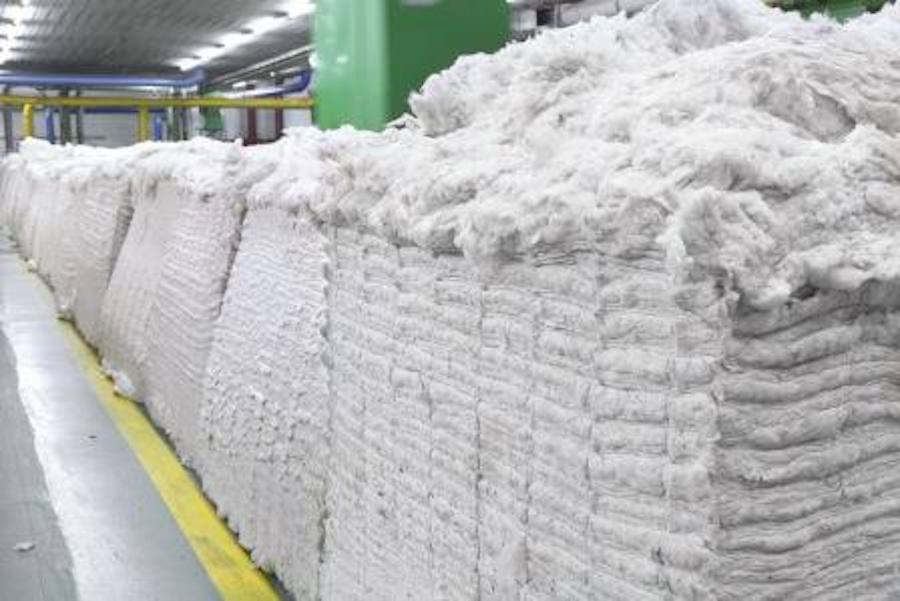
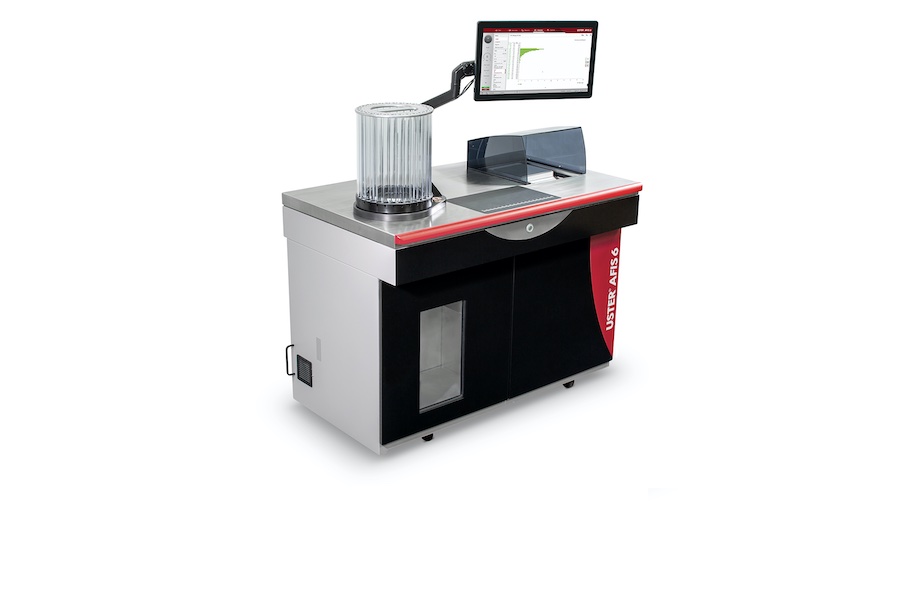
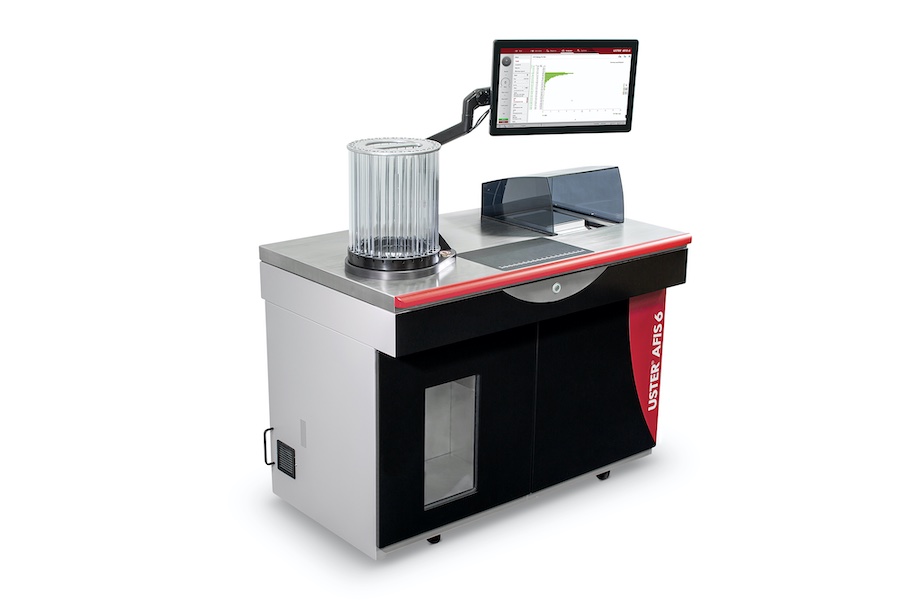
To control blowroom and carding performance, measurements with Uster AFIS are part of the routine test plan, as well as also being applied after machine maintenance or changes in cotton laydown recipes. These tests ensure optimal opening and cleaning at an appropriate waste level. Close monitoring of potential fiber damage is essential.
Processing statistics – track fiber characteristics
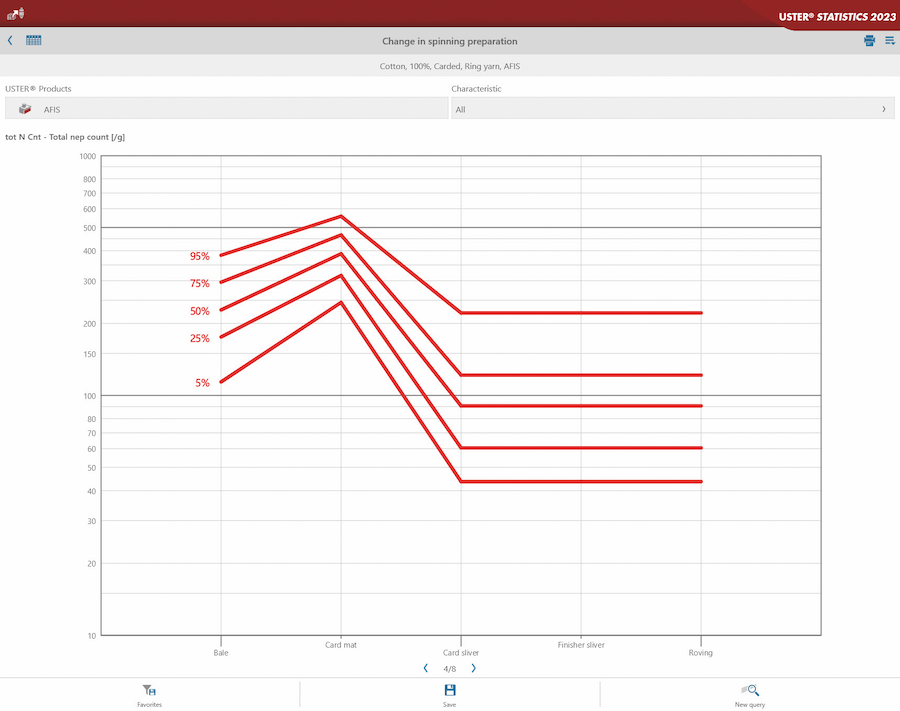
The processing charts in Uster Statistics track the fiber quality characteristics. Key parameters for neps, short fibers, and impurities are plotted through each processing stage. The accompanying graphic shows the typical increase in neps in the blowroom from bale to card mat, followed by a decrease after carding as neps are removed. Spinning mills can compare their own levels against the global standard. This allows a quick assessment of the situation, identifying areas of overperformance or potential improvements.
Various raw materials – one common goal
Process control is also important, and even more so when processing mechanically recycled cotton. Depending on the source of the recycled material and its opening method, the short fiber content might already be at a naturally higher level when entering the blowroom.
Similarly, fiber damage can apply to man-made fibers which initially have uniform cut lengths. Uster AFIS 6 is able to measure cotton as well as synthetic materials. With thorough quality management, spinners can identify fiber deterioration at source, before it results in yarn irregularity.
It’s clear that fiber characteristics significantly affect both spinnability and yarn quality consistency. Therefore, understanding fiber quality and how fibers are treated during the spinning process is essential right from the start. What is not measured, cannot be controlled! However, this is only one element to be managed to avoid quality claims.
Uster has the technology, the experience and the knowledge to foster a new level of consistency in yarn production. The company’s know-how is freely shared in Uster News Bulletin No. 52, which includes more chapters offering ‘best practice’ advice – from spinners for spinners – on how to take control of quality claims. Also free of charge is a wide range of application literature on https://360q.uster.com as well as the new Uster Statistics.