[pageLogInLogOut]
ITM 2026  9-13 JUNE 2026 ISTANBUL

#ITM 2026

Recycled fibers: the vital data for quality and profitability

Uster’s new Recycling Opening Index guides spinners to the perfect blend
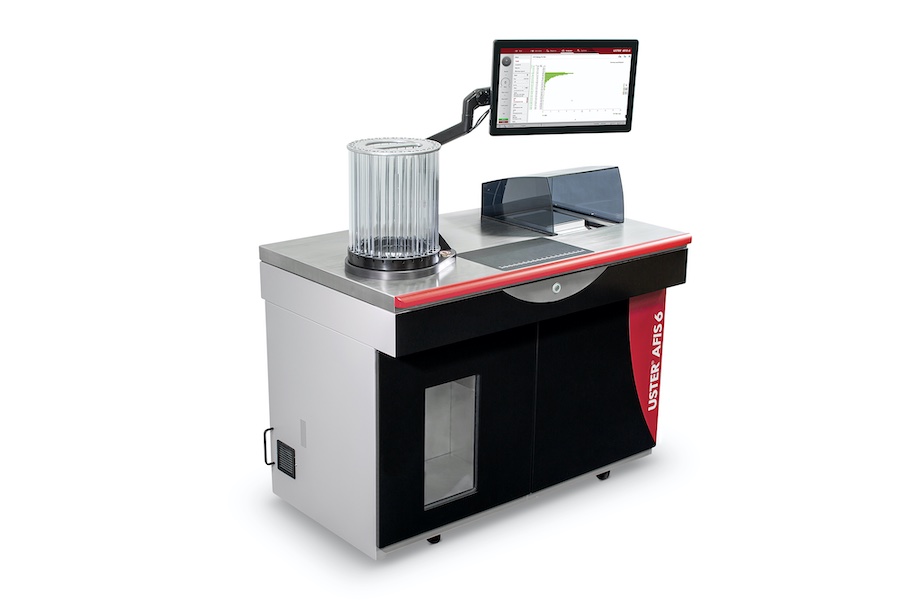
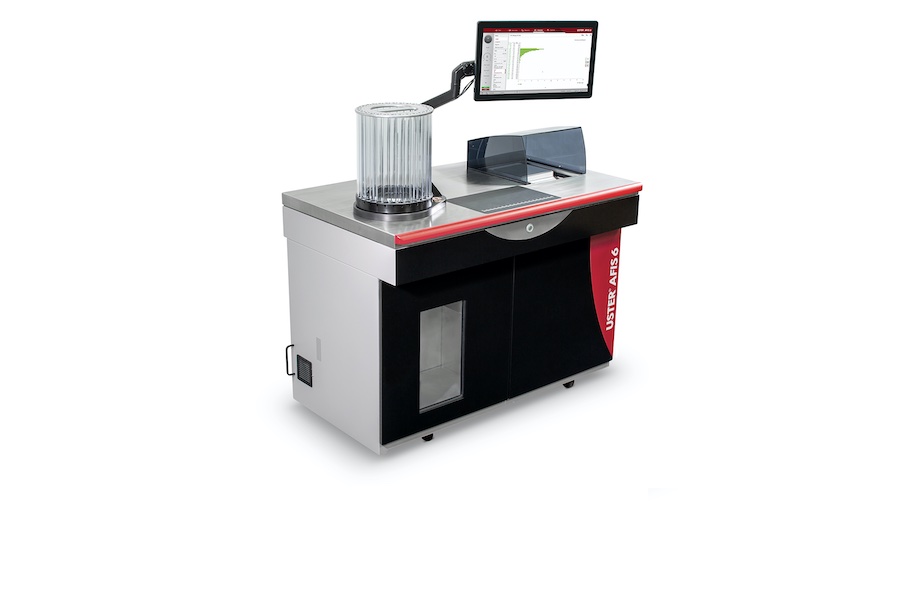
Uster AFIS 6 – The fiber process control system © 2026 USTER
Uster AFIS 6 now offers the key data for better decisions when blending recycled fibers. Process control is decisive in determining the quality and economic outcome. The new R Recycling Module of AFIS 6 introduces the Recycling Opening Index (ROI), so spinners can optimize their circularity credentials. It was officially launched at ITM 2026 in Istanbul, Türkiye.

Cotton recycling has become a strategic priority for brands, regulators, and technology providers because it directly addresses the textile sector’s biggest challenges: growing volumes of waste, resource scarcity, climate impact, and regulatory pressure.

Recycled waste and the use of it

Recent industry data shows that most textile waste is post-consumer waste (75% by volume) while post-industrial (pre-consumer) waste makes up around 25%. However, when it comes to recycling – turning this waste into quality new yarn – the situation is different.

Even though it’s a smaller share of total waste, about 95-99% of post-industrial waste is already being reused. Almost every scrap of factory waste is already being collected and spun back into yarn. That’s because it’s clean, consistent, and relatively easy to process.

Spinners generally see it as the safer option to start their recycling activities with post-industrial waste. These raw materials are more predictable in their behaviour, so it’s simpler to refine spinning techniques to suit them. An optimized process can then be developed for blending in pre- and/or post-consumer waste.

Controlling processes with recycled raw materials

Now, objective measurement data from Uster is available to give clear indicators of processability and profitability when using recycled raw materials. This comes with the Recycling Opening Index (ROI), together with the total yarn pieces value. The ROI is a metric in the Uster AFIS 6 R Recycling Module, which describes the effectiveness of the opening process in the recycling of cotton fibers. It is defined as the ratio of opened fibers to remaining yarn pieces (hard ends). ‘Total yarn pieces’ means the sum of yarn fragments present in the raw material that have not yet been fully opened into individual fibers.

If a low ROI value is indicated, this suggests a poor degree of opening, which can disrupt the spinning process and cause issues such as yarn irregularity (IPI), weak spots and uneven surface structures.

So, the ROI is a vital metric for evaluating the quality of recycled cotton materials. For the first time, spinners can have a quantitative assessment of the opening process.
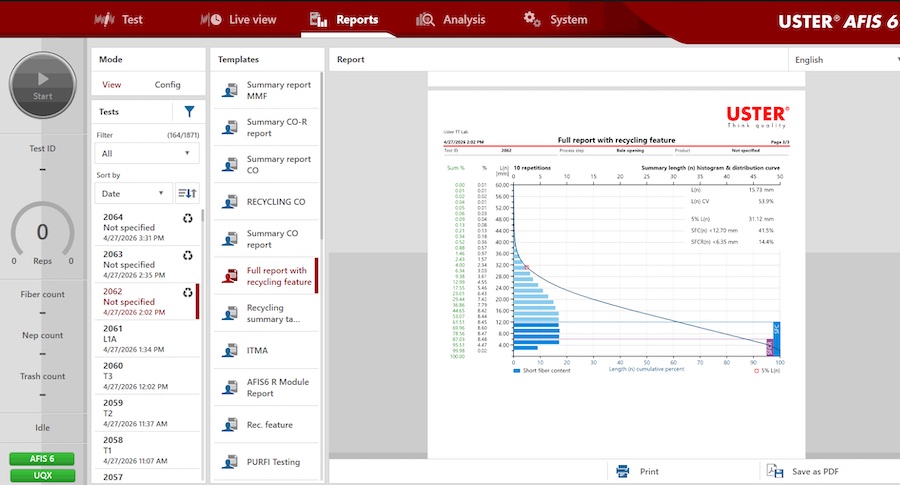
Screenshot of Uster AFIS 6 R Recycling Module measurement showing summary of length (n) histogram and distribution curve.<br />
 © 2026 USTER
Screenshot of Uster AFIS 6 R Recycling Module measurement showing summary of length (n) histogram and distribution curve. © 2026 USTER


R Recycling Module of Uster AFIS 6

Uster AFIS 6 with the R Recycling Module supports better decisions through real measurements. The concept of the Recycling Opening Index (ROI) combined with the number of yarn pieces per gram, provides spinners with a more precise evaluation of recycled material processing. The R Recycling Module also offers advanced recycling parameter measurements, as well as a refined short fiber content analysis with < 6.35 mm indicating the non-spinnable fiber content. In addition, the module enhances fiber quality assessment by incorporating detailed nep and fiber length parameters. The R Recycling Module on AFIS 6 is an optional, on-demand feature designed exclusively for this latest model.

The new module fits perfectly within Uster AFIS 6, with its expanded measurement range for 100% synthetic fibers giving details of cut length and denier/fineness, to help spinners make proper raw material selections. The updated reporting package simplifies complex data analysis, and the integrated Uster Statistics remains the essential tool for spinners to optimize intermediate process steps – finally empowering full control of their processes.
More News from Uster Technologies AG

#Spinning

Measure and control the fiber – optimize yarn quality

Producing consistent yarn quality is an everyday challenge – and a very difficult one. Detailed knowledge and understanding of the fiber raw material is absolutely critical to achieving the best possible quality in the yarn. To help spinners, Uster experts have put together guidelines for avoiding yarn irregularity claims, in a special edition of the Uster News Bulletin.

#ITMA Asia + CITME Singapore 2025

Uster presents novelties at ITMA Asia + CITME 2025

There’s news from Uster Technologies to be announced for the industry’s upcoming event in Singapore. The Uster 360Q universe is growing with new products, solutions and services. Innovation developments can also be recorded in the fields of man-made fiber testing and fabric inspection. Uster innovations address the industry’s trending topics as mill management and process control, optimization of delivered fabric quality and yield.

#Spinning

Uster Technologies marks 150 years of empowering quality excellence

Uster Technologies marks 150 years of excellence – a milestone that reflects continuous adaptation to customer needs and industry change. Over the decades, Uster has evolved from manufacturing quality testing instruments into a trusted partner shaping the future of textile production.

#Recycling / Circular Economy

Challenges of making yarn from recycled fibers

What does it take to spin quality yarn from recycled fibers? Uster Technologies brought textile industry leaders together to discuss the role of technology, data and automation – as well as the current challenges in using recycled raw material. Experts from Rieter, Säntis Textiles, Otto Yarns, and TVU commented on the current situation and looked into the future of spinning in a panel discussion organized at Uster headquarters.

More News on ITM 2026

#Spinning

Barmag and Hitech Automation enter into partnership for an auto-doff system for texturing machines

Barmag (Suzhou) Technology Co., Ltd. and Hitech Automation Solutions PVT LTD. of Surat, India, have agreed to an exclusive partnership to jointly market Hitech’s Doffmatic automation solution for Barmag’s proven manual eFK texturing machines. In many texturing facilities, manual doffing processes remain heavily operator-dependent – resulting in issues such as increased scrap, inconsistent quality, and limited productivity.

#HIGHTEX 2026

The heart of the technical textiles and nonwovens world will beat in Istanbul

Only 1 day remains until HIGHTEX 2026 International Technical Textiles and Nonwovens Exhibition opens its doors. Bringing together manufacturers, technology developers, investors, and industry professionals from around the world, HIGHTEX 2026 is preparing to showcase the innovations shaping the future of the industry. As the countdown to this major event continues, Istanbul is once again getting ready to become the meeting point of the global technical textiles industry.

#ITM 2026

The future of textiles, the power of trade, and the summit of technology come together at ITM 2026

ITM 2026 International Textile Machinery Exhibition, one of the most prestigious organizations in the textile technologies sector, opens its doors to visitors between June 9-13. Expected to break records in terms of both exhibitor and visitor numbers, as well as the technological vision it presents, ITM 2026 will transform into a global trade hub with machine sales, and new business collaborations.

Latest News

#Man-Made Fibers

Grasim Industries announces fresh investment of ₹3094 Crore to expand Lyocell capacity

Grasim Industries Limited, the flagship company of the Aditya Birla Group and a global leader in cellulosic fibres, today announced an investment of ₹3,094 crore, for Phase II Lyocell capacity of 110K TPA at Harihar, Karnataka. This expansion will consist of 2 lines of 55K TPA (150 Tons per day) each. The first line is expected to be commissioned by 2028, and the second line is expected to be commissioned by 2030.

#Nonwoven machines

ATCO Hygienics, Uzbekistan, orders baby diaper production line from ANDRITZ

International technology group ANDRITZ has received an order from ATCO Hygienics to supply a new baby diaper production line for its plant in Tashkent, Uzbekistan. The order is included in ANDRITZ’s order intake for the first quarter of 2026. Commissioning of the production line is scheduled for the end of 2026.

#Weaving

Itema manufactures the first Projectile Weaving Machines “Made in Italy” at its Colzate Headquarters.

Itema proudly announces an important industrial milestone: in early May, the first Itema projectile weaving machines manufactured in Italy were successfully produced at the Group’s headquarters in Colzate.

#Spinning

Nico Pedretti appointed as Managing Director Graf Group

As of June 1, 2026, Nico Pedretti has assumed the role of Managing Director Graf Group. With more than 20 years of international industrial experience and extensive expertise in Operations, Supply Chain Management, Finance and Controlling, he brings a broad range of leadership and business experience to support Graf’s continued success.

ITM 2026  9-13 JUNE 2026 ISTANBUL
TOP