[pageLogInLogOut]

#India ITME 2026

India’s textile industry: Current position, growth targets and industrial development

© 2026 AI Generated / TexData International
With ambitious export targets, major investments in manufacturing infrastructure and new international trade agreements, India is pursuing a comprehensive development strategy for its textile and apparel industry. An overview of the industry’s current position, government initiatives, progress achieved and challenges ahead.

India’s textile industry today

India’s textile and apparel industry occupies a distinctive position in the global market. The country has one of the world’s largest textile manufacturing bases, a substantial domestic market and a production structure extending from cotton cultivation and fibre processing to spinning, weaving, knitting, finishing and garment manufacturing. Few countries possess such a broadly integrated textile value chain.

The industry’s economic and social importance is considerable. According to India’s Economic Survey 2024–25, textiles and apparel contribute approximately 2.3% to national GDP and account for around 13% of industrial production. The sector provides direct employment to an estimated 45 million people, making it one of the country’s largest industrial employers. The survey also indicates that around 80% of production capacity is concentrated in micro, small and medium-sized enterprise (MSME) clusters.

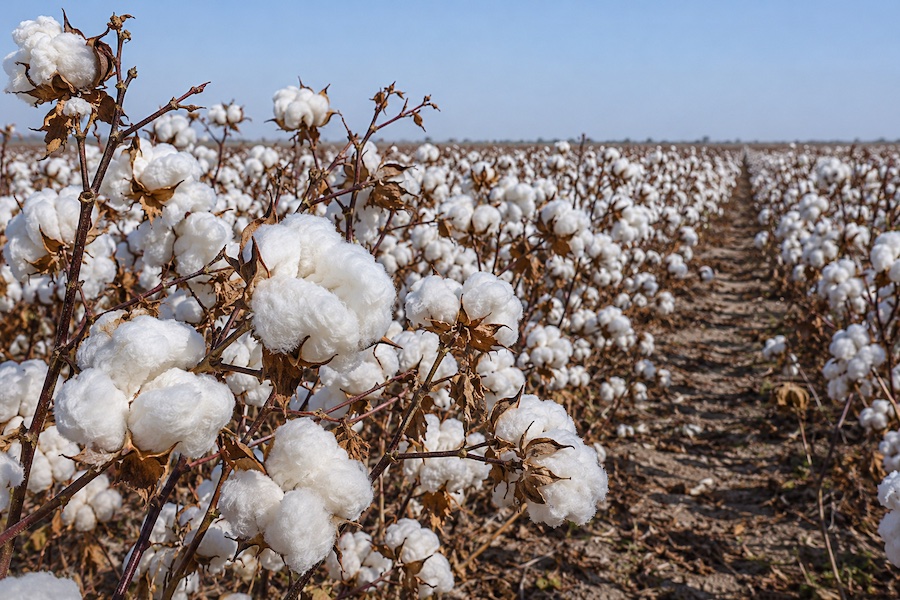
India’s traditional strength lies in cotton. According to estimates published by the International Cotton Advisory Committee (ICAC), the country is expected to produce approximately 5.5 million tonnes of cotton lint in the 2025/26 season, representing roughly one-fifth of global output. India is the world’s second-largest cotton producer after China and has the largest area devoted to cotton cultivation. ICAC estimates domestic cotton consumption at nearly 5.9 million tonnes, illustrating the scale of India’s processing industry but also the importance of productivity, fibre quality and raw material availability.

Cotton remains central to India’s textile exports, although the industry’s product range is becoming more diversified. Based on export figures published by India’s Ministry of Textiles for the 2024/25 financial year, ready-made garments accounted for approximately 42.4% of textile and apparel exports including handicrafts, followed by cotton textiles at 32.6% and man-made textiles at 14.0%. The development of synthetic fibres, technical textiles and higher-value finished products is therefore an important element of the country’s industrial strategy.

Despite its considerable manufacturing capacity, India faces strong international competition.

According to WTO international trade statistics for 2024, India accounted for approximately 5.8% of global textile exports, compared with China’s share of around 43.5%. In the broader textile and apparel market, India’s share of world exports was approximately 4.1%.

These figures demonstrate both the country’s established position and the considerable distance separating it from the world’s leading exporter. They also underline the importance of improving productivity, expanding manufacturing capacity and strengthening competitiveness in international markets.

Growth targets and government strategy

The Indian government has set ambitious targets for the industry’s development. In a statement published by the Ministry of Textiles in June 2026, Union Minister Giriraj Singh reiterated the objective of increasing the value of India’s textile and apparel industry to USD 350 billion by 2030. The government’s export target stands at USD 100 billion. According to the ministry, the industry’s value had reached approximately USD 190 billion in 2025/26.

The full article can be read in the latest issue of textile.4U, available for free download here:




More News from TEXDATA International

#Weaving

“A complex design is only useful if the machine can reproduce it consistently”

Andreas Schnabel, Head of R&D for Technical Weaving Systems at Stäubli, discusses how 3D weaving can create textile reinforcements tailored to the loads within a composite component, where near-net-shape weaving can reduce processing steps and material waste, and what it takes to produce complex structures reliably and economically. He also explains how manufacturers can adapt Stäubli’s modular TF weaving platforms to new applications and how the company’s centre of excellence in Bayreuth supports the transition from research to industrial production.

#India ITME 2026

India ITME 2026: Textile technology meets India's investment ambitions

With ambitious growth targets, government incentive programmes and industrial development initiatives already underway, India is preparing for the next stage of its textile transformation. Against this backdrop, the 12th India ITME, taking place in Greater Noida from 4 to 9 December 2026, arrives at a particularly important moment for machinery manufacturers and textile producers alike.

#ITMA Asia + CITME 2026

ITMA ASIA + CITME 2026: Shanghai prepares for a record edition

With record demand for exhibition space, a strong presence of international technology suppliers and growing interest in automation and intelligent manufacturing, ITMA ASIA + CITME 2026 will provide an important overview of technological developments in the world’s largest textile producing region.

#ITM 2026

ITM 2026: The new geography of textile production

New production hubs are emerging across North Africa and Central Asia, while Türkiye is accelerating its transformation toward higher-value, technology-driven and more sustainable textile manufacturing.

More News on India ITME 2026

#India ITME 2026

Uster to present novel solutions at India ITME 2026

Tackling contamination is a critical quality target in yarn production – and Uster now enables spinners to make the right choices for optimized profitability, with top technology, precise data and integrated analysis across the entire process. The new Uster Contamination Control solution and latest Uster Vision Shield 3i put spinners in command of contaminant removal, ensuring yarn quality, minimizing waste and protecting profits. These exciting developments – and even more news – will be featured at India ITME 2026.

#Spinning

Barmag’s single-stage Bi-Shrinkage concept impresses with yarn quality and efficiency

The Indian company Garden Silk Mills Pvt. Ltd. adopts Barmag's new single-stage Bi-Shrinkage Yarn (BSY) spinning concept based on WINGS FDY PLUS eco. The systems, which have been in operation for about a year, deliver excellent yarn quality with very good productivity.

#India ITME 2026

Trützschler brings intelligent fiber processing and automation to India ITME 2026

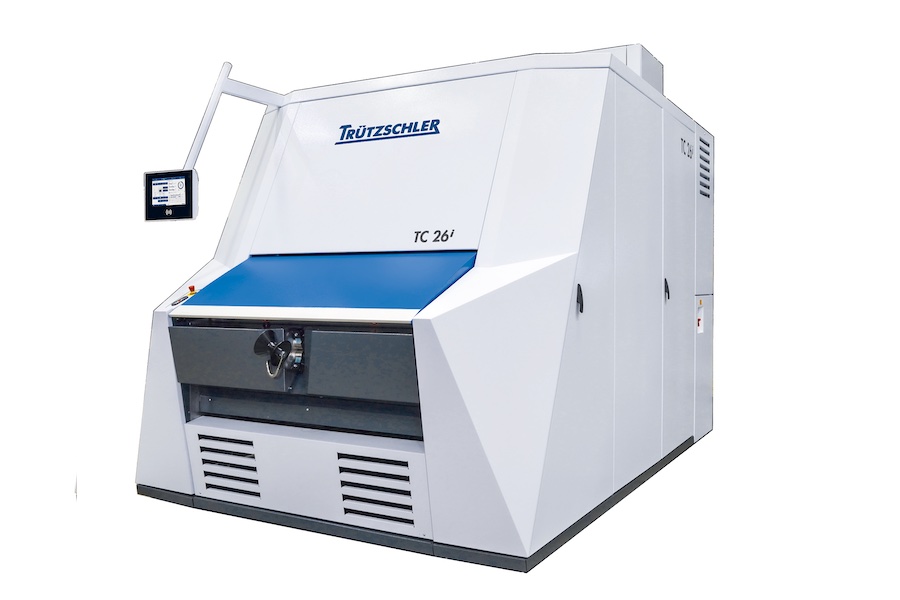
From December 4 to 9, 2026, the Trützschler Group will present its latest innovations in spinning, card clothing and nonwovens at India ITME in Greater Noida, India. At Hall 11, Booth B15, visitors can discover solutions designed to increase productivity, reduce operating costs and ensure consistently high product quality. Key highlights include the intelligent card TC 26i, the 12-head comber TCO 21XL, innovative card clothing solutions for improved fiber utilization and quality, as well as advanced nonwovens technologies for hygiene, wipes and technical applications.

#India ITME 2026

Stäubli to introduce new S3292 dobby for high-speed weaving at ITME India 2026

Stäubli will introduce its new S3292 dobby at ITME India 2026, taking place from December 4 to 9 at the India Expo Centre & Mart in Greater Noida, Uttar Pradesh. Designed for high-speed air-jet weaving, the new machine will be among the highlights of the company's presentation, which also includes warp preparation systems, cam motions, Jacquard technologies and digital services.

Latest News

#ITMA Asia + CITME 2026

Saurer showcases flexible spinning solutions from bale to yarn at ITMA ASIA + CITME 2026

At ITMA ASIA + CITME 2026 in Shanghai, Saurer will demonstrate how its advanced technologies enable maximum flexibility across the entire spinning process, from bale to yarn and twisting. Visitors to hall 6.1, booth A58, can explore solutions designed to optimise production, improve efficiency and help mills respond quickly to changing market demands. Saurer's experts will be available to discuss individual production challenges and tailored solutions.

#Nonwovens

Freudenberg Performance Materials brings interlining production to Vietnam for faster regional supply

Freudenberg Performance Materials Apparel (Freudenberg Apparel) has expanded its manufacturing capabilities in Vietnam with local apparel interlining production at its factory in Long Thanh, Dong Nai. Apparel brands and manufacturers in Southeast Asia can now source both interlinings and comfortemp® thermal insulation from Vietnam, benefiting from shorter lead times, improved supply responsiveness, and consistent quality standards across Freudenberg Apparel’s regional manufacturing network.

#EU Textile Strategy

EURATEX and Egyptian industry groups sign textile cooperation agreement

The European Apparel and Textile Confederation (EURATEX) has signed a memorandum of understanding with the Apparel Export Council of Egypt (AEC), the Textile Export Council of Egypt (TEC) and the Egyptian Exporters Association (EXPOLINK). The agreement sets out plans to help Egyptian manufacturers prepare for EU sustainability requirements, promote investment and strengthen ties between European and Egyptian textile and clothing companies.

#Raw Materials

Cotton Brazil brings producers' perspective to EU textile sustainability debate

As the European Union develops new sustainability and circular economy policies, Brazilian cotton producers are seeking a stronger voice in the regulatory debate. From 16 to 18 November 2026, Cotton Brazil will hold a series of meetings in Brussels with European policymakers, industry representatives and agricultural stakeholders. The initiative aims to demonstrate how responsible cotton production can contribute to Europe's sustainability ambitions while ensuring that the perspectives of major producing countries are reflected in future policy frameworks.

TOP