[pageLogInLogOut]

#Yarns

Textile Exchange publishes the final criteria for its new Materials Matter Standard, marking a pivotal shift in connecting certification to impact

Textile Exchange has published the final criteria for its Materials Matter Standard—a major milestone in the organization’s multi-year transition toward a unified, impact-driven standards system for raw material production and primary processing. 

For more than 20 years, the global nonprofit has been developing and maintaining leading material sustainability standards. Today, over 90,000 sites worldwide are certified to one of its programs, including the Global Recycled Standard and Responsible Wool Standard. Now, the release of the Materials Matter Standard criteria marks an important step in connecting this work more directly to measurable outcomes for climate, nature, people, and animals.  

Textile Exchange began developing the new framework in 2021 with a clear goal: to align the ambition, rigor, and expected results across its material-specific standards and transition the industry into a more coherent, science-aligned way to measure and verify impact.  

Since then, the organization has worked closely with stakeholders from across the supply system to design and test a framework that is both robust and workable in real-world production systems. Built on a combination of practice-based and outcome-based expectations, the standard includes comprehensive criteria for land management, animal welfare, human rights and livelihoods, and primary processing, which covers water, chemical, and energy use, as well as waste and emissions management.  

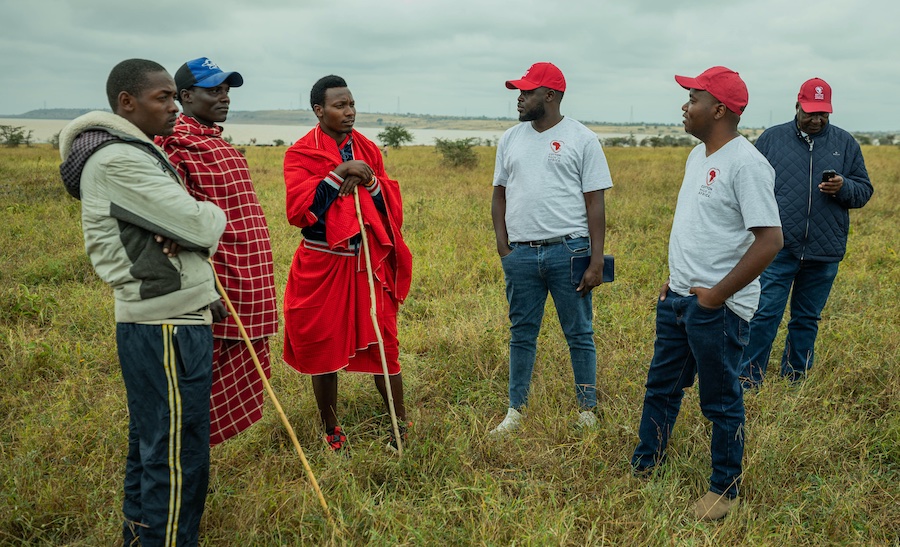
The criteria were developed over five years in close collaboration with a designated International Working Group made up of brands, retailers, suppliers, producers, NGOs, and technical specialists. Two publicly consulted drafts and a pilot version, tested in key material production regions from Peru to Italy, have helped refine the framework, alongside extensive work to ensure alignment with the ISEAL Code of Good Practice for Sustainability Systems.  

The first version of the Materials Matter Standard includes all materials currently covered by Textile Exchange’s Responsible Animal Fiber framework, including wool, alpaca, mohair, as well as recycled materials, as currently covered in the Global Recycled Standard (GRS) and Recycled Claims Standard (RCS). Organic cotton, which has long been an integral part of Textile Exchange’s standards system, will continue to play a central role through a gradual transition pathway for the Organic Content Standard into the Materials Matter System. This pathway will preserve essential functions such as traceability while strengthening the system to enable more holistic, farmer-centered outcomes.  

Looking ahead, Textile Exchange intends to expand the system through partnerships with credible programs that align with their shared vision for climate and nature impact. This includes exploring pathways for fibers such as cotton produced through preferred production systems and man-made cellulosic fibers. By collaborating with established partners and bringing efforts together under one framework, Textile Exchange aims to reduce duplication, ease the burden on suppliers, and enable brands to more easily source materials that deliver measurable benefits on the ground. This partnership-driven approach is designed to broaden opportunity and impact across the industry while accelerating progress for climate, nature, people, and animals.  

Today, the publication of the final criteria marks the first phase of the transition. The Materials Matter Standard will become effective on December 31, 2026, meaning that sites can start to get certified, and will be mandatory from December 31, 2027. Organizations may continue using Textile Exchange’s current standards until this date to ensure a smooth shift for certified sites globally.  

Ultimately, the goal of the Materials Matter Standard is to provide brands, suppliers, and producers with a credible mark that links production practices to measurable outcomes—supporting the industry’s move toward integrity and accountability at scale. To support this transition, Textile Exchange has also released the Materials Matter Claims and Labeling Policy, which guides brands in communicating certification to the Materials Matter Standard with clarity and accuracy, strengthening consumer trust and ensuring claims remain grounded and responsible.  

Together, these documents form the basis of a transparent and trusted framework that provides certification users with a reliable way to substantiate the environmental and social information they share about their products. In the coming months, Textile Exchange will continue to provide its community with practical information on certification to the new standard through the release of further policies and guidance, as well as close collaboration on piloting certification procedures. 

Today, the launch of the final Materials Matter Standard criteria represents a significant step toward Textile Exchange’s vision: a world where materials have lasting value, leading to thriving communities and landscapes. 

Claire Bergkamp, CEO of Textile Exchange, said: “The Materials Matter Standard is more than a certification; it’s a commitment to driving measurable impact at the very start of the supply system. By aligning expectations and outcomes across the industry, this standard accelerates progress toward climate and nature goals and ensures that sustainability becomes a shared responsibility.”  

Ashley Gill, Chief Standards and Strategy Officer at Textile Exchange, said:  “The Materials Matter System strengthens integrity, reduces complexity, and connects best practices to real outcomes. By consolidating our existing standards into one system, we’re creating a clearer, more scalable pathway to systemic change across the textile and apparel industry.”

More News from Textile Exchange

#Sustainability

Textile Exchange unveils agenda for 2026 conference in Vancouver

Textile Exchange has released the agenda for its 2026 Conference, which will take place from October 12–16 in Vancouver, Canada. Under the theme “The Implementation Era,” the event will focus on translating sustainability commitments into practical action and scaling solutions across businesses, supply systems, and landscapes.

#Man-Made Fibers

Textile Exchange publishes comprehensive polyester LCA study

Textile Exchange has released a new Life Cycle Assessment (LCA) study on polyester, providing detailed data on the environmental impacts of both virgin and recycled polyester production. The study aims to strengthen understanding across the fashion, textile and apparel industries and support more informed decision-making regarding polyester sourcing and production.

#Raw Materials

Textile Exchange publishes cotton Life Cycle Assessment study to strengthen impact data

Textile Exchange has published the first in a series of seven Life Cycle Assessment (LCA) studies designed to improve the quality and robustness of environmental impact data for raw material production across the fashion, textile, and apparel industry. The first LCA study focuses on cotton and addresses critical data gaps and methodology variability through new high-quality data across key producing countries. The study includes organic, regenerative, recycled, and country averages for conventional cotton production systems, providing a clearer picture of the associated environmental impact.

#Sustainability

Textile Exchange unveils commitment-based pathway for members to accelerate responsible raw material production

Textile Exchange has unveiled further details about its new membership structure, designed to guide the fashion, textile, and apparel industry in a collective course of action toward preferred production systems for raw materials and fibers.

More News on Yarns

#Yarns

Yarn Expo Shenzhen 2026 closes doors, advancing sustainable and innovative sourcing in South China

Yarn Expo Shenzhen 2026 served as a strategically positioned mid-year sourcing platform for the Greater Bay Area, highlighting Shenzhen’s role in connecting regional demand, supply and innovation exchange across the textile value chain. During the three-day fair, over 20,000 visits were drawn from 74 countries and regions[1], as exhibitors and buyers engaged with new developments in greener, performance-led, and value-added yarn and fibre solutions. Held in conjunction with Intertextile Shenzhen Apparel Fabrics and PH Value, the fair underscored the benefits of closer synergy and new materials across yarn, fabric and apparel platforms for the South China market.

#Yarns

Yarns and technologies in symbiosis: Biella Yarn presents Fall/Winter 2027/2028 collection “New Romance_”

Biella Yarn, the flat knitting brand of Suedwolle Group, launches new Fall/Winter 2027/2028 collection, inspired by the symbiosis of yarns and technologies – elements that blend, adapt and evolve together, forming something new without losing their origin. The name “Neu Romance_” reflects the emotional and neurological dimension of the yarns: a connection that engages the senses, experienced through material, touch and interaction. The collection is further brought to life through design collaborations, featuring selected yarns used in different design approaches.

#Spinning

"We will become a recycling powerhouse"

The textile industry is now in its fourth consecutive year of crisis, while automation, artificial intelligence and recycling are reshaping the rules of the game. In this interview, Rieter CEO Thomas Oetterli discusses the first signs of a market recovery, reflects on his first three years at the helm of the company, explains the integration of Barmag, outlines Rieter’s vision of the fully automated spinning mill and highlights the strategic importance of recycling. In doing so, he explains why the new Rieter Group aims to play a leading role in transforming the textile value chain into a circular economy.

#Man-Made Fibers

Spinnova’s partner NZ TEX GROUP supports scaling of SPINNOVA® fibre

NZ TEX GROUP, Spinnova’s long-term woven fabric manufacturing partner based in Bangladesh, supports the scaling of SPINNOVA® fibre by joining the Spinnova ecosystem. NZ TEX GROUP and Spinnova have jointly developed fabrics, including denim, over several years, and the partners are now formalising and strengthening their cooperation through the ecosystem model.

Latest News

#Recycling / Circular Economy

Reju opens its first R&D Center in the U.S. in Conshohocken, Pennsylvania

Reju, the company specializing in textile regeneration, today announced the opening of a Research and Development (R&D) Center in Conshohocken, Pennsylvania, the company's first proprietary research center in North America. Located within Technip Energies' existing Advanced Materials and Catalysts research center, the lab will allow Reju to accelerate the rollout of its recycling technologies and develop its next-generation circular solutions.

#Weaving

Itema reaffirms its commitment to the Syrian textile industry at NasTex 2026

From July 18th to 21st, Itema will exhibit at NasTex at the Damascus Fairground (Hall 11 – Stand C02), marking its return to one of the Middle East’s historically significant textile markets. Itema will showcase advanced weaving technology designed to support the competitiveness and technological evolution of Syrian manufacturers and announces a new partnership with Growfast Agency as the sole agent of Itema in Syria.

#Knitting & Hosiery

KARL MAYER's HKS 2-SE Expands Possibilities for Premium Stretch WARP KNITS

Warp knitted fabrics with a woven look are more in demand than ever in the fashion and apparel industries. Stretch WARP KNITS, in particular, impress with their freedom of movement, breathability, and virtually wrinkle-free wear – thereby opening up new style worlds such as smart casual or business casual. When it comes to the highly efficient production of premium-quality stretch WARP KNITS, the HKS 2-SE has long been the machine of choice. KARL MAYER’s best-selling tricot machine produces standard elastic fabrics characterized by high gauges, smooth, delicate surfaces, and a soft hand feel.

#Textiles & Apparel / Garment

Catalyst Club launches in Florence: Where conversations become catalysts for change

The first chapter of Catalyst Club debuted in Florence, bringing together creative directors, entrepreneurs, manufacturers, journalists and innovators from across the fashion and textile industry for an evening of dialogue, exchange and connection.

TOP