[pageLogInLogOut]

#Sustainability

New guidance to help organizations deliver the Material Matter Standard’s human rights commitments

Textile Exchange has published new guidance and tools to help organizations better understand and implement the human rights and livelihoods requirements of the forthcoming Materials Matter Standard.


The standard, effective on December 31, 2026, aligns with the industry’s evolving expectations for people-centered sustainability across raw material production for the fashion, textile, and apparel industry, with criteria designed to protect human and labor rights on farms and in processing facilities.

The three new resources support organizations in translating the standard’s requirements into practical actions to identify human rights risks, strengthen health and safety, and support people in vulnerable positions. They also promote fair working conditions for all, including appropriate pay and benefits and measures to prevent excessive working hours and overtime.

The three new resources are:

  • Human Rights and Livelihoods Quick Guide: Provides an introduction to the human rights and livelihood requirements of the Materials Matter Standard, the themes covered, and the approach to implementation.
  • Human Rights Risk Assessment Tool: Helps organizations identify, prioritize, and address human rights risks in their operations.
  • Human Rights Commitment & Code of Conduct Template: Designed to help organizations formalize their commitment to respecting all human rights and establish and implement a code of conduct.

Together, these resources support organizations in taking the human rights steps needed to successfully transition to the Materials Matter Standard, which ultimately gives brands, retailers, and consumers greater confidence that certified materials are produced with respect for people.

Siobhan Cullen, Lead, Human Rights and Social Responsibility, said: “Stronger human rights and livelihoods practices are central to meaningful sustainability progress and resilient supply systems. The Materials Matter Standard sets a holistic set of requirements incorporating respect for human rights, with the new guidance and tools released today supporting organizations in putting those requirements into practice. By transitioning to the Materials Matter Standard, organizations can play a key role in embedding greater social responsibility across the textile supply system and support a fairer and safer industry for the people and communities that depend on it.”

Practical human rights due diligence

The Materials Matter Standard makes human rights due diligence practical and achievable for organizations of different sizes. Its proportionate approach reflects differences in resources, operating contexts, and levels of risk, while maintaining a clear responsibility to respect human rights. Informed by both the Organisation for Economic Co-operation and Development’s (OECD) Due Diligence Guidance for Responsible Business Conduct and the UN Guiding Principles on Business and Human Rights, the approach helps organizations focus their efforts on implementing meaningful due diligence.

Transition to Materials Matter Standard

The publication of these documents marks another milestone in the transition to the Materials Matter Standard, which brings together Textile Exchange’s suite of material standards into a single, unified framework. The standard provides a shared direction for the fashion, textile, and apparel industry, while establishing consistent requirements across all materials so their production respects climate, nature, people, and animals.

The Human Rights and Livelihoods Quick Guide, Human Rights Risk Assessment Tool, and Human Rights Commitment & Code of Conduct Template were published on September 1, 2026.

The Materials Matter Standard becomes effective on December 31, 2026, and mandatory from December 31, 2027, with all audits conducted to the Materials Matter Standard before that date.



More News from Textile Exchange

#Sustainability

Action Cohort: Textile Exchange’s new initiative designed to help scale preferred production systems

Textile Exchange has published new guidance to help brands and retailers participating in its Action Cohort prepare for upcoming reporting and target-setting requirements. Earlier this year, the organization evolved its membership to create more action-oriented pathways, designed to accelerate progress toward scaling preferred production systems that create beneficial impacts and resilient supply chains and livelihoods.

#Sustainability

Textile Exchange reports growth in certifications and industry engagement

Textile Exchange has published its 2025 Annual Report, highlighting continued growth in certified sites, industry participation and the development of its standards and membership structure. According to the report, more than 100,000 sites worldwide are now certified to Textile Exchange standards, more than three times the number recorded in 2020. Preliminary figures also indicate 12% year-on-year growth across the organization's current standards, including the Global Recycled Standard (GRS), Recycled Claim Standard (RCS) and the Responsible Animal Fiber standards.

#Sustainability

Updated supply chain taxonomy advances apparel alignment

The apparel alliance (Apparel Impact Institute, Cascale, Textile Exchange, and ZDHC Foundation) today announced the launch of Version 2 of the Supply Chain Taxonomy, an updated harmonized framework designed to improve consistency, transparency, and collaboration across the textile, clothing, leather, and footwear (TCLF) sectors of the broader apparel industry.

#Sustainability

The first widely accessible Life Cycle Assessment study for cashmere production published by Textile Exchange.

Crucial new data to better understand, measure, and address the impacts of cashmere production has been made available to the fashion, textile, and apparel industry through a new Life Cycle Assessment (LCA) published by Textile Exchange.

More News on Sustainability

#Sustainability

Wendy Woods named Chair of the Fashion for Good BV Board

Fashion for Good is pleased to welcome Wendy Woods as its new board chair, succeeding Jill Beraud as of 1 September 2026, who had led the board since 2022.

#Recycling / Circular Economy

Arc'teryx introduces System 0™, a new framework for the future of product design and circularity

Arc'teryx Equipment, the global design company specializing in technical high-performance apparel and equipment, today introduced System 0™, a new framework that reimagines how products can be designed, manufactured, used, repaired, and ultimately regenerated. System 0 represents the next evolution for sustainability in the outdoor industry, as it embeds circular thinking across an entire product lifecycle while maintaining the uncompromising performance standards that define the Arc’teryx brand.

#Composites

WHILL selects Teijin’s tough, lightweight Carbon Fiber Composite for new last-mile mobility

Teijin Limited announced today that WHILL Inc., a global leader in inclusive mobility technology, has selected Sereebo® P CFP series, a carbon fiber-reinforced thermoplastic (CFRTP) material, for key structural components of the upcoming WHILL Model C Lite. Sereebo® P CFP series provides high strength, light weight, design flexibility and system cost advantages to the Model C Lite, which is a battery powered, single-seat, last-mile device. This new model combines maneuverability with light weight and one-handed folding to ensure ease of handling and operation.

#Sustainability

Execs help steer Cascale’s consumer goods agenda in Athens

The 2026 Cascale Annual Meeting, taking place September 15–17 in Athens, Greece, will convene leaders from across the global consumer goods value chain to tackle one of the industry’s defining questions: how to accelerate meaningful, system-wide transformation. Guiding those conversations as this year’s co-chairs are Sean Cady, vice president, global sustainability, responsibility, trade, and government affairs at VF Corporation, and Dr. Delman Lee, vice chair at TAL Apparel Limited.

Latest News

#Knitting & Hosiery

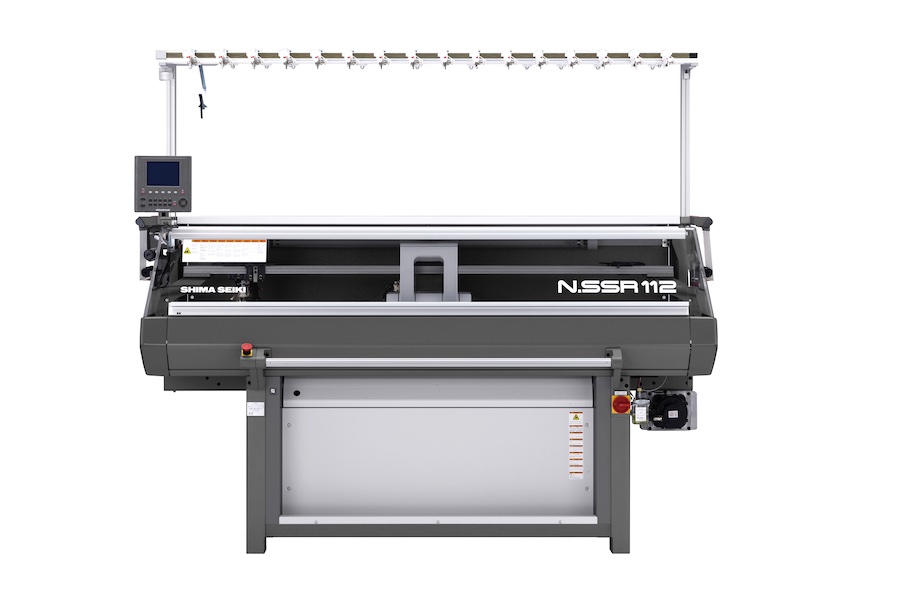
SHIMA SEIKI to showcase flat knitting and digital design solutions at Egypt Stitch & Tex

Leading Japanese computerized flat knitting technologist SHIMA SEIKI MFG., LTD. of Wakayama, Japan, together with its sales representative in Egypt, TTS (EL MASRIA FOR TRADE & TECHNICAL SERVICES), will participate in the upcoming 24th International Exhibition for Textile & Carpet Machineries, Printing Technologies and Accessories (Egypt Stitch & Tex) to be held in Cairo, Egypt this month.

#Raw Materials

Cotton made in Africa puts farmer dialogue at the heart of agricultural training

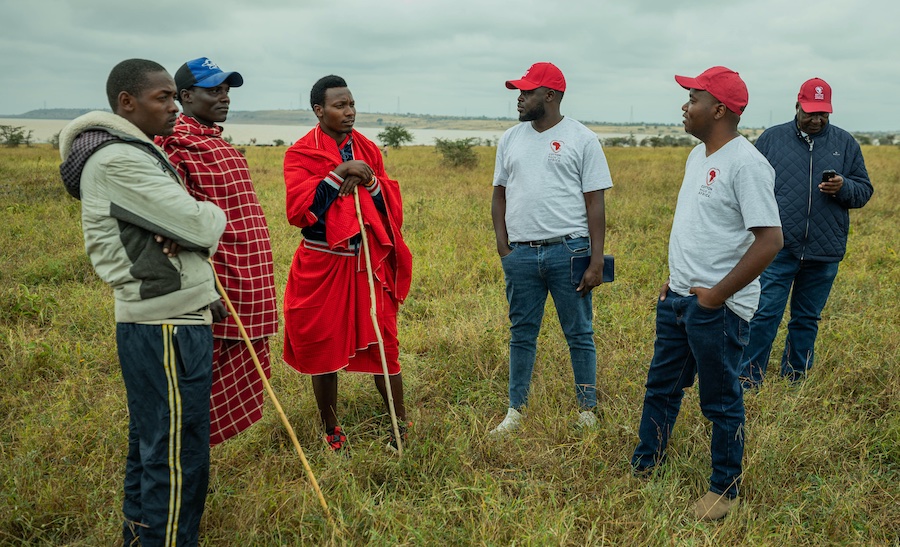
A new manual created by the Aid by Trade Foundation and African People & Wildlife shows how Cotton made in Africa aims to transform cotton cultivation through dialogue rather than directives.

#Industry 4.0 / Digitalization

Coats Digital launches AI-powered GSD RealMotion for motion analysis

Coats Digital has launched GSD RealMotion, an AI-powered solution designed to provide apparel manufacturers with greater visibility into factory-floor operations. By analysing shop-floor video and applying Coats Digital’s GSD methodology, the solution turns video recordings into structured, motion-by-motion method studies.

#Textile chemistry

Archroma and Lameirinho partner in pioneering deployment of InOneGO single-step dyeing

Archroma, a global leader in specialty chemicals, and Lameirinho, a leading home textiles manufacturer based in Portugal, are collaborating to bring InOneGO by Archroma, a new single-step dyeing process, into commercial production. Lameirinho’s first InOneGo bedlinens collection is now available worldwide.

TOP