[pageLogInLogOut]

#Raw Materials

Better Cotton Initiative opens enrollment in the US with promising opportunities for producers
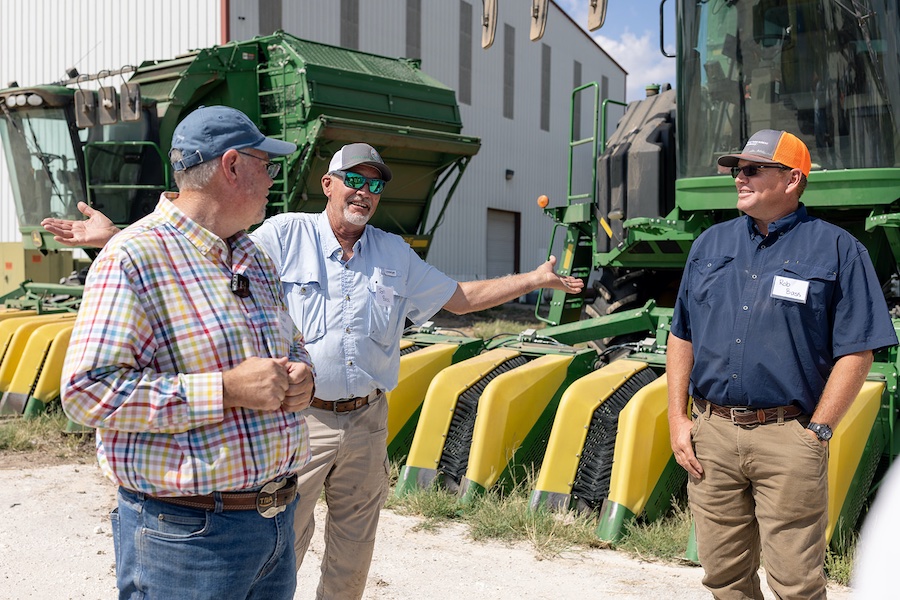
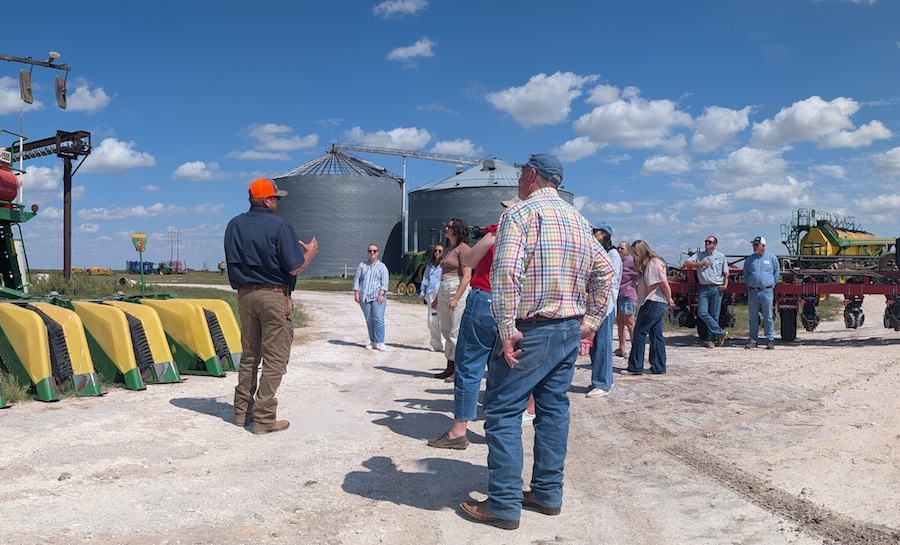
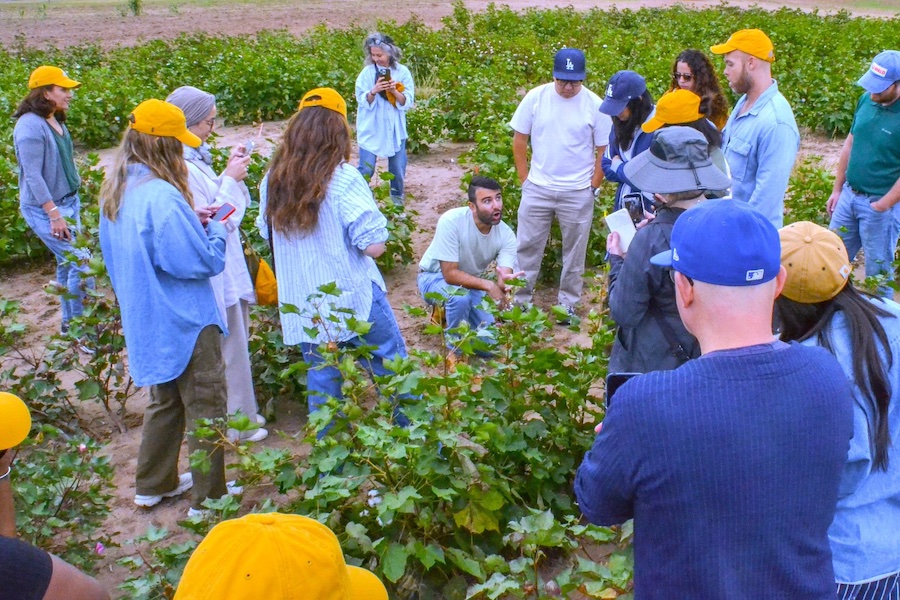
Photo credit: BCI/Katrina McArdle Photography. Location: Plainview, Texas, USA, 2025. Description: Todd Straley, Jon Bass & Rob Bass of Quarterway Cotton Growers.
Producer enrollment for the US Program of the Better Cotton Initiative (BCI) is open until May 15 for the 2026-2027 season. With over 2,600 members spanning the cotton supply chain and more than 11,000 users of its Better Cotton Platform (BCP) as of 2025, BCI’s standard is implemented in 15 countries and covers one fifth of global cotton production.


Those interested in working with BCI can fill a brief Producer & Program Partner Interest Survey or learn more about the US Program below.

BCI‘s farm-level standard is built on regenerative environmental and social principles including farm and labor management, soil health, biodiversity, water management, and crop protection. The organization is funded primarily by its supply chain membership through annual fees and additional program investment based on BCI volumes purchased. Most BCI-Certified Producers pay no certification fees.

Working with BCI increases market entry opportunities with exposure to a global network of over 300 retailers and brands who source BCI cotton, along with access to resources and industry recognition. BCI certification further enables producers to market their fiber as BCI Cotton globally. By implementing practices which meet BCI’s criteria – practices many already employ on their farms – producers also stand to benefit from cost savings and farm resilience while contributing to positive environmental impacts.

In 2025, BCI released its 10-Year US Impact Report showcasing regional data insights, production statistics and special features on the US Program’s vast network of collaborators.

Current opportunities for US Producers

Producers working with BCI are at the heart of its mission. In the US, the program is now offering additional assistance beyond certification activities, at no financial cost to the producer.

Conservation planning: BCI is now working with individual BCI-Certified Producers to develop individualized conservation plans. These plans can help cotton producers assess soil health, IPM tactics, and other resources concerns and access USDA funding, including the new NRCS regenerative agriculture program. In addition, the plans help BCI producers comply with its standard and navigate additional regulations like new EPA pesticide rules.Learn about producer Terry Fuller and his experience with BCI Conservation Planning.

On-farm innovation projects: BCI’s US Program offers limited funding for producers to field test innovative, regenerative practices on their farms. The program helps support producers like fifth-generation North Carolina farmer Zeb Winslow who are testing new approaches on their farms to ensure profitable and resilient systems.

Carbon programs by Indigo Ag: BCI-Certified Producers may also be eligible to participate in Indigo Ag’s Carbon program, which is inclusive of multiple crops, recognizes practices many are already implementing, and returns 75% of the carbon credit purchase price to the producer. BCI is also working with Indigo Ag on its Source program to develop a way for Retailer and Brand Members to purchase carbon reductions and removals in their supply chains.

Building connections across the globe: BCI works to connect cotton producers with advocates, buyers and fellow producers to forge a strong network. BCI-Certified Producers and Program Partners regularly meet both virtually and in person to share challenges and new ideas.

US producers are invited to fill out this brief interest survey with their basic farm info, or reach out to us.team@bettercotton.org to learn more about any of these programs.

https://survey.alchemer.eu/s3/90892812/Interest-Survey

More News from Better Cotton

More News on Raw Materials

#Raw Materials

China projected to increase cotton production, yields, and imports in 2026/27

World cotton production in the 2026/27 season is projected at 25.9 million tonnes, exceeding global consumption of 25.2 million tonnes, according to the May 2026 issue of Cotton This Month. That means both production and consumption are expected to remain close to current season levels, while global cotton trade is projected to decline by 2.7% to approximately 9.6-9.7 million tonnes.

#Raw Materials

ICAC launches Carbon Credits Initiative to deliver new income streams to cotton farmers

The International Cotton Advisory Committee (ICAC) has announced a new initiative designed to unlock additional income streams for cotton farmers through participation in carbon credit markets, linking sustainable production practices directly to financial returns.

#Raw Materials

ECCO introduces first shoe featuring innovative protein-based fibre

ECCO, in partnership with Spinnova, announces the launch of the limited edition ECCO BIOM® 720, a first-of-its-kind shoe utilising an often overlooked leather by-product, transformed into a protein-based fibre. The fibres are produced using patented technology that advances material innovation while reducing waste and supporting full resource use across the leather and textile industry.

#Raw Materials

Kraig Biocraft Laboratories reports major progress converting record-setting spider silk cocoon production into reeled silk

Kraig Biocraft Laboratories, Inc. (OTCQB: KBLB) (“the Company”, “Kraig Labs”, or “Kraig’s”), a world leader in spider silk technology*, today announced significant progress in the processing of its recently produced recombinant spider silk cocoons into reeled silk.

Latest News

#INDEX 2026

“We clearly see that reliability, flexibility, service and total cost of ownership are becoming increasingly important again.”

The nonwovens industry continues to face a challenging market environment. Nevertheless, AUTEFA Solutions reports successful projects, new line sales and growing demand for energy-efficient and flexible solutions. In this interview, André Imhof of AUTEFA Solutions talks about competitiveness against Chinese suppliers, new service and recycling concepts, the growing importance of application development and the opportunities created by countercyclical investments.

#INDEX 2026

“Needle punching technology is more universal and sustainable than ever!”

Needle punching technology was long regarded as a rather traditional and comparatively slow technology within the nonwovens industry. In this interview, Johann Philipp Dilo explains why needle punching is more relevant than ever today – ranging from energy efficiency and resource conservation to hygiene applications, new machine concepts and design-oriented nonwoven solutions.

#Research & Development

Textile climate control system in workwear – exhibition at the 2026 SME Innovation Day!

Conventional protective workwear often reaches its limits during strenuous physical activity. In particular, the transport of sweat and excess body heat poses a problem. The German Institutes of Textile and Fiber Research (DITF) conducted research on flow-optimized, air-conducting textile structures that enable targeted climate control directly on the body. These structures can be integrated straight into protective work garments. The textile climate control system supports the body’s natural thermoregulation. This contributes to improved workplace safety and comfort.

#Nonwovens

PET spunbond from China – EDANA welcomes imposition of provisional anti-dumping measures

On 13 May 2026, after eight months of investigation, the European Commission imposed provisional anti-dumping duties of 45.6-50.0% on imports of PET spunbond from China. EDANA welcomes this expression of the Commission’s clear determination to protect EU industries from the unfair trade practices of Chinese producers.

TOP