[pageLogInLogOut]
You can feel it's Benninger!

#Dyeing, Drying, Finishing

Orthopac RVMC-20 plus: German Engineering for Smarter Weft Straightening

Mahlo enhances proven technology with AI-based double scanning
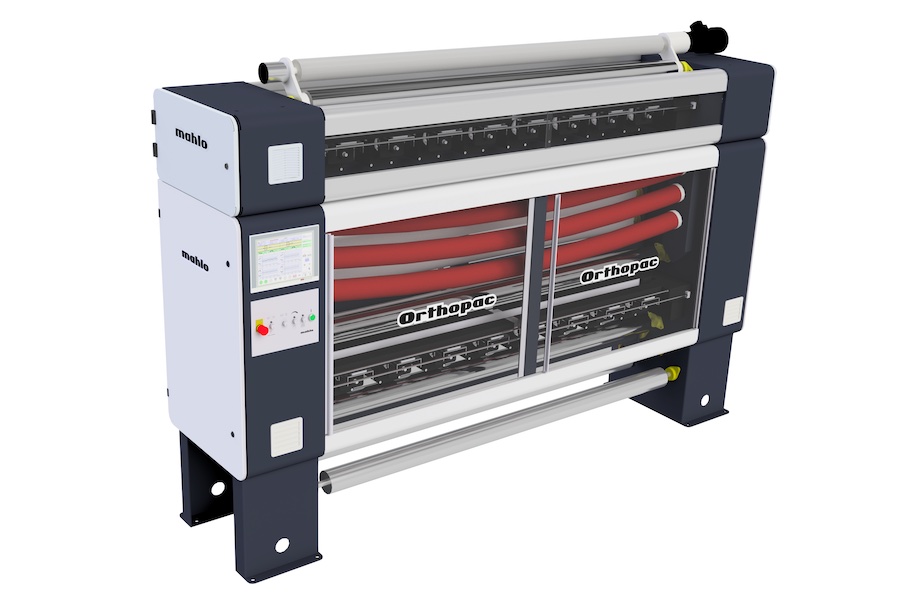
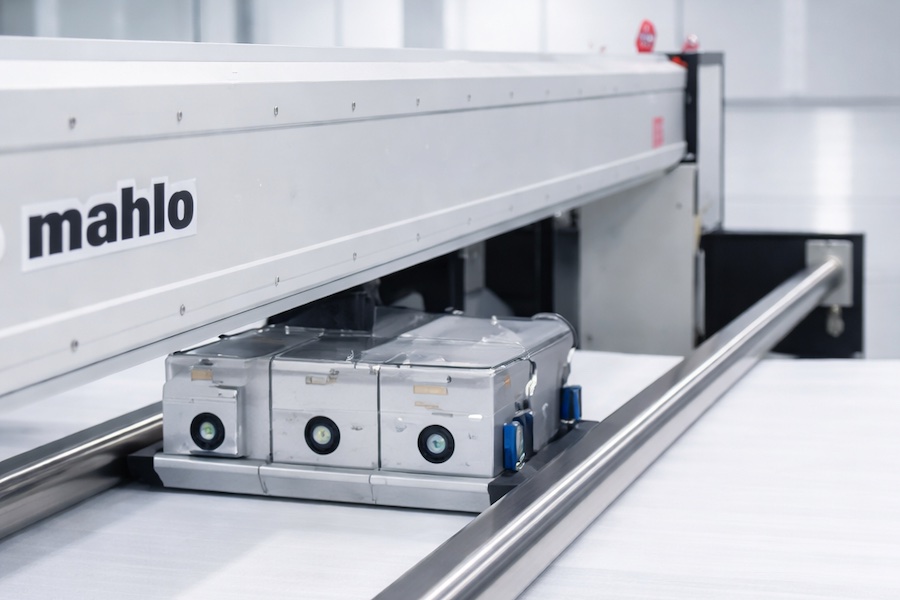
The Orthopac RVMC-20 plus from Mahlo delivers precise weft straightening at high production speeds. © 2026 Mahlo
In times of rising cost pressure and growing quality demands, textile producers worldwide are searching for solutions that combine precision, efficiency, and sustainability. With its latest innovation, the Orthopac RVMC-20 plus, Mahlo once again demonstrates the strength of German engineering: improving proven technology to meet today’s challenges.


For decades, Mahlo has set the benchmark in automatic weft straightening. The new Orthopac RVMC-20 plus continues this tradition, building on the trusted Orthopac RVMC-15 while introducing a decisive technological step forward: double scanning with AI-supported control systems.

The concept relies on two detection units – one at the fabric inlet and one at the outlet. At the inlet, so-called Feed Forward Control analyzes distortions before they even reach the straightening rollers, ensuring precise positioning from the first centimeter. At the outlet, Closed Loop Control continuously monitors the result and applies AI-based corrections in real time. This dual approach enables the system to cope even with highly variable distortions at high production speeds. The outcome is reliably straight fabric, less waste, and consistent premium quality.

Innovation without replacement

A key feature of the RVMC-20 plus lies not only in its precision but also in its retrofit capability. Instead of requiring manufacturers to purchase an entirely new machine, Mahlo has designed the scanning module so that existing Orthopac RVMC-15 systems can be upgraded with minimal effort. By simply adding a second scanning unit, the older equipment is effectively transformed into an RVMC-15 plus – giving customers access to the latest technology without the cost of a full replacement.

The benefits of this approach are clear: upgraded machines deliver higher precision and more consistent results, while reducing waste and saving valuable raw materials. At the same time, extending the service life of existing equipment lowers capital expenditure and supports a more sustainable use of resources. In an industry facing both economic and ecological pressures, this combination of efficiency and responsibility represents a strong competitive advantage.
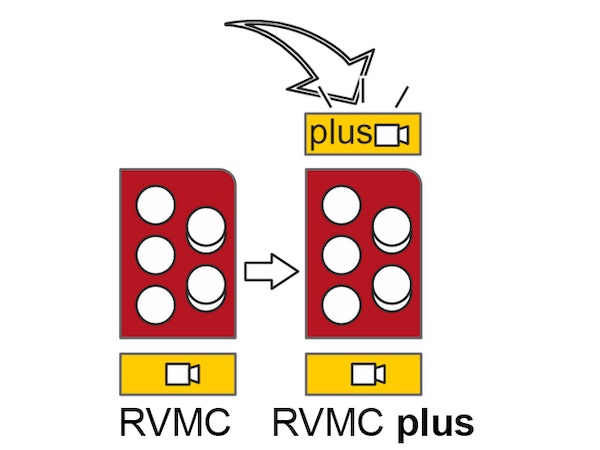
An additional camera at the fabric outlet enables AI-supported closed-loop control for real-time correction. © 2026 Mahlo


A global opportunity

With thousands of Orthopac systems already in use worldwide, the RVMC-20 plus offers a compelling proposition to textile manufacturers across markets. Every installed RVMC-15 now presents an opportunity for modernization. For customers, this means a reliable path toward improved quality and cost efficiency. For Mahlo, it strengthens the company’s position as a long-standing partner to the textile industry.

Sales Director Thomas Höpfl summarizes the philosophy behind the development: “Innovation doesn’t always mean starting from scratch. With the RVMC-20 plus, we’ve shown that progress can also mean making the best even better – smarter, more precise, and more sustainable.”

More News from Mahlo GmbH + Co. KG

#Dyeing, Drying, Finishing

Smart Quality Control for Technical Textiles

In the end, what matters is the result: a filter that performs reliably, a membrane that remains stable in storm conditions, a composite material with precisely defined properties. But the path to achieving this is demanding. In the production of technical textiles, numerous parameters interact – and even the smallest deviations can have major consequences.

#Advertorial

New Gravimax MMX-R X-ray sensor platform opens up new application fields

The demands placed on quality control in web-based production processes are increasing: materials are becoming more complex, basis weights are varying more widely, and at the same time, pressure is growing to make processes more efficient and transparent. Precise measurement data across the entire web width has therefore become a key factor in ensuring stable production processes. With its new Gravimax MMX-R sensor platform, Mahlo introduces a radiometric measurement solution designed to set new standards in determining basis weight and material composition. The platform combines advanced X-ray technology with newly developed signal processing, enabling measurement tasks that previously often required multiple sensor technologies.

#Dyeing, Drying, Finishing

Stefan Moll becomes new CEO of the machinery manufacturer

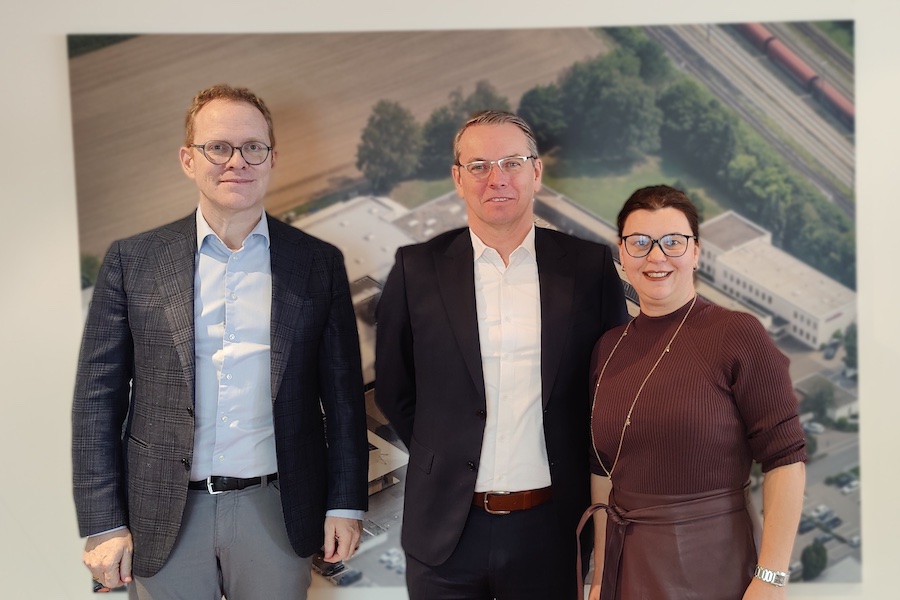
Starting January 1, 2026, Stefan Moll will take over the management of Mahlo GmbH + Co. KG, the world’s leading provider of measurement and control technology for web-shaped materials. With this move, Mahlo is focusing on the long-term safeguarding of its market position and technological leadership. The current CEO, Rainer Mestermann, will leave the company after 14 years as part of a planned succession arrangement.

#Dyeing, Drying, Finishing

Knitex Industries Ltd. (Mondol Group) invests in advanced Mahlo technology

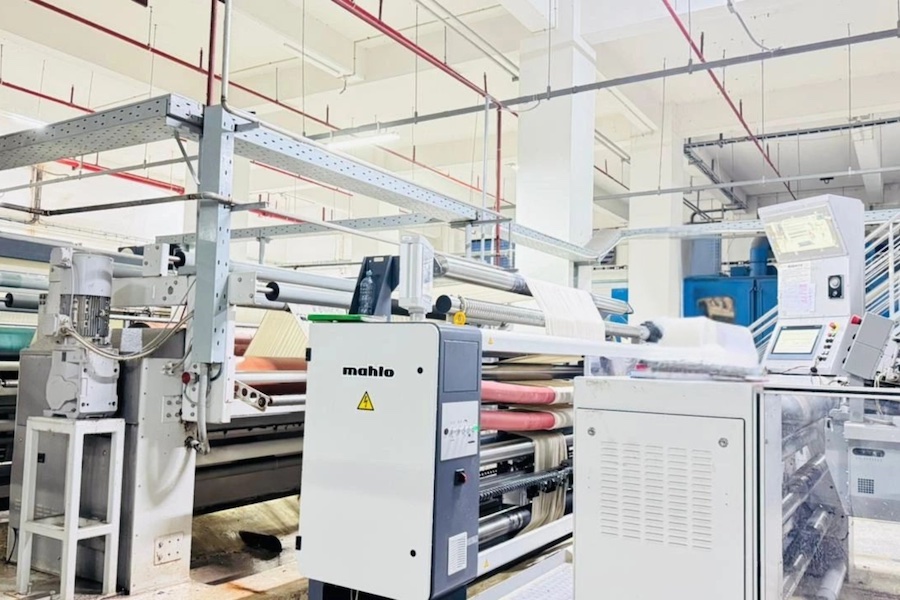
Bangladesh’s Knittex Industries Ltd. is known for its commitment to top-quality knitwear and responsible produc-tion. To further enhance fabric quality, the company has invested in a Mahlo Orthopac RVMC-15 weft straightener. Installed by Tootal Quality Resources, the system ensures perfect fabric alignment and supports Knittex’s goal of continuous improvement.

More News on Dyeing, Drying, Finishing

#ITM 2026

The address for environmentally friendly dyeing and finishing systems: ITM 2026

Dyeing and finishing technologies, one of the most critical and value-added areas of the textile sector, have gained strong growth momentum on a global scale. Technologies that are pioneers of this transformation focused on sustainability, quality and efficiency will meet with sector professionals at the ITM 2026 International Textile Machinery Exhibition. Dyeing and Finishing Hall (11–12) will host the latest technologies that increase efficiency, optimize resource use and reduce environmental impact in textile finishing processes.

#Techtextil 2026

iNTERSPARE presents latest developments and upgrade solutions for technical textile finishing at Techtextil

iNTERSPARE Textilmaschinen GmbH will present its latest solutions for technical textile finishing at Techtextil 2026 in Frankfurt (VDMA joint stand, Hall 12 / Stand C55A). The focus will be on further developments within the Krantz, Artos and Babcock (BTM) product lines, in particular the Krantz K30 stenter as well as the reintroduction of the Artos Vari-Flex foulard. The presentation will be complemented by modular solutions for upgrading existing installations and new approaches in automation and digitalization.

#Techtextil 2026

Sedo Treepoint will exhibit smart technologies for technical textile production

As technical textile production becomes increasingly complex and sustainability requirements intensify, digital integration is evolving from an efficiency tool into a strategic task. At Techtextil 2026 (April 21–24, Frankfurt am Main), Sedo Treepoint will present smart digital systems designed to address the demanding production environments of technical textile manufacturing. The company’s focus will be on practical technologies that enhance process transparency, reproducibility, and efficient resource use. Visitors will meet Sedo Treepoint in Hall 12, Booth D05.

Latest News

#INDEX 2026

“We clearly see that reliability, flexibility, service and total cost of ownership are becoming increasingly important again.”

The nonwovens industry continues to face a challenging market environment. Nevertheless, AUTEFA Solutions reports successful projects, new line sales and growing demand for energy-efficient and flexible solutions. In this interview, André Imhof of AUTEFA Solutions talks about competitiveness against Chinese suppliers, new service and recycling concepts, the growing importance of application development and the opportunities created by countercyclical investments.

#INDEX 2026

“Needle punching technology is more universal and sustainable than ever!”

Needle punching technology was long regarded as a rather traditional and comparatively slow technology within the nonwovens industry. In this interview, Johann Philipp Dilo explains why needle punching is more relevant than ever today – ranging from energy efficiency and resource conservation to hygiene applications, new machine concepts and design-oriented nonwoven solutions.

#Research & Development

Textile climate control system in workwear – exhibition at the 2026 SME Innovation Day!

Conventional protective workwear often reaches its limits during strenuous physical activity. In particular, the transport of sweat and excess body heat poses a problem. The German Institutes of Textile and Fiber Research (DITF) conducted research on flow-optimized, air-conducting textile structures that enable targeted climate control directly on the body. These structures can be integrated straight into protective work garments. The textile climate control system supports the body’s natural thermoregulation. This contributes to improved workplace safety and comfort.

#Nonwovens

PET spunbond from China – EDANA welcomes imposition of provisional anti-dumping measures

On 13 May 2026, after eight months of investigation, the European Commission imposed provisional anti-dumping duties of 45.6-50.0% on imports of PET spunbond from China. EDANA welcomes this expression of the Commission’s clear determination to protect EU industries from the unfair trade practices of Chinese producers.

TOP