[pageLogInLogOut]

#Natural Fibers

Better Cotton Initiative marks World Cotton Day with launch of innovative product label
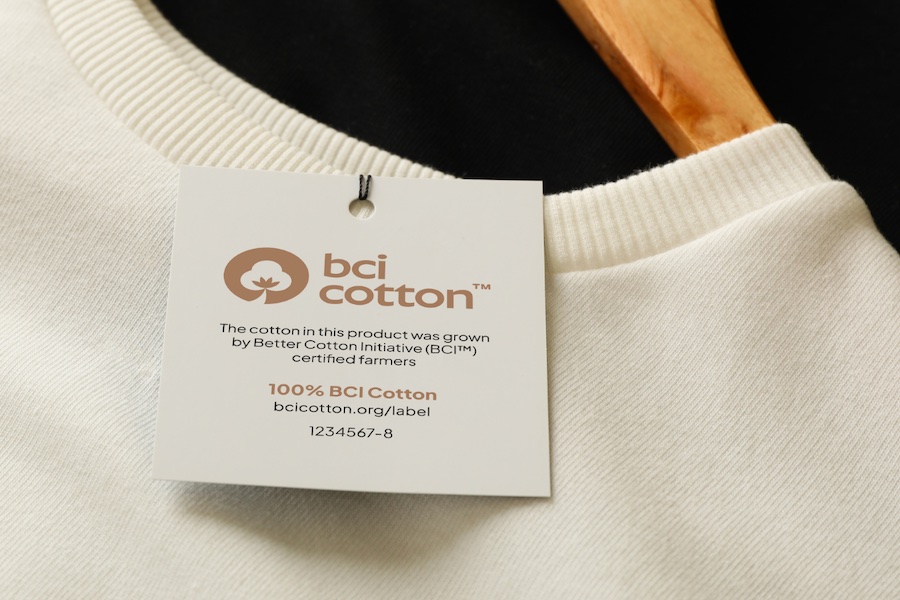
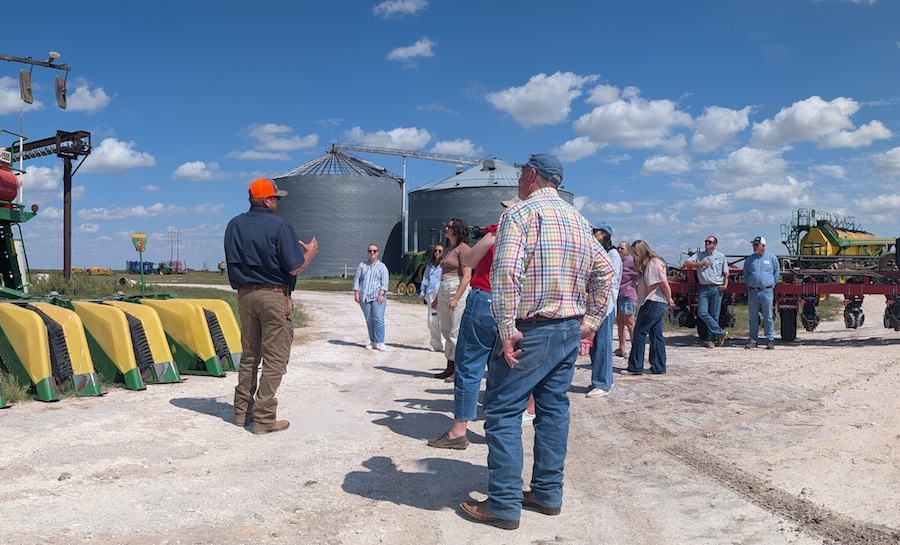
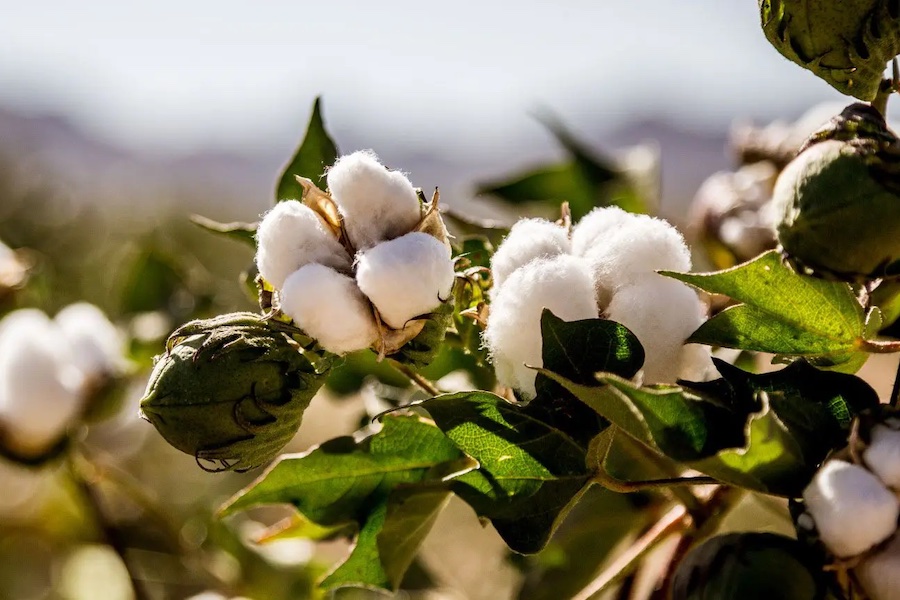
The Better Cotton Initiative (BCI) has launched an innovative product label for the fashion and textile sectors which allows retailer and brand members to provide consumers with greater clarity about the origin and percentage of BCI Cotton in their products.
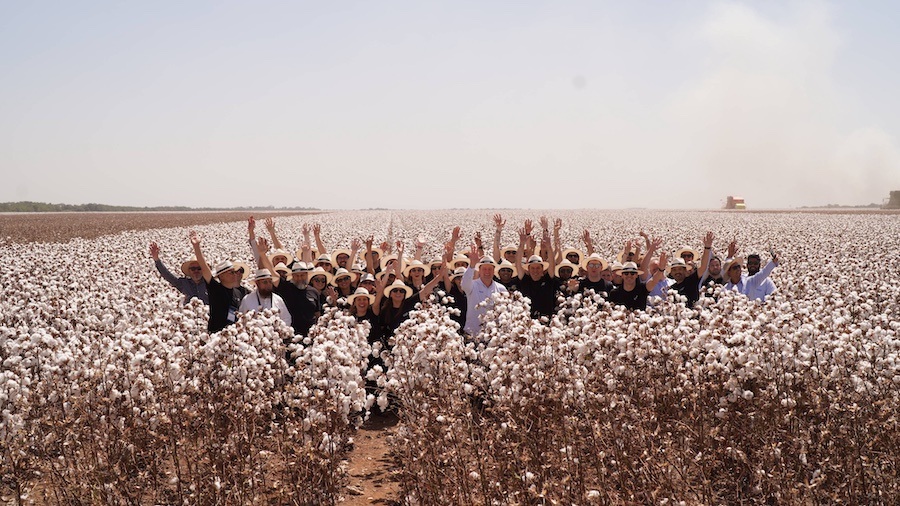
© 2025 BCI
© 2025 BCI


The new label, launched on this year’s World Cotton Day, will enable retailers and brands to claim with confidence that their products contain physical BCI Cotton, certified by a third-party body, that has been traced from its country of origin. The label is expected to gradually arrive in stores in the coming months. 

Nick Weatherill, CEO at the Better Cotton Initiative, said: “In a time of increasing scrutiny around sustainability claims, global trade pressures, and shifting Environmental, Social, and Governance (ESG) priorities, transparency and accountability are more critical than ever. 

“As we celebrate World Cotton Day, our new label reaffirms our commitment to both, as part of our mission to drive measurable impact and continuous improvement in sustainability across the cotton sector.” 

Alongside the launch of the new label, the organisation has announced that as part of a refreshed brand identity, it will call itself the Better Cotton Initiative (BCI), a move that provides more clarity to both its institutional identify and the cotton it sources, now to be called BCI Cotton. The new label and brand come as the Better Cotton Initiative publishes its 2024/2025 Annual Report, highlighting the impact of its programmes over more than 15 years in driving environmental, social, and economic improvements in cotton farming. This impact includes: 

+++ Improving incomes for more than 650,000 licensed farmers;

+++ Reducing synthetic nitrogen use per kilogram of cotton produced across 2.15 million hectares of land, supporting 700,000 farmers;

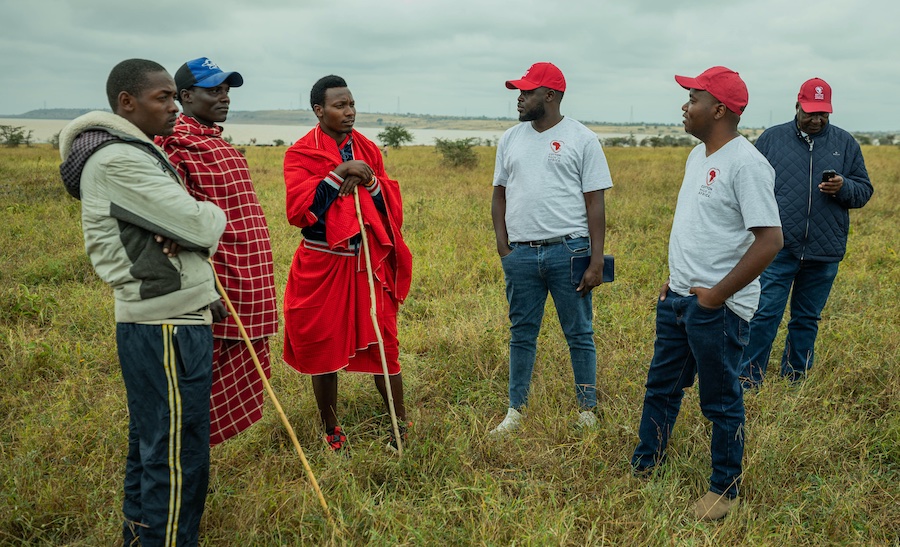
+++ Championing women in cotton by training more than 575,000 female farmers or workers as part of capacity strengthening activities;

+++ Reducing the volume of synthetic pesticide applied per hectare for more than 788,000 licensed farmers. 81% of our licensed farmers do not use Highly Hazardous Pesticide (HHP).

Nick Weatherill added: “These results represent real change in cotton farming communities around the world. Both our new label and annual report are more than updates, they are evidence of our steadfast determination to catalyse and scale sustainable practices in cotton production. We are proud of our progress but also recognise there is much more to do. Time is of the essence, and with our multistakeholder membership and network of field-level partners, I’m confident we will rise to the challenge.”
More News from Better Cotton

#Raw Materials

Better Cotton Initiative strengthens regenerative focus in standard update

The Better Cotton Initiative (BCI) has strengthened the regenerative focus of its field-level standard with the launch of a new version of its Principles & Criteria (P&C), which marks the next step in the organisation’s journey to becoming a regenerative standards system.

#Raw Materials

Better Cotton Initiative marks certification anniversary with progress update and accreditation

One year since becoming a certification scheme, the Better Cotton Initiative (BCI) has announced that more than 3,000 supply chain actors have been certified. At farm level, more than 30% of farms and producer units supplying BCI Cotton have received a positive audit outcome.

#Raw Materials

Better Cotton Initiative opens enrollment in the US with promising opportunities for producers

Producer enrollment for the US Program of the Better Cotton Initiative (BCI) is open until May 15 for the 2026-2027 season. With over 2,600 members spanning the cotton supply chain and more than 11,000 users of its Better Cotton Platform (BCP) as of 2025, BCI’s standard is implemented in 15 countries and covers one fifth of global cotton production.

#Natural Fibers

Better Cotton Initiative partners with Uzbek government agency to offset certification costs

The Better Cotton Initiative (BCI) has today announced a strategic agreement with Uzbekistan’s Light Industry Agency to increase financial support for cotton farming clusters adopting sustainable agricultural practices.

More News on Natural Fibers

#Research & Development

Regional hemp bast for lightweight construction profiles

The cultivation of fibre hemp for the production of ropes and clothing has a long tradition in Saxony. Due to its excellent fibre properties, it is also suitable as a renewable raw material for reinforcement in fibre composites. At the STFI and IWU in Chemnitz, the CannaPul project is cur- rently investigating how a regional value chain for hemp-based lightweight construction profiles can be established. To this end, the technical processing of hemp fibres into continuous fibre strands and their embedding in a suitable bio-based matrix are being investigated.

#Raw Materials

China projected to increase cotton production, yields, and imports in 2026/27

World cotton production in the 2026/27 season is projected at 25.9 million tonnes, exceeding global consumption of 25.2 million tonnes, according to the May 2026 issue of Cotton This Month. That means both production and consumption are expected to remain close to current season levels, while global cotton trade is projected to decline by 2.7% to approximately 9.6-9.7 million tonnes.

#Raw Materials

ICAC launches Carbon Credits Initiative to deliver new income streams to cotton farmers

The International Cotton Advisory Committee (ICAC) has announced a new initiative designed to unlock additional income streams for cotton farmers through participation in carbon credit markets, linking sustainable production practices directly to financial returns.

#Raw Materials

Kraig Biocraft Laboratories reports major progress converting record-setting spider silk cocoon production into reeled silk

Kraig Biocraft Laboratories, Inc. (OTCQB: KBLB) (“the Company”, “Kraig Labs”, or “Kraig’s”), a world leader in spider silk technology*, today announced significant progress in the processing of its recently produced recombinant spider silk cocoons into reeled silk.

Latest News

#INDEX 2026

“We clearly see that reliability, flexibility, service and total cost of ownership are becoming increasingly important again.”

The nonwovens industry continues to face a challenging market environment. Nevertheless, AUTEFA Solutions reports successful projects, new line sales and growing demand for energy-efficient and flexible solutions. In this interview, André Imhof of AUTEFA Solutions talks about competitiveness against Chinese suppliers, new service and recycling concepts, the growing importance of application development and the opportunities created by countercyclical investments.

#INDEX 2026

“Needle punching technology is more universal and sustainable than ever!”

Needle punching technology was long regarded as a rather traditional and comparatively slow technology within the nonwovens industry. In this interview, Johann Philipp Dilo explains why needle punching is more relevant than ever today – ranging from energy efficiency and resource conservation to hygiene applications, new machine concepts and design-oriented nonwoven solutions.

#Research & Development

Textile climate control system in workwear – exhibition at the 2026 SME Innovation Day!

Conventional protective workwear often reaches its limits during strenuous physical activity. In particular, the transport of sweat and excess body heat poses a problem. The German Institutes of Textile and Fiber Research (DITF) conducted research on flow-optimized, air-conducting textile structures that enable targeted climate control directly on the body. These structures can be integrated straight into protective work garments. The textile climate control system supports the body’s natural thermoregulation. This contributes to improved workplace safety and comfort.

#Nonwovens

PET spunbond from China – EDANA welcomes imposition of provisional anti-dumping measures

On 13 May 2026, after eight months of investigation, the European Commission imposed provisional anti-dumping duties of 45.6-50.0% on imports of PET spunbond from China. EDANA welcomes this expression of the Commission’s clear determination to protect EU industries from the unfair trade practices of Chinese producers.

TOP