[pageLogInLogOut]

#Natural Fibers

"Review" examines the outlooks for seven major cotton producers

The newest issue of Cotton: Review of the World Situation provides an in-depth look at how seven important cotton-producing countries are responding to changing markets, rising production costs, climate pressures, evolving technologies, and growing demands for quality and sustainability.

The July 2026 edition — available free of charge — features reports on the cotton sectors of Uzbekistan, Argentina, Brazil, Spain, the United States, Greece, and Pakistan. Together, the articles illustrate a global industry pursuing greater productivity and value even as weak demand, low prices, competition from synthetic fibers, and unpredictable weather continue to challenge producers.

The issue’s lead article, “Beyond Raw Fiber: Uzbekistan’s Cotton-to-Textile Transformation,” examines the country’s transition from exporting raw fiber toward a more integrated, value-added cotton and textile economy. Uzbekistan has made rapid gains in yield, mechanization, water-saving irrigation, intensive planting, domestic processing, and market reform. Its 2026 plans call for 4.5 million metric tons of seed cotton from 889,500 hectares, while the country continues expanding textile production, traceability, regenerative agriculture, and other sustainability initiatives.

The edition also includes:

“Quality Over Quantity: Argentina’s Cotton at a Turning Point,” which explores how a sharp reduction in planted area, climatic variability, pest pressures, and weakness in the domestic textile sector are increasing the importance of fiber quality and export competitiveness.

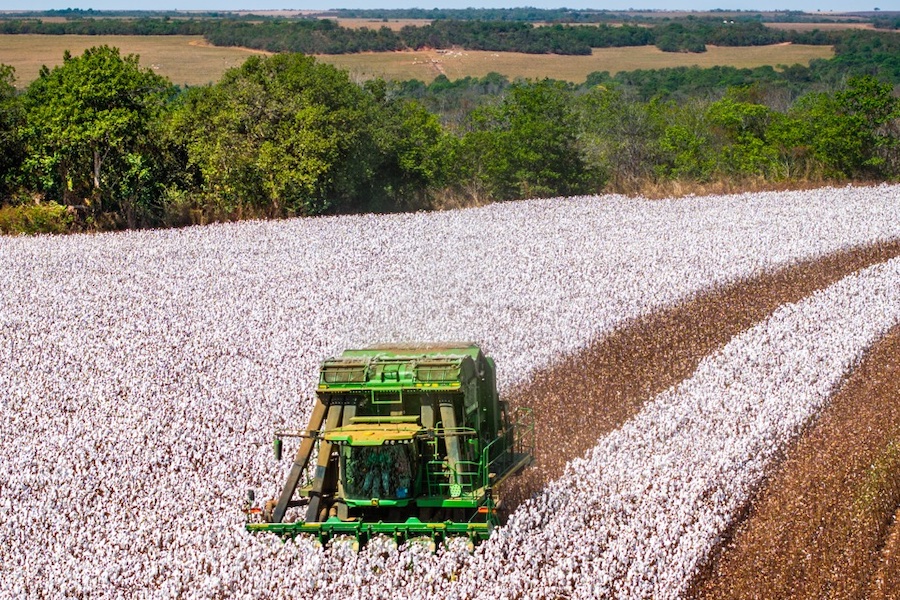
“Production Down, Exports Up: Brazil’s Cotton Resilience,” detailing how the world’s largest cotton exporter is adjusting production following a record crop while maintaining strong export volumes through efficiency, quality assurance, traceability, and an increasingly sophisticated logistics network.

“After the Drought: Spain’s Quality-Led Cotton Recovery,” examining the sector’s rebound from several difficult seasons and its emphasis on certified production, traceability, responsible water use, and the quality advantages associated with European cotton.

“On the Rebound: US Cotton’s Push to Rebuild Demand,” which considers the outlook for American cotton as the sector works to recover production, strengthen domestic and international demand, and reinforce cotton’s position in an increasingly competitive global fiber market.

“Smarter Fiber, Stronger Future: Greece’s Cotton Outlook,” highlighting the country’s export-oriented cotton sector and its efforts to compete through quality differentiation, precision agriculture, improved irrigation efficiency, sustainability, and traceable European production.

“Uneven Recovery: Pakistan’s Cotton Sector Under Pressure,” describing a mixed outlook in which cotton area has declined in Punjab but increased substantially in Sindh. Although production could recover, high input costs, climate risks, competing crops, weak grower incentives, and continued reliance on imported cotton remain significant concerns.

Taken as a whole, the issue shows that there is no single outlook for the global cotton industry. Some countries are expanding exports or domestic textile capacity, while others are confronting falling acreage, production shortfalls, or weaker mill demand. Across nearly every market, however, competitiveness increasingly depends on productivity, fiber quality, sustainability, traceability, technological adoption, and the ability to respond quickly to changing demand.

To view the July 2026 edition of Cotton: Review of the World Situation, please click here:

https://icac.org/wp-content/uploads/2026/07/Review-June-2026.pdf

More News from International Cotton Advisory Committee (ICAC)

#Natural Fibers

Global cotton trade poised for recovery as India and China drive import demand

The July 2026 issue of Cotton This Month highlights a changing global cotton market, with consumption and trade expected to strengthen despite a modest decline in production during the 2026/27 season. The next issue of Cotton This Month will be released on August 1, 2026.

#Natural Fibers

Organic cotton at the crossroads: Ideology, evidence, and the road ahead

Organic cotton occupies one of the most contentious spaces in global agriculture. While praised by brands and consumers for its environmental ideals, it also faces persistent questions about yield stability, certification integrity, and scalability. The current edition of The ICAC Recorder cuts through the ideology to deliver a rigorous, evidence-based assessment of both sides of the debate.

#Raw Materials

CSITC adds ABRAPA as a round trial sample provider

Beginning with the Q2 2026 Round Trials, the ICAC's Committee on the Commercial Standardization of Instrument Testing of Cotton has expanded its sample provision framework by adding the Brazilian Cotton Growers Association (ABRAPA) as an official sample provider.

#Raw Materials

Dr N Vigneshwaran is named 2026 ICAC Researcher of the Year

The International Cotton Advisory Committee (ICAC) is pleased to announce the selection of Dr N Vigneshwaran, Principal Scientist and Head of the Chemical and Biochemical Processing Division at the ICAR–Central Institute for Research on Cotton Technology (ICAR-CIRCOT), Mumbai, India, as the ICAC Researcher of the Year 2026.

More News on Natural Fibers

#Natural Fibers

Better Cotton Initiative multistakeholder event in US unpacks regenerative agriculture potential

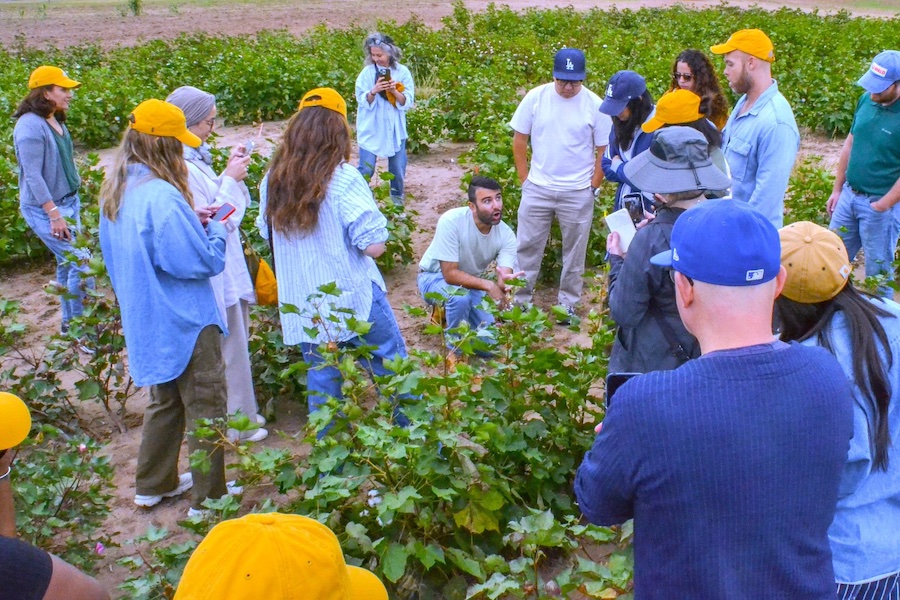
The Better Cotton Initiative (BCI), in collaboration with Texas-based partner, Quarterway Cotton Growers, will expand upon its annual US field event to relay the vast potential of regenerative agriculture through an immersive experience of tours and demonstrations.

#Sustainability

The first widely accessible Life Cycle Assessment study for cashmere production published by Textile Exchange.

Crucial new data to better understand, measure, and address the impacts of cashmere production has been made available to the fashion, textile, and apparel industry through a new Life Cycle Assessment (LCA) published by Textile Exchange.

#Natural Fibers

Woolmark: Merino wool innovation takes centre stage at Pitti Filati with The Wool Lab themes and Journal debut

Woolmark returns to Pitti Filati to lead AW27 sourcing conversations, spotlighting two new The Wool Lab trend-led themes, the debut of The Wool Lab journal for the European and Italian market and a stand centring the role of Merino wool as a high-performance technical fibre.

#Natural Fibers

Cotton made in Africa partners receive top marks in independent verifications

Cotton made in Africa® (CmiA) and CmiA Organic are two internationally recognised standards that aim to promote sustainable development in the African cotton sector south of the Sahara. To ensure the standards’ credibility among brands, retailers, and consumers, independent verifiers evaluate compliance on the ground. The verification results for 2025, now published in the Aggregated Verification & Implementation Report, were very strong: The verifiers awarded consistently very good remarks regarding management, people, prosperity, and the environment.

Latest News

#Sustainability

bluesign appoints Hanane Taidi as CEO to lead next phase of global impact

bluesign, which partners with the textile industry to reduce adverse impact across the value chain, appoints Hanane Taidi as Chief Executive Officer, marking a pivotal moment as the company builds on its leadership amid rapid industry change.

#Textiles & Apparel / Garment

C&S strengthens its governance to support its evolution

C&S announces the appointment of Marco Lucietti to its Board of Directors. With extensive international experience across the textile and denim industries, Lucietti will work alongside CEO Federico Corneli, contributing to the company’s managerial development, organizational structure and long-term strategic direction.

#Recycling / Circular Economy

Industrial scale meets verified governance: RE&UP is now B Corp™ certified

RE&UP, the circular-tech transforming global textile waste into high-volume Next-Gen materials, has officially become a Certified B Corporation™. The milestone establishes the industrial recycler among a select group of manufacturing infrastructure providers verified as meeting B Lab Standards for social and environmental performance, transparency, and accountability.

#Denim

ISKO brings conscious color, texture, and tactile evolution to Bluezone Munich

At Bluezone ISKO is debuting its FW 27–28 Collection, structured around a trio of core sensory pillars: color, texture, and touch. This season, the textile leader showcases a creative vision where emotional connection and advanced technical innovation come together. The entire range is anchored by a dedicated commitment to eco-conscious material creation, utilizing patented processing technologies and high-quality Next-Gen materials powered by RE&UP.

TOP