[pageLogInLogOut]

#Natural Fibers

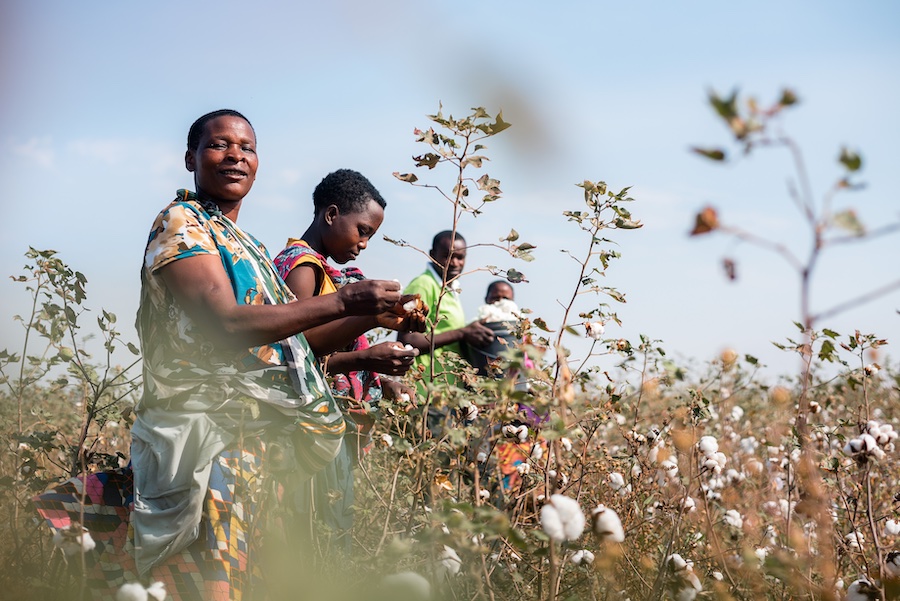
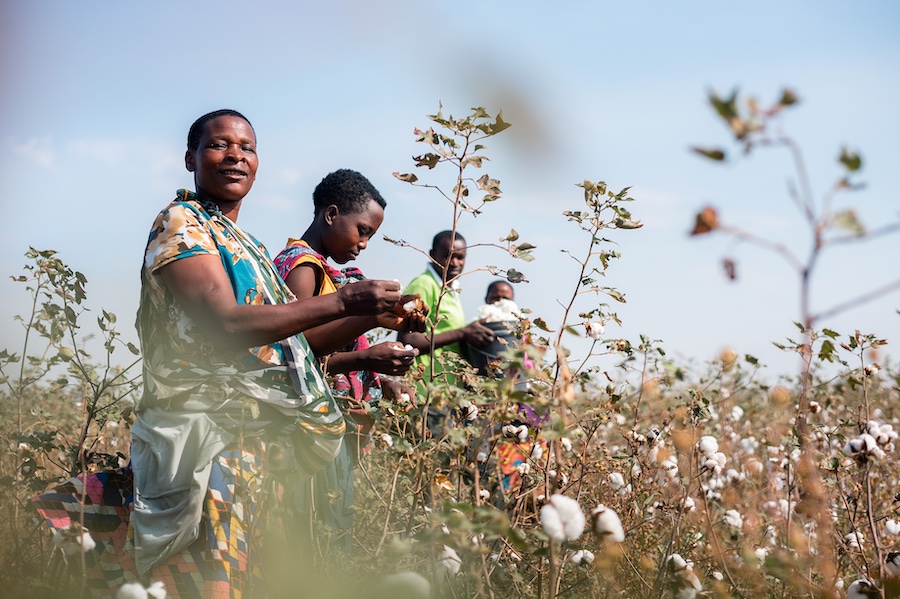
Cotton made in Africa launches public consultation for standard revision
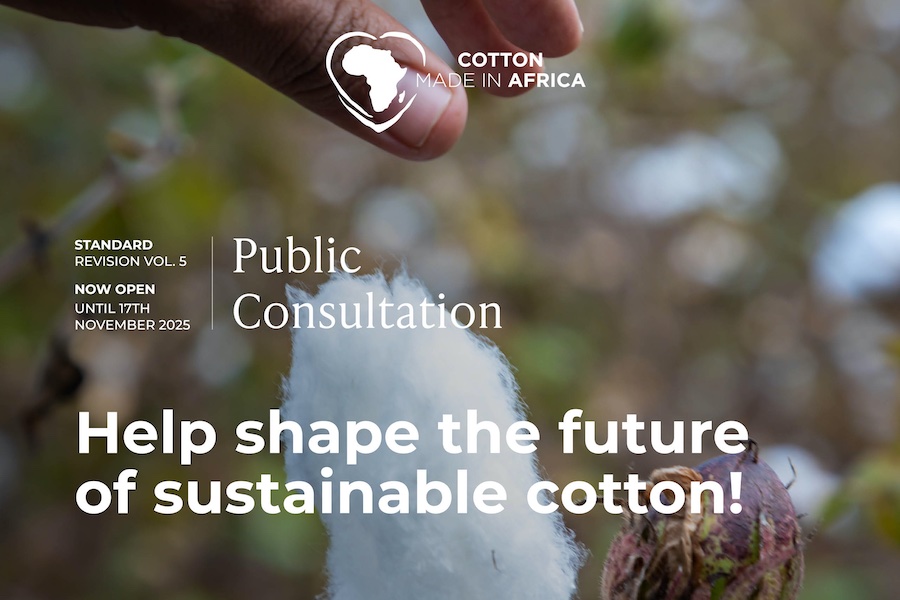
The Aid by Trade Foundation (AbTF) is opening public consultation on its Cotton made in Africa standard today. Interested parties will have 60 days to provide feedback, helping shape the future of one of the world’s largest standards for sustainable cotton. The latest update to the standard, Version 5.0, focusses on increasing Cotton made in Africa’s effectiveness and adapting its criteria and indicators to external factors, which currently include biodiversity loss and a growing set of reporting requirements for companies.
© 2025 Cotton made in Afrika


Public consultation launched on revision of the Cotton made in Africa standard

The public consultation on the draft of CmiA Standard Vol. 5.0 will run from 19 September to 17 November 2025. This revision revolves around three elements in particular. The first is precision, with indicators being reduced in number and reformulated to be more concise and easier to understand. Secondly, the standard’s objectives are being reprioritised, for instance, through new or reformulated indicators that strengthen biodiversity, climate change resilience, or cooperation between cotton companies and farmers. The third point of focus is to ensure that indicators for human rights and risk management meet the increasingly strict requirements regarding due diligence and corporate sustainability reporting. 

“Having received valuable feedback on CmiA Standard Version 4.0 from partners and stakeholders in recent months, we look forward to hearing the public response to our draft of Version 5.0,” says Alexandra Perschau, the head of the Standards & Outreach Department of AbTF, adding, “If this topic interests you, this is an excellent opportunity to actively participate in shaping our approach to supporting small-scale farmers producing cotton in Africa, to protecting biodiversity, and to giving companies access to the sustainable resources they need to fulfil their due diligence obligations.”

How the revision process works

The revision of the standard started in the spring of this year, with a two-day workshop in which partners and stakeholders in Côte d’Ivoire provided important input. Also taken into account were verification results from the last few years as well as additional findings from monitoring and evaluation processes and from innovations in sustainable cotton cultivation. After receiving feedback from the public consultation and from the technical advisory group, the approval of the AbTF Board of Trustees will be sought; if granted, Version 5.0 will enter into force in 2026.

How to participate

Public interest groups are invited to provide online feedback on the draft of CmiA Standard Vol. 5.0 between 19 September and 17 November 2025. A copy of the draft can be downloaded here. General feedback can be sent to standards@abt-foundation.org. To provide detailed feedback on specific standard requirements, an Excel version of CmiA Standard Vol. 5 is available through the online platform indicated above.

https://cottonmadeinafrica.org/en/standard-revision/

More News from Cotton made in Africa (CmiA)

#Natural Fibers

Human Rights Day: Cotton made in Africa reinforces its commitment to ensuring respect for human rights in cotton production

The sustainable cotton standard Cotton made in Africa (CmiA) has always focussed on respect for human rights, including by prohibiting child labour and discrimination. With the new version of the CmiA standard coming into force, AbTF raises requirements for due diligence in the areas of human rights and risk management.

#Raw Materials

EUR 2.8 million project for climate-resilient agriculture in Africa

Healthy soils, responsible water use, and biodiversity conservation are central to the efforts of the Aid by Trade Foundation (AbTF) to make African cotton production more resilient to climate change. AbTF has opened new doors for small-scale farming families in Africa through a EUR 2.8 million project for climate-resilient cotton cultivation. Over the last three years, more than 100,000 farmers in Africa were involved in testing various soil improvement measures, with encouraging results: yields on demonstration sites increased significantly, despite the effects of climate change.

#Raw Materials

Cotton farmers in Benin benefit from organic cotton cultivation

Launched three years ago with EUR 1 million in total volume, a project called “Growing Benin’s Organic Cotton Sector” aimed to support small-scale farmers in transitioning to organic cotton cultivation in accordance with the Cotton made in Africa Organic standard, to avoid the use of synthetic pesticides, and to further develop the organic cotton sector, thereby securing the future of farming communities. The project has proved a success as participating cotton farmers are benefiting from higher incomes.

#Raw Materials

Cotton made in Africa supports the development of West African textile production in Benin

The West African country of Benin is well on its way to establishing itself as a new procurement and production hub for textiles and clothing; these efforts include having locally produced cotton made into textiles for the global market. The Aid by Trade Foundation (AbTF) is supporting this development through Cotton made in Africa (CmiA), one of its sustainability standards, which not only provides a sustainable and local basis for textile production but also facilitates access to international markets. Recently, a delegation of AbTF visited the CmiA project country of Benin for a first-hand look at the progress being made.

More News on Natural Fibers

#Raw Materials

Modern testing methods for raw cotton

The 38th International Cotton Conference Bremen will take place from 25 to 27 March 2026 at the Bremen Parliament. This conference has traditionally stood for in-depth expertise and international exchange. The program will focus on technical innovations, market trends, and regulatory frameworks across the entire value chain – from agriculture to the circular economy. With high-profile speakers, the conference is regarded as the key meeting point for the global cotton industry. Today’s focus: Cotton quality and testing methods.

#Recycled_Fibers

Advancing the future of stretch: Fashion for Good launches new project to validate bio-based and recycled elastane

Launched today, Stretching Circularity is a collaborative project initiated by Fashion for Good dedicated to accelerating the adoption of lower-impact elastane alternatives that are compatible with circular textile systems. By validating bio-based and recycled elastane solutions through pilot-scale testing and demonstrator garments, the initiative aims to remove one of the most significant technical barriers to a circular textile economy.

#Spinning

Perfect quality through collaboration: Machinery from Trützschler, Toyota and Murata at Zirve Tekstil

In today’s textile industry, excellence is not achieved by chance – it’s the result of deliberate decisions, technical expertise, and the courage to go beyond conventional paths. The Turkish company Zirve Tekstil has done just that: by combining the best technologies from Trützschler, Toyota and Murata, they’ve created a production setup that delivers outstanding yarn quality – recognized worldwide.

#Man-Made Fibers

Lenzing AG to become majority owner of TreeToTextile AB and accelerates industrialization of new fibers

The Lenzing Group is taking another strategic milestone by acquiring a controlling majority in the Swedish innovation company TreeToTextile AB. This step strengthens Lenzing’s position as a leading provider of sustainable, wood‑based specialty fibers and expands its innovation pipeline with a highly scalable, patent‑protected technology platform. The transaction is executed through the issuance of new shares.

Latest News

#Recycling / Circular Economy

Circulose restarts commercial-scale production at Ortviken plant in Sundsvall

Circulose today announced the restart of its commercial-scale production plant at Ortviken in Sundsvall, Sweden, marking a significant step in scaling next-generation materials for the global fashion industry. The company plans to resume production of CIRCULOSE®, a recycled pulp made entirely from discarded cotton textiles, in the fourth quarter of 2026.

#Textiles & Apparel / Garment

VIATT 2026 to debut German Pavilion, strengthening European participation alongside key Asian textile hubs

Vietnam’s textile and garment sector continues to be a major contributor to the country’s economic growth, with export revenues expected to reach USD 46 billion in 2025, a 5.6% increase from 2024 . From 26 – 28 February, the Vietnam International Trade Fair for Apparel, Textiles and Textile Technologies (VIATT) is set to contribute to economic growth opportunities by accelerating digital transformation and green transition across the entire textile value chain. The upcoming edition will respond to the rising demand for advanced technologies and sustainable materials with the introduction of the German Pavilion, alongside strong exhibitor participation from key Asian sectors, as well as several high-profile fringe events.

#Sustainability

Ying McGuire becomes new CEO of Cascale

Cascale today announced the appointment of Ying McGuire as Chief Executive Officer, effective June 1, 2026.

#Technical Textiles

Sustainable, lightweight, and sound absorbing: Polyester-based front trunk solution for BEVs

As car manufacturers look to further reduce their carbon footprint, Autoneum has developed an innovative front trunk solution for battery electric vehicles (BEVs), made entirely from polyester-based textile. The Ultra-Silent Frunk offers significant weight reduction, improved acoustic and thermal insulation, and uses up to 70 percent recycled material, supporting sustainable and efficient vehicle design. Autoneum, global technology leader in acoustic and thermal management for vehicles, has already received orders for the new frunk from three major OEMs in Asia and Europe to be built in three BEV models. Series production for two BEVs has been underway in China and Germany since last year.

TOP