[pageLogInLogOut]

#Textile chemistry

Commission strengthens Europe's chemical industry

Today, the European Commission presented an Action Plan for the Chemicals Industry to strengthen the competitiveness and modernisation of the EU chemical sector. The Action Plan addresses key challenges, namely high energy costs, unfair global competition, and weak demand, while promoting investment in innovation and sustainability. The Action Plan is accompanied by a simplification omnibus on chemicals – the sixth that the Commission has presented in this mandate so far – to further streamline and simplify key EU chemicals legislation, alongside a proposal to strengthen the governance and financial sustainability of the European Chemicals Agency (ECHA).

Stéphane Séjourné, Executive Vice-President for Prosperity and Industrial Strategy, says: "Chemicals is the mother of all industries, with over 96% of manufactured goods relying on chemicals. Today’s action plan on chemicals is our business plan to secure this critical sector’s future in Europe. It includes all levers to put the sector back on a growth track, from production-support measures to keep our steam-crackers and chemical sites in Europe, to trade defence instruments to protect our chemical businesses from unfair global competition, all the way to securing domestic demand for clean & “made in Europe” chemicals. "

The Action Plan proposes the following measures: 

Resilience and level playing field: The Commission will establish together with Member States and stakeholders a Critical Chemical Alliance to address the risks of capacity closures in the sector. The Alliance will identify critical production sites needing policy support and tackle trade issues like supply chain dependencies and distortions. The Commission will also swiftly apply trade defence measures to ensure fair competition, while expanding chemical import monitoring through the existing Import Surveillance Task Force. The Alliance will align investment priorities, coordinate EU and national projects, including Important Projects of Common European Interest (IPCEIs) and support EU critical production sites to boost innovation and regional growth.

Affordable energy and decarbonisation: The Commission will implement at full speed the Affordable Energy Action Plan to help reduce high energy and feedstock costs. It has introduced clear rules for low-carbon hydrogen and will update state aid to lower electricity costs for more chemical producers by the end of the year. The plan also encourages using clean carbon sources like carbon capture, biomass, and waste, alongside support for renewables. A public consultation on improving chemical recycling has also been launched today.

Lead markets and innovation: The Action Plan highlights fiscal incentives and tax measures to boost demand for clean chemicals. The upcoming Industry Decarbonisation Accelerator Act will set EU content and sustainability rules to support market growth and clean technology investment. The upcoming Bioeconomy Strategy and Circular Economy Act will boost the EU's resource efficiency, chemicals recycling, and strengthen the market for bio-based and recycled alternatives to fossil-based inputs. The Commission will also launch EU Innovation and Substitution Hubs and mobilise EU funding under Horizon Europe (2025–2027) to accelerate the development of safer, more sustainable chemical substitutes.

Taking action on per- and polyfluoroalkyl substances (PFAS): The Action Plan reaffirms the Commission's commitment to minimise PFAS emissions through a robust, science-based restriction, while ensuring continued use in critical applications under strict conditions where no alternatives are available which will be proposed swiftly after ECHA's opinion. The Commission will also invest in innovation, promote remediation based on the polluter pays principle, and prioritise the development of safer alternatives.

Simplification

As part of its ongoing efforts to boost the EU's competitiveness, the Commission adopted a sixth simplification omnibus to reduce compliance costs and administrative burden for the chemical industry while ensuring strong protection of human health and the environment. This includes simplifying hazardous chemical labelling rules, clarifying EU cosmetics regulations, and easing registration for EU fertilising products by aligning information requirements with standard REACH rules for chemicals. These measures are expected to save at least €363?million annually for the industry. 

The proposal for the ECHA Basic Regulation equips ECHA with the resources, flexibility, and structural adaptations required to fulfil the duties under its growing mandate, which now includes responsibilities under multiple EU regulations, namely spanning classification and labelling, biocidal products, import and export of hazardous chemicals, waste management and water. 

The chemicals sector is vital to Europe's economy, underpinning the manufacture of almost all goods. It provides essential materials and technologies to industries that support the welfare, security and resilience of European economies, including automotive, construction, healthcare, agriculture, clean technologies and defence.

More News from European Commission

#Europe

EU and Australia strengthen relations with Security and Defence Partnership and Trade Agreement

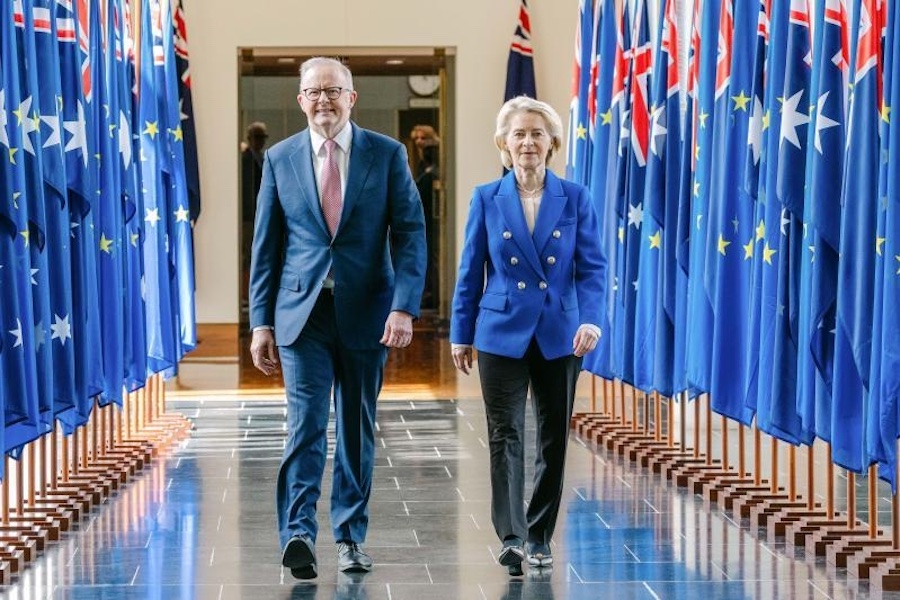
The EU and Australia have today announced the adoption of a groundbreaking Security and Defence Partnership. They have also concluded negotiations for an ambitious and balanced free trade agreement (FTA) and agreed to launch formal negotiations for the association of Australia to Horizon Europe, the world's largest funding programme for research and innovation. With these steps, the EU and Australia are delivering mutually beneficial outcomes and further reinforcing their already close relations in a time of geopolitical uncertainty.

#Europe

Commission presents proposal for EU Inc. - unlocking the full potential of the Single Market for Europe's entrepreneurs

Today, the European Commission presented its proposal for EU Inc., a new single set of corporate rules, building the cornerstone and starting point for the EU's 28th regime. EU Inc. is an optional, digital-by-default European corporate framework. It will make it easier for businesses to start, operate and grow across the EU – incentivising them to stay in Europe, and encourage those who once looked elsewhere to return.

#Europe

New EU rules to stop the destruction of unsold clothes and shoes

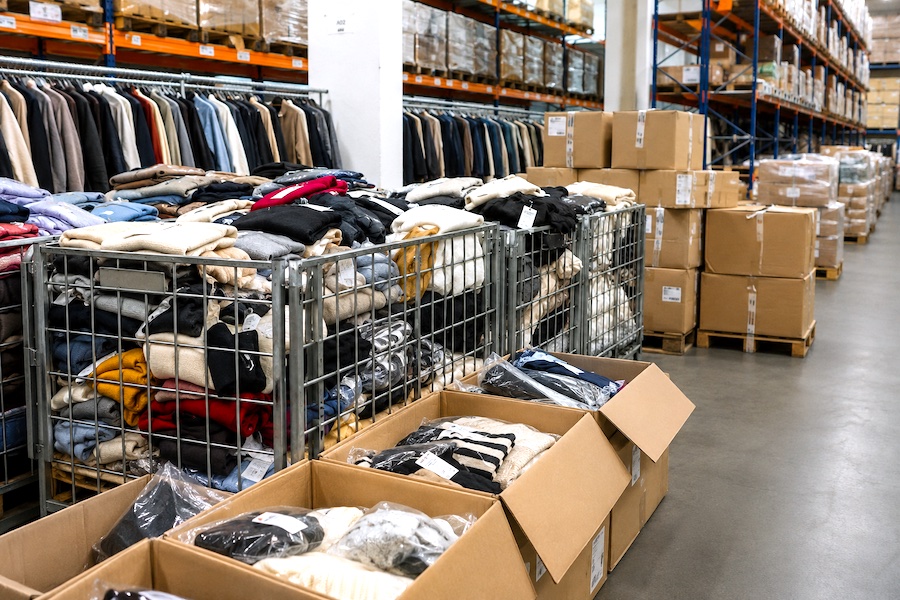
The European Commission today (Feb 9) adopted new measures under the Ecodesign for Sustainable Products Regulation (ESPR) to prevent the destruction of unsold apparel, clothing, accessories and footwear.

#Europe

Commission adopts a first-ever EU Visa Strategy

Today, the European Commission is adopting its first-ever EU Visa Strategy. It sets out a framework for a visa policy that is more strategic and that advances the EU's long-term interests, allowing it to be better equipped for growing mobility as well as the consequences of regional instability and geopolitical competition.

More News on Textile chemistry

#Sustainability

bluesign technologies introduces bluepass

bluesign technologies ag (www.bluesign.com) today announces the launch of bluepass, a new certification mark and product labeling system created to deliver clear, substantiated, and verifiable sustainability claims at scale.

#Textile chemistry

Officina39 expands in South Asia with dual trade show presence and new low-impact dyeing innovation

Officina39 reinforces its strategic expansion in South Asia by announcing its participation in two key textile industry events in Bangladesh and India, alongside the launch of a new solution designed to reduce the environmental impact of reactive dyeing.

#Techtextil 2026

Speed and connectivity: Techtextil and Texprocess provided market-ready solutions for industries under pressure

With more than 36,000 visitors and 1,700 exhibitors from a total of 112 countries, Techtextil and Texprocess 2026 demonstrated how innovation comes into industrial use. The convergence of research, industry and application proved to be a breeding ground for new material solutions, manufacturing and processing technologies. Natural fibres, performance apparel, connected systems and AI-driven processing technologies emerged as key growth and future markets.

#Techtextil 2026

RUDOLF is pioneering the future of technical textiles by developing innovative, functional solutions

At Techtextil 2026, RUDOLF presents its latest innovations for textile auxiliaries, textile care and construction chemicals. Based in Geretsried, Bavaria, the company draws on more than 100 years of experience and continues to position itself as a global technology partner focused on quality, innovation and sustainability.

Latest News

#INDEX 2026

“We clearly see that reliability, flexibility, service and total cost of ownership are becoming increasingly important again.”

The nonwovens industry continues to face a challenging market environment. Nevertheless, AUTEFA Solutions reports successful projects, new line sales and growing demand for energy-efficient and flexible solutions. In this interview, André Imhof of AUTEFA Solutions talks about competitiveness against Chinese suppliers, new service and recycling concepts, the growing importance of application development and the opportunities created by countercyclical investments.

#INDEX 2026

“Needle punching technology is more universal and sustainable than ever!”

Needle punching technology was long regarded as a rather traditional and comparatively slow technology within the nonwovens industry. In this interview, Johann Philipp Dilo explains why needle punching is more relevant than ever today – ranging from energy efficiency and resource conservation to hygiene applications, new machine concepts and design-oriented nonwoven solutions.

#Research & Development

Textile climate control system in workwear – exhibition at the 2026 SME Innovation Day!

Conventional protective workwear often reaches its limits during strenuous physical activity. In particular, the transport of sweat and excess body heat poses a problem. The German Institutes of Textile and Fiber Research (DITF) conducted research on flow-optimized, air-conducting textile structures that enable targeted climate control directly on the body. These structures can be integrated straight into protective work garments. The textile climate control system supports the body’s natural thermoregulation. This contributes to improved workplace safety and comfort.

#Nonwovens

PET spunbond from China – EDANA welcomes imposition of provisional anti-dumping measures

On 13 May 2026, after eight months of investigation, the European Commission imposed provisional anti-dumping duties of 45.6-50.0% on imports of PET spunbond from China. EDANA welcomes this expression of the Commission’s clear determination to protect EU industries from the unfair trade practices of Chinese producers.

TOP