#Techtextil 2026
Innovation as the answer: Techtextil and Texprocess honour solutions to global challenges with the 2026 Innovation Awards

The textile industry and many of its application sectors face unprecedented challenges – the winners of the Techtextil and Texprocess Innovation Awards 2026 provide solutions: How do textile innovations open up new, smart and sustainable applications for aircraft, cars, humanoid robots, surgical sutures and buildings? How can synthetic textiles become circular? How is AI revolutionising the textile value chain? How can dependence on PFAS and fossil-based chemicals be reduced and textile production further automated? The 17 winners of the Techtextil and Texprocess Innovation Awards 2026 provide answers to these and other key questions about the future. They were selected by two renowned expert juries. Their in-depth expertise ensures a reliable evaluation and highlights innovations with particular potential for future growth and transformation.
“We are thrilled by the extraordinary breadth of ideas. They demonstrate that textile innovations are driving forces across numerous industries. At the same time, these new developments are strengthening the future viability of the textile industry. The winners are more international than ever, which confirms the global relevance of our leading trade fairs,” says Sabine Scharrer, Director Brand Management Technical Textiles & Textile Processing at Messe Frankfurt.
Techtextil Innovation Award 2026
Two winners in the ‘New Concept’ category
Northern Lights instead of chemicals: finishing textiles without PFAS
Per- and polyfluoroalkyl substances (PFAS) give technical and outdoor textiles water-, oil- and stain-repellent properties. However, these so-called ‘forever chemicals’ are facing regulatory pressure worldwide due to their environmental and health risks – ranging from EU-wide restrictions to national bans. “EC0Tex” demonstrates that the textile industry is working intensively on PFAS-free finishing alternatives. With the new process, both inelastic and highly elastic yarns can be finished to be permanently water-repellent and quick-drying without the use of PFAS or fresh water. For this, the Swiss yarn manufacturer
Bäumlin & Ernst receives a Techtextil Innovation Award 2026 in the “New Concept” category. The patented EC0Tex process is based on a plasma system developed by the project partner Empa (Swiss Federal Laboratories for Materials Science and Technology). It uses dry plasma – a reactive gas that physically resembles the aurora – to coat every single filament of a yarn with an ultra-thin organosilicon layer. This makes the yarns water-repellent and quick-drying – and, at the end of their life cycle, they break down into silicon dioxide, i.e. sand. “EC0Tex demonstrates that a nanometre-thin plasma coating is sufficient to achieve performance properties that were previously the preserve of PFAS,” says Bernd Schäfer, CEO of Bäumlin & Ernst. Over the next twelve months, the EC0Tex project partners Lothos and Seilfabrik Ullmann plan to launch the first PFAS-free swimming and water sports products. Schäfer says: “For us, the Techtextil Innovation Award is a milestone.”
Textile nanotubes for electric cars, humanoid robots and aircraft
Carbon nanotubes (CNTs) are microscopically small cylinders made of carbon atoms with remarkable properties: they are up to 100 times stronger than steel, electrically conductive and feather-light. Their potential is already being harnessed in lithium-ion batteries, electronics and sports equipment. The South Korean nanotechnology company aweXome Ray now aims to make CNTs usable in the textile industry. To this end, the company has developed a special direct spinning process. For the first time, it transforms CNTs – previously available mainly as powders or pastes – into scalable, textile-compatible continuous filaments and non-woven membranes. These can be processed with textile techniques such as twisting, braiding and laminating. For the innovation “axrial”, aweXome Ray is awarded a Techtextil Innovation Award 2026 in the “New Concept” category. “With axrial, we are bridging the gap between nanotechnology and the textile industry and transforming passive textiles into active electronic and thermal functional components,” says Managing Director Se Hoon Gihm. He founded aweXome Ray with two colleagues from a research laboratory at Seoul National University. Potential applications range from on-board electrical systems in electric cars, aircraft and humanoid robots, to EMI shielding, seat heating systems and smart textiles. Initial research collaborations with a major car manufacturer and an aerospace company are already underway. aweXome Ray plans a first mass-production facility up and running by 2028. Techtextil 2026 marks axrial’s official international debut.
Two winners in the ‘New Chemicals & Dyes’ category
Textile printing pastes from waste, not petroleum
CITEVE demonstrates how local waste from the industrial, food and agricultural sectors can be transformed into high-quality, sustainable textile printing pastes for fashion and home textiles. The Portuguese technological centre has developed bio-based (over 94 per cent) and water-based printing pastes as an alternative to petroleum-based formulations. For this work, CITEVE receives a Techtextil Innovation Award 2026 in the “New Chemicals & Dyes” category. The patent-pending pastes are designed to reduce reliance on fossil-based raw materials in textile printing. Instead of conventional petrochemicals, the formulations use binders and thickeners made from biopolymers such as collagen and chitosan, derived from food-industry by-products. The colour pigments are produced through fine mechanical grinding (micronisation) of waste materials such as vine prunings, pine bark and ash from biomass boilers. The resulting particles are smaller than 45 micrometres and are compatible with rotary screen printing, one of the world’s most widely used textile printing methods. “Our pastes are revolutionary because they enable
sustainable textile printing by combining environmentally friendly formulations with industrial applicability,” says Augusta Silva, Innovation Manager for Textile Printing and Coating at CITEVE. “The Techtextil Innovation Award validates the excellence of our research.” CITEVE developed this in collaboration with the research centre CeNTI and the company Lameirinho Indústria Têxtil. The print quality achieved with these new textile printing pastes can be experienced at Techtextil, where CITEVE presents the bio-based pastes to an international professional audience for the first time, including examples of printed textile products.
Goodbye PFAS: Textile water repellency at molecular level thanks to agricultural waste
The search for alternatives to PFAS, the so-called ‘forever chemicals’, is one of the most pressing challenges facing the textile industry. In France, the government has already taken action: from January 2026, the sale of apparel containing PFAS will be gradually banned, with other textiles set to follow. An innovative answer to upcoming global bans is provided by the French deep-tech start-up H&B Materials, founded in 2025. For this, it receives a Techtextil Innovation Award 2026 in the “New Chemicals & Dyes” category: a PFAS-free water-repellent textile finish based on fatty acids derived from agricultural waste. The founders Hichem Ichou and Baptiste Andrin had the idea at the CEISAM Research Institute for Molecular Chemistry at Nantes University. “We asked ourselves: what if we could make textiles water-repellent at a molecular level, rather than using traditional coating methods?” explains Ichou. So they developed a patented grafting process: it anchors water-repellent groups of plant-based fatty acids directly to cellulose fibres at the molecular level using ‘mild’ chemistry – the water-repellent protection (lotus effect) thus becomes an integral part of the fibre structure. In spray tests – the industry benchmark for water repellency – this innovation reaches scores of 5 out of 5 on cotton and blended fabrics. Of interest to finishers and manufacturers of technical textiles: the process is compatible with finishing systems such as Foulard and Stenter (plug-and-play). Strengthened by the Techtextil Innovation Award, H&B Materials is planning a seed capital funding round for 2026 to establish an initial industrial pilot line.
Two winners in the ‘New Material’ category
When wood becomes knittable
Every year, 50 to 70 million tonnes of lignin are generated worldwide. The biopolymer, which acts as ‘nature’s glue’ to give plants and trees strength, is produced as a by-product of the paper and pulp industry – and to date, 98 to 99 per cent of it is burned. The German design studio spek Design demonstrates how this potential can be harnessed for sustainable textile materials: “FormLig – Knitted Wood” was developed in collaboration with the German Institutes of Textile and Fibre Research Denkendorf (DITF) and the companies Tecnaro and Buck.
FET has received the prestigious Techtextil Innovation Award 2026 in the New Production Technology category. The Techtextil Innovation Award honours outstanding ideas in textile technology, sustainability, AI and the creation of technical textiles, selected by an international jury of experts. Ranging from new materials to new production technologies, this award recognises progressive ideas that are driving forces for numerous industries, such as automotive, medical and construction.#Techtextil 2026
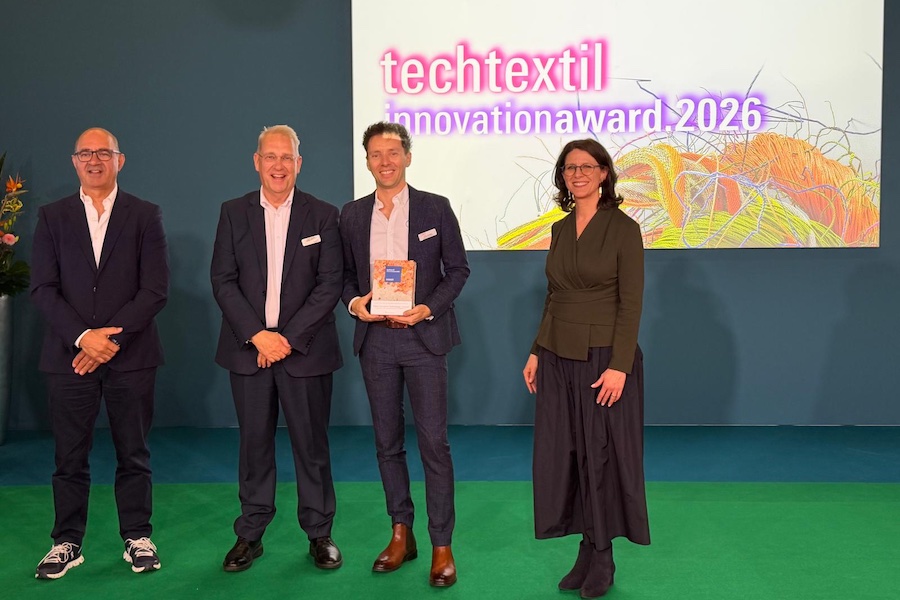
FET’s revolutionary gel spinning system wins Techtextil Innovation Award
Biopolyester combines high performance with biodegradability
In its search for sustainable alternatives to conventional polyester (PET), the textile industry faces a key challenge: how can biodegradability be combined with the performance standards of synthetic fibres and industrial scalability, whilst avoiding microplastics? This is precisely where the Dutch research and development company Senbis Polymer Innovations comes in: Senbis receives a Techtextil Innovation Award 2026 in the “New Material” category for a novel performance biopolyester that combines biodegradability with the properties of synthetic fibres. The award recognises the new product “Mariva”. According to Senbis, this bio-based high-performance polymer for the production of fibres and textiles has properties similar to those of PET and polyamide (PA).
At the Techtextil trade fair in Frankfurt at the end of April, Peter D. Dornier, chairman of the VDMA’s Walter Reiners Foundation, presented awards to five successful young engineers. Promotion and sustainability awards were presented in the categories of bachelor’s/project theses and diploma/master’s theses. Academic theses are eligible for the sustainability awards if, for example, they develop solutions for resource-efficient products and technologies.#Techtextil 2026
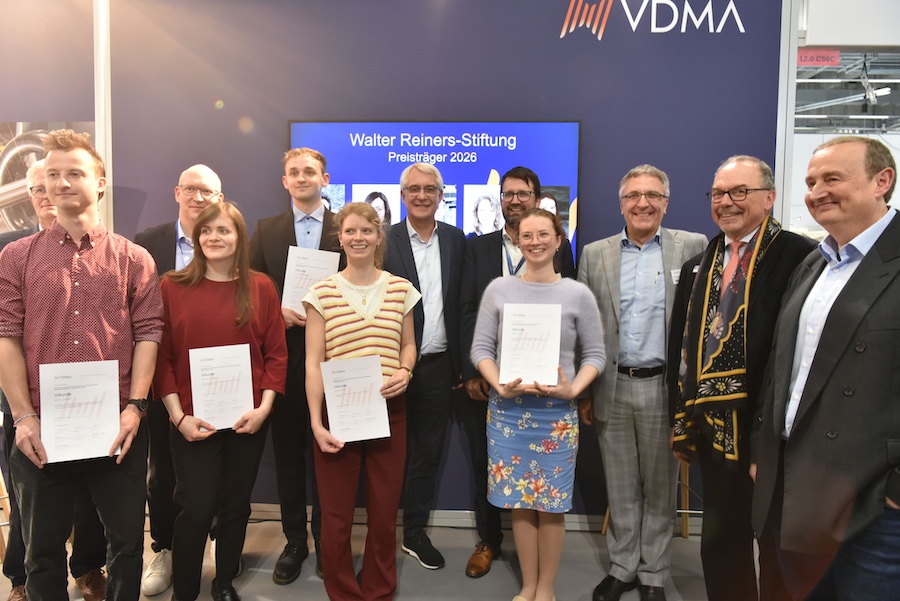
Young talents honoured – 60 years Walter Reiners Foundation
Two winners in the ‘New Product’ category
Bio-based car interiors: wood that behaves like fabric
Wood is rigid – or at least it used to be. The German company NUO manufactures wood-textile composites that combine the aesthetic appeal of wood with the flexibility of textiles. The “wood textiles” are already being used in the interiors of car brands such as Fiat and Renault. Until now, wood veneers – thin decorative sheets of wood – and textiles have been bonded using fossil-based adhesives. In collaboration with the German Institutes of Textile and Fibre Research Denkendorf (DITF), NUO has for the first time developed fully bio-based wood textiles that also meet the stricter sustainability requirements in the automotive industry. NUO receives a Techtextil Innovation Award 2026 in the “New Product” category for its new material, “NUO FlexHolz”. Veneers from sustainable forestry, such as walnut or oak, are bonded with a natural fibre fabric made from hemp. Instead of petroleum-based adhesives, a lignin-based film is used – a by-product of the paper and pulp industry that has so far mostly been burned.
KARL MAYER looks back with satisfaction on its participation in Techtextil 2026. From April 21 to 24, the international industry leader used the trade show in Frankfurt to meet with numerous key customers at its booth and, at the same time, establish many new contacts. Most visitors came from Germany, followed by major markets such as Poland, the United Kingdom, Turkey, France, and Portugal.#Techtextil 2026
Techtextil 2026: KARL MAYER impresses as an innovative sector partner
AI-controlled facade: fibre-reinforced facade as a climate protection agent
The building sector is a sleeping giant when it comes to climate protection: According to the United Nations Environment Programme (UNEP), around 34 per cent of global CO2 emissions are attributable to the construction and operation of buildings. The Institute for Textile and Fiber Technologies (ITFT) at the University of Stuttgart demonstrates how this potential can be harnessed with “FlectoLine” – a flexible facade made of fibre-reinforced composite modules. These can be positioned in real time depending on the position of the sun, daylight and temperature, actively improving the energy efficiency of buildings. For this, the ITFT receives a Techtextil Innovation Award 2026 in the “New Product” category. Measurements carried out by the ITFT show: The ‘intelligent’ facade reduces the indoor temperature by up to 8 °C in summer and increases the time in the thermal comfort zone from 25 to 75 per cent – without requiring any additional heating or cooling energy.
With more than 36,000 visitors and 1,700 exhibitors from a total of 112 countries, Techtextil and Texprocess 2026 demonstrated how innovation comes into industrial use. The convergence of research, industry and application proved to be a breeding ground for new material solutions, manufacturing and processing technologies. Natural fibres, performance apparel, connected systems and AI-driven processing technologies emerged as key growth and future markets.#Techtextil 2026
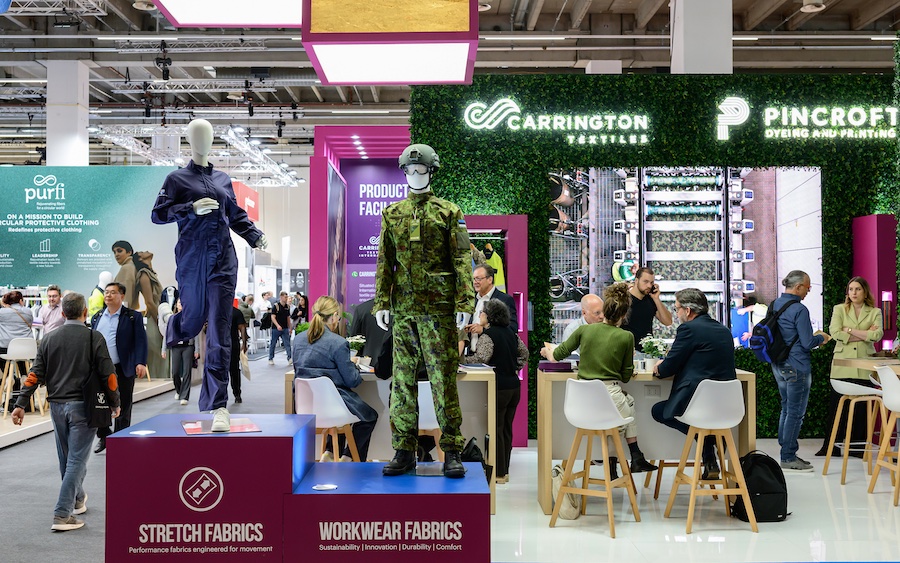
Speed and connectivity: Techtextil and Texprocess provided market-ready solutions for industries under pressure
Winner in the category ‘New Production Technology, Digitalisation & AI Solutions’
Toxic-free gel spinning: UHMWPE fibres without hexane
Ultra-high-molecular-weight polyethylene (UHMWPE) is regarded as one of the most high-performance fibre materials for technical textiles due to its extreme strength: up to 15 times stronger than steel, it is used to manufacture surgical sutures, body armour, high-strength offshore ropes and cut-resistant gloves. However, production has so far had an environmental drawback: in the traditional gel spinning process, UHMWPE is mixed with oil to form a gel-like mass and processed into fine strands. The oil is then washed out again with toxic solvents such as hexane or dichloromethane. The consumption is enormous: around 100 kilograms of these solvents are required per kilogram of yarn. The British textile machinery manufacturer Fibre Extrusion Technology (FET) has now developed a sustainable gel spinning process for UHMWPE yarns that works without hexane or dichloromethane.
As global industries rethink supply chains and accelerate the adoption of advanced materials, the Aditya Birla Group, a US$67‑billion global conglomerate, headquartered in Mumbai, India, showcased the full strength of its technical textiles portfolio at Techtextil 2026 in Frankfurt today. The Group’s presence underscored India’s transformation into a hub for high-value, performance-driven textile solutions within the global ecosystem.#Techtextil 2026

Aditya Birla Group showcases integrated technical textile capabilities at Techtextil 2026
Two winners in the ‘New Recycled Materials & Recycling Technologies’ category
Endless textile recycling with AI and ‘plastic-eating’ enzymes
The world is producing more textile fibres than ever before: in 2024, fibre production reached a record high of around 132 million tonnes. Around 70 per cent are synthetic fibres, primarily polyester and nylon, which are rarely recycled at present. The Australian biotech company Samsara Eco aims to shift the industry away from the linear ‘take-make-waste’ model: it receives a Techtextil Innovation Award 2026 in the ‘New Recycled Materials & Recycling Technologies’ category for its enzyme-based recycling technology ‘EosEco’. The method uses AI-engineered ‘plastic-eating’ enzymes. These break down polyester, nylon 6 and the particularly resistant nylon 6,6 in such a way that new-quality fibres are produced. ‘Whether recycled once or a hundred times – our recycled materials are identical every time,’ says Paul Riley, founder and CEO of Samsara Eco.
RE&UP takes part in Techtextil 2026, where the team will be present at the ISKO Pro booth (Hall 9, Booth D31). Together, RE&UP and ISKO Pro are demonstrating how textile-to-textile solutions meet the non-negotiable specifications of the workwear sector.#Techtextil 2026

RE&UP to showcase Next-Gen circularity in ISKO Pro workwear at Techtextil
Start-up cracks chemical recycling code
Less than one per cent of all textile waste worldwide is recycled in textile-to-textile loops. Mixed textiles in particular are often incinerated or disposed of in landfill. Chemical textile recycling holds promise for closed-loop systems – but faces an environmental hurdle: Hydrolysis, one of the most efficient processes for mixed textiles, generates around one tonne of chemical waste salt per tonne of polyester recovered. The reason: recovering the fibre components requires acid, which remains as salt sludge. The German start-up re.solution now replaces this acid step with electricity. This prevents salt waste during the production of circular polyester from mixed textile waste. For this world-first electrochemically assisted hydrolysis, re.solution is awarded a Techtextil Innovation Award 2026 in the “New Recycled Materials & Recycling Technologies” category. According to re.solution, the new process saves 94 per cent of chemicals and 74 per cent of water compared with similar chemical recycling processes.
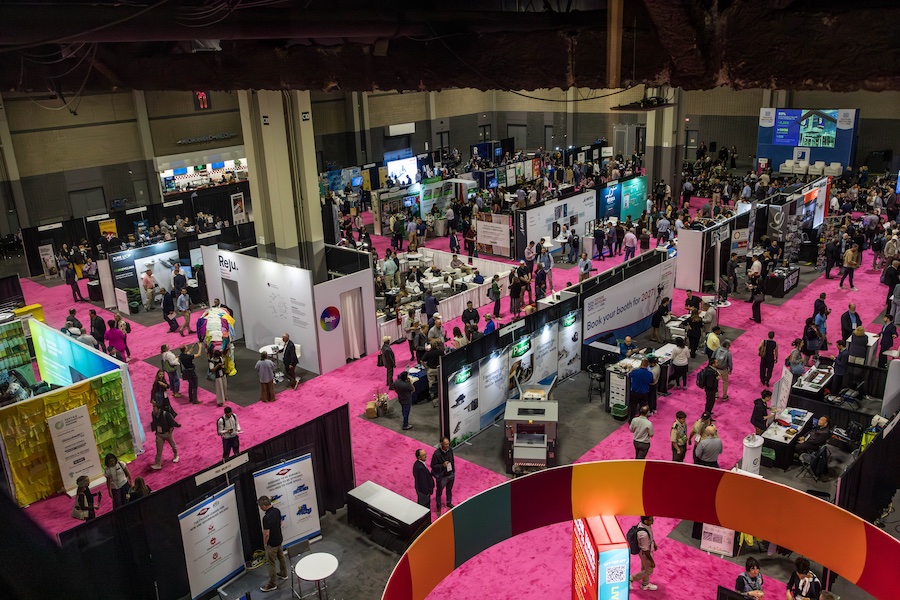
With 1,700 exhibitors from 54 countries, Techtextil and Texprocess 2026 showcase the full range of innovation within the international textile industry – from new materials and recycling technologies to finishing solutions and high-performance textile manufacturing and processing technologies. The opening press conference centred on a key theme where innovation is especially strong: Performance Apparel Textiles.#Techtextil 2026

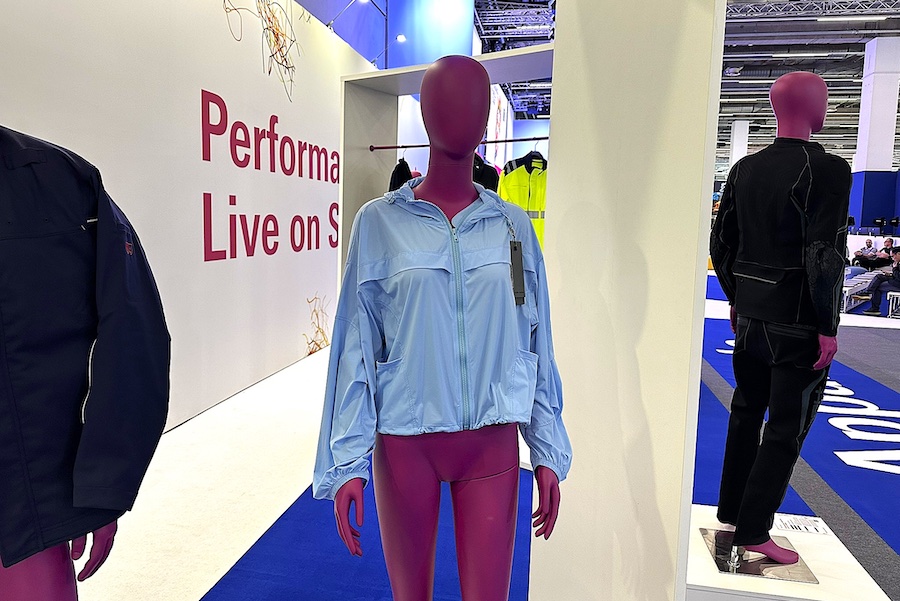
Techtextil & Texprocess 2026: Global benchmark for textile innovation – Performance Apparel Textiles takes centre stage at the opening
Texprocess Innovation Award 2026
Two winners in the category ‘Economic Quality (cost minimisation, time and process optimisation, automation)’
Automated singulation: flow gripper for the ‘supreme discipline’
While the automotive and semiconductor industries have long operated with fully automated production, automation in the textile industry often stops at the multi-layer stack: cut fabric layers – for example for jeans, car seat covers or airbags – are stacked and then manually separated for subsequent steps such as sewing, printing, pressing or laminating. This seemingly simple task of de-stacking is a real challenge for robots: Because textiles are not rigid but flexible, deformable and air-permeable, conventional robotic systems cannot grip them reliably. For a flow gripper that automatically separates fabric layers from a stack, the German company Robotextile receives a Texprocess Innovation Award 2026 in the “Economic Quality (cost minimisation, time and process optimisation, automation)” category.
Kornit Digital (NASDAQ: KRNT) (“Kornit” or the “Company”), a global pioneer in sustainable, on-demand digital fashion and textile production, today unveiled the Kornit Presto MAX PLUS, a new roll-to-roll system expanding digital manufacturing into footwear, automotive interiors, military camouflage, high-performance sportswear, and high-end furnishings. Debuting at Texprocess 2026 in Frankfurt, Presto MAX PLUS enables entirely new applications for on-demand textile production.#Texprocess 2026

Kornit Digital expands digital production into footwear and technical textiles with Presto MAX PLUS
Freeze gripping of textiles using ice and AI
There are various methods for the automated gripping of textiles, including vacuum, needle and clamping grippers. However, mechanical and pneumatic methods can reach their limits, as they can deform or even damage textiles. The Technical University of Applied Sciences Wildau therefore takes a different approach: freezing. TH Wildau receives a Texprocess Innovation Award 2026 for the “CryoTec” freezing gripper in the category “Economic Quality (cost minimisation, time and process optimisation, automation)”. The system makes use of the adhesive properties of ice: A small amount of water is sprayed onto the fabric, freezes slightly and enables the gripper to adhere evenly to create a full-surface, reversible adhesion. Jörg Reiff-Stephan, Professor of Automation Engineering at TH Wildau and Head of the Institute for Cyber-Physical Production Systems, explains it clearly: “If you touch the wall of a freezer compartment in a fridge, your hand sticks briefly – our gripper ‘sticks’ to the fabric in the same way, based on the same physical principle.” According to Reiff-Stephan, the technology is not fundamentally new.
As the smart textiles market continues to grow across healthcare, personal protection, sportswear, and automotive applications, developers are seeking new ways to integrate electronic functionality directly into textiles, without the rigidity and complexity of conventional wiring. To address this challenge, FILK Freiberg Institute, an independent research institution with expertise in polymer coatings for textile applications, collaborated with Optotransmitter-Umweltschutz-Technologie (OUT) e.V. The joint project, funded under the German Industrielle Gemeinschaftsforschung (IGF) program of the Bundesministerium für Wirtschaft und Energie (BMWE), focused on developing flexible, conductive polymer surfaces for next-generation smart textiles.#Smart Textiles
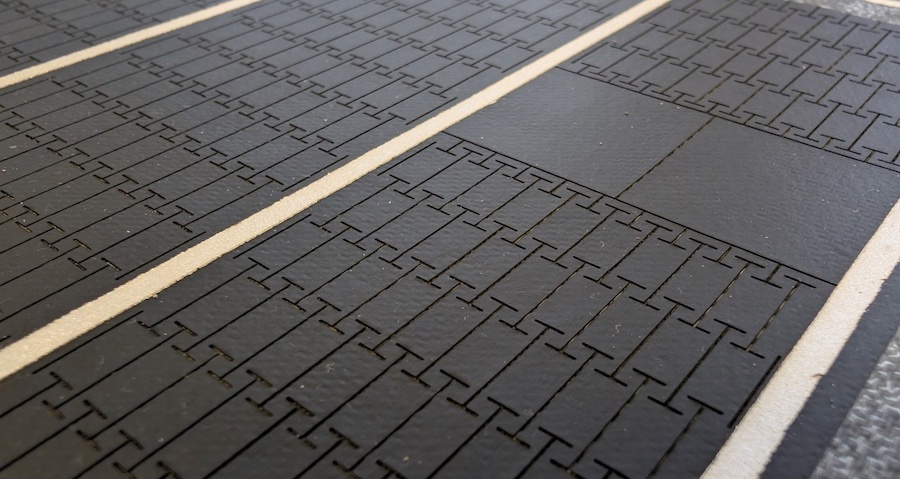
Covestro, FILK Freiberg, and OUT e.V. develop flexible, conductive polymer smart textile system
Winner in the ‘Innovation for Quality Improvement’ category
Fabric inspection: When AI learns to ‘read’ textiles
Visual inspection of textiles is a crucial step in quality management to identify material defects, colour deviations, soiling or structural faults. The Laboratory for Artificial Intelligence in Design (AiDLab) in Hong Kong demonstrates that AI can fundamentally transform the largely manual visual inspection carried out to date. The research laboratory receives the Texprocess Innovation Award 2026 in the category “Innovation for quality improvement” for its AI-powered inspection technology “WiseEye”. The solution uses integrated cameras and self-learning AI. It detects and assesses faults in various textile materials in real time. According to AiDLab, WiseEye achieves an accuracy of around 90 per cent at an inspection speed of 35 metres of fabric per minute. This makes it more accurate than manual visual inspection, which, according to AiDLab, achieves an accuracy of only around 50 to 70 per cent at a speed of around 10 metres per minute.
At Techtextil 2026, RUDOLF presents its latest innovations for textile auxiliaries, textile care and construction chemicals. Based in Geretsried, Bavaria, the company draws on more than 100 years of experience and continues to position itself as a global technology partner focused on quality, innovation and sustainability.#Techtextil 2026

RUDOLF is pioneering the future of technical textiles by developing innovative, functional solutions
Winner in the category ‘Ecological Quality (Climate Protection, Energy Efficiency, Sustainability, Recycling, Circularity)’
Monomaterial design thanks to cellulose sewing thread
Even when textile products are made from biodegradable materials, there is a major drawback to their recyclability: Their seams are often made of synthetic fibres such as polyester or polyamide, which prevents them from being mono-material. New eco-design requirements, the Digital Product Passport and extended producer responsibility are further increasing the pressure to design textiles to be fully recyclable. To fill this gap, the thread manufacturer Amann has developed a biodegradable sewing and embroidery thread. For this achievement, the German company is awarded the Texprocess Innovation Award 2026 in the “Ecological Quality (climate protection, energy efficiency, sustainability, recycling, circularity)” category. The new yarn, called “AeoniQ Fil”, is the world’s first sewing and embroidery thread made from the wood pulp-based fibre “AeoniQ”. It is a microplastic-free and biodegradable material made from cellulose, which comes close to synthetic fibres in terms of tear resistance and elasticity. With this innovative yarn, Amann aims to make monomaterial designs for clothing and home textiles viable: “Homogeneous materials right down to the seam are a crucial step towards true circularity,” says Lea Fischer, Product Manager at Amann. “This simplifies recycling processes and end-of-life options.” According to Amann, the new sewing and embroidery thread is about twice as elastic as conventional cellulose-based threads. This results in stronger seams. AeoniQ Fil makes its official market debut at Texprocess.
Two winners in the ‘Digitalisation + AI’ category
Digitising the sample book: fabrics meet 3D and AI
In the apparel industry, sampling and fabric sourcing are key links between design development and mass production. At the same time, they are cost-intensive, time-consuming and generate significant CO2 emissions due to the global shipment of samples. In addition, there is a fundamental visualisation problem: It is difficult to reliably predict how fabrics will look on a finished product based on samples alone. To digitalise and make fabric sourcing more resource-efficient, the German technology company Vizoo has developed the product design tool “CAST”. For this, it receives a Texprocess Innovation Award 2026 in the “Digitalisation + AI” category. CAST combines a camera-light setup with 3D technology and AI. According to Vizoo, it is the first application to combine the digital fabric communication, their simulation on products and an easy-to-use interface: “Simply start the app, select a product, place the fabric on the scanning surface – and the material is projected onto the product,” explains Renate Eder, Managing Director of Vizoo, which describes itself as the global market leader in the digitalisation of fabrics. Integrated AI also generates photorealistic product images in seconds as an alternative to photo shoots. “Our aim is to enable digital material decisions across continents and significantly reduce the resources required for fabric samples that are physically shipped around the world,” says Eder. At Texprocess, visitors can experience CAST first-hand.
AI for automated T-shirt production
With an estimated two billion units produced each year, the T-shirt is one of the most widely manufactured garments in the world – and is still made almost entirely by hand. Against the backdrop of a shortage of skilled labour, requirements for digital traceability and the trend towards relocating production back to Europe, the textile industry is increasingly facing the question: can T-shirts be manufactured automatically in the future? The Portuguese technology centre CITEVE provides an answer with its robot-controlled T-shirt production cell. It combines AI-based gripping with automated sewing. For this, the institute receives a Texprocess Innovation Award 2026 in the “Digitalisation + AI” category. According to CITEVE, the key innovation is AI-powered grip point detection (computer vision pipeline). It identifies fabric pieces directly on the cutting table in real time and calculates the optimal grasp points based on shape, size and material. “Reliably grasping flexible fabric pieces is one of the most challenging unsolved problems in textile robotics,” explains Nelson Rodrigues, robotics team lead at CITEVE. “Our system tackles this problem head-on: if the fabric is gripped at the point calculated by the AI, it retains its shape.” To facilitate integration into existing production processes, CITEVE relies on conventional sewing machines upgraded with advanced technology. First pilot cells in the testing environment are achieving a cycle time of just under 35 seconds per T-shirt. A validation phase with knitwear manufacturers is planned. The project, coordinated by CITEVE, is jointly implemented with the research institutions CeNTI, CCG/ZGDV and INESC TEC, as well as the technology companies ESI Robotics and Mind. At Texprocess, they demonstrate the solution using the example of AI-assisted sewing of tote bags.
Awards ceremony, special exhibition and tours to the winning projects
Under the motto “Celebrating the Best”, the award ceremony for the Techtextil and Texprocess Innovation Awards take place on 21 April 2026 in Hall 9.1. From 21 to 24 April 2026, the winning projects of the Techtextil Innovation Award are on display in Hall 11.1. During guided tours on all days of the fair, the jury members lead visitors to the stands of the winners of the Texprocess Innovation Award. Visitors can experience the exhibits first-hand, learn about their applications and talk directly to the minds behind the innovations.