[pageLogInLogOut]

#Sustainability

Renewables lower energy prices and play key role to reduce vulnerability to fossil fuel supply shocks

Renewables lower energy prices and play key role to reduce vulnerability to fossil fuel supply shocks Boosting the use of homegrown renewable electricity is Europe’s best way to reduce its vulnerability to volatile international energy supplies and rising energy prices according to a European Environment Agency (EEA) assessment published today.

Global gas price spikes this year cost the European Union an additional €13 billion by mid-April, while renewables saved €29 billion. This means renewable energy sources are already shielding Europe from price shocks — and could do so far more — acting as a powerful buffer against gas price volatility, as highlighted in the EEA briefing ‘Renewable electricity: best buffer against gas price volatility'.

Europe’s fossil vulnerability

With around 85% of all gas and 97% of all oil products consumed in the EU in 2024 imported, Europe remains exposed to externa supply shocks with direct implications for competitiveness and strategic autonomy. This continued dependence on fossil fuel imports means European consumers are paying a considerable gas volatility premium especially in wake of external political and economic shocks. In the last five years these have included the war in Ukraine and the closure of the Strait of Hormuz due to the recent the US-Israel-Iran conflict.

Renewables: Europe’s future proofing on prices and beyond

Stepping up the deployment of renewables like wind and solar, could lessen Europe’s fossil fuel import dependence and prevent a potential 125% rise in wholesale prices by 2030, according to the briefing which involves assessing price and renewable rollout scenarios. This is based on a 68% growth of renewable energy use of total EU electricity generation, according to projections from EU Member States in the most recent 10-year network development plans.

The EEA briefing cautions, however, that renewables alone will not deliver price gains. As renewable electricity shares rise, price benefits increasingly depend on grids, storage and demand response to integrate variable solar and wind. Faster electrification of buildings, transport and industry must be matched by parallel progress in renewables, grids, storage, efficiency and demand response to avoid locking in additional gas-fired capacity.

Balanced progress across supply, demand, grids and storage — supported by pricing that favours electrification — is essential to deliver sustained price reductions, the briefing says.

These measures are explored at greater detail in the EEA report ‘Renewables, electrification and flexibility -

For a competitive EU energy system transformation by 2030’.


More News from European Environment Agency

#Europe

Circular economy offers the EU win-win on environment and economy

Stepping up a circular economy offers the European Union the potential for significant positive impacts on Europe’s environment and poses an untapped and strategic economic opportunity in terms of better access to materials and the creation of new businesses. Three new assessments on circularity, published today by the European Environment Agency (EEA), also stress the need to accelerate investment in circularity efforts to meet EU climate and environment policy targets.

#Europe

State of Europe’s environment not good: threats to nature and impacts of climate change top challenges

State of Europe’s environment not good: threats to nature and impacts of climate change top challenges Significant progress has been made in reducing greenhouse gas emissions and air pollution, but the overall state of Europe’s environment is not good, especially its nature which continues to face degradation, overexploitation and biodiversity loss. The impacts of accelerating climate change are also an urgent challenge, according to the European Environment Agency’s (EEA) most comprehensive, ‘state of environment’ report, published today. The outlook for most environmental trends is concerning and poses major risks to Europe’s economic prosperity, security and quality of life.

#Europe

EEA Scientific Committee elects new chair and vice-chairs

The European Environment Agency’s (EEA) Scientific Committee has elected a new chair and two vice-chairs at its spring meeting held over two days at the EEA headquarters in Copenhagen.

#Sustainability

What are the impacts of PFAS polymers on our health and the environment?

The widespread use of PFAS polymers in everything from consumer products to green technologies can lead to contamination of water, air, soil, food and people. A European Environment Agency (EEA) assessment, published today, says that these chemicals can also contribute to global warming and ozone depletion.

More News on Sustainability

#Sustainability

Wendy Woods named Chair of the Fashion for Good BV Board

Fashion for Good is pleased to welcome Wendy Woods as its new board chair, succeeding Jill Beraud as of 1 September 2026, who had led the board since 2022.

#Recycling / Circular Economy

Arc'teryx introduces System 0™, a new framework for the future of product design and circularity

Arc'teryx Equipment, the global design company specializing in technical high-performance apparel and equipment, today introduced System 0™, a new framework that reimagines how products can be designed, manufactured, used, repaired, and ultimately regenerated. System 0 represents the next evolution for sustainability in the outdoor industry, as it embeds circular thinking across an entire product lifecycle while maintaining the uncompromising performance standards that define the Arc’teryx brand.

#Sustainability

Action Cohort: Textile Exchange’s new initiative designed to help scale preferred production systems

Textile Exchange has published new guidance to help brands and retailers participating in its Action Cohort prepare for upcoming reporting and target-setting requirements. Earlier this year, the organization evolved its membership to create more action-oriented pathways, designed to accelerate progress toward scaling preferred production systems that create beneficial impacts and resilient supply chains and livelihoods.

#Composites

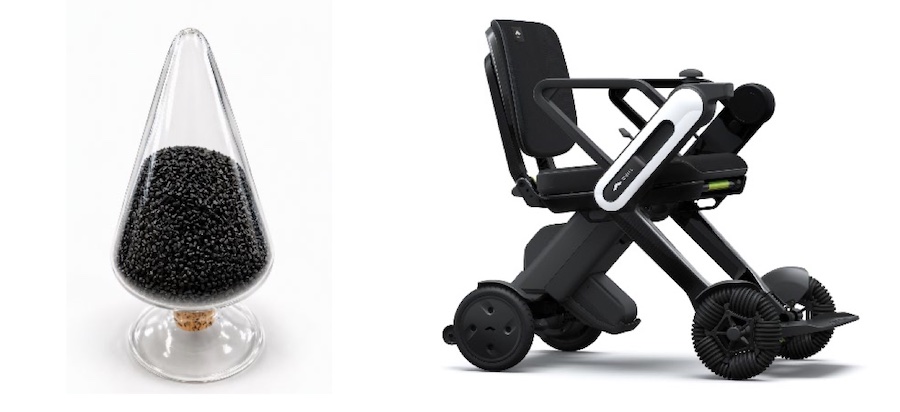
WHILL selects Teijin’s tough, lightweight Carbon Fiber Composite for new last-mile mobility

Teijin Limited announced today that WHILL Inc., a global leader in inclusive mobility technology, has selected Sereebo® P CFP series, a carbon fiber-reinforced thermoplastic (CFRTP) material, for key structural components of the upcoming WHILL Model C Lite. Sereebo® P CFP series provides high strength, light weight, design flexibility and system cost advantages to the Model C Lite, which is a battery powered, single-seat, last-mile device. This new model combines maneuverability with light weight and one-handed folding to ensure ease of handling and operation.

Latest News

#Knitting & Hosiery

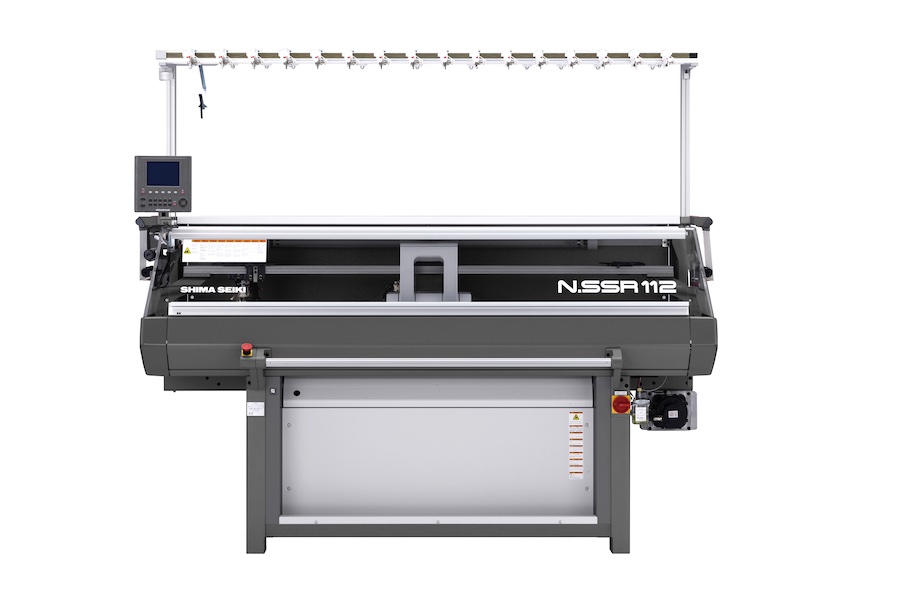
SHIMA SEIKI to showcase flat knitting and digital design solutions at Egypt Stitch & Tex

Leading Japanese computerized flat knitting technologist SHIMA SEIKI MFG., LTD. of Wakayama, Japan, together with its sales representative in Egypt, TTS (EL MASRIA FOR TRADE & TECHNICAL SERVICES), will participate in the upcoming 24th International Exhibition for Textile & Carpet Machineries, Printing Technologies and Accessories (Egypt Stitch & Tex) to be held in Cairo, Egypt this month.

#Raw Materials

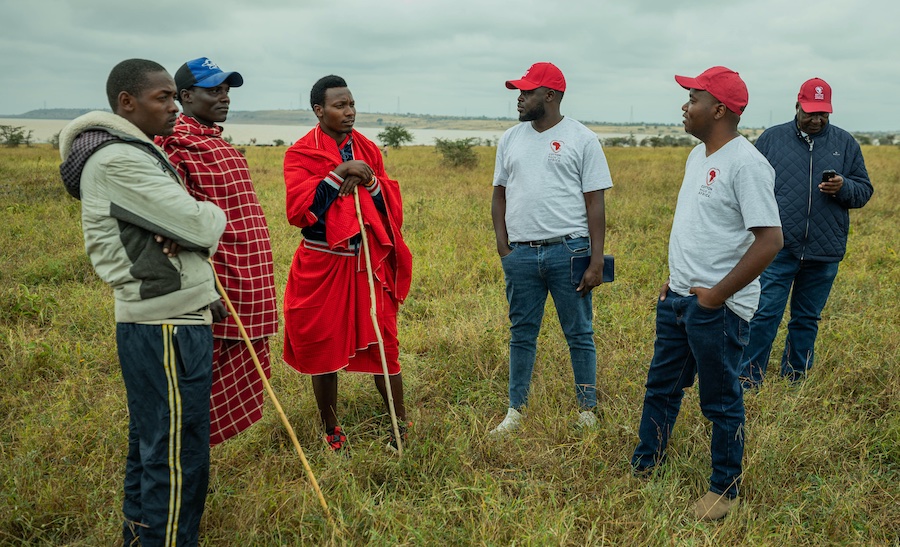
Cotton made in Africa puts farmer dialogue at the heart of agricultural training

A new manual created by the Aid by Trade Foundation and African People & Wildlife shows how Cotton made in Africa aims to transform cotton cultivation through dialogue rather than directives.

#Industry 4.0 / Digitalization

Coats Digital launches AI-powered GSD RealMotion for motion analysis

Coats Digital has launched GSD RealMotion, an AI-powered solution designed to provide apparel manufacturers with greater visibility into factory-floor operations. By analysing shop-floor video and applying Coats Digital’s GSD methodology, the solution turns video recordings into structured, motion-by-motion method studies.

#Textile chemistry

Archroma and Lameirinho partner in pioneering deployment of InOneGO single-step dyeing

Archroma, a global leader in specialty chemicals, and Lameirinho, a leading home textiles manufacturer based in Portugal, are collaborating to bring InOneGO by Archroma, a new single-step dyeing process, into commercial production. Lameirinho’s first InOneGo bedlinens collection is now available worldwide.

TOP