[pageLogInLogOut]

#Europe

Circular economy offers the EU win-win on environment and economy

Stepping up a circular economy offers the European Union the potential for significant positive impacts on Europe’s environment and poses an untapped and strategic economic opportunity in terms of better access to materials and the creation of new businesses. Three new assessments on circularity, published today by the European Environment Agency (EEA), also stress the need to accelerate investment in circularity efforts to meet EU climate and environment policy targets.


A set of 17 circular economy actions have the potential to reduce the EU’s impact on climate change by 22%, or almost one billion tonnes of CO2-equivalents, reduce its impact on biodiversity loss by 19% and reduce air pollution (fine particulate matter) by 25% according to the EEA briefing ‘The environmental and climate benefits of circular economy'.

These estimated benefits, based on modelling of specific circularity measures carried out in selected sectors like housing, mining, food, and mobility also have positive aspects in terms of building resource supply security. They would reduce the EU’s reliance on strategic raw materials produced elsewhere around the world. For example, the EU reliance on aluminium, nickel, and platinum group metals ores extracted in other world regions would decline by around 20%, and by 12% for copper.

The environmental and climate benefits of a circular economy

Circularity measures generate environmental and climate benefits by reducing demand for natural resources – and their associated negative impacts on nature. This in turn leads to economic opportunities by shifting value creation from material extraction to other parts of the economy.

Reducing natural resource use in Europe has benefits both within and outside the EU as the EU imports large amounts of resources and products, the extraction of which burdens the local environment in other world regions.

Untapped business opportunities

The circular economy represents a strategic business opportunity to expand Europe’s market, unlock significant economic returns and decrease resource dependence at the same time as reducing pressure on the climate and the environment, according to the EEA report ‘Unlocking the circular economy: investment needs, barriers and enabling conditions’.

Building on the most recent estimates, the EEA report shows that accelerated investment is needed to meet the objectives of the circular economy policies already adopted, with an investment gap of around EUR 82 billion a year up to 2040.

Unlocking the circular economy: investment needs, barriers and enabling conditions

It points to product design and end of life-stages as areas that need the most attention with the greatest sectoral gaps in construction, textiles, and batteries and vehicles. It adds that while private finance currently dominates investment, public funding plays a catalytic role in de-risking projects and enabling blended and long-term financing.

The progress of the circular economy faces structural economic and financial barriers that need to be addressed adding that policy action is needed to improve access to finance and marketability of circular projects. Better monitoring is also crucial to follow financial flows and how they deliver the best socio-economic and environmental benefits.

Better circularity and use of longer lasting materials

Improving the circularity — reuse or recycling potential — of Europe’s long-lived products like buildings, cars, roads or machinery can provide the EU economy with more cost-competitive homegrown raw materials, according to the EEA briefing ‘Material stocks in a circular economy’.

Europe’s economy depends heavily on large amounts of materials: 14.4 tonnes are consumed by each person per year. Almost half of that, over 6 tonnes, ends up embedded in buildings, infrastructure or machinery, forming what is known as material stock. Stocks are essential for our quality of life, they are buildings and roads, hospitals and schools, cars and washing machines, but they increasingly shape Europe’s resource dependency.

Material stocks in a circular economy

Material stocks have a key part to play in a circular economy, Increasing the circularity of material stocks can transform them into a source of secondary raw materials, strengthening European competitiveness and economic security.
More News from European Environment Agency

#Sustainability

Renewables lower energy prices and play key role to reduce vulnerability to fossil fuel supply shocks

Renewables lower energy prices and play key role to reduce vulnerability to fossil fuel supply shocks Boosting the use of homegrown renewable electricity is Europe’s best way to reduce its vulnerability to volatile international energy supplies and rising energy prices according to a European Environment Agency (EEA) assessment published today.

#Europe

State of Europe’s environment not good: threats to nature and impacts of climate change top challenges

State of Europe’s environment not good: threats to nature and impacts of climate change top challenges Significant progress has been made in reducing greenhouse gas emissions and air pollution, but the overall state of Europe’s environment is not good, especially its nature which continues to face degradation, overexploitation and biodiversity loss. The impacts of accelerating climate change are also an urgent challenge, according to the European Environment Agency’s (EEA) most comprehensive, ‘state of environment’ report, published today. The outlook for most environmental trends is concerning and poses major risks to Europe’s economic prosperity, security and quality of life.

#Europe

EEA Scientific Committee elects new chair and vice-chairs

The European Environment Agency’s (EEA) Scientific Committee has elected a new chair and two vice-chairs at its spring meeting held over two days at the EEA headquarters in Copenhagen.

#Sustainability

What are the impacts of PFAS polymers on our health and the environment?

The widespread use of PFAS polymers in everything from consumer products to green technologies can lead to contamination of water, air, soil, food and people. A European Environment Agency (EEA) assessment, published today, says that these chemicals can also contribute to global warming and ozone depletion.

More News on Europe

#Europe

The Digital Product Passport registry is now live

On 20 July, the European Commission launched the Digital Product Passport Registry together with a testing environment, marking an important milestone in making the Digital Product Passport (DPP) a practical reality for businesses placing products on the EU market.

#Europe

EU ban on destroying unsold clothing and footwear now in force

The European Union's ban on the destruction of unsold clothing, clothing accessories and footwear has entered into force. Since July 19, 2026, large companies across the EU have been prohibited from destroying unsold textile products, while medium-sized companies will be required to comply with the same rules from 2030.

#Recycling / Circular Economy

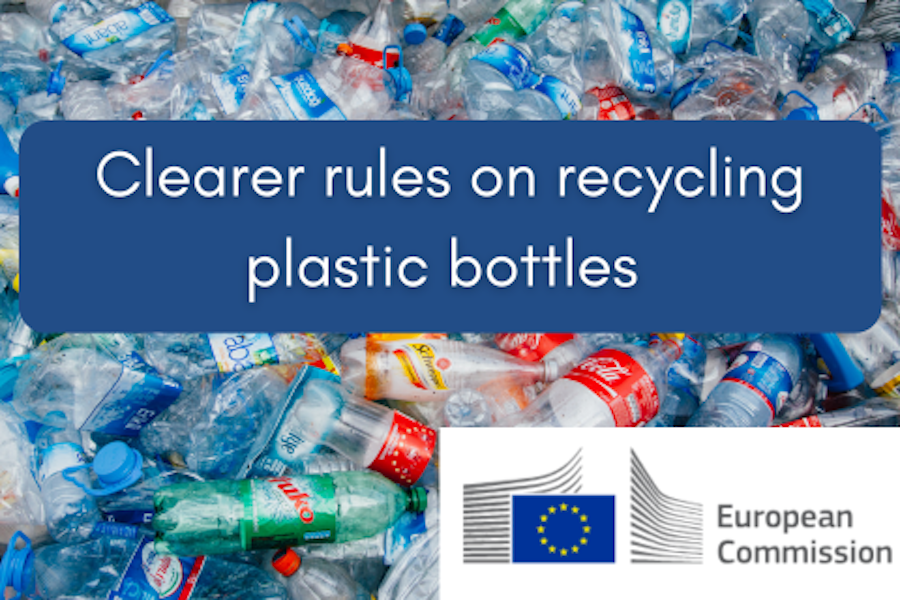
Commission clarifies rules on plastic bottles recycling

The European Commission today adopted new rules on recycling of single-use plastic beverage bottles made primarily of polyethylene terephthalate (PET bottles). These rules establish, for the first time, a methodology to calculate, verify and report chemically recycled content. This is part of the Commission’s December 2025 plastics package.

#Europe

EU and Australia strengthen relations with Security and Defence Partnership and Trade Agreement

The EU and Australia have today announced the adoption of a groundbreaking Security and Defence Partnership. They have also concluded negotiations for an ambitious and balanced free trade agreement (FTA) and agreed to launch formal negotiations for the association of Australia to Horizon Europe, the world's largest funding programme for research and innovation. With these steps, the EU and Australia are delivering mutually beneficial outcomes and further reinforcing their already close relations in a time of geopolitical uncertainty.

Latest News

#Recycled Fibers

Eastman Naia™ brings its inside-out denim vision to Kingpins New York

Following its debut at Kingpins Amsterdam, Eastman Naia™ brings the next chapter of its denim story to Kingpins New York, taking place July 22–23. At Booth Green 7, Naia™ presents its denim proposition built around three complementary design directions: Performance Denim, Fashion Denim and Authentic Denim.

#Recycling / Circular Economy

Pirelli, Pyrum, Synthos and BASF partner to transform end‑of‑life and scrap tyres into recycled materials for new products

Pirelli, Pyrum, Synthos and BASF are jointly advancing a tyre-to-tyre circular economy initiative in Europe, driving the development of an industrial ecosystem designed to increase the use of recycled materials derived from end-of-life and scrap tyres.

#Recycling / Circular Economy

Recover™ showcases textile recycling to European ambassadors in Bangladesh

Representatives of the European Union, the Netherlands and Spain have visited Recover™’s textile recycling facility in Bangladesh to discuss the implications of upcoming EU textile regulations and the role of textile-to-textile recycling in future supply chains.

#Dyeing, Drying, Finishing

Contactless measurement of coating for Technical Textiles with PLEVA AF 310 and AF 120

Textiles used for protection and defense must perform reliably – whether they are protective garments, tents, tarpaulins, covers, or technical carrier materials. Properties such as flame resistance, water repellency, weather resistance, or defined air permeability are often only achieved through precise coating, finishing, or printing processes.

TOP