[pageLogInLogOut]

#Research & Development

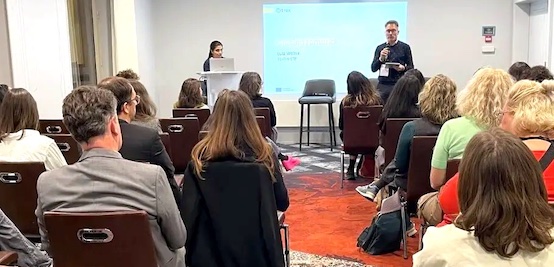
MELANGE starts with a co-creative design workshop at Aalto University to shape the visual identity of this new project transforming colouration in textiles
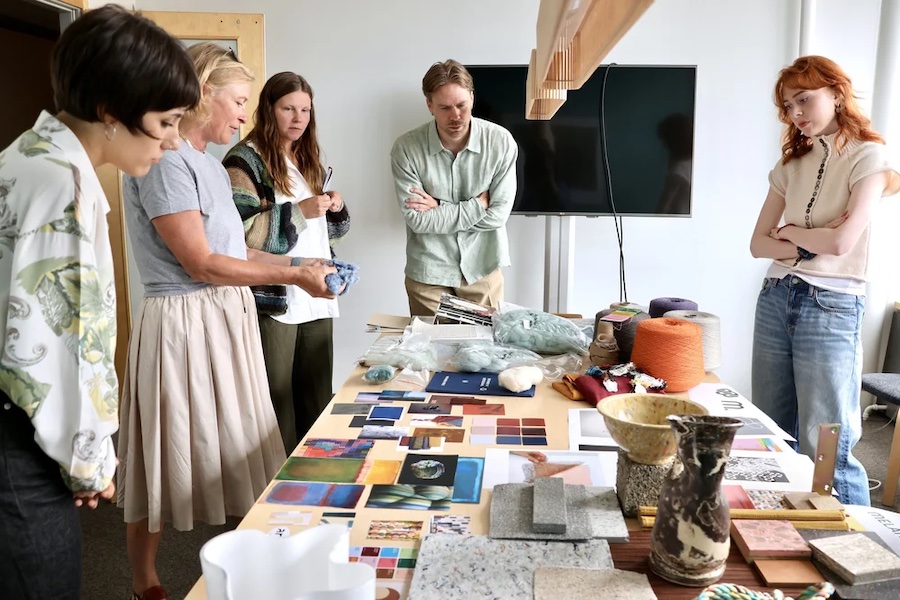
Design workshop at Aalto University © 2026 Textile ETP
Over the next three years, MELANGE will lower the environmental impact of interior textile production by moving colour design to the beginning of the manufacturing process. This Horizon Europe project officially started on 1 August 2026, and will be publicly launched on 27 August 2026.


The industry today treats colour as something applied at the end to achieve replicability and uniformity, at the massive cost of water, energy, and chemicals. MELANGE sees variation as a desirable signature of uniqueness, not a defect. That is why MELANGE combines expertise in design, technology and business, bringing together researchers, designers, industrial partners and textile networks to inspire and guide designers, industry, and policy-makers to adopt new aesthetics and a more sustainable way of working with colours

The consortium, led by Aalto University, includes industrial partners representing the textile supply chain, ranging from the Austrian fibre producer Lenzing to Turkish spinning mill Karacasu Tekstil and weaving mill Vanelli Tekstil, Slovenian interior design company Triiije Architect, VIA University College from Denmark, Brussels-based Ohana Public Affairs and Textile ETP, and Next Technology Tecnotessile from Italy.

A visual identity born from co-creation

From 4 to 6 August 2026, Textile ETP, which leads the project's communications, dissemination and stakeholder engagement activities, joined the Aalto University team for a design workshop dedicated to co-creating the visual identity of MELANGE. Over three days, the teams worked together to explore how the project's core values (colour design, circularity and sustainable competitiveness) could be translated into a distinctive and coherent visual language.

The visual identity will be presented on 27 August, and will support consistent, engaging communications throughout the project's lifetime, carrying its story to industry and design stakeholders, policymakers and the wider public.
More News from Textile ETP

#Industry 4.0 / Digitalization

Textile ETP launches digital transformation strategy, calling for urgent collective action across the value chain

Textile ETP’s DigitX Innovation Hub published its strategic roadmap for the digital transformation of Europe's textile and apparel industry.

#Recycling / Circular Economy

From local actions to industrial innovations: SOLSTICE shares mid-project results

Since its launch in May 2024, the SOLSTICE project is accelerating the transition from linear models to circular regional ecosystems in the textile industry, focusing on four key territories: Grenoble-Alpes Métropole (France), Berlin (Germany), Prato (Italy), and Catalonia (Spain). By mid-project, SOLSTICE has already revealed both regional disparities and promising solutions to strengthen textile repair, reuse, and recycling infrastructure.

#Recycling / Circular Economy

Textile ETP wraps up T-REX's Policy Roundtable

The T-REX project’s policy roundtable in Brussels on November 12 was a pivotal gathering of experts and leaders committed to advancing Europe’s sustainability efforts. Concluding the event, Secretary General Lutz Walter reflected on the discussions and emphasized the core themes that resonated throughout the day.

#EU Textile Strategy

Textile ETP at the European Commission's event on the Textiles Ecosystem Transition Pathway

On 4 June 2024, the Textile ETP Secretary General Lutz Walter participated in the European Commission’s Directorate-General for Internal Market, Industry, Entrepreneurship & SMEs (DG GROW) stakeholder event for the Textiles Ecosystem Transition Pathway.

More News on Research & Development

#Research & Development

Reducing development times for technical textiles by accelerated thermo-oxidative aging in a high-pressure autoclave

Synthetic polymers used in technical textiles can be effectively protected against degradation caused by heat, oxygen, and water through the use of stabilizer systems. This enables service lives of several decades, extending to more than 50 years. As the use of durable technical textiles continues to grow, so does the demand for reliable methods to predict their service life within economically feasible testing periods. For the first time the German Institutes of Textile and Fiber Research Denkendorf (DITF) developed methods for robust service life prediction for textiles in an IGF research project.

#Research & Development

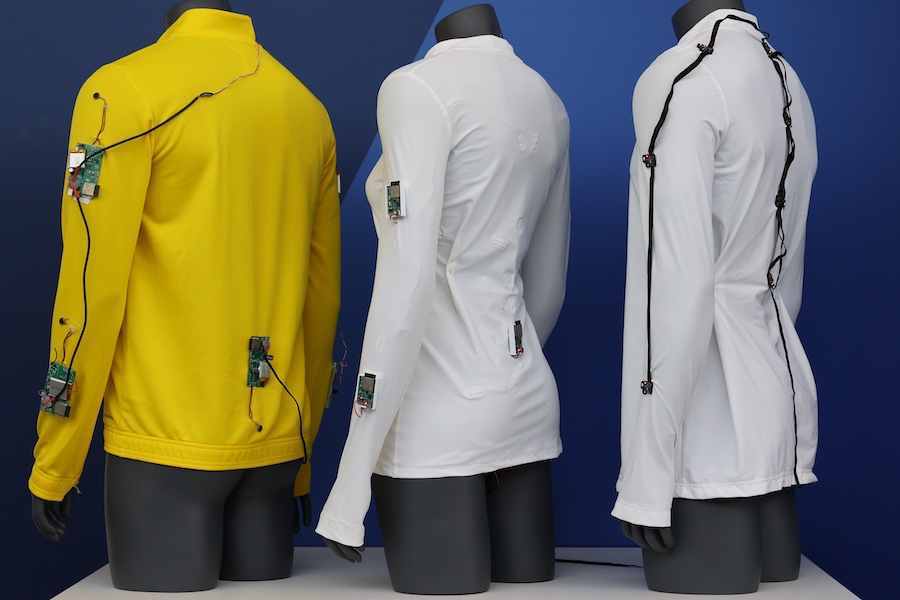
ITA has developed a washable digital smart jacket with real-time feedback and an AI-powered app for rehabilitation

As part of the PhysioTaix research project, the Institut für Textiltechnik (ITA) of RWTH Aachen University is developing a digital smart jacket with integrated sensors. The jacket is washable and reusable; it tracks movements during rehabilitation exercises in real time and transmits the data to an app.

#Research & Development

ADD-ITC 2026 highlights strong industry participation

The Aachen-Dresden-Denkendorf International Textile Conference (ADD-ITC) 2026 will place a strong focus on the exchange between textile research and industry when it takes place on November 26–27, 2026, at the International Congress Center Dresden. According to the preliminary conference program, more than two-thirds of all presentations will be contributed by companies or jointly presented by industry and research institutions.

#Recycling / Circular Economy

2. RETRAKT EU Conference - „Join the Circle“: Turning challenges of the textile sector into chances

On 19 November 2026, the second RETRAKT EU Conference – “Join the Circle” will take place in Brussels. The event, which focuses on the transformation of the textile sector towards a circular economy, will be held under the motto: “Turning Challenges in the Textile Sector into Chances.”

Latest News

TOP