[pageLogInLogOut]
TRÜTZSCHLER SPINNING - FROM WASTE TO VALUE

#Industry 4.0 / Digitalization

Textile ETP launches digital transformation strategy, calling for urgent collective action across the value chain

Textile ETP’s DigitX Innovation Hub published its strategic roadmap for the digital transformation of Europe's textile and apparel industry.


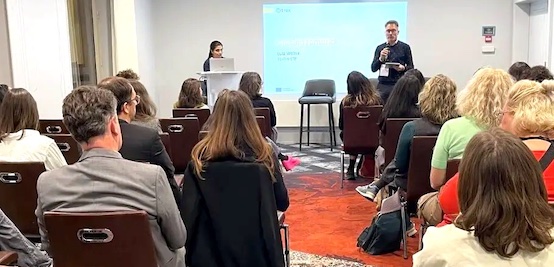
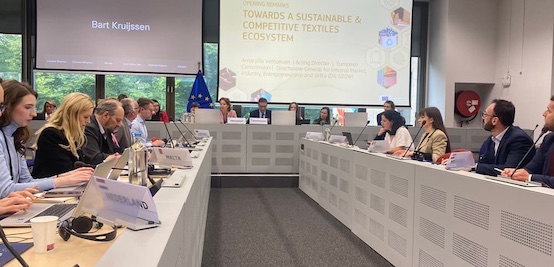
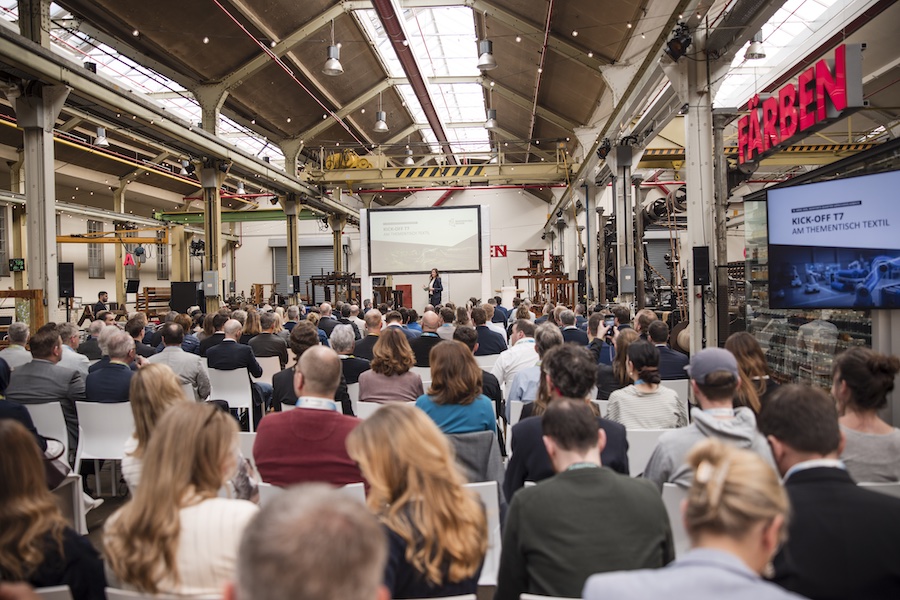
Presented on May, 26th, during the 20th Textile ETP Annual Conference in Amsterdam, and developed collaboratively by more than 100 industry experts from the DigitX Innovation Hub over six months, The Digital Transformation of the European Textile and Apparel Industry sets out a comprehensive plan to help European textile businesses become fit for the digital future, or risk losing them altogether.

The strategy identifies three converging pressures making digital transformation an existential necessity: the need for competitive agility in the face of ultra-fast global rivals; a wave of EU regulatory requirements including the Digital Product Passport and the Corporate Sustainability Due Diligence Directive; and the structural data demands of circular and service-driven business models.

“Combining the physical world of fibres and textile machines with the digital world of bits and bytes and soft factors like creativity, hands-on expertise or consumer psychology with rational and precise data-driven decision making in complex fast-paced supply chains are not easy tasks. But they must be undertaken, not only in the interest of greater competitiveness of the EU industry, but also to fully comply with a diverse set of upcoming EU regulations including the Digital Product Passport and to operate at a much higher level of sustainability and circularity in line with the vision of the EU strategy for sustainable and circular textiles2, said Marina Crnoja-Cosic, President, Textile ETP.

The strategy charts a path toward a digitally integrated, transparent, and responsive European textile value network by 2035, built on four technology layers (data infrastructure, digitised hardware, interoperable software, and human-AI collaboration) and four concrete innovation building blocks: Data Infrastructure, Digital Product Creation, Digital Production, and Digital Supply Chain.

The roadmap also presents ten recommendations to EU policy makers, with four identified as highest priority: explicitly linking sustainability regulation to digitalisation and competitiveness; mandating interoperability and open standards for publicly funded digital innovations; establishing and funding a European Textile Data Space with 500+ active participants by 2030; and funding the collaborative development of a harmonised Textile Data Ontology.

Mario Jorge Machado, President, EURATEX, stated: “The priority now should be implementation: making sure that digital solutions are accessible, affordable and relevant for companies on the ground. If Europe wants a competitive, circular and resilient textile and apparel ecosystem, digitalisation must become a practical enabler for industry, not an additional layer of complexity.”

Finally, the strategy identifies five cross-cutting actions that no single stakeholder can accomplish alone: co-developing a European Textile Data Ontology; building shared digital fabric libraries; establishing end-to-end Digital Product Passport data flows; creating feedback loops between recyclers and designers; and developing a cross-border digital skills and talent pipeline.

Concrete implementation strategies for the key recommendations will be developed in the second half of 2026, following the strategy’s public presentation at the 20th Textile ETP Annual Conference.

The Digital Transformation of the European Textile and Apparel Industry strategy is available on:

http://www.textile-platform.eu/innovation-hub-digitx/#strategy


More News from Textile ETP

#Recycling / Circular Economy

From local actions to industrial innovations: SOLSTICE shares mid-project results

Since its launch in May 2024, the SOLSTICE project is accelerating the transition from linear models to circular regional ecosystems in the textile industry, focusing on four key territories: Grenoble-Alpes Métropole (France), Berlin (Germany), Prato (Italy), and Catalonia (Spain). By mid-project, SOLSTICE has already revealed both regional disparities and promising solutions to strengthen textile repair, reuse, and recycling infrastructure.

#Recycling / Circular Economy

Textile ETP wraps up T-REX's Policy Roundtable

The T-REX project’s policy roundtable in Brussels on November 12 was a pivotal gathering of experts and leaders committed to advancing Europe’s sustainability efforts. Concluding the event, Secretary General Lutz Walter reflected on the discussions and emphasized the core themes that resonated throughout the day.

#EU Textile Strategy

Textile ETP at the European Commission's event on the Textiles Ecosystem Transition Pathway

On 4 June 2024, the Textile ETP Secretary General Lutz Walter participated in the European Commission’s Directorate-General for Internal Market, Industry, Entrepreneurship & SMEs (DG GROW) stakeholder event for the Textiles Ecosystem Transition Pathway.

#Textiles & Apparel / Garment

Shaping new horizons for the textile sector: 18th Textile ETP Conference 2024

The 18th Textile ETP Annual Conference in Mechelen brought together industry leaders, experts, and innovators for two dynamic days of discussions and insights, focusing on sustainability, innovation, funding, and the future of the textile sector.

More News on Industry 4.0 / Digitalization

#ITM 2026

Driving digitalization, efficiency, and Smart Manufacturing across textiles and carpets

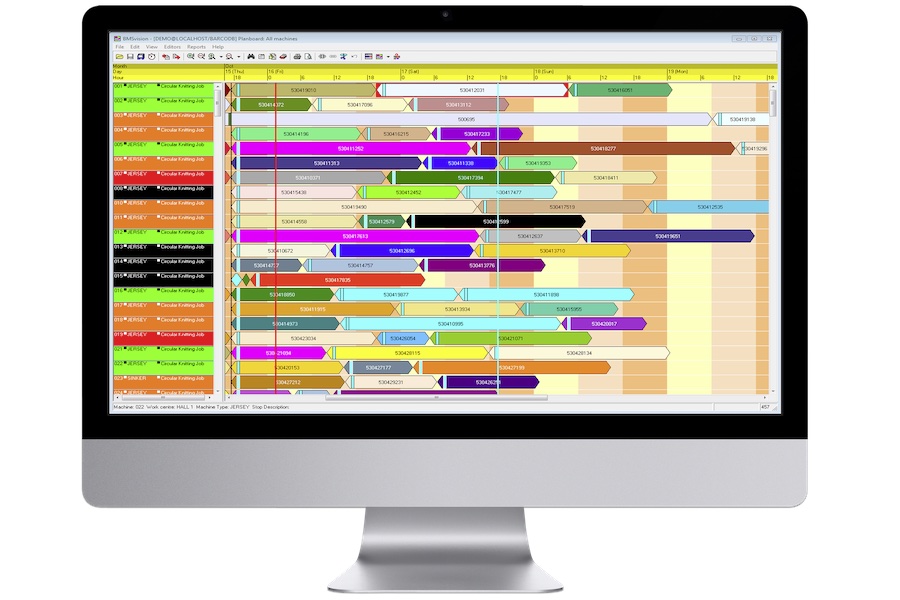
At this year’s ITM, BMSvision proudly showcases its next leap forward in digital manufacturing excellence. As a long-standing global pioneer in Manufacturing Execution Systems (MES) for the textile and plastics industries, BMSvision continues to accelerate digital transformation by delivering powerful, data-driven solutions that boost productivity, enhance quality and support sustainable growth. Visit BMSvision at the Vandewiele booth in Hall 7, Booth 710, to experience the future of textiles manufacturing.

#Research & Development

Textilfabrik 7.0 launched: Mönchengladbach becomes a real-world lab for sustainable textile production

With the official kick-off event of the Textilfabrik 7.0 (T7), a major transformation project for the German textile and apparel industry has been launched in the Monforts Quarter in Mönchengladbach. At the “Textile Roundtable,” an event format organized by the Zukunftsagentur Rheinisches Revier, representatives from industry, research, politics, and the regional economy came together to jointly lay the foundation for CO₂-neutral, circular, and economically viable textile production in Germany.

#Man-Made Fibers

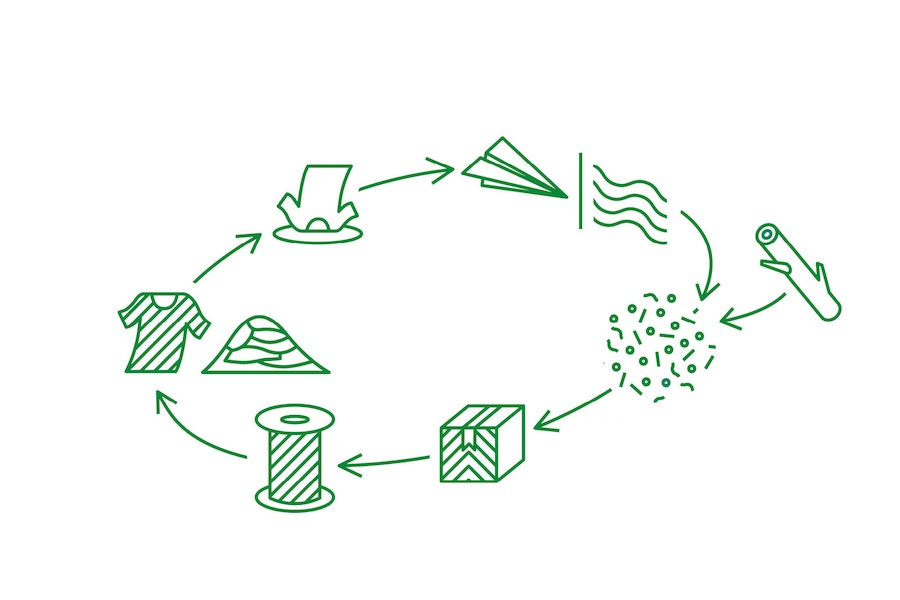
OnceMore® from Södra brings end-to-end traceability for circular Man-made Cellulosic Fibers (MMCF) using TextileGenesis

OnceMore® from Södra, the world’s first large-scale process for recycling blended fabrics into high‐quality dissolving pulp, will begin using TextileGenesis, a Lectra company, to strengthen traceability from raw material to retail across the value chain. OnceMore® produces dissolving pulp made from blended textile waste and wood sourced from responsibly managed Swedish forests. By integrating TextileGenesis, OnceMore® supports the growing need for verified data and secure, transparent tracking throughout increasingly complex supply chain.

#Denim

Jeanologia launches Billy

The new AI extracts precise laser designs from a garment image in minutes, transforming how vintage denim is recreated for production. If Jeanologia’s laser changed the way jeans were made at the end of the last century, its AI now takes the next step: moving from reproducing wear to designing it. / archive photo © 2026 Jeanologia

Latest News

#ITM 2026

Mayer & Cie. Global is getting ready for ITM 2026

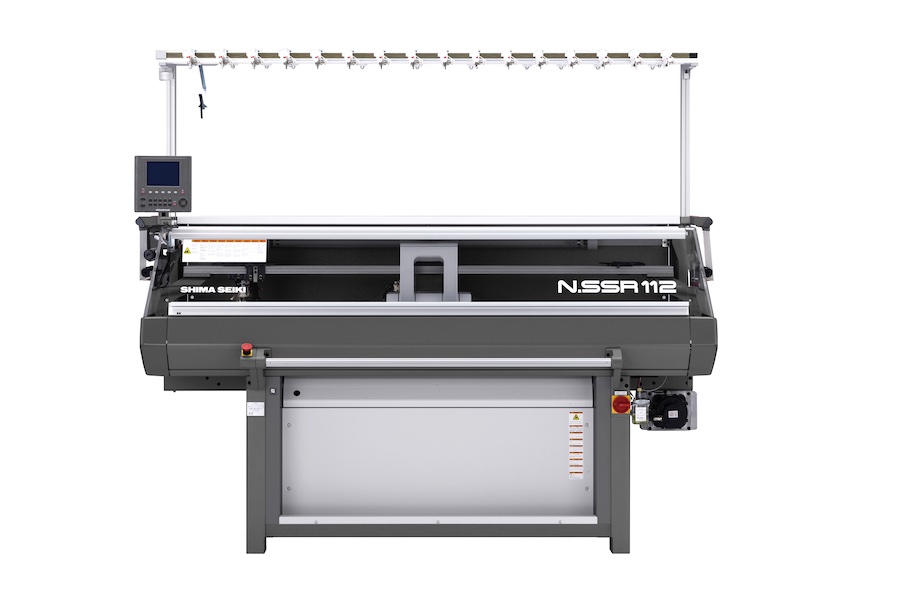
ITM 2026 marks the beginning of a new chapter for Mayer & Cie. Global. For the first time, the company will present itself to the international textile machinery industry in its new setup: combining proven circular knitting technology engineered in Germany with a clear commitment to its Albstadt headquarters and an internationally shaped, agile management approach.

#Texprocess 2026

Eton’s AI-driven sorting system targets growing resale market

At the recent Texprocess exhibition in Frankfurt, Eton Systems – a member of TMAS, the Swedish textile machinery association – demonstrated its new aUPS module for the rapid sorting of used garments.

#Recycling / Circular Economy

Textiles Recycling Expo 2026 to spotlight the companies turning textile circularity into industrial reality

As the textile industry faces mounting pressure to scale circular solutions, improve recycling infrastructure, and respond to evolving regulation, Textiles Recycling Expo 2026 will bring together the organisations leading that transformation in practice.

#Natural Fibers

The Good Cashmere Standard expands Animal Welfare Assessment on audited farms

With the Animal-related Animal Welfare Assessment (ARAWA), the Aid by Trade Foundation (AbTF) conducts a pioneering project for the second consecutive year in 2025, parallel to the independent verifications of The Good Cashmere Standard® (GCS). ARAWA assessments provide a comprehensive overview of the health status of a herd on an audited farm, going beyond standard verification procedures. They are inherently complex, which still makes them a rarity in the standard sector, but offer support in identifying non-conformities and provide a holistic overview of the herd's well-being. Therefore, the Aid by Trade Foundation will continue this crucial project and even further expand it by 2027.

TOP