#Recycling / Circular Economy
ERC 2025: Recycling Europe debuts in Hamburg as industry and policymakers confront circular economy challenges
Maria Vera Durán, (Recycling Europe), opened the conference by marking a milestone: EuRIC’s debut as Recycling Europe, and stressed that “there is no better moment to shape a truly competitive recycling industry in Europe. Dr. Alexander von Vogel (Free and Hanseatic City of Hamburg) also set the tone: “In the current economic and geopolitical climate, circularity is more important than ever”, urging public authorities to lead by example, using recycled materials in buildings and infrastructure. Echoing the call, Recycling Europe President Olivier François stressed that Europe produces more recycled raw materials than its industries can currently absorb, and this very success creates a surplus, showing the urgent need for stronger demand for recycled materials.
Kicking off the presentations, Alejandro Moreno (StoneX) flagged pressure points in non- ferrous metals: aluminium scrap exports remain a key concern, copper supply is tightening due to the economic slowdown, while competitors like China, unbound by climate commitments, are pushing ahead with electrification
Frank Pothen (EAH Jena) cautioned that most recycled steel exports do not go to geopolitical rivals and warned against new barriers: “The real challenges are high energy prices, administrative burdens, foreign trade barriers, and subsidies. The task is to keep free trade alive while defending ourselves where necessary.”
Speaking for the European Commission, Jan Ceyssens outlined three priorities for the Circular Economy Act: boosting demand, strengthening the single market, and cutting red tape, while stressing that Brussels will only intervene where clear market failures arise, and that supporting the steel industry’s transition remains essential.
During the first panel discussion on preserving global trade of recycled materials, Murat Bayram (VDM) made a strong plea for open trade: “Open markets are symbols of freedom – restrictions only limit our capacity to learn, develop, and grow together. Every country that banned exports of recycled materials has seen recycling decline.” Comparisons with the US loomed large, with Emily Sanchez noting similar debates in Washington and stressed that Electric Arc Furnaces can use up to 100% scrap. Susie Burrage (BIR), who was moderating the panel, pointed to Europe’s gap: “The EU still has some work to catch up with the US. If we shrink the recycling industry, the impact will be huge – financially, and in terms of jobs.”
Shifting from global trade to Europe’s waste management challenges, the ‘Industry Insights’ session turned to the growing threat of battery fires. With lithium-ion batteries now ubiquitous, Federico Magalini (dss+) warned that risks are unevenly spread across the value chain, calling for stronger technical and organisational safeguards. One promising step is GRS Batterien Service GmbH’s LiLa project, a safer system for collecting small battery-powered devices. As Fatah Naji explained, pilots show improved e-waste collection and a potential blueprint for prevention, though fire incidents remain a stubborn problem. Adding a sharper perspective, Tammo Behrendt (Behrendt Recycling GmbH) criticised the flood of unnecessary battery-powered products, from sneakers to disposable vapes, many of which contain non- removable batteries that heighten fire risks. He also pointed to the practical hurdles recyclers face under restrictive insurance rules.
The afternoon debate focused on boosting demand for recycled materials. “It takes us three to five years to develop EU-wide criteria. That is simply too slow,” said Florian Flachenecker (European Commission), adding that end-of-waste criteria for mechanically recycled plastics could be presented before year’s end. Sven Saura (Veolia) called the Circular Economy Act a “huge opportunity” to strengthen Europe’s recycling markets but warned that delayed regulation and raw material volatility risk holding the sector back. Urgency is greatest in plastics, textiles and WEEE, where demand for strategic minerals and safe, high-quality feedstock is surging. Mariska Boer (Boer Group) pointed to investment and innovation as key, describing textiles as facing a “perfect storm” of fast fashion, weak infrastructure and falling reuse. Katharina Schlegel (Plastics Europe) warned Europe “cannot afford” three-year delays for innovation, urging stronger data, support for EU-made plastics, and protection againstimports. Pär Larshans (Ragn-Sells) stressed that green public procurement will be key to driving demand in construction, calling for better demolition practices, standards that cover all materials, and clear processes to ensure waste ends up in the right stream.
Moderating the panel on automotive circularity, Emmanuel Katrakis (Galloo) framed the debate around the ELV Regulation and warned that watered-down recycled plastic content targets could weaken demand and investment. Poul Steen Rasmussen (Genan) remained optimistic but underlined that recyclers face tougher rules than virgin producers, calling for stronger EU support for end-applications and even deregulation to speed market uptake. Marta Roche Díez (CLEPA) highlighted that suppliers are investing in recycled content, remanufacturing and alternative materials, but need clear legislation and predictable targets to make these efforts competitive. Umberto Eynard (JRC) noted that the automotive sector is at a crossroads, with EVs reshaping material use, and pointed to JRC’s work on plastics and aluminium to guide future targets. Tess Pozzi (Derichebourg) welcomed the ELV Regulation’s value chain approach but warned that weakened goals and the “low-carbon steel” concept risk stalling investment and undermining circularity. Regina Kohlmeyer (German Environment Agency) stressed the need for enforceable criteria to tackle missing vehicles, including clear definitions of waste vehicles and obligations for owners to prove status when transferring cars.
From export restrictions on steel, to low domestic demand for recycled plastics, to the threat of fast fashion for textiles, to untapped potential in construction and demolition and the challenge of lithium-ion battery fires, ERC revealed a single truth: Europe must act faster, smarter, and more collaboratively to make circularity the new normal.
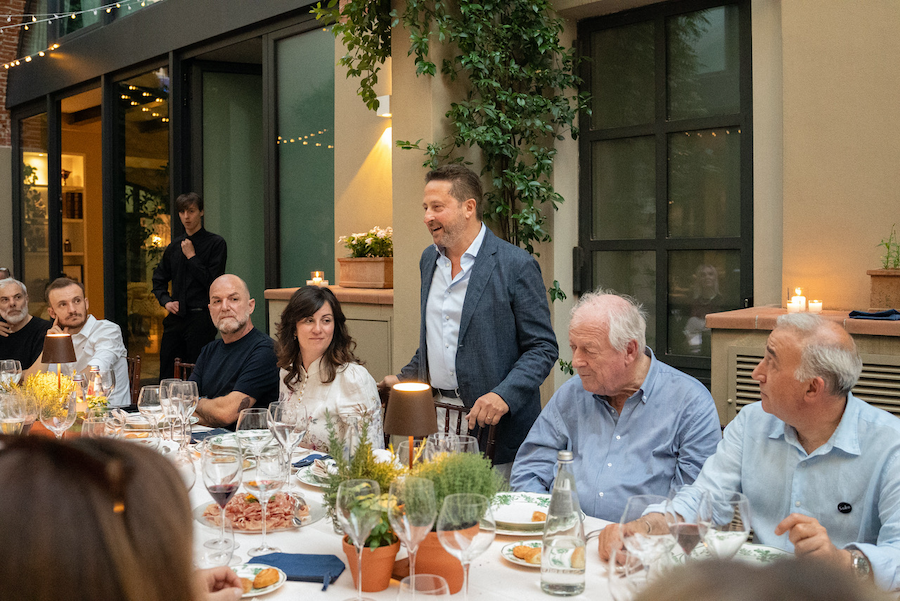
Recycling Europe extends its heartfelt thanks to all participants, speakers, and partners for making this year’s European Recycling Conference (ERC) a true success. From inspiring debates to the gala dinner overlooking the Port of Hamburg, it was a memorable gathering of the recycling community. The association looks forward to welcoming everyone to the 8th ERC in Madrid on 10 June 2026.