[pageLogInLogOut]

#Natural Fibers

Beyond Cotton: Natural Fibres in the Spotlight at the Bremen Cotton Conference - Branded by DNFI

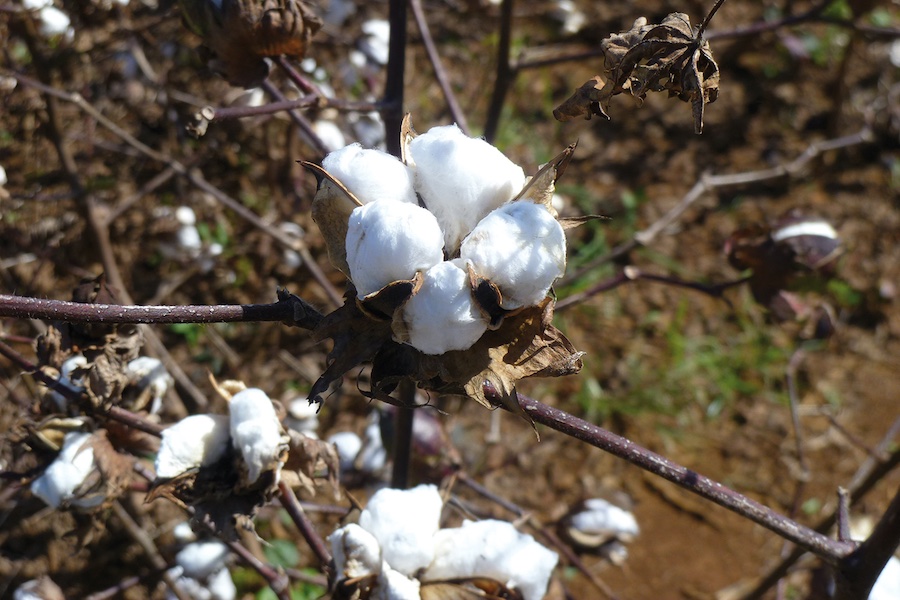
Cotton plant © 2026 Bremen Cotton Conference
Climate targets, fragile supply chains, and rising regulatory requirements are fundamentally changing the perspective of the textile industry - the focus is increasingly shifting toward the base material. Not only cotton, but natural fibres are gaining significant importance: they stand out not only because of their outstanding functional properties, but also because they make a valuable contribution to the bioeconomy and responsible product development.

But what concrete opportunities do plant- and animal-based fibres offer for innovation, design and industrial applications? The 38th Bremen Cotton Conference, taking place from 25–27 March 2026 at the House of the Parliament on Bremen’s market square, will address these questions. On 27 March 2026, the topic will be explored in a dedicated, practice-oriented session highlighting perspectives, trends and concrete application possibilities.

Under the leadership of Dalena White, Secretary General of the International Wool Textile Organisation (IWTO) and co-spokesperson of the Make the Label Count campaign, the presentations take a clear look at the interplay between sustainability, performance, and material innovation. Rather than offering broad generalizations, the session provides concrete perspectives and highlights which fibres and technologies are truly relevant for the future.

Rethinking natural fibres: How responsibly produced fibres drive material innovation

Drawing on his extensive experience in bionics, Jörg Müssig from Bremen University of Applied Sciences focuses on the diverse potential of responsibly produced fibres. He demonstrates how plant-based and animal-derived materials not only expand traditional textile applications but also open entirely new fields of use - from innovative lightweight components and functional high-tech textiles to materials that combine ecological and economic advantages. Müssig also provides practical insights into how sustainability, material properties, and design interact to fundamentally transform product development and pave the way for circular, environmentally friendly solutions.

Banana and pineapple: Exotic plant fibres or the future of textiles?

Sandra Bohne, Co-Founder and Director of the FIBRAL Material Alliance and consultant, demonstrates how diverse the uses of plant fibres can be. Her organization connects the global plant-fibre industry with the goal of strengthening plant fibres as circular raw materials for the bioeconomy, thereby supporting rural development and climate resilience. FIBRAL brings together 36 types of fibre that can be used alongside cotton in the textile, automotive, construction, and paper industries.

As the world’s population grows, demand for fibres is increasing while agricultural land and cotton yields remain limited. Cellulose-based alternatives such as banana, pineapple, or kapok are therefore gaining importance. When cultivated responsibly, they promote biodiversity, improve water quality, regenerate soils, and store carbon.

At the same time, they create income in rural areas and enable shorter value chains. FIBRAL supports the sector through networking, data collection, and capacity building in order to drive innovation and investment.

Jute, Kapok, Coconut, Silk: The right fibre for the right application

Thomas Bressler, Managing Director of WGC-Holding GmbH, is closely engaged with the question of which natural fibre is best suited for which specific application. Natural fibres differ significantly in their mechanical properties, such as tensile strength, moisture management, thermal characteristics, and processability.

While cotton, the most important natural fibre worldwide in terms of volume, continues to set benchmarks in comfort, versatility, and finishing capabilities, alternative fibres such as jute, kapok, coconut, or silk offer exciting, specialized application possibilities — ranging from robust structural uses and decorative textiles to lightweight, functional specialty textiles for high-tech or performance applications. This diversity opens up new opportunities for innovative product development and responsible materials based on natural fibres.


More News from Bremer Baumwollbörse

#Raw Materials

Fiber traceability - A vehicle to ensure sustainability or injustice?

The Bremen Cotton Exchange is making a new paper available for download. In this paper, analyst Veronica Bates Kassatly and statistician Terry Townsend examine the justifications behind this approach and assess the consequences for textile and apparel sustainability claims and global legislation.

#Raw Materials

A Powerful Opening: Global thought leaders launch the International Cotton Conference Bremen

The International Cotton Conference Bremen will open on 25 March 2026 in the Parliament building of the Free Hanseatic City of Bremen with a keynote session of exceptional calibre. Distinguished international experts will set the stage for the conference by offering incisive perspectives on the most pressing challenges and the defining trends shaping the future of the global cotton trade. Their insights will span a broad spectrum — from geopolitically driven disruptions affecting global supply chains to the opportunities emerging from innovation-led agriculture capable of supporting a growing world population. Together, these opening keynotes will frame the dialogue of the conference, highlighting both the complexity of today’s market environment and the pathways toward a resilient and forward-looking cotton sector.

#Raw Materials

Beyond the wardrobe – innovative cotton takes the spotlight

Cotton can do more – a lot more. Cutting-edge textiles and high-tech products made from 100% cotton prove just how powerfully performance and sustainability can come together. That very surge of innovation is front and centre at the 38th Bremen Cotton Conference, taking place March 25–27, 2026, at Bremen’s Parliament on the historic market square – culminating in a bold and dedicated closing session on Friday. In the spotlight: performance upgrades for pure cotton, smart strategies for circular textile waste solutions, and pioneering concepts for demanding technical applications. From natural fibre–reinforced composites to highly effective flame-retardant solutions, cotton steps out of the closet and shows the future potential woven into every fibre.

#Raw Materials

Modern testing methods for raw cotton

The 38th International Cotton Conference Bremen will take place from 25 to 27 March 2026 at the Bremen Parliament. This conference has traditionally stood for in-depth expertise and international exchange. The program will focus on technical innovations, market trends, and regulatory frameworks across the entire value chain – from agriculture to the circular economy. With high-profile speakers, the conference is regarded as the key meeting point for the global cotton industry. Today’s focus: Cotton quality and testing methods.

More News on Natural Fibers

#Raw Materials

Kraig Biocraft Laboratories reports major progress converting record-setting spider silk cocoon production into reeled silk

Kraig Biocraft Laboratories, Inc. (OTCQB: KBLB) (“the Company”, “Kraig Labs”, or “Kraig’s”), a world leader in spider silk technology*, today announced significant progress in the processing of its recently produced recombinant spider silk cocoons into reeled silk.

#Natural Fibers

Natural Fiber Welding Inc. debuts PLIANT™ PCS, a 100-percent biobased outsole compound for the footwear industry

Natural Fiber Welding Inc. (NFW), a pioneer in high-performance, plant-based materials, today announced the commercial availability of PLIANT™ PCS, a 100-percent biobased, non-toxic, and plastic-free natural rubber outsole compound engineered for the footwear industry. NFW is introducing its next-generation natural rubber compound at the International Footwear Conference (FXPO) on April 28–29, in Ha Long Bay, Vietnam.

#Raw Materials

New study shows low environmental impact by Cotton made in Africa Organic Cotton from Tanzania

Today, the Aid by Trade Foundation (AbTF) is announcing the results of a comprehensive life-cycle analysis (LCA) for cotton produced in Tanzania under the Cotton made in Africa Organic (CmiA Organic) standard. The study emphasises the small ecological footprint of CmiA Organic verified cotton. This can largely be traced back to the absence of synthetic pesticides, artificial fertilisers, and artificial irrigation. Consequently, CmiA Organic cotton can help the textile industry meet regulatory requirements as well as science-based targets. The results also show that the consequences of climate change threaten the livelihoods of these cotton farmers, even though the type of agriculture they practise barely contributes to climate change.

#Raw Materials

Better Cotton Initiative strengthens regenerative focus in standard update

The Better Cotton Initiative (BCI) has strengthened the regenerative focus of its field-level standard with the launch of a new version of its Principles & Criteria (P&C), which marks the next step in the organisation’s journey to becoming a regenerative standards system.

Latest News

#Sustainability

Number of GOTS-certified facilities grow 15% globally as demand for credible sustainability standards continues to strengthen

Global Organic Textile Standard (GOTS) certification continued to grow in 2025, with nearly 18,000 certified facilities worldwide, despite ongoing geopolitical uncertainty and rapidly evolving regulatory requirements across global textile supply chains.

#Raw Materials

ECCO introduces first shoe featuring innovative protein-based fibre

ECCO, in partnership with Spinnova, announces the launch of the limited edition ECCO BIOM® 720, a first-of-its-kind shoe utilising an often overlooked leather by-product, transformed into a protein-based fibre. The fibres are produced using patented technology that advances material innovation while reducing waste and supporting full resource use across the leather and textile industry.

#Man-Made Fibers

The LYCRA Company strengthens sustainability leadership, appoints Alistair Williamson as VP of Product Sustainability

The LYCRA Company has appointed longtime executive Alistair Williamson as vice president of product sustainability, reaffirming its commitment to developing sustainable solutions for apparel and personal care products. In this role, he will guide the company’s next chapter of sustainability strategy and oversee all initiatives aimed at reducing environmental impact across products, operations, and innovation platforms.

#Textile processing

trinamiX mobile NIR spectroscopy: New applications for the footwear and textile industry

trinamiX GmbH expands its solution portfolio for the circular economy, now enabling the identification of materials used in the footwear and textile industries. With its mobile near-infrared (NIR) spectroscopy solutions, trinamiX supports manufacturers, sorters, recyclers, and brand owners in reliably identifying materials and improving transparency across increasingly complex value chains.

TOP