[pageLogInLogOut]

#Raw Materials

38th Bremen Cotton Conference

Beyond the wardrobe – innovative cotton takes the spotlight
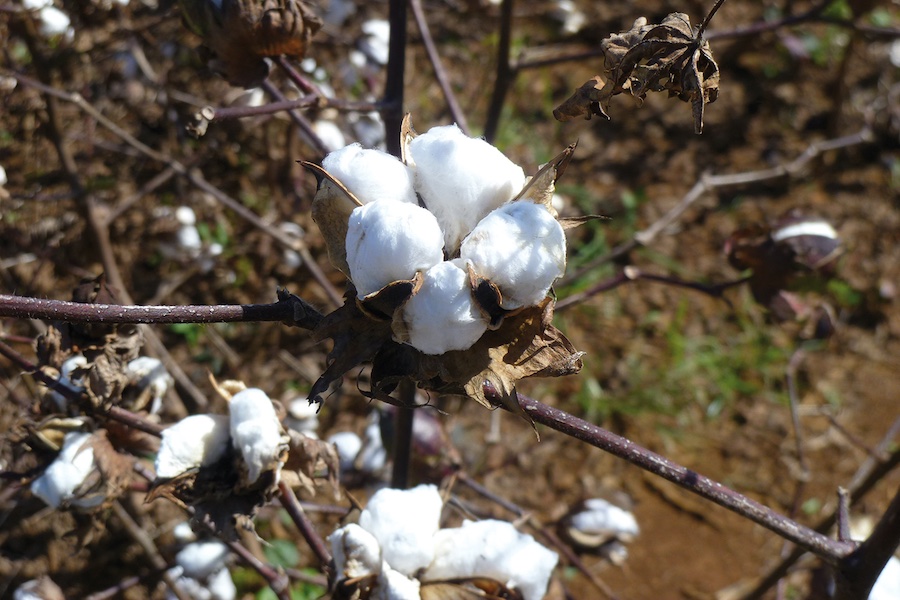
Cotton plant in Brasil © 2026 Bremen Cotton Exchange
Cotton can do more – a lot more. Cutting-edge textiles and high-tech products made from 100% cotton prove just how powerfully performance and sustainability can come together. That very surge of innovation is front and centre at the 38th Bremen Cotton Conference, taking place March 25–27, 2026, at Bremen’s Parliament on the historic market square – culminating in a bold and dedicated closing session on Friday. In the spotlight: performance upgrades for pure cotton, smart strategies for circular textile waste solutions, and pioneering concepts for demanding technical applications. From natural fibre–reinforced composites to highly effective flame-retardant solutions, cotton steps out of the closet and shows the future potential woven into every fibre.

Cotton is so much more than just a T-shirt. As a renewable resource, it’s biodegradable, free from microplastics, naturally breathable, and delivers comfort you can actually feel. But this fibre has long since broken free from the fashion rack. Cotton is evolving into a versatile high-tech material.Thanks to advanced finishing technologies, functional coatings, innovative hybrid yarns, and bio-based material blends, its range of applications is expanding fast – far beyond traditional textiles. For companies, that means real opportunity: replacing fossil-based resources with sustainable alternatives, staying ahead of regulatory demands, and unlocking new high-performance markets. Cotton is transforming from a natural product into a true engine of innovation.

Cotton textile waste as a resource

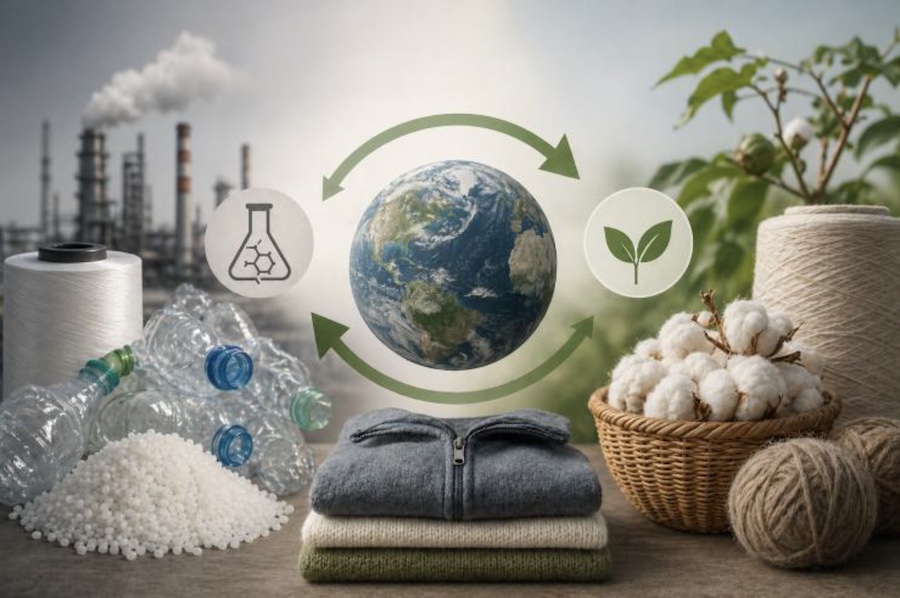
Future-ready innovation means thinking across the entire product lifecycle. Production scraps, offcuts, and post-consumer textiles are not just a growing waste problem — they are also a valuable and largely untapped resource. In his presentation, Dr. Matthew Farrell of Cotton Incorporated (USA) demonstrates how cotton textile waste can be converted into glucose. Since these materials consist primarily of cellulose — aside from dyes and finishes — they can be broken down into their sugar building blocks through hydrolysis.* The resulting glucose serves as a bio-based platform feedstock for a wide range of value-added products. Drawing on two processes developed in recent years, Farrell illustrates how used cotton textiles can be integrated into viable circular economy concepts.

* Note: During hydrolysis, cellulose chains are broken down into glucose using water — often supported by acids or enzymes.

Natural fibre systems and flame retardancy

At the same time, the market for natural fibre-reinforced composites is expanding rapidly, as industry and research increasingly turn to renewable, lightweight, and resource-efficient materials. Natural fibres generally offer a lower carbon footprint than glass or carbon fibre reinforcements and are especially attractive for applications driven by clear sustainability targets. However, fire performance presents specific challenges. As plant-based fibres are inherently combustible, natural fibre composites often exhibit less favourable fire behaviour than their glass- or carbon-fibre-reinforced counterparts. Meanwhile, regulatory and safety requirements are becoming more stringent: beyond flammability itself, parameters such as heat release rate, smoke development, and smoke toxicity are moving into sharper focus.

At the Bremen conference, Dr. Thomas Mayer-Gall from the German Institutes of Textile and Fibre Research North-West (DTNW), Krefeld, will present newly developed, halogen-free flame-retardant systems from DTNW research designed for these demanding applications.

More performance from 100% cotton

Complementing the circularity perspective, Seth Winner of Cotton Incorporated turns the spotlight on enhancing the performance of textiles made from pure cotton. The goal: to elevate 100% cotton fabrics with targeted functional upgrades — improving breathability, thermal insulation, and stretch, among other properties.

He will present innovative approaches that enable the precise functionalization of cotton textiles, using both new and established technologies to unlock the full performance potential of pure cotton.

Innovation meets circularity

Against the backdrop of rising demands for resource efficiency, circular economy solutions, and product safety, the closing session of the Bremen Cotton Conference sends a strong message. It delivers fresh, hands-on impulses for manufacturers, finishers, and developers — and showcases the remarkable innovative power of cotton.

Cotton is no longer just a traditional apparel fibre. It is evolving into a high-performance raw material platform for technical and sustainable applications — with strategic relevance for the textile and materials industries of tomorrow.



More News from Bremer Baumwollbörse

#Raw Materials

Modern testing methods for raw cotton

The 38th International Cotton Conference Bremen will take place from 25 to 27 March 2026 at the Bremen Parliament. This conference has traditionally stood for in-depth expertise and international exchange. The program will focus on technical innovations, market trends, and regulatory frameworks across the entire value chain – from agriculture to the circular economy. With high-profile speakers, the conference is regarded as the key meeting point for the global cotton industry. Today’s focus: Cotton quality and testing methods.

#Natural Fibers

Modern testing methods for raw cotton

The 38th International Cotton Conference Bremen will take place from 25 to 27 March 2026 at the Bremen Parliament. This conference has traditionally stood for in-depth expertise and international exchange. The program will focus on technical innovations, market trends, and regulatory frameworks across the entire value chain – from agriculture to the circular economy. With high-profile speakers, the conference is regarded as the key meeting point for the global cotton industry. Today’s focus: Cotton quality and testing methods.

#Natural Fibers

38th International Cotton Conference Bremen: Let´s Talk about Cotton!

The 38th International Cotton Conference Bremen, to be held on 25-27 March 2026 in Bremen’s parliament building on market square, once again sends a powerful signal for professional excellence and international dialogue. The focus is on the latest market trends and technical innovations throughout the entire value chain – from agriculture and quality assurance to processing and the circular economy. With its high-calibre speakers, the conference remains an indispensable forum for anyone involved in shaping the cotton industry scientifically, technically, or economically.

#Natural Fibers

38th International Cotton Conference Bremen launches registration and unveils key topics

Participants can now register online for the 38th International Cotton Conference Bremen, which will be held on 25-27 March 2026 at the Haus der Bürgerschaft parliament building on market square. All visitors can look forward to a high-calibre conference programme, numerous additional meetings and a valuable exchange of knowledge and information. The comprehensive range of topics covering the entire value chain will provide practical expertise, address current developments, answer key industry questions, and provide new impetus for the future.

More News on Raw Materials

#Raw Materials

Esquel Group adds two new extra-long staple cotton varieties approved

Esquel Group’s Xinjiang Research & Development Center has successfully developed two new Sea Island cotton (Extra-Long-Staple cotton, ELS cotton) varieties named “Yuan Loong 37” and “Yuan Loong 42,” which have been officially approved and granted registration numbers. Both varieties have also obtained Plant Variety Rights certificates, marking another significant breakthrough for the Group in cotton breeding and commercial application.

#Raw Materials

Aid by Trade Foundation reaches new milestones in supply chain transparency

The Aid by Trade Foundation (AbTF) is reaching new milestones as it leads the way towards greater physical traceability for Cotton made in Africa® (CmiA) cotton. With around 700 suppliers and producers in a total of 25 countries, the Aid by Trade Foundation has reached a new record number of partners who can trace CmiA cotton from the product back to its origin. This is more than double the previous year’s figure.

#Raw Materials

2026 production plan set for a record 10 metric tons of recombinant spider silk cocoon per month

Kraig Biocraft Laboratories, Inc. (OTCQB: KBLB) (“the Company”, “Kraig Labs”, or “Kraig’s”), a world leader in spider silk technology*, today announced its 2026 production plan that will drive explosive growth and establish a new global benchmark for spider silk manufacturing.

#Man-Made Fibers

Lenzing AG to become majority owner of TreeToTextile AB and accelerates industrialization of new fibers

The Lenzing Group is taking another strategic milestone by acquiring a controlling majority in the Swedish innovation company TreeToTextile AB. This step strengthens Lenzing’s position as a leading provider of sustainable, wood‑based specialty fibers and expands its innovation pipeline with a highly scalable, patent‑protected technology platform. The transaction is executed through the issuance of new shares.

Latest News

#Composites

JEC World 2026 returns with an unprecedented content program

Recognized worldwide as the leading trade exhibition for composite materials and their applications, JEC World returns on March 10-12, 2026, at Paris Nord Villepinte as the most ambitious edition to date, in line with its motto “Pushing the limits”. As the must-attend event for the composites industry, JEC World will offer an unprecedented program, blending conferences, markets insights, technical sessions, awards, and above all, a unique experience and invaluable connections.

#Digital Printing

Keeping print inclusive: Empowering women in the print industry

Across all industries, cultivating a diverse and inclusive workplace is increasingly recognised as valuable and essential to long-term success. However, despite the print industry’s significant advancements in technology and innovation, visible representation of women remains limited. As the sector grapples with low recruitment, it’s important to challenge outdated perceptions. Creating real change, however, requires collective effort - no single company can do it alone.

#Texprocess 2026

Texprocess 2026: market overview for strategic future investments

At Texprocess 2026, 200 exhibitors from 28 countries will be represented. In a challenging market environment, the leading trade fair is a constant and reflects progress in textile processing – driven by automation, digitalisation and AI. In addition, international start-ups present their ideas and meet partners from industry and research. Techtextil takes place in parallel with an optimised hall layout.

#Associations

European Business Coalition welcomes provisional application of EU–Mercosur Agreement and calls for Swift and full implementation

With the European Commission’s decision to provisionally apply the EU–Mercosur Interim Trade Agreement, a process spanning more than 25 years now moves decisively into its implementation phase.

TOP