[pageLogInLogOut]
TRÜTZSCHLER SPINNING - THE NEW CARD

#Industry 4.0 / Digitalization

Lectra launches Apogy with agentic AI for fashion product development

Lectra has launched Apogy, a new cloud-based solution for fashion product development that combines product data, collaborative workflows and agentic artificial intelligence. The platform is designed to connect the different stakeholders and processes between initial design and production while using AI agents to automate tasks and support decision-making throughout the development cycle.

Paris, September 15, 2026 – With Apogy, Lectra is extending its digital solutions beyond traditional computer-aided design and patternmaking into a broader product development environment. The new SaaS platform brings together product information, processes and teams in a shared digital workspace and uses specialized AI agents to assist with tasks from early concepts through to industrialization-ready prototypes.

The launch comes as fashion companies face shorter collection cycles, more volatile demand and increasing regulatory and environmental requirements. At the same time, product development often continues to rely on fragmented processes, separate software environments and data distributed across different teams and external partners.

Lectra developed Apogy over a period of three years, working with several dozen customers to identify requirements and test the new approach.

“For fifty years, Lectra has helped transform the fashion industry, particularly by digitizing patternmaking. Today, agentic artificial intelligence gives us the opportunity to take a new step forward and reinvent product development as a whole,” said Maximilien Abadie, Deputy CEO of Lectra.

AI agents support the development process

A central element of Apogy is the use of agentic AI. While generative AI systems typically respond to individual prompts by producing content, agentic systems are designed to pursue defined objectives through a sequence of tasks, drawing on available data and interacting with different parts of a workflow.

Within Apogy, Lectra says specialized intelligent agents can support development teams in decision-making, automate routine activities and access relevant product information. The aim is to reduce time spent on repetitive and low-value tasks while making technical knowledge and product data more readily available throughout the development process.

Teams can use prompts, sketches or images to generate and explore initial concepts. These concepts can then move through the development process within the same environment. Apogy also supports digital prototyping, 3D simulations and photorealistic renderings, allowing teams to evaluate and approve products digitally before physical production stages.

The platform is compatible with standard market formats, according to Lectra, and provides traceability of changes throughout the development process.

One data environment for teams and suppliers

Another focus is collaboration. Apogy centralizes product development data in a shared and continuously updated environment, enabling internal teams as well as partners and suppliers to work with the same information simultaneously.

This is intended to address a recurring challenge in fashion product development: information being transferred between different applications, departments and companies, potentially creating duplicate work, inconsistencies and delays.

Irish sportswear manufacturer O’Neills is among the companies already using Apogy.

“For the first time in our history, all our teams are using a single solution,” said David Towell, Senior Manager at O’Neills. “This harmonization eliminates errors linked to data transfers, increases transparency and now enables us to accelerate operations, improve productivity and effectively support our growth.”

Lectra also sees the platform as a way of preserving and distributing technical expertise within companies. By making existing product knowledge accessible through a common digital environment, Apogy is designed to reduce dependence on individual specialists and facilitate knowledge transfer to new employees.

Oniverse, the international fashion group behind brands including Calzedonia, Intimissimi and Tezenis, points to this aspect in particular.

“New generations expect to work with cutting-edge tools,” said Riccardo Romani, Operations Director at Oniverse. “By equipping our teams with Apogy, a solution designed natively for the AI era and featuring advanced capabilities, we are strengthening our ability to attract, develop and retain the next generation of talent in product development roles.”

From CAD to AI-supported product development

Apogy represents a further development of the digital tools that have shaped Lectra’s position in fashion technology. The company’s portfolio includes established CAD and patternmaking solutions such as Modaris, ModarisPGS and Gerber AccuMark.

With the new platform, the focus expands from individual design and patternmaking tasks towards the orchestration of the wider product development process. Lectra says Apogy will continue to evolve as a SaaS solution, with additional AI capabilities planned to automate further tasks and workflows.

The company positions the combination of centralized product data and specialized AI agents as a way for fashion businesses to shorten development cycles while retaining the technical information required to move designs towards industrial production.



More News from Lectra Deutschland GmbH

#Textile processing

Lectra strengthens its partnership with Caron Technology

Lectra announces the strengthening of its industrial alliance with Caron Technology, an Italian company founded in 1993 and specializing in preparation systems operating before the cutting process. This new milestone reflects the strength of a trusted relationship that has grown between the two companies over nearly two decades.

#Industry 4.0 / Digitalization

Mango joins TextileGenesis pioneering traceability solution, a Lectra company, for a transparent value chain

Mango, one of the leading international fashion groups, has joined TextileGenesis, the pioneering traceability solution for the fashion and textile industries, to trace their natural and animal fibers, synthetics, man-made cellulosic fibers and leather. TextileGenesis, a Lectra company, offers a complete and secure cutting-edge technology with its six-dimensional (6D) offering and unique “fiber forwards” approach. Mango, has long been committed to maintaining a fully transparent supply chain, and TextileGenesis will reinforce this commitment.

#Textiles & Apparel / Garment

New Retviews study by Lectra: the luxury market in 2025, between margin protection strategies and new iconic pieces

After more than a decade of uninterrupted growth, the luxury fashion market is now experiencing a more pronounced slowdown. Global luxury goods sales have fallen from €369 billion in 2023 to €364 billion in 2024 (according to Bain & Co.), exposing the vulnerabilities of a model long supported by aggressive price increases.

#Recycling / Circular Economy

Recover and TextileGenesis collaborate to verify supply chain integrity of recycled materials

RecoverTM, a global producer of recycled cotton and cotton-blend fibers, has commenced a traceability collaboration with TextileGenesis, a Lectra company, to digitally track its recycled waste materials across the entire textile value chain.

More News on Industry 4.0 / Digitalization

#Industry 4.0 / Digitalization

Orient Rongheng connects production planning across China and Bangladesh with FastReactPlan

Chinese apparel manufacturer Orient Rongheng is implementing Coats Digital’s FastReactPlan to digitalize production planning across its manufacturing operations in China and Bangladesh. The project aims to connect capacity, materials and order planning across multiple factories while integrating these processes with the company’s existing ERP and Manufacturing Execution System (MES).

#Industry 4.0 / Digitalization

Coats Digital launches AI-powered GSD RealMotion for motion analysis

Coats Digital has launched GSD RealMotion, an AI-powered solution designed to provide apparel manufacturers with greater visibility into factory-floor operations. By analysing shop-floor video and applying Coats Digital’s GSD methodology, the solution turns video recordings into structured, motion-by-motion method studies.

#ITM 2026

Driving digitalization, efficiency, and Smart Manufacturing across textiles and carpets

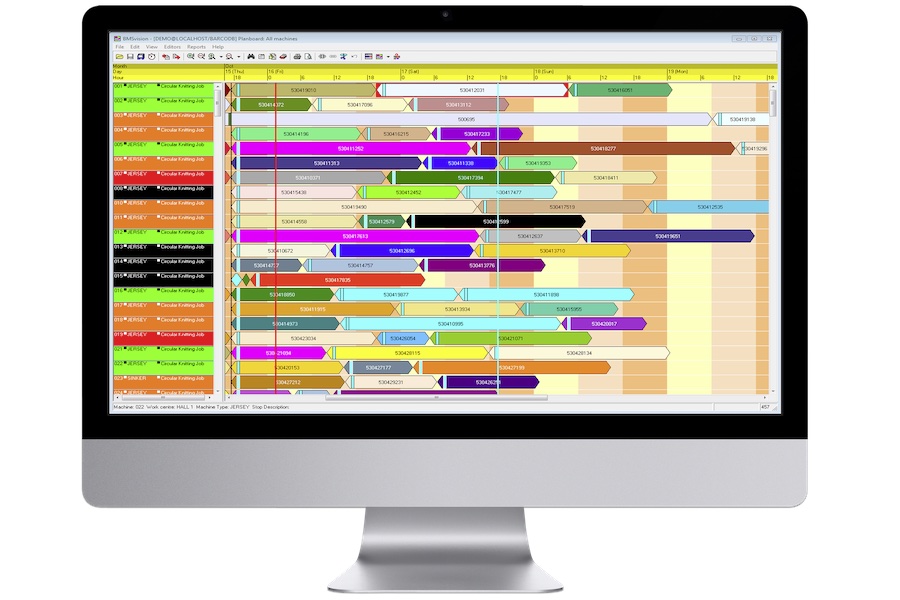
At this year’s ITM, BMSvision proudly showcases its next leap forward in digital manufacturing excellence. As a long-standing global pioneer in Manufacturing Execution Systems (MES) for the textile and plastics industries, BMSvision continues to accelerate digital transformation by delivering powerful, data-driven solutions that boost productivity, enhance quality and support sustainable growth. Visit BMSvision at the Vandewiele booth in Hall 7, Booth 710, to experience the future of textiles manufacturing.

#Industry 4.0 / Digitalization

Textile ETP launches digital transformation strategy, calling for urgent collective action across the value chain

Textile ETP’s DigitX Innovation Hub published its strategic roadmap for the digital transformation of Europe's textile and apparel industry.

Latest News

#Sustainability

Jeanologia Sustainability Report highlights environmental impact of textile technologies

Jeanologia has published its Sustainability Report 2025, reporting a 13.64% reduction in its own carbon footprint and quantifying the environmental impact associated with the use of its technologies across the global textile industry. According to the company’s calculations, their use avoided the pollution of 21.52 million m³ of water and emissions of approximately 103,530 tonnes of CO₂ compared with conventional textile finishing processes.

#Sustainability

Global Standards announce launch of a new textile processing standard

The 14th September 2026 marks the public launch of the Global Responsible Textile Standard (GRTS), a new standard for the processing of textiles made from fibres certified to third-party standards recognised by GRTS and covering a broad range of plant, animal, synthetic, man-made cellulosic and recycled fibres.

#Raw Materials

ALLIED expands down traceability with lot-level carbon footprint data

ALLIED Feather + Down has expanded its TrackMyDown traceability platform to include validated cradle-to-gate carbon footprint data linked to individual down lots. The initiative is designed to provide brands and consumers with more detailed environmental information on the materials used in finished products and could also support future data requirements associated with Digital Product Passports.

#Sustainability

bluesign launches bluepass alongside first consumer-facing campaign

With its first consumer-facing advertising campaign, bluesign is taking a new approach to making chemical management, manufacturing standards and third-party verification more visible to consumers. The UNSEEN campaign will launch on September 20 around New York Climate Week and accompanies the introduction of bluepass, bluesign’s new consumer-facing designation.

TOP