[pageLogInLogOut]

#Associations

Engineering depth and diversity for composites

Airbond prototyped and tested a number of structures with different cell sizes and thicknesses before deciding on the optimised structure for its latest range of 3D-printed splicers. © 2026 Airbond
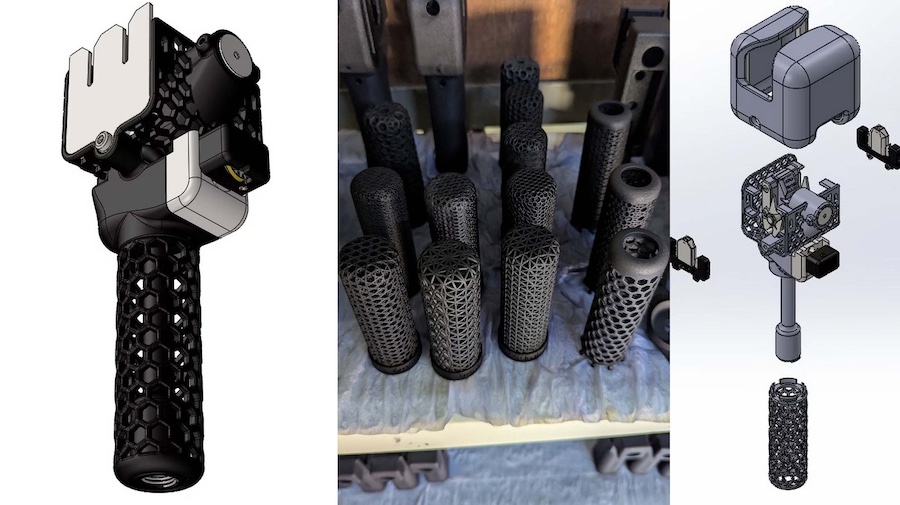
Airbond is the latest member of the British Textile Machinery Association (BTMA) to receive recognition for contributions to the composites industry. The engineering firm based in Pontypool, South Wales, has just received the Make UK Energy and Sustainability Award for its Lattice 3D Printing project.


The award recognises the company’s use of industrial 3D printing and advanced design methods to reduce material use and waste in the production of its pneumatic splicers, while improving manufacturing efficiency and maintaining the reliability demanded by industrial customers.

“We’ve used 3D printing to do something traditional manufacturing can’t – build strength and performance into the inside of the part, using far less material,” explains Maxim Wright, Airbond’s Head of Design and Development who leads the company’s design engineering and additive manufacturing programme. “Winning a national sustainability award is a big moment for a small team in Pontypool and it shows what modern Welsh engineering can deliver.”

Optimised structure

Pneumatic splicing was invented by Airbond in the 1960s, initially for the textile industry, and has subsequently been widely adopted by companies manufacturing carbon and aramid-based components for the aerospace, automotive and wind power industries.

Using Carbon3D’s Lattice Design Engine, Airbond prototyped and tested a number of structures – Voronoi, Tetrahedral, Kagome – all with different cell sizes and thicknesses, before deciding on the optimised structure for its latest range of splicers.

Zero mechanical failures and a strong customer response confirmed the design’s robustness and manufacturing viability. The standardised modular design is 33% lighter than previous splicers and has reduced costs in electrical packages, engineering and installation for Airbond, which continues to invest in product development and manufacturing capability in South Wales, applying advanced design to make industrial tools lighter, more efficient to produce and more sustainable.

Interfacing with specialists

This success follows quickly on the heels of the announcement that fellow BTMA member Cygnet Texkimp has been shortlisted for a 2026 JEC Innovation Award for its collaboration with McLaren Automotive on the ART rapid tape-deposition system. Capable of depositing dry fibre tapes at up to 2.5 metres per second with exceptional precision, ART reduces scrap, shortens cycle times and delivers structural improvements already being realised across McLaren’s composite-intensive vehicle platforms.

As the world’s largest independent manufacturer of prepreg production machinery and handling and converting systems for the composites industry, Cygnet has just launched a new website for its global audience, providing users with easy access to valuable resources and an interface to connect with product specialists.

“The new site gives us a dynamic platform to share our technologies and expertise with our global audience in a way that reflects the ease and professionalism with which we operate,” says CEO Luke Vardy. “We hope it will provide a sense of what it’s like to collaborate with us and a clear view of our commitment to innovation and performance in fibre processing.”
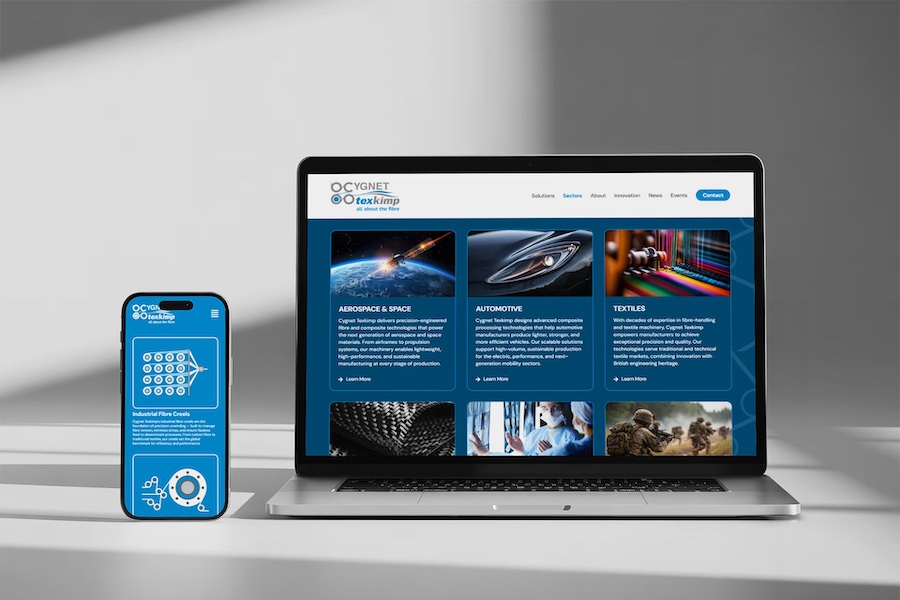
Cygnet has just launched a new website for its global audience. © 2026 Cygnet


Autoclave advances

A dedicated new LinkedIn page meanwhile celebrates 15 years of growth, development, and engineering innovation in autoclave and thermosetting technologies for a third BTMA member, Roaches International.

Roaches Autoclaves was founded in 2011 and has subsequently become a central part of the West Yorkshire-based business, supporting the development of aerospace components and high-performance automotive structures, as well as the production of components for commercial construction, sporting goods and food production and processing.

The company’s first ever autoclave was installed at Crosby Composites in Brackley, Northamptonshire, with a diameter of 2.5 metres and a length of three metres.

“We started big and the industry instantly wanted more, so happily, we carried on and Crosby went on to order three more autoclaves of the same size, all of which are still in operation today and receive reliable and ongoing service from us,” says Roaches International MD Sean O’Neil. “In addition to the machines themselves, support, service, calibration and collaboration remain the cornerstones of Roaches Autoclaves and our dedicated new LinkedIn platform will allow for more frequent, higher quality communication with the digital composites community.”
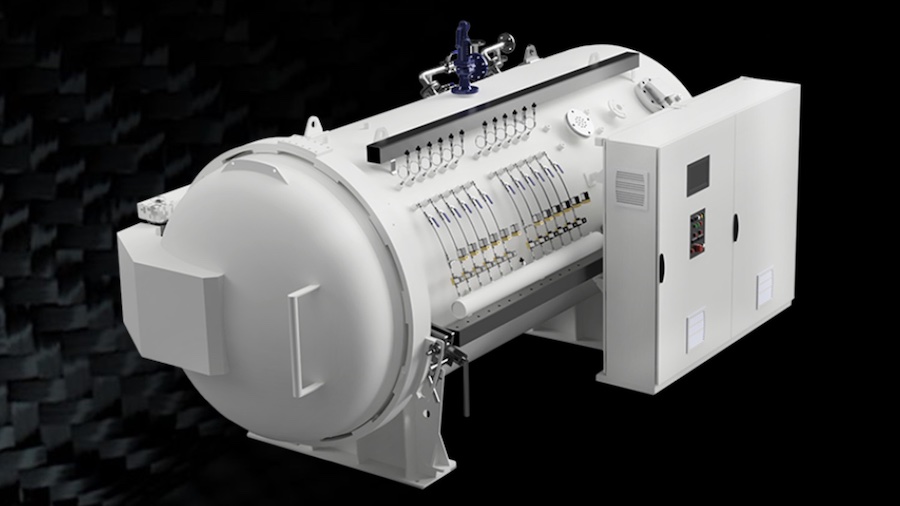
Roaches International is marking 15 years of manufacturing autoclaves for composites manufacturers. © 2026 Roaches International


Measurable benefits

“From additive manufacturing and sustainable product design to high-speed fibre placement and advanced autoclave technologies, our members continue to demonstrate how British machinery and engineering expertise are helping to shape the future of the global composites industry,” says BTMA CEO Jason Kent. “These achievements underline the depth and diversity of engineering excellence across our membership, and what is particularly encouraging is the way they all deliver real, measurable benefits in efficiency, sustainability and performance, while being rooted in long-term investment, collaboration and skills within the UK.”
More News from British Textile Machinery Association

#Associations

BTMA backs global growth while investing in future UK leaders

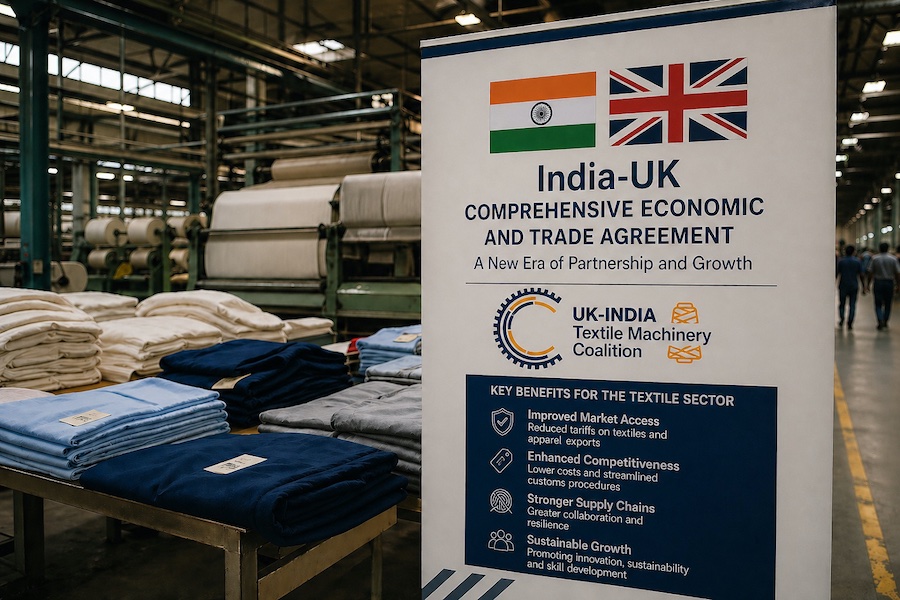
As one of a number of new initiatives launched this year, the British Textile Machinery Association (BTMA) is launching the UK-India Textile Machinery Coalition. The UK-India Free Trade Agreement, signed in July 2025, has implications that extend across sourcing, competitiveness and long-term trade dynamics, believes BTMA CEO Jason Kent.

#Techtextil 2026

Techtextil 2026 recognition for the UK’s FET

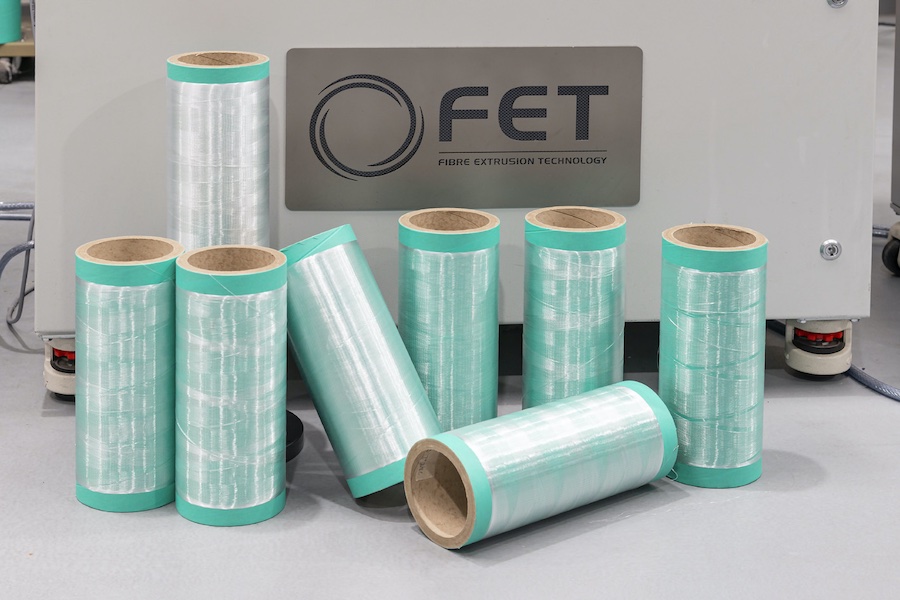
Fibre Extrusion Technology (FET) will receive the Techtextil 2026 New Production Technology Innovation Award at next week’s Techtextil in Frankfurt (April 21-24). The Leeds-based member of the British Textile Machinery Association (BTMA) has developed the FET-500, a new toxic solvent-free gel small scale system for the production of ultra-high-molecular-weight polyethylene (UHMWPE).

#Techtextil 2026

Precision, performance and progress: British textile machinery at Techtextil and Texprocess 2026

As global demand accelerates for lighter, stronger and more sustainable technical textiles, the machinery and testing technologies behind their manufacture are evolving at pace. At the Techtextil and Texprocess exhibitions in Frankfurt this April, eight members of the British Textile Machinery Association (BTMA) will demonstrate how advanced engineering continues to shape the performance, precision and resource efficiency of advanced fibre and fabric production.

#Associations

Driving innovation in technical textiles, digitalisation and testing

Members of the British Textile Machinery Association (BTMA) can look back on 2025 as a year marked by notable technological advances and continued progress in global trade, despite an uncertain and volatile market.

More News on Associations

#Associations

Sustainability: European industry calls on EU to keep Single-Use Plastics Directive unchanged

A broad coalition of European industry associations, including EDANA, Euratex and Plastics Europe, has urged EU institutions to maintain the current legal framework of the Single-Use Plastics Directive (SUPD). In a joint statement, the organisations argue that reopening the Directive at this stage would create legal uncertainty, increase regulatory complexity and undermine investment, while its implementation across the European Union is still incomplete.

#Associations

Textile machinery: Italian technology charts the course for revival

Operating in a scenario characterized by geopolitical instability, slowing industrial investments, and new protectionist pressures. This is the main challenge for the Italian textile machinery industry that emerged during the General Assembly of ACIMIT (Association of Italian Textile Machinery Manufacturers), held today in Milan at the Shareholders’ Hall of Palazzo Edison.

#Recycling / Circular Economy

New skills for a circular textile economy

Based on the results of a comprehensive analysis, the Erasmus+ project Skills4Circularity is developing three practical training modules covering recycling technologies, eco-design for the circular economy and sustainable manufacturing. The content of the first module, Recycling Technologies, has now been developed and validated together with industry representatives. The module provides participants with knowledge of regulatory requirements, material sorting and the preparation of textile waste for recycling.

#Associations

Bangladesh: Italian textile machinery mission stops in Dhaka and Chittagong

Technological upgrading and the transition toward higher value-added production are driving the new Italian industrial mission to Bangladesh. This year, the mission will split between the country’s two main manufacturing hubs, where Italian manufacturers will meet the leaders of the local textile supply chain in two strategic stages: July 7th in Dhaka and July 9th in Chittagong.

Latest News

#Recycling / Circular Economy

Reju opens its first R&D Center in the U.S. in Conshohocken, Pennsylvania

Reju, the company specializing in textile regeneration, today announced the opening of a Research and Development (R&D) Center in Conshohocken, Pennsylvania, the company's first proprietary research center in North America. Located within Technip Energies' existing Advanced Materials and Catalysts research center, the lab will allow Reju to accelerate the rollout of its recycling technologies and develop its next-generation circular solutions.

#Weaving

Itema reaffirms its commitment to the Syrian textile industry at NasTex 2026

From July 18th to 21st, Itema will exhibit at NasTex at the Damascus Fairground (Hall 11 – Stand C02), marking its return to one of the Middle East’s historically significant textile markets. Itema will showcase advanced weaving technology designed to support the competitiveness and technological evolution of Syrian manufacturers and announces a new partnership with Growfast Agency as the sole agent of Itema in Syria.

#Knitting & Hosiery

KARL MAYER's HKS 2-SE Expands Possibilities for Premium Stretch WARP KNITS

Warp knitted fabrics with a woven look are more in demand than ever in the fashion and apparel industries. Stretch WARP KNITS, in particular, impress with their freedom of movement, breathability, and virtually wrinkle-free wear – thereby opening up new style worlds such as smart casual or business casual. When it comes to the highly efficient production of premium-quality stretch WARP KNITS, the HKS 2-SE has long been the machine of choice. KARL MAYER’s best-selling tricot machine produces standard elastic fabrics characterized by high gauges, smooth, delicate surfaces, and a soft hand feel.

#Textiles & Apparel / Garment

Catalyst Club launches in Florence: Where conversations become catalysts for change

The first chapter of Catalyst Club debuted in Florence, bringing together creative directors, entrepreneurs, manufacturers, journalists and innovators from across the fashion and textile industry for an evening of dialogue, exchange and connection.

TOP