[pageLogInLogOut]

#Textile processing

Jeanologia reinvents textile finishing at Egypt Stitch & Tex with advanced laser and G2 Indra technologies

At the Egypt Stitch & Tex fair, held from February 20 to 23 in Cairo, Jeanologia, a global leader in textile technology innovation, showcased its groundbreaking solutions that are set to revolutionize textile finishing in Egypt and beyond. These innovations empower Egyptian manufacturers with the tools to drive automation, improve resource efficiency, and enhance sustainability.

At Egypt Stitch & Tex, Jeanologia highlighted the synergy between some of its most advanced technologies, including laser, G2 Indra, eFlow + DB 420, and H2 Zero. These solutions are making a significant impact on global textile production and are essential to the future of Egypt’s textile sector.
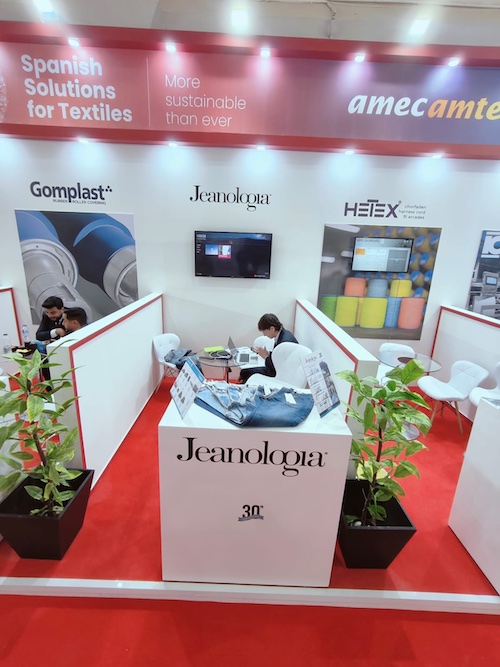
Jeanologia booth at Egypt Stitch & Tex © 2025 Jeanologia


Jeanologia’s pioneering laser technology—refined over 25 years—now offers a fully automated process that replaces harmful traditional techniques. By eliminating dangerous practices for workers and the environment, this innovative laser not only ensures safer operations but also unlocks endless creative possibilities, enhances design quality, and boosts productivity for manufacturers.

Complementing the laser is the G2 Indra technology, the perfect partner in achieving a sustainable finishing process. Instead of washing with water and chemicals, G2 Indra uses air, significantly reducing chemical usage and water consumption. Today, the combination of these two technologies has permanently eliminated the need for PP spray and the stone wash process, marking a decisive shift toward cleaner, more efficient production.
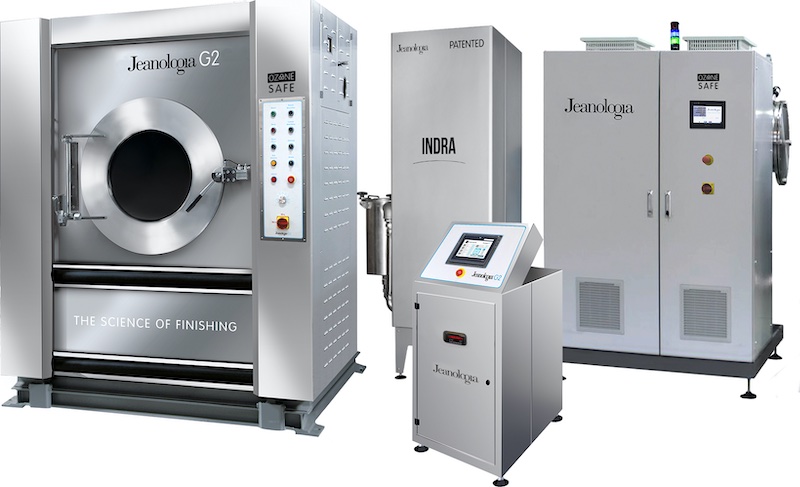
Jeanologia recently showcased its cutting-edge laser and G2 Indra technologies at the Egypt Stitch & Tex fair © 2025 Jeanologia


These innovations empower Egyptian textile manufacturers to drive automation, optimize resource efficiency, and meet international sustainability standards.

“Egypt’s textile market is evolving rapidly, and our advanced laser and G2 Indra technologies are designed to meet the growing demands for efficiency, safety, and environmental responsibility,” said Mahmoud Hassan, Jeanologia Area Manager in Egypt. “We are proud to offer solutions that not only improve production quality and design possibilities but also set a new benchmark for sustainable practices in the industry.”

The game-changing technologies of Jeanologia are empowering Egyptian manufacturers to automate production, reduce resource consumption, and lead the charge in sustainability game-changing technologies are empowering Egyptian manufacturers to automate production, reduce resource consumption, and lead the charge in sustainability © 2025 Jeanologia


More News from JEANOLOGIA S.L.

#Denim

Denim moves towards sustainability

EIM (Environmental Impact Measurement), the global reference platform for measuring the environmental impact of garment finishing, presents the second edition of its annual report Denim Industry Progress & Insights 2025. The study analyses over 100,000 real denim finishing processes, providing an accurate and up-to-date view of the industry’s evolution towards more sustainable models.

#Textile processing

Jeanologia showcases the future of product development

Jeanologia is showcasing how software is transforming product development in the fashion industry at PI Apparel Europe: The Fashion Technology Show, taking place on March 30–31 in London.

#Denim

Jeanologia launches Billy

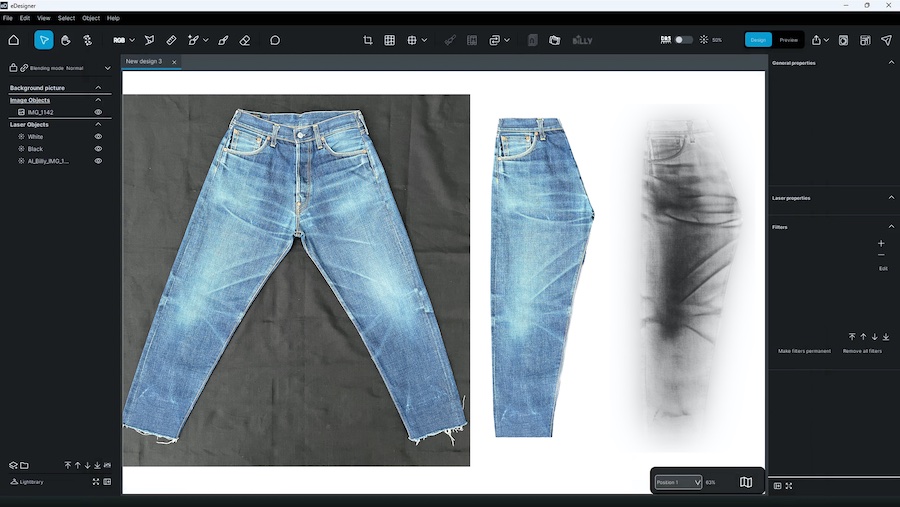
The new AI extracts precise laser designs from a garment image in minutes, transforming how vintage denim is recreated for production. If Jeanologia’s laser changed the way jeans were made at the end of the last century, its AI now takes the next step: moving from reproducing wear to designing it. / archive photo © 2026 Jeanologia

#Textile chemistry

Jeanologia urges industry to accelerate PP Spray phase-out following ZDHC Watchlist update

Potassium permanganate has officially entered the Chemical Watchlist of the ZDHC Foundation, signaling increased scrutiny and potential phase-out of one of the most hazardous chemicals still used in denim finishing. The inclusion confirms an industry shift that Jeanologia anticipated more than a decade ago.

More News on Textile processing

#Textile processing

YKK joins ZDHC as a Signatory Supplier, strengthening commitment to eliminating hazardous chemicals

YKK Corporation (Headquarters: Chiyoda-ku, Tokyo; President: Koichi Matsushima; hereafter, YKK) has joined ZDHC (Zero Discharge of Hazardous Chemicals) as a Signatory Supplier as of May 2026.

#Textile processing

trinamiX mobile NIR spectroscopy: New applications for the footwear and textile industry

trinamiX GmbH expands its solution portfolio for the circular economy, now enabling the identification of materials used in the footwear and textile industries. With its mobile near-infrared (NIR) spectroscopy solutions, trinamiX supports manufacturers, sorters, recyclers, and brand owners in reliably identifying materials and improving transparency across increasingly complex value chains.

#Texprocess 2026

Texprocess 2026: Style3D | ASSYST showcases AI, 3D, 2D and automation and meets strong industry response

Four days, countless discussions and a clear signal from the industry: the future of fashion is digital and AI-driven. At Texprocess 2026, Style3D | ASSYST demonstrated how AI, 3D and automation are already fundamentally transforming processes from design to production.

#Techtextil 2026

Speed and connectivity: Techtextil and Texprocess provided market-ready solutions for industries under pressure

With more than 36,000 visitors and 1,700 exhibitors from a total of 112 countries, Techtextil and Texprocess 2026 demonstrated how innovation comes into industrial use. The convergence of research, industry and application proved to be a breeding ground for new material solutions, manufacturing and processing technologies. Natural fibres, performance apparel, connected systems and AI-driven processing technologies emerged as key growth and future markets.

Latest News

#INDEX 2026

“We clearly see that reliability, flexibility, service and total cost of ownership are becoming increasingly important again.”

The nonwovens industry continues to face a challenging market environment. Nevertheless, AUTEFA Solutions reports successful projects, new line sales and growing demand for energy-efficient and flexible solutions. In this interview, André Imhof of AUTEFA Solutions talks about competitiveness against Chinese suppliers, new service and recycling concepts, the growing importance of application development and the opportunities created by countercyclical investments.

#INDEX 2026

“Needle punching technology is more universal and sustainable than ever!”

Needle punching technology was long regarded as a rather traditional and comparatively slow technology within the nonwovens industry. In this interview, Johann Philipp Dilo explains why needle punching is more relevant than ever today – ranging from energy efficiency and resource conservation to hygiene applications, new machine concepts and design-oriented nonwoven solutions.

#Research & Development

Textile climate control system in workwear – exhibition at the 2026 SME Innovation Day!

Conventional protective workwear often reaches its limits during strenuous physical activity. In particular, the transport of sweat and excess body heat poses a problem. The German Institutes of Textile and Fiber Research (DITF) conducted research on flow-optimized, air-conducting textile structures that enable targeted climate control directly on the body. These structures can be integrated straight into protective work garments. The textile climate control system supports the body’s natural thermoregulation. This contributes to improved workplace safety and comfort.

#Nonwovens

PET spunbond from China – EDANA welcomes imposition of provisional anti-dumping measures

On 13 May 2026, after eight months of investigation, the European Commission imposed provisional anti-dumping duties of 45.6-50.0% on imports of PET spunbond from China. EDANA welcomes this expression of the Commission’s clear determination to protect EU industries from the unfair trade practices of Chinese producers.

TOP