[pageLogInLogOut]

#Textile chemistry

PFAS: TÜV Rheinland expands global testing capabilities

TÜV Rheinland is expanding its testing capacity worldwide to meet the growing global demand for testing services for per- and polyfluoroalkyl substances (PFAS). The testing services provider has seen demand increase by more than 30 per cent year-on-year. PFAS, a group of more than 10,000 known substances, are used in many industries for their functional properties, including textiles, food packaging, furniture and carpet fabrics, as well as mechanical and automotive engineering. However, their potential risk to the environment and human health is increasingly the focus of regulatory and public attention.


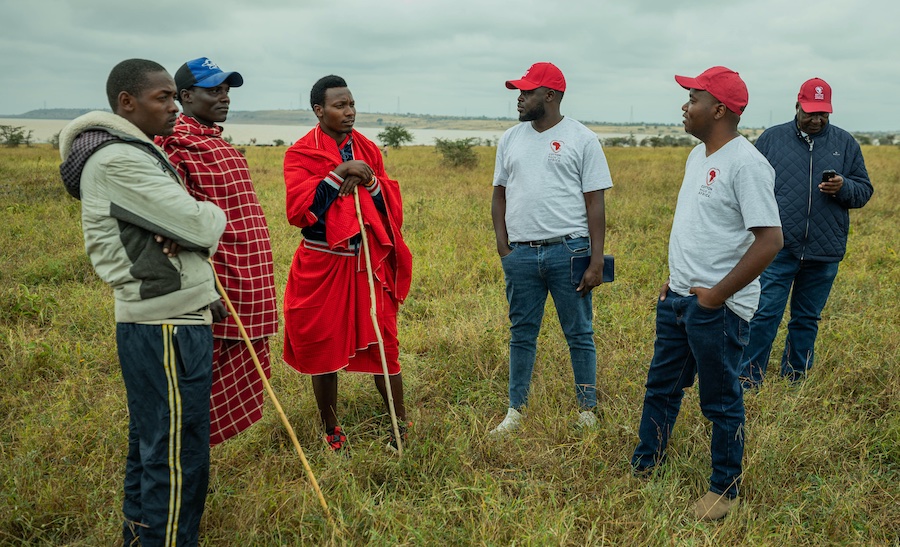
In view of increasing demand for PFAS testing services, TÜV Rheinland is expanding its testing capacities worldwide (photo: TÜV Rheinland).

The chemical ban on PFAS in many countries in the world poses new challenges for manufacturers and retailers and requires a lot of development and testing. Companies that manufacture, trade or import products will need to monitor and reduce PFAS. TÜV Rheinland is helping companies prepare for changes in legislation by providing accurate chemical analysis. "This enables companies to adapt to changes in the legal situation at an early stage, establish responsible action as a quality feature and thus remain competitive," explains Steffen Tümptner, an expert at TÜV Rheinland.

PFAS in industry – further restrictions on the horizon

In the EU, several classes of PFAS are already subject to restrictions, for example under the REACH and POP regulations. In September 2024, EU Regulation 2024/2462 was adopted, which will phase in bans on PFHxA (C6 PFAS) in certain applications over a five-year period. This includes a ban on PFAS in clothing, footwear, paper and board in contact with food and in cosmetics from October 2026. From October 2027, the ban will be extended to other textiles and leather products. European authorities are currently considering further restrictions that could cover more and more PFAS in the long term. The US authorities are also taking far-reaching action to restrict PFAS at the national level. In April 2024, the US Environmental Protection Agency (EPA) issued nationwide limits for six groups of substances in tap water, making them among the strictest in the world.

Accurate analysis and expert advice from TÜV Rheinland

TÜV Rheinland's testing packages, training and on-site audits provide the tools needed to analyse products, find suitable alternatives and ensure more sustainable production. More information on PFAS for interested parties and companies is available at: www.tuv.com/pfas



More News from TÜV Rheinland

More News on Textile chemistry

#Sustainability

bluesign technologies introduces bluepass

bluesign technologies ag (www.bluesign.com) today announces the launch of bluepass, a new certification mark and product labeling system created to deliver clear, substantiated, and verifiable sustainability claims at scale.

#Textile chemistry

Officina39 expands in South Asia with dual trade show presence and new low-impact dyeing innovation

Officina39 reinforces its strategic expansion in South Asia by announcing its participation in two key textile industry events in Bangladesh and India, alongside the launch of a new solution designed to reduce the environmental impact of reactive dyeing.

#Techtextil 2026

Speed and connectivity: Techtextil and Texprocess provided market-ready solutions for industries under pressure

With more than 36,000 visitors and 1,700 exhibitors from a total of 112 countries, Techtextil and Texprocess 2026 demonstrated how innovation comes into industrial use. The convergence of research, industry and application proved to be a breeding ground for new material solutions, manufacturing and processing technologies. Natural fibres, performance apparel, connected systems and AI-driven processing technologies emerged as key growth and future markets.

#Techtextil 2026

RUDOLF is pioneering the future of technical textiles by developing innovative, functional solutions

At Techtextil 2026, RUDOLF presents its latest innovations for textile auxiliaries, textile care and construction chemicals. Based in Geretsried, Bavaria, the company draws on more than 100 years of experience and continues to position itself as a global technology partner focused on quality, innovation and sustainability.

Latest News

#INDEX 2026

“We clearly see that reliability, flexibility, service and total cost of ownership are becoming increasingly important again.”

The nonwovens industry continues to face a challenging market environment. Nevertheless, AUTEFA Solutions reports successful projects, new line sales and growing demand for energy-efficient and flexible solutions. In this interview, André Imhof of AUTEFA Solutions talks about competitiveness against Chinese suppliers, new service and recycling concepts, the growing importance of application development and the opportunities created by countercyclical investments.

#INDEX 2026

“Needle punching technology is more universal and sustainable than ever!”

Needle punching technology was long regarded as a rather traditional and comparatively slow technology within the nonwovens industry. In this interview, Johann Philipp Dilo explains why needle punching is more relevant than ever today – ranging from energy efficiency and resource conservation to hygiene applications, new machine concepts and design-oriented nonwoven solutions.

#Research & Development

Textile climate control system in workwear – exhibition at the 2026 SME Innovation Day!

Conventional protective workwear often reaches its limits during strenuous physical activity. In particular, the transport of sweat and excess body heat poses a problem. The German Institutes of Textile and Fiber Research (DITF) conducted research on flow-optimized, air-conducting textile structures that enable targeted climate control directly on the body. These structures can be integrated straight into protective work garments. The textile climate control system supports the body’s natural thermoregulation. This contributes to improved workplace safety and comfort.

#Nonwovens

PET spunbond from China – EDANA welcomes imposition of provisional anti-dumping measures

On 13 May 2026, after eight months of investigation, the European Commission imposed provisional anti-dumping duties of 45.6-50.0% on imports of PET spunbond from China. EDANA welcomes this expression of the Commission’s clear determination to protect EU industries from the unfair trade practices of Chinese producers.

TOP