[pageLogInLogOut]

#Sustainability

Global Standards establishes new non-profit foundation to strengthen governance

Governing Council © 2026 GOTS
Global Standards gGmbH, the nonprofit organisation behind the globally recognised Global Organic Textile Standard (GOTS), announced a new governance structure designed to support its long-term mission and reinforce organisational autonomy of its Voluntary Sustainability Standards and programmes.


The newly established Global Standards Foundation is the sole shareholder of the operating organisation, which was renamed Global Standards gGmbH. The new structure will ensure that strategic decisions are guided by independent expertise, to support a more sustainable textile sector, in line with the Sustainable Development Goals (SDGs).

A key feature of the new model is the establishment of a Governing Council as the organisation's strategic governing body. The inaugural Governing Council brings together four new outstanding independent experts alongside nominees from each of the four founding organisations and an independent chair, showcasing a global range of experience and expertise. All serve in a personal capacity, collectively extending Global Standards’ expertise across sustainability, governance, finance, certification and public policy:

Prof. Dr. Christian Berg, Member of the GLS Bank Investment Committee and of the German Association of the Club of Rome and former Chief Sustainability Architect, SAP

Pietro Bertazzi, Chief Policy, Projects and Interim Growth Officer at Carbon Disclosure Project (CDP)

James Cashmore, former Managing Director, Soil Association

Tom Chapman, co-CEO, Organic Trade Association

Herbert Ladwig (Governing Council Founding Chair), Policy & Legal Advisor, Global Standards gGmbH

Tsuyoshi Maeda, Founder and CEO, Team O-Three Co., Ltd., and Chair, Japan Organic Cotton Association

Nicole Pälicke, Director, People Wear Organic and Board Member, Internationaler Verband der Naturtextilwirtschaft (IVN)

Georg Schürmann, Chair, UmweltBank Supervisory Board, Member of Supervisory Board, Oikocredit and former Managing Director, Triodos Bank Germany

Laurence Tanty, former Chair of Fairtrade International Board

The new governance structure draws from more than 20 years of industry leadership and will support Global Standards' evolution to a multi-standard Voluntary Sustainability Standards organisation. Its portfolio today includes the worldwide recognised GOTS and the new Global Responsible Textile Standard (GRTS), which expands to fibres beyond organic.

As expectations for Voluntary Sustainability Standards and regulatory requirements continue to intensify, the new foundation structure provides an independent governance model designed to meet those expectations while strengthening Global Standards’ ability to serve the textile sector over the long term.

Today, Global Standards is a team of around 50 professionals working around the world with a clear mission: “To ensure the highest level of social and environmental impact in textile value chains through voluntary sustainability standards and related activities.”

This new structure is designed to serve that mission better — giving Global Standards the independence, stability, and accountability it needs to keep delivering meaningful impact across global textile value chains.

More News from Global Standard (GOTS)

#Sustainability

Global Standards announce launch of a new textile processing standard

The 14th September 2026 marks the public launch of the Global Responsible Textile Standard (GRTS), a new standard for the processing of textiles made from fibres certified to third-party standards recognised by GRTS and covering a broad range of plant, animal, synthetic, man-made cellulosic and recycled fibres.

#Sustainability

GOTS releases Version 8.1 with clarifications and editorial updates

Global Standard has released Version 8.1 of the Global Organic Textile Standard (GOTS), following the publication of Version 8.0 in March 2026.

#Sustainability

Number of GOTS-certified facilities grow 15% globally as demand for credible sustainability standards continues to strengthen

Global Organic Textile Standard (GOTS) certification continued to grow in 2025, with nearly 18,000 certified facilities worldwide, despite ongoing geopolitical uncertainty and rapidly evolving regulatory requirements across global textile supply chains.

#Natural Fibers

Global Standard gGmbH launches second public consultation for GRTS Draft 2 for the textile industry (1–30 April 2026)

Global Standard gGmbH is pleased to announce the release of Draft 2 of the Global Responsible Textile Standard (GRTS) for its second public consultation. The consultation will be open from 1 April 2026 to 30 April 2026, inviting stakeholders across the textile and apparel value chain to provide input and contribute to the further development of this new Standard.

More News on Sustainability

#Sustainability

Textile Exchange 2026: From sustainability commitments to industry-wide action

More than 1,300 participants and over 90 speakers gathered in Vancouver to discuss how the textile and apparel industry can move from planning to implementation, with a focus on resilient supply chains, circularity, regenerative agriculture and collaboration.

#Industry 4.0 / Digitalization

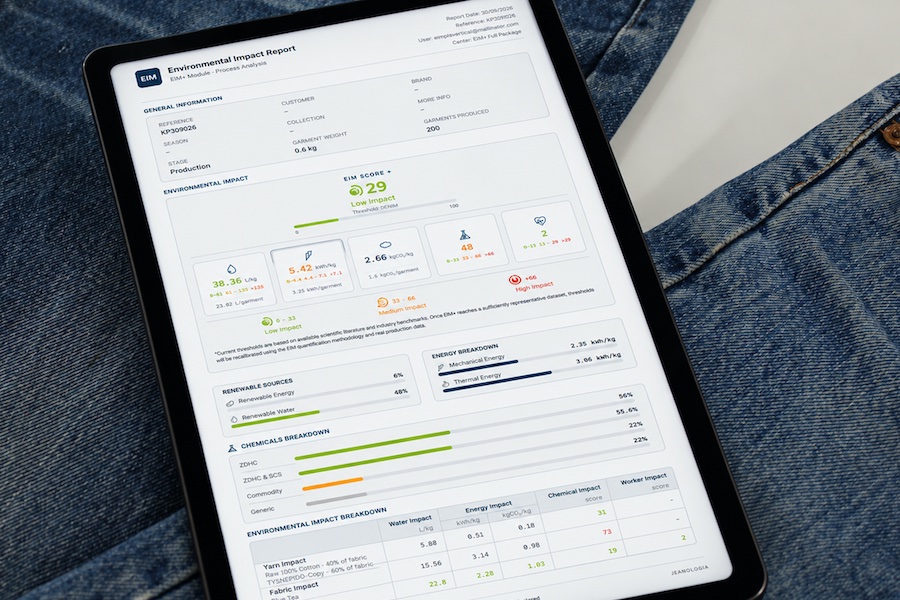
Jeanologia presents expanded EIM platform and COMMON GROUND collection at Kingpins Amsterdam

Jeanologia is presenting two approaches to textile product development at Kingpins Amsterdam on October 14–15: measuring the environmental impact of textile production and exploring new creative possibilities through garment finishing technologies.

#Recycling / Circular Economy

The Or Foundation, adidas, BESTSELLER, H&M Group, and Inditex launch Apparel Recovery Coalition, responding to impacts of post-consumer textile exports

adidas, BESTSELLER, H&M Group, Inditex and The Or Foundation, with support from Circle Economy, unveiled the Apparel Recovery Coalition (ARC). The coalition will explore how producer responsibility systems can support circular pathways such as reuse, upcycling, recycling, and responsible waste management in countries that receive large volumes of exported secondhand apparel.

#Recycling / Circular Economy

NEUMÜHLE launches mono-material hoodie designed for textile recycling

With the Circular Mono Hoodie, Zurich-based label NEUMÜHLE introduces a new essential designed around a single-material principle. The textile construction is cotton throughout, right down to the sewing thread. Entirely free from elastane, the hoodie launches as a Limited Drop for CHF 139. Take-back, collection and existing recycling partnerships complement its circular design.

Latest News

#ITMA Asia + CITME 2026

KARL MAYER expands TM WEFT capabilities for fashion fabrics at ITMA ASIA 2026

A new E 36 gauge, an EL pattern drive and improved yarn tension regulation extend the application possibilities of KARL MAYER's TM WEFT warp knitting machine. At ITMA ASIA 2026, the company will demonstrate the developments alongside a collection of woven-like warp knitted fabrics for fashion and apparel.

#Recycling / Circular Economy

Textiles Recycling Expo USA 2027 opens registration and expands with manufacturing exhibition

The second edition of Textiles Recycling Expo USA will take place on 7–8 April 2027 in Charlotte, North Carolina. Following a debut that attracted more than 1,800 visitors and 95 exhibitors, the event will expand its exhibition and conference programme and will be held alongside the new Textiles Manufacturing Expo.

#Research & Development

First "Korea Day" at RWTH Aachen attracts more than 300 participants

The inaugural Korea Day in Aachen brought together representatives from science, business and Korean institutions to strengthen German-Korean cooperation in research, technology and education. The Institut für Textiltechnik (ITA) of RWTH Aachen University was among the participating organisations.

#Textiles & Apparel / Garment

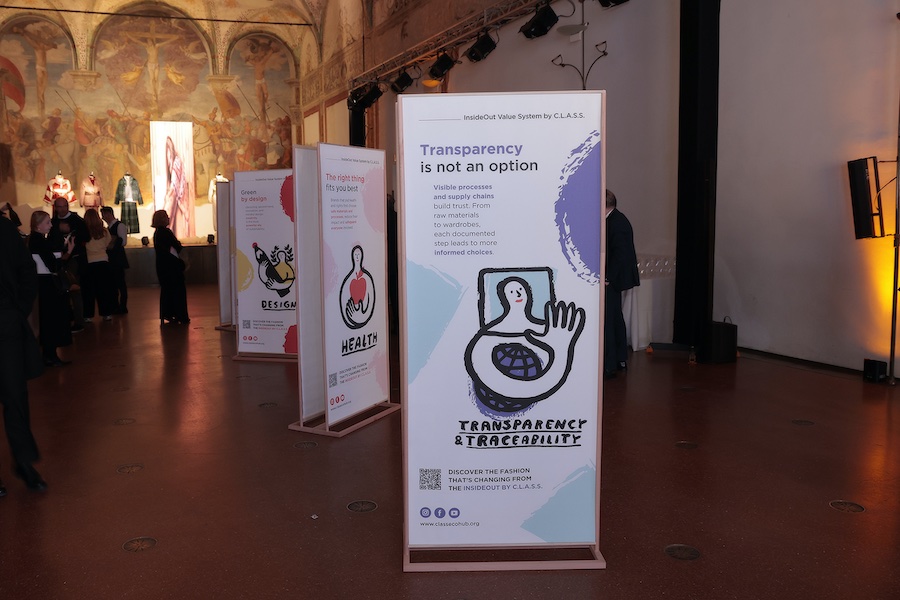
MarediModa highlights transparency and traceability with InsideOut by C.L.A.S.S.

The InsideOut by C.L.A.S.S. exhibition at MarediModa 2026 in Cannes focused on transparency, traceability and the measurable values behind fashion products. Its Decalogue of Values aims to make environmental, social and production-related information more accessible throughout the textile supply chain.

TOP