#Sustainability
Peak Sustainability Ventures & Arvind launch India’s first industrial-scale cotton-stalk torrefaction project, decarbonizing textile manufacturing in Gujarat
The project will convert cotton stalk into torrefied biomass, a cleaner, drop-in substitute for coal in boilers at Arvind’s manufacturing operations, reducing fossil fuel usage. This industrial-scale project, which is the first of its kind in India for cotton stalk, is intended to serve as an economically viable, scalable blueprint for industrial companies to transition away from coal towards biomass-based alternatives.
Commenting on the project, Mr. Punit Lalbhai, Vice Chairman at Arvind Limited, said, “At Arvind, sustainability is not just a goal; it’s a journey with a sense of responsibility. We are innovating in all parts of our value chain to improve our sustainability and long-term business and meet our SBTI targets. This torrefaction project with Peak is one of the best examples of circular economy and waste-to-energy we have seen in the textiles space, exemplifying what a regenerative textile ecosystem can look like. I am proud to announce this collaboration as a bold step toward responsible manufacturing at scale.”
Mr. Samir Shah, Managing Partner at Peak Sustainability Ventures, noted, “We are excited to partner with Arvind Limited, a globally recognized player in the textiles sector, on this landmark project. Through this collaboration, we hope to provide validation to the broader industry that waste-to-energy solutions can be economical, circular, and importantly, catalytic in accelerating India’s transition away from fossil fuels. At Peak, our core mission is to make a large impact on India’s sustainability goals, and we believe this pioneering project with Arvind can play a key role in that journey.”
Peak has been instrumental in putting the project together by developing the reactor design, identifying the technology partner, and funding the project capex. For Arvind, this project helps accelerate its transition towards a 100% coal-free company by 2030. For the local area, the project provides non-agricultural employment, economic growth, and the utilization of the cotton stalk that may otherwise have decayed or been burnt in the open fields. Through this project, Arvind’s global customers can also reduce their Scope 3 emissions through decarbonization of their supply chain, which has become a key focus for fashion brands. For Peak, this project accelerates India’s pathway to achieving its broader sustainability goals, that of utilizing India’s abundant agricultural waste for energy, enabling a pathway for a clean energy future.
Torrefaction as a climate solution for textiles
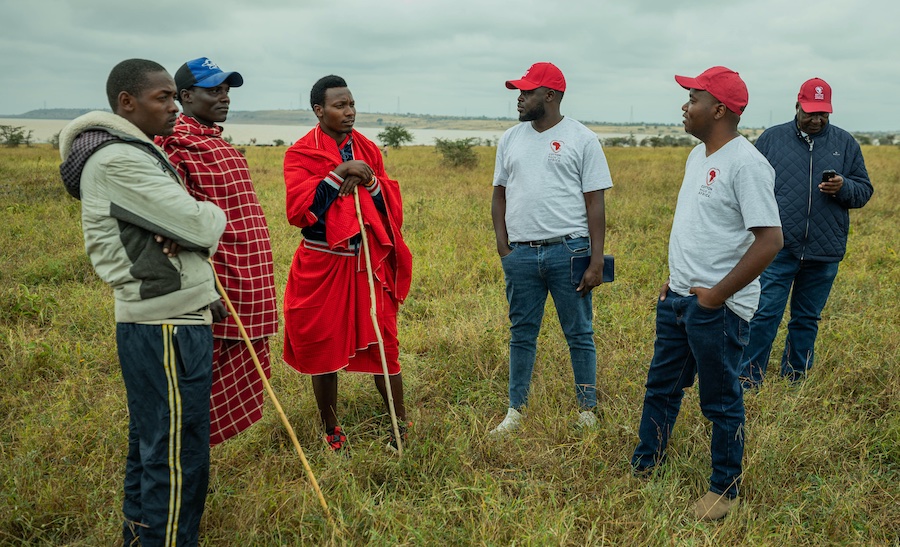
India produces over 500 million tonnes of agricultural waste every year, most of which is either discarded or burned. In the case of cotton, only 15% of the plant, the cotton fiber and seed, is used for textile and other products, with the remaining 85% of the crop, the woody biomass remaining after the cotton is extracted, commonly called cotton stalk, is being burnt or left in the field. Arvind, as one of the largest textile mills in India, has a farmer network of over 90,000 cotton farmers. While Arvind currently is using cotton stalk for thermal energy at its manufacturing units, the fuel characteristics of the stalk are substantially improved through torrefaction. This project demonstrates a circular, replicable, and scalable model to convert large quantities of cotton plant by-product into a valuable, low-carbon energy source that can fuel its own operations. In the future, both parties may explore producing biochar from cotton stalks to provide to farmers, which can in turn improve soil health and crop yield and promote regenerative agricultural practices.
Torrefaction is a thermal process that enhances the energy density, stability, and handling properties of biomass and increases the calorific value by up to 20%. The resulting biomass closely mimics coal and can be seamlessly used in industrial boilers, with up to a 100% replacement of coal, without additional capital investment or significant retrofit. The torrefied biomass produced will be used to power Arvind’s industrial boilers, enabling the company to replace at least 20% of its coal-based thermal energy needs, with potential for increased substitution in the future. Upon successful implementation, this project has the potential to be expanded even further to meet wider industrial energy needs and replicated across other agricultural regions.
Arvind has received a grant from Apparel Impact Institute’s (Aii) Climate Solutions Portfolio Grant program for this project. Aii’s grants help pilot and scale promising climate solutions for the textile industry, and this project was selected for its potential to offer a more practical and cost-effective way for textile manufacturers to use biomass as a transition fuel.
Sustainable biomass offers an effective interim solution until factories can electrify. Through torrefaction, textile manufacturers can procure biomass and use it in existing coal boilers without needing a capex investment. Aii believes this project could help manufacturers in India—and other production countries with agricultural waste—to transition from coal without incurring significant costs
Peak’s role as a climate investor
Peak has been in discussions with Arvind for this project over the past year. In addition to conceptualizing the idea with Arvind, Peak has identified and onboarded a leading European technology company, which specializes in torrefaction and biochar technology, to implement this project as the technology partner
Peak and its affiliates will be funding the capital expenditure and operations of the project. Peak and Arvind are in discussions with global players who are keen to be involved in this first-of-its-kind, waste-to-energy project in India. Arvind is involved as the long-term offtake party, and feedstock provider, a potential for meeting our own decarbonization goals. While there are no other investments other than the offtake assurance by Arvind, their role will add a lot of pecuniary benefit to our sustainability credentials and advance our decarbononization agenda.
The broader intent for Peak and Arvind is to build a robust waste-to-energy platform that is financially viable and catalytic in addressing India’s fossil fuel usage. Both parties believe that torrefaction can be an extremely important technology to address India’s long-term sustainability transition.