[pageLogInLogOut]

#Sustainability

Pioneering open-source framework shows how early innovation drives a just and net-zero fashion future

Since 2015, its flagship initiative, the Global Change Award, has supported 56 teams from 23 countries with 10 million euros in grants, paving the way for circular and decarbonised business models across the textile value chain.
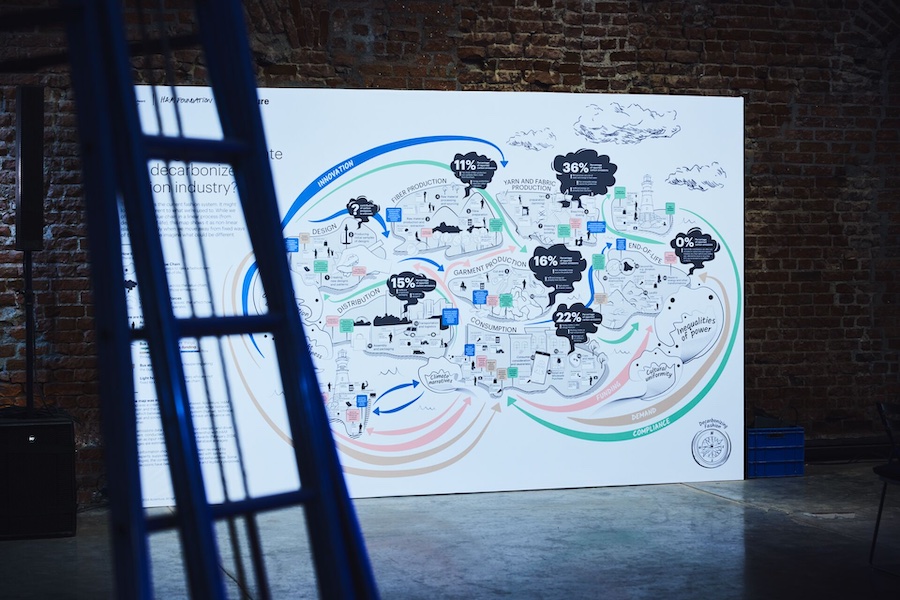
The non-profit H&M Foundation, in collaboration with Accenture, has unveiled From Signals to Systems Change, an insight report calling on the fashion industry to rethink its role in transformation. At its core is the Reimagined System Map, a pioneering open-source framework that visualises how early-stage innovation could drive a just and net-zero textile future.

Grounded in insights from innovation, philanthropy and systems thinking, From Signals to Systems Change explores how early ideas can become a catalyst for a just and decarbonised textile future. It maps the key forces reshaping fashion, from AI and geopolitics to resource scarcity and biodiversity loss, and calls on industry leaders, investors and policymakers to recognise their place in an interconnected system.

“By looking at the fashion system as it is today and reimagining what it could become, we visualised how scaling early-stage innovations might ripple across the industry“, says Annie Lindmark, Programme Director, Innovation at the H&M Foundation. Our hope is that different stakeholders will explore the System Map and ask themselves where in the system they have the most power to influence change, and in doing so, ignite new sparks of transformation.”
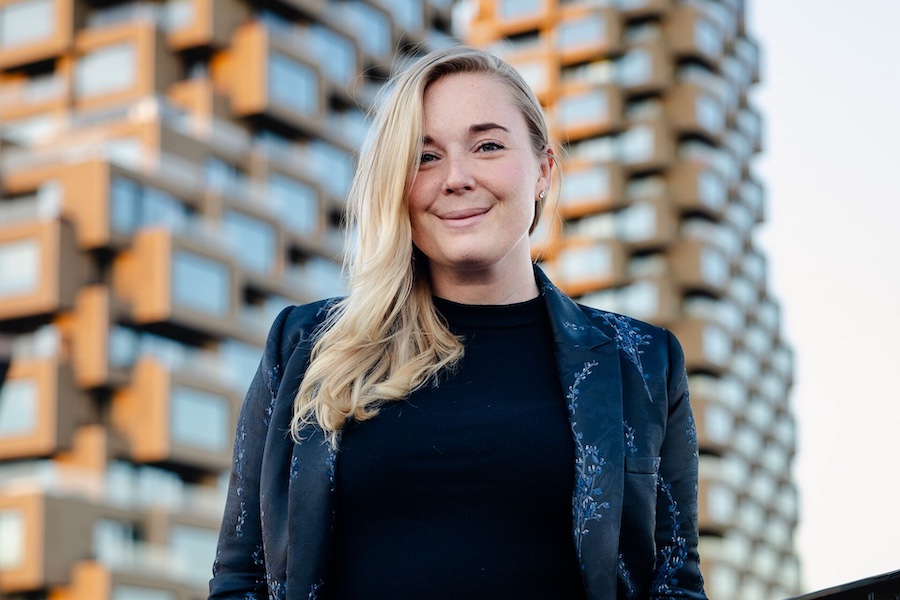

Annie Lindmark, Programme Director Innovation © 2025 H&M


A glimpse of a reimagined fashion system

To understand what early-stage innovation can achieve at scale, Accenture applied its 360-degree value approach to estimate the potential impact of four Global Change Award 2025 winners: Loom, PulpaTronics, Renasens and The Revival Circularity Lab. The findings show that small ideas, when supported early, can deliver outsized returns for both climate and communities. By 2050, their innovations could:

+++ Save 570,000 tonnes of CO2 annually, equal to the life-cycle emissions of 170 million cotton T-shirts.

+++ Save 160 billion litres of water, enough for the annual drinking needs of 200 million people.

+++ Create 30,000 designer jobs and reduce 3,000 tonnes of e-waste each year.

Philanthropy as a catalyst for systems change

As an independent, privately funded philanthropic organisation, the H&M Foundation uses philanthropy as risk capital, funding early ideas, breakthrough research and collaborations often considered too early or too uncertain. Since 2015, its flagship initiative, the Global Change Award, has supported 56 teams from 23 countries with 10 million euros in grants, paving the way for circular and decarbonised business models across the textile value chain.

From Signals to Systems Change builds on that mission by showing how early-stage ideas could unlock systemic opportunities and accelerate transformation across the industry. When changemakers thrive, systems change follows. The report is part of the Foundation’s ongoing work to support the textile industry in halving its greenhouse gas emissions every decade while promoting a just transition for both people and planet.

An open invitation

The report closes with a challenge to every actor in the system, from brands and suppliers to investors and citizens:

+++ Where in the system do you have the most power to influence change?

+++ Who must you collaborate with to turn ideas into action?

+++ What decision can you make today that signals real commitment to transformation?

From Signals to Systems Change is not just a report. It is an open invitation to imagine, collaborate and act.

Explore the report here:

https://hmfoundation.com/wp-content/uploads/2025/10/GCA-2025-Insight-Report.pdf


More News from H&M Group

#Sustainability

H&M Foundation funds pioneering initiative to build the factories of the future

The H&M Foundation is committing SEK 53 million (approx. EUR 5 million) towards Future Forward Factories, a five-year initiative led by Fashion for Good, to address fashion’s most polluting stage: tier 2 textile processing.

#Textiles & Apparel / Garment

Global Change Award 2026: Nominations now open

On 1 September, the H&M Foundation launched the nomination round for the Global Change Award 2026. The international innovation challenge is looking for early-stage ideas that can drive the textile and fashion industry towards circularity and climate neutrality.

#Sustainability

Ten bold ideas to decarbonise fashion: Meet the winners of Global Change Award 2025

The H&M Foundation has revealed the ten winners of the Global Change Award 2025 – spotlighting groundbreaking ideas aimed at decarbonising the fashion industry in a just way. Each winner will receive a €200,000 grant and take part in the yearlong GCA Changemaker Programme – one of the few programmes of its kind focused on early-stage fashion innovation. Designed to accelerate the industry’s journey toward net-zero, the programme offers a mix of innovation support, systems thinking and personal growth.

#Recycling / Circular Economy

H&M Foundation launches new round of Global Change Award with a mission to accelerate innovation for a net-zero textile industry by 2050

The H&M Foundation today announces a significant shift in its overall strategic direction, with a new mission of promoting just and fair climate solutions for the textile industry, with the innovation challenge Global Change Award (GCA) being the first initiative to reflect this shift.

More News on Sustainability

#Sustainability

Ying McGuire becomes new CEO of Cascale

Cascale today announced the appointment of Ying McGuire as Chief Executive Officer, effective June 1, 2026.

#Sustainability

VAUDE eliminates PFAS from all products

PFAS (per- and polyfluoroalkyl substances) are now detectable worldwide – in drinking water, soil and the human body. These so-called “forever chemicals” are considered hazardous to health and potentially carcinogenic, as they do not break down and remain in the environment permanently. Despite these risks, PFAS are still used in a wide range of products. More than 15 years ago, VAUDE made a strategic decision to gradually eliminate PFAS from all product categories.

#Sustainability

OEKO-TEX® chooses TextileGenesis to advance digital traceability for organic cotton

OEKO-TEX® today announced a full collaboration with TextileGenesis, a Lectra company, to digitally trace and authenticate organic cotton, strengthening fraud prevention across the supply chain. This announcement follows a successful pilot and brings together OEKO-TEX®’s certification expertise and closed testing system with TextileGenesis’ digital traceability platform to deliver a secure, end-to-end solution for managing certified organic cotton flows.

#Europe

ICAC to support European Commission on pending PEF legislation

The International Cotton Advisory Committee (ICAC) is proud to announce that it has been included as a member of the European Commission’s Technical Advisory Board (TAB) on the Product Environmental Footprint methodology. The Commission developed the Product Environmental Footprint (PEF) to assess and communicate the life cycle environmental performance of products and organizations.

Latest News

#Recycling / Circular Economy

Circulose restarts commercial-scale production at Ortviken plant in Sundsvall

Circulose today announced the restart of its commercial-scale production plant at Ortviken in Sundsvall, Sweden, marking a significant step in scaling next-generation materials for the global fashion industry. The company plans to resume production of CIRCULOSE®, a recycled pulp made entirely from discarded cotton textiles, in the fourth quarter of 2026.

#Textiles & Apparel / Garment

VIATT 2026 to debut German Pavilion, strengthening European participation alongside key Asian textile hubs

Vietnam’s textile and garment sector continues to be a major contributor to the country’s economic growth, with export revenues expected to reach USD 46 billion in 2025, a 5.6% increase from 2024 . From 26 – 28 February, the Vietnam International Trade Fair for Apparel, Textiles and Textile Technologies (VIATT) is set to contribute to economic growth opportunities by accelerating digital transformation and green transition across the entire textile value chain. The upcoming edition will respond to the rising demand for advanced technologies and sustainable materials with the introduction of the German Pavilion, alongside strong exhibitor participation from key Asian sectors, as well as several high-profile fringe events.

#Technical Textiles

Sustainable, lightweight, and sound absorbing: Polyester-based front trunk solution for BEVs

As car manufacturers look to further reduce their carbon footprint, Autoneum has developed an innovative front trunk solution for battery electric vehicles (BEVs), made entirely from polyester-based textile. The Ultra-Silent Frunk offers significant weight reduction, improved acoustic and thermal insulation, and uses up to 70 percent recycled material, supporting sustainable and efficient vehicle design. Autoneum, global technology leader in acoustic and thermal management for vehicles, has already received orders for the new frunk from three major OEMs in Asia and Europe to be built in three BEV models. Series production for two BEVs has been underway in China and Germany since last year.

#Raw Materials

Modern testing methods for raw cotton

The 38th International Cotton Conference Bremen will take place from 25 to 27 March 2026 at the Bremen Parliament. This conference has traditionally stood for in-depth expertise and international exchange. The program will focus on technical innovations, market trends, and regulatory frameworks across the entire value chain – from agriculture to the circular economy. With high-profile speakers, the conference is regarded as the key meeting point for the global cotton industry. Today’s focus: Cotton quality and testing methods.

TOP