[pageLogInLogOut]

#Spinning

UHMWPE fibres – FET’s game changer for the biomedical market
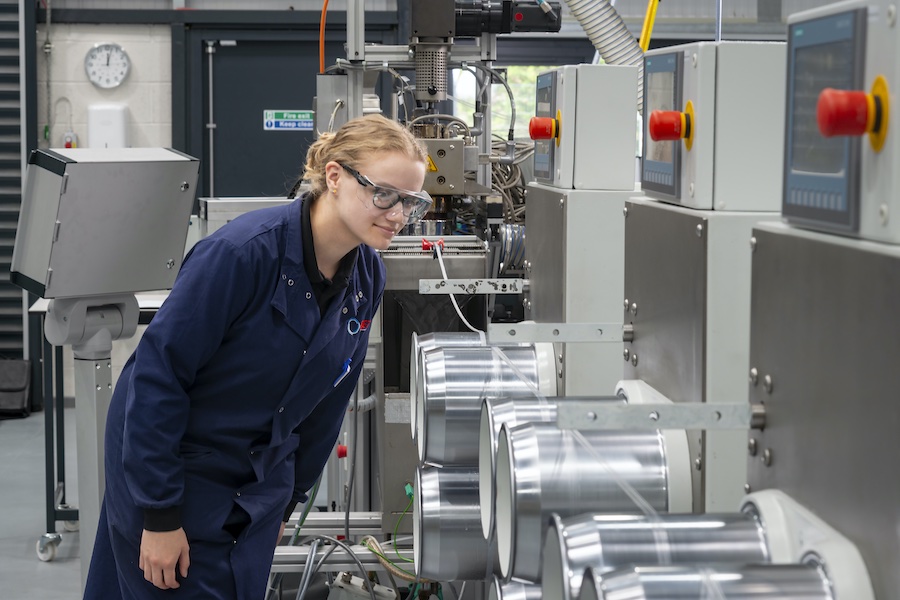
FET is launching the FET-500 Series of gel spinning systems in a move that could revolutionise the research and development of UHMWPE fibres.
© 2025 FET
© 2025 FET


Fibre Extrusion Technology Ltd (FET) of Leeds, UK, has built a reputation in medical fibre extrusion technology and innovations, designing and delivering high-performance equipment for a range of precursor medical products, including bespoke extrusion systems for the production of both resorbable and non-absorbable sutures. FET’s equipment supports small-scale, adaptable production and rapid new product development. 

In recent years, there has been a growing demand for R&D of UHMWPE fibres. These fibres are prized in many industries due to their extraordinary properties. However, current production processes are complex and focused on the large-scale output of existing fibre grades. This rigid supply chain has stifled innovation in this untapped product market.

The FET-500 gel spinning systems will address this gap in the market. The FET-500 enables a flexible and consistent process, able to produce quality fibres with less than 100 grams of polymer, while avoiding the harsh processing chemicals that were historically associated with gel spinning. The key to unlocking this lab and pilot scale flexibility is the use of supercritical carbon dioxide as a green solvent in a patent-pending process.

Gel spinning starts with extrusion, but the additional washing and drawing technology to produce finished yarn is critical to the overall performance characteristics. An example of the wide range of features and benefits can be shown in the Washing process, with Patent Pending technology using Supercritical Carbon Dioxide:

Extract carrier oil without using toxic, environmentally harmful chemicals such as Hexane and DCM

+++ CO2 is green, cheap, abundant, and significantly safer to work with

+++ CO2 efficiently dissolves carrier oils without affecting the polymer yarn

Reduced operational costs

+++ 9-Vast reduction in solvent use (CO2 vs Hexane/DCM)

+++ Comprehensive oil recovery and recycling

+++  Zero solvent waste is generated, unlike the hexane route

Compact and efficient batch washing system

+++ Recipe controlled plug and play technology

+++ Scalable and adjustable to customer needs

+++ Carrier oil is recovered and fed back to the extrusion process

+++ 80% reduction in factory footprint vs hexane route

FET’s Fibre Development Centre is critical to the inception and success of the FET-500. Having this facility located in Leeds where the manufacturing takes place allows FET to offer a gateway to de-risk, develop and demonstrate the system’s capabilities. FET houses a full demonstration line of the FET-500 to allow customers, existing and new, to visit and experience the system operating from start to finish. We can also aid in developing new products and operating parameters through R&D trials, giving you the confidence and knowledge to transfer a new product offering onto a production line.
More News from Fibre Extrusion Technology Ltd.

More News on Spinning

#Spinning

Object Carpet tests production of rPET BCF yarn on Neumag BCF line

In a joint project with Object Carpet GmbH, Denkendorf; the Institute for Textile Technology (ITA), Augsburg; and Next Generation Recyclingmaschinen GmbH (NGR), Feldkirchen, Austria, Barmag investigated the processing of recycled polyester for BCF yarn. The goal was to evaluate the fundamental suitability of 100% recycled carpet material for reuse in carpet yarn production to create a closed-loop system in carpet manufacturing. To date, commercial rPET BCF processes have been based solely on rPET from bottle pellets.

#Spinning

New spinning package with two-step filtration for recycled yarns and more

At the ITM in Istanbul, BB Engineering unveiled its new, patented ValuePack spinning package for the first time, which features a two-stage filtration system. This is particularly beneficial for re-cycling processes. Until now, spinning packs have used either metal powder (“sand”) or filter candles as filter media. Both options are suitable for differ-ent applications, and each has its own specific advantages and dis-advantages.

#Research & Development

GenuTrace client advisory: Is your cotton supply chain UFLPA ready?

U.S. Customs and Border Protection has released updated operational guidance (CBP Publication No. 5560-0526) expanding its forced labor enforcement framework. The guidance supersedes the original 2022 UFLPA Operational Guidance and now covers all forced labor enforcement authorities — UFLPA, CAATSA, and WROs/Findings — in a single unified document. For cotton importers, the enforcement posture has not softened. It has become more structured, more documented, and more demanding. Learn more about UFLPA.

Latest News

#Recycling / Circular Economy

Reju opens its first R&D Center in the U.S. in Conshohocken, Pennsylvania

Reju, the company specializing in textile regeneration, today announced the opening of a Research and Development (R&D) Center in Conshohocken, Pennsylvania, the company's first proprietary research center in North America. Located within Technip Energies' existing Advanced Materials and Catalysts research center, the lab will allow Reju to accelerate the rollout of its recycling technologies and develop its next-generation circular solutions.

#Weaving

Itema reaffirms its commitment to the Syrian textile industry at NasTex 2026

From July 18th to 21st, Itema will exhibit at NasTex at the Damascus Fairground (Hall 11 – Stand C02), marking its return to one of the Middle East’s historically significant textile markets. Itema will showcase advanced weaving technology designed to support the competitiveness and technological evolution of Syrian manufacturers and announces a new partnership with Growfast Agency as the sole agent of Itema in Syria.

#Knitting & Hosiery

KARL MAYER's HKS 2-SE Expands Possibilities for Premium Stretch WARP KNITS

Warp knitted fabrics with a woven look are more in demand than ever in the fashion and apparel industries. Stretch WARP KNITS, in particular, impress with their freedom of movement, breathability, and virtually wrinkle-free wear – thereby opening up new style worlds such as smart casual or business casual. When it comes to the highly efficient production of premium-quality stretch WARP KNITS, the HKS 2-SE has long been the machine of choice. KARL MAYER’s best-selling tricot machine produces standard elastic fabrics characterized by high gauges, smooth, delicate surfaces, and a soft hand feel.

#Textiles & Apparel / Garment

Catalyst Club launches in Florence: Where conversations become catalysts for change

The first chapter of Catalyst Club debuted in Florence, bringing together creative directors, entrepreneurs, manufacturers, journalists and innovators from across the fashion and textile industry for an evening of dialogue, exchange and connection.

TOP