[pageLogInLogOut]

#Research & Development

Empa develops liquid-core fibre for insecticide-treated mosquito nets
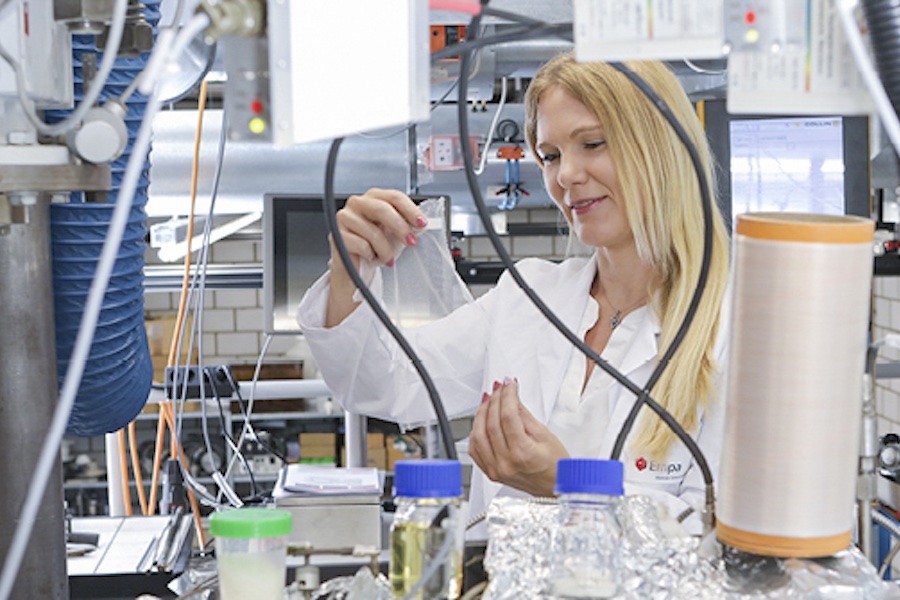
Empa researcher Edith Perret led the development of a liquid-core fibre designed to release insecticide gradually in mosquito nets. (Photo © 2026 Empa)
Empa researchers have developed a liquid-core fibre for mosquito nets that can incorporate insecticides unsuitable for conventional melt spinning. The fibre gradually releases the active ingredient through a polymer sheath. The team developed and tested the yarn over three years in the Innosuisse project MalCoFil with Swiss industry partners Vestergaard and Monosuisse.


The project addresses growing resistance to pyrethroids, a class of insecticides widely used in treated mosquito nets. In conventional melt spinning, the insecticide can be mixed into the polymer before extrusion. Many non-pyrethroid insecticides evaporate at the temperatures used in this process, limiting the choice of active ingredients.

A liquid core releases the insecticide gradually

The fibre developed by Empa’s Advanced Fibers laboratory in St. Gallen consists of a polymer sheath surrounding a liquid core. The insecticide diffuses through the sheath to the fibre surface, while the carrier fluid remains inside.

Edith Perret, who led the Empa research team, explained how the design broadens the choice of insecticides.

“The liquid-core fiber makes it possible to incorporate novel insecticides into the fiber that could not be used with the previous approach – for example, those that would evaporate at high temperatures,” explains Perret. “In addition, this fiber can be loaded with larger amounts of insecticide.”

Perret estimates that the release could continue for around three years and that the net could withstand repeated washing. Large-scale testing is still needed to confirm both. Tests so far have shown that the fibres retain their mechanical properties.

Industry partners test yarn and prepare for scale-up

Vestergaard Sárl examined how the new yarns performed during knitting and tested their effectiveness against mosquitoes, including resistant species. Monosuisse AG worked with Empa to develop a spinning nozzle designed for industrial scale-up. The next question is whether the fibres can be produced at industrial scale.
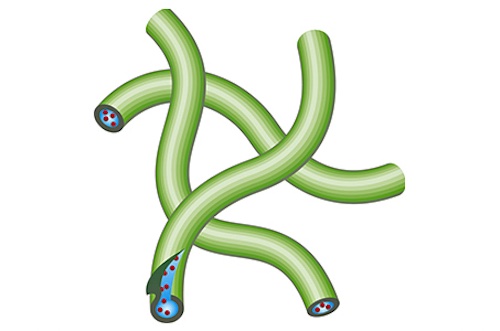
The liquid-core fiber consists of a polymer sheath (green) and a liquid core made of a carrier fluid (blue) that contains an insecticide (red). The insecticide can diffuse through the polymer sheath to the outside, where it takes effect, while the carrier fluid remains inside the fiber. Illustration: Empa


More News from EMPA

More News on Research & Development

#Weaving

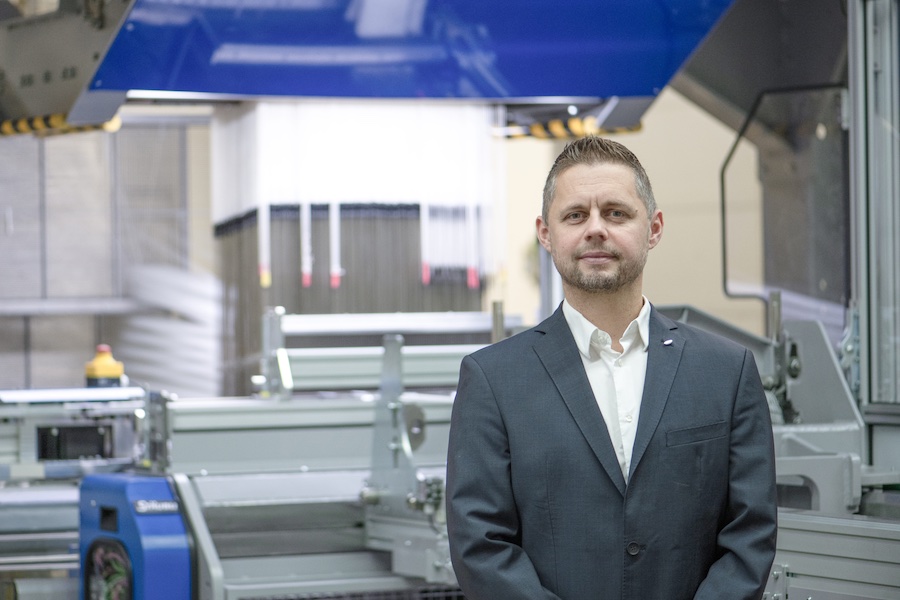
“A complex design is only useful if the machine can reproduce it consistently”

Andreas Schnabel, Head of R&D for Technical Weaving Systems at Stäubli, discusses how 3D weaving can create textile reinforcements tailored to the loads within a composite component, where near-net-shape weaving can reduce processing steps and material waste, and what it takes to produce complex structures reliably and economically. He also explains how manufacturers can adapt Stäubli’s modular TF weaving platforms to new applications and how the company’s centre of excellence in Bayreuth supports the transition from research to industrial production.

#Research & Development

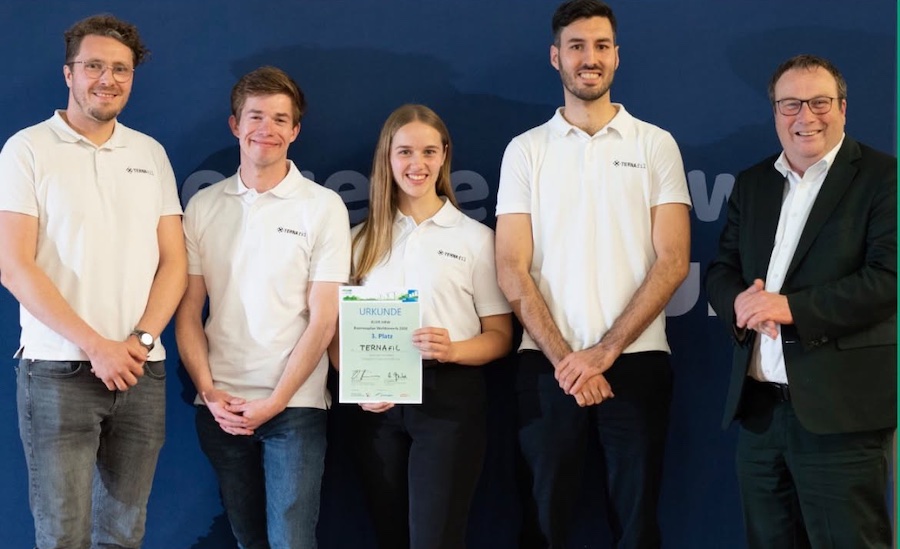
ITA spin-off TERNAfil wins third place at KUER.NRW 2026 with MAXCarbon technology

The Aachen-based ITA spin-off TERNAfil GmbH has secured third place in the KUER.NRW Business Plan Competition 2026 with MAXCarbon, an innovative carbon-ceramic hybrid fibre developed for applications in the hydrogen economy. The technology combines the mechanical properties of carbon fibres with the thermal and corrosion resistance of ceramic materials.

#Research & Development

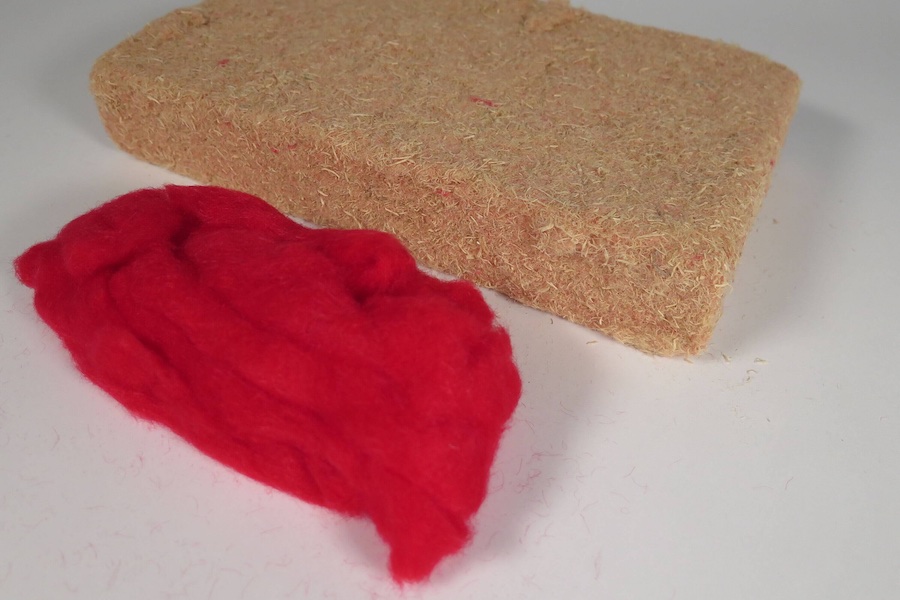
DITF develops bio-based binding fibers for wood-fiber insulation materials

As part of the CelluWoodFlex project, the German Institutes of Textile- and Fiber-Research in Denkendorf (DITF) are developing bio-based cellulose ester fibers as alternative binding fibers for flexible wood fiber insulation materials. In addition to the spinning process and the production of suitable staple fibers, the institute is also investigating how wood and cellulose fibers can be separated and recycled at the end of their useful life.

Latest News

#Heimtextil 2027

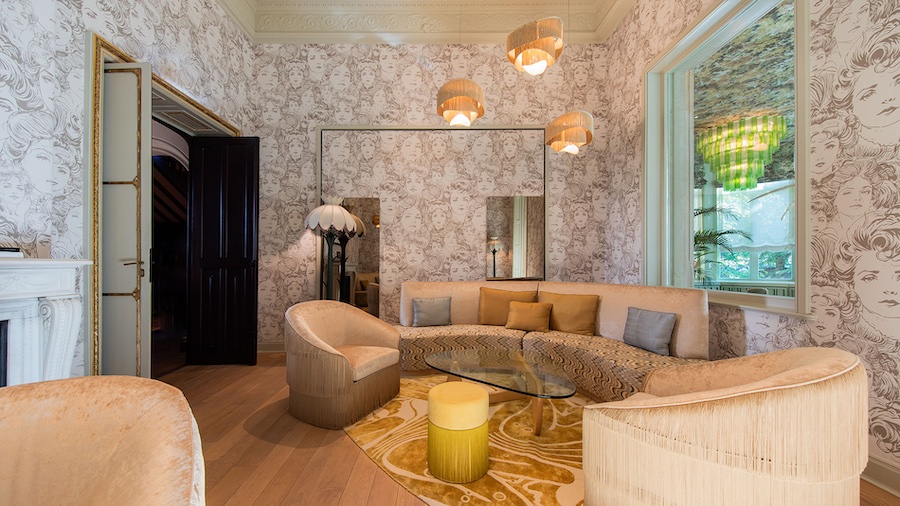
Heimtextil and The Florentin showcase the role of textiles in hotel design

Heimtextil has partnered with Frankfurt hotel The Florentin by Althoff Collection for its new Interior.Architecture.Hospitality campaign. The collaboration will give architects, interior designers and other contract-sector professionals a closer look at how textiles were used in the hotel. The two studios behind the project will discuss their work at Heimtextil on 14 January 2027 in Hall 4.1.

#EU Textile Strategy

EU Commission proposes advanced materials agenda with targets for 2035

The European Commission has proposed an Advanced Materials for Europe agenda to accelerate the development, production and adoption of safer and more sustainable advanced materials. The proposal sets three benchmarks for 2035 and calls for closer coordination among EU member states to help move new materials from the laboratory into industrial production.

#Raw Materials

Sourcing of traceable BCI cotton rises 43.5% to 33,000 tonnes

Retailers and brands sourced a record 33,000 metric tonnes of Traceable BCI Cotton over the past year, up 43.5% from 23,000 tonnes in 2024–2025, the Better Cotton Initiative (BCI) reported on 17 November 2026.

#Industry 4.0 / Digitalization

Smartex.ai names Tony Fadell chairman and previews new fabric inspection system

Smartex.ai has appointed Tony Fadell as chairman and will present its new fabric inspection hardware and software at SmartCollab Hong Kong on 27 November. Fadell co-designed Inspect, the hardware at the centre of the system, which Smartex developed with a supplier in H&M Group’s network.

TOP