[pageLogInLogOut]

#Research & Development

Smart textiles reversibly change shape in an energy-efficient manner in response to ambient temperature
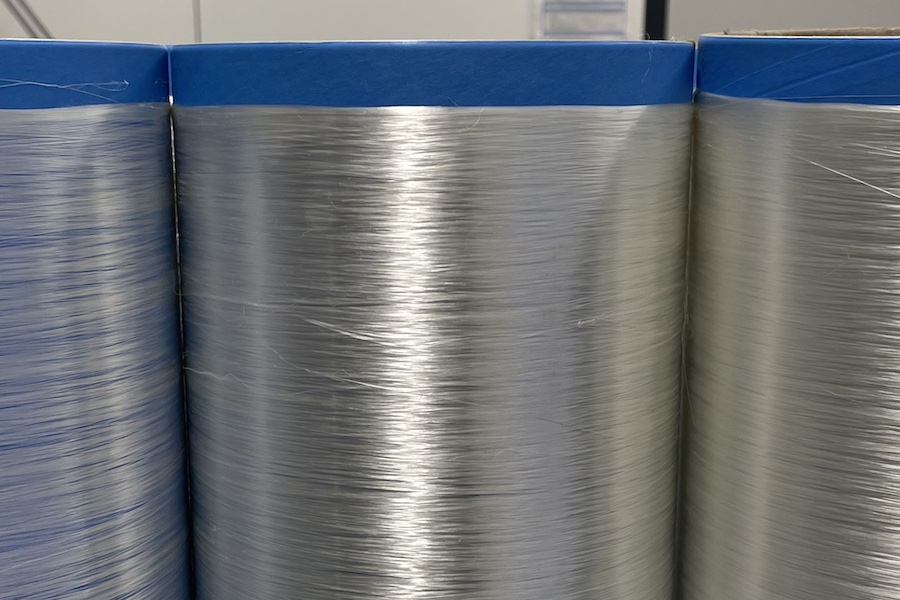
Multifilament yarns made from two-way shape-memory polymers. Photo: DITF © 2026
Self-actuating textile structures are used in a wide range of applications, such as medical technology, automation, architecture, agriculture, and the apparel industry. An example is the use of shading nets in greenhouses, which can be deployed and retracted depending on the sunlight intensity. The German Institutes of Textile and Fiber Research Denkendorf (DITF) are developing textiles based on shape-memory polymers with reversibly controllable geometry.

Changes in the shape of conventional textiles are often controlled by external mechanical components, such as motors. This increases the total weight, energy consumption, and thus also the costs.

Shape-memory polymers can respond to changes in their environment with a preprogrammed deformation. So-called 2-way shape-memory polymers (2W-SMP) even allow reversible shape changes. Textiles made from these materials open up new possibilities for developing energy-efficient textile actuators.

In a joint research project, the DITF, in collaboration with the Fraunhofer Institute for Applied Polymer Research (IAP), are developing multifilament yarns made from thermoplastic 2-way shape-memory polymers. These yarns exhibit a reversible and reproducible change in length that is controlled solely by temperature changes. When the temperature rises, the yarns shorten; when they are cooled, their length increases. Unlike one-way shape-memory polymers, no external deformation is required to achieve reversible shape change (actuation).

To enable the textiles to be used at room temperature, spinnable 2W-SMP fibers with transition temperatures of approximately 30 °C and 60 °C were first synthesized. Subsequently, suitable spinning parameters - such as spinning temperature, spinneret diameter, and take-up speed - were determined to enable the production of multifilament yarns, first using a Spin Line rheometer and then on a pilot plant.
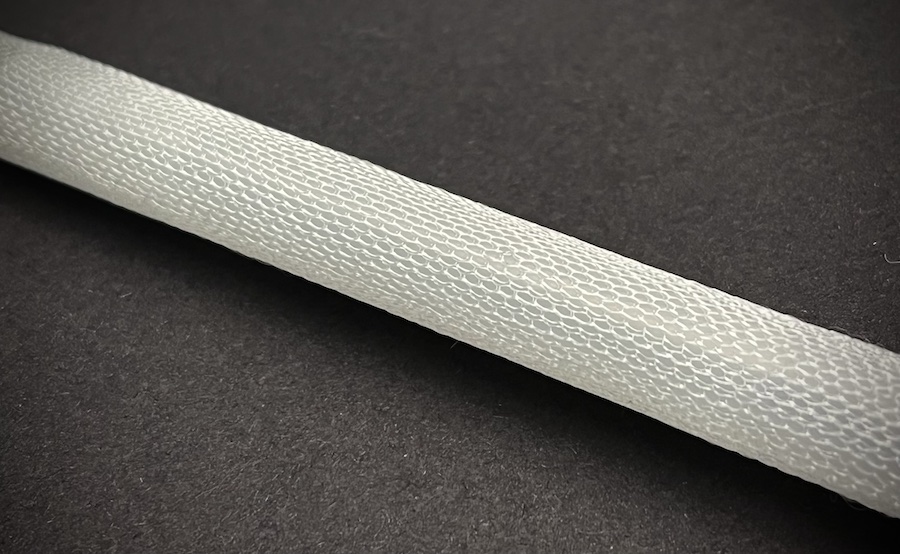
Circular-knit fabric made from multifilament yarns based on two-way shape-memory polymers. Photo: DITF © 2026


Finally, the influence of the spinning parameters on the thermal actuation of the produced yarns was investigated. Therefore, their dimensional stability was determined. If the dimensional stability is 100%, the yarn returns to the same length every time the corresponding temperature is reached. Thermal actuation was also determined by the reversible change in elongation of the yarns during temperature changes. Multifilament yarns were produced with a dimensional stability of over 99% at 60°C and a reversible change in elongation of 16% at a winding speed of 1,500 m/min. This shows that these materials can be produced cost-effectively.

As next steps in the project, researchers will investigate how the yarns can be processed into textiles and how they can be thermomechanically recycled at the end of their service life. Based on these studies, it is possible to assess the extent to which the new material is suitable for industrial production and which applications are feasible. For example, in the future, an agricultural textile made of shape-memory polymers could be produced that automatically adjusts its air and light permeability to changing weather conditions, thereby creating an ideal environment for plant growth.

IGF Project 01IF23512 N was funded by the Federal Ministry for Economic Affairs and Energy as part of the Program for the Promotion of Joint Industrial Research (IGF), based on a resolution of the German Bundestag.
More News from Deutsche Institute für Textil- und Faserforschung Denkendorf

#Research & Development

Reducing development times for technical textiles by accelerated thermo-oxidative aging in a high-pressure autoclave

Synthetic polymers used in technical textiles can be effectively protected against degradation caused by heat, oxygen, and water through the use of stabilizer systems. This enables service lives of several decades, extending to more than 50 years. As the use of durable technical textiles continues to grow, so does the demand for reliable methods to predict their service life within economically feasible testing periods. For the first time the German Institutes of Textile and Fiber Research Denkendorf (DITF) developed methods for robust service life prediction for textiles in an IGF research project.

#Research & Development

Europe is committed to recycling end-of-life wind turbine blades

Starting in 2026, Europe’s wind energy industry has committed itself to ensuring that wind turbine blades do not end up in landfills once they reach the end of their service life. The EU-funded research project REWIND is exploring ways to reuse this composite waste. The German Institutes of Textile and Fiber Research Denkendorf (DITF) are one of 13 project partners from seven countries.

#Research & Development

ALADIN paves the way for circular and demand-driven textile production in Europe

Textile production can be organized sustainably by utilizing short supply chains and preventing overproduction. This can already be achieved today by intelligently connecting and efficiently utilizing existing infrastructure. At the same time, production becomes circular when innovative technologies and materials are used that enable high-quality recycling. The ALADIN research project, launched in May 2026 and co-funded with five million euros under the EU Horizon Europe program, is creating the conditions for this.

#Research & Development

Textile climate control system in workwear – exhibition at the 2026 SME Innovation Day!

Conventional protective workwear often reaches its limits during strenuous physical activity. In particular, the transport of sweat and excess body heat poses a problem. The German Institutes of Textile and Fiber Research (DITF) conducted research on flow-optimized, air-conducting textile structures that enable targeted climate control directly on the body. These structures can be integrated straight into protective work garments. The textile climate control system supports the body’s natural thermoregulation. This contributes to improved workplace safety and comfort.

More News on Research & Development

#Research & Development

ITA has developed a washable digital smart jacket with real-time feedback and an AI-powered app for rehabilitation

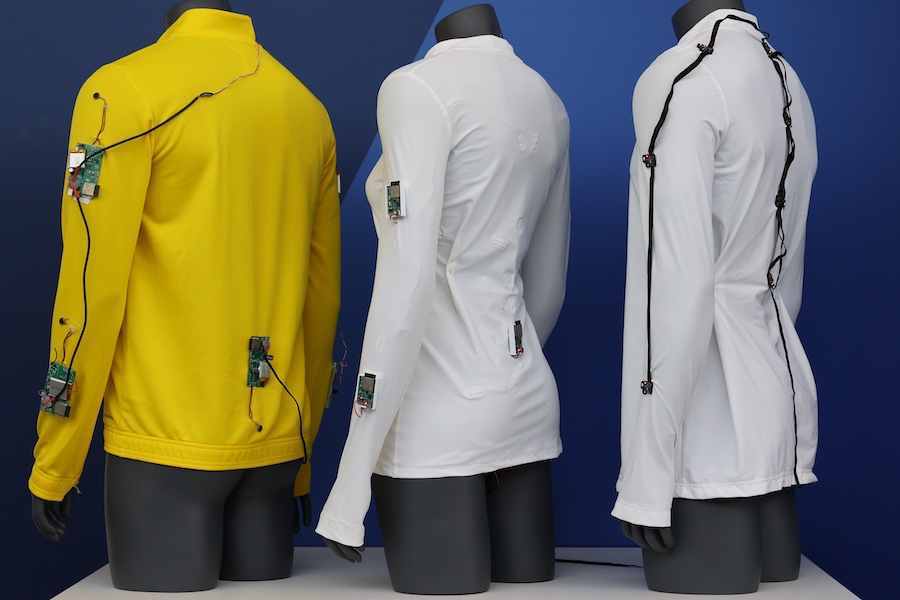
As part of the PhysioTaix research project, the Institut für Textiltechnik (ITA) of RWTH Aachen University is developing a digital smart jacket with integrated sensors. The jacket is washable and reusable; it tracks movements during rehabilitation exercises in real time and transmits the data to an app.

#Research & Development

ADD-ITC 2026 highlights strong industry participation

The Aachen-Dresden-Denkendorf International Textile Conference (ADD-ITC) 2026 will place a strong focus on the exchange between textile research and industry when it takes place on November 26–27, 2026, at the International Congress Center Dresden. According to the preliminary conference program, more than two-thirds of all presentations will be contributed by companies or jointly presented by industry and research institutions.

#Recycling / Circular Economy

2. RETRAKT EU Conference - „Join the Circle“: Turning challenges of the textile sector into chances

On 19 November 2026, the second RETRAKT EU Conference – “Join the Circle” will take place in Brussels. The event, which focuses on the transformation of the textile sector towards a circular economy, will be held under the motto: “Turning Challenges in the Textile Sector into Chances.”

#Research & Development

Novel flame-retardant and recyclable fiber-reinforced composite

Airplanes and passenger trains must meet strict safety requirements, including fire safety standards. This calls for materials that are flame-retardant, lightweight, robust, and scalable. Empa researchers, in collaboration with their industry partner Elantas, have now succeeded for the first time in making such a material – a composite – fully recyclable.

Latest News

TOP