[pageLogInLogOut]

#Research & Development

GenuTrace client advisory: Is your cotton supply chain UFLPA ready?

U.S. Customs and Border Protection has released updated operational guidance (CBP Publication No. 5560-0526) expanding its forced labor enforcement framework. The guidance supersedes the original 2022 UFLPA Operational Guidance and now covers all forced labor enforcement authorities — UFLPA, CAATSA, and WROs/Findings — in a single unified document. For cotton importers, the enforcement posture has not softened. It has become more structured, more documented, and more demanding. Learn more about UFLPA.

Cotton is a named high-priority sector

Cotton and cotton products are explicitly identified as a high-priority sector for UFLPA enforcement. CBP expects documentation tracing every stage of the supply chain — from bale-level fiber origin through ginning, spinning, fabric production, dyeing and finishing, garment assembly, and export. A single undocumented supplier tier is sufficient grounds to deny entry. Can you prove the origin of your cotton?

Isotopic testing: Now an expected tool

The updated guidance dedicates an entire appendix to isotopic testing and references it explicitly as a tool CBP supports for origin determination and due diligence.

For cotton, isotopic testing identifies the geographic fingerprint of the fiber based on growing environment, providing an independent, science-based verification layer that document trails alone cannot replicate. Isotope testing vs DNA tagging: what brands should know.

CBP does not endorse any specific testing provider. Importers are free to select the lab that best meets their needs. However, CBP is explicit: testing should be integrated early in a compliance program, not deployed reactively after a detention notice arrives.

What Importers Must Have Ready

  • Bale-level cotton origin documentation
  • Full supply chain map from fiber to finished product
  • Transaction records at every tier: purchase orders, invoices, proof of payment, bills of lading
  • Identification of every entity involved, including sub-suppliers
  • Isotopic testing results where applicable
  • A documented due diligence system with supplier code of conduct, audits, and remediation protocols


For a deeper look at how physical and digital verification work together in a defensible compliance package, see Genuine Cotton Traceability: Proving Cotton Origin with Physical & Digital Verification.

The 30-day clock is unforgiving

When a shipment is detained under UFLPA, importers have 30 days to respond with a maximum of two extensions not to exceed 90 days total. The response must include comprehensive supply chain tracing documentation. Affidavits alone are not accepted. All foreign-language documents must be translated. The burden of proof is clear and convincing evidence.

The risk of inaction

Goods detained under UFLPA cannot enter U.S. commerce until the importer demonstrates admissibility. Goods excluded must be exported or destroyed within 180 days. Storage costs throughout the review period are the importer's responsibility. A shipment that clears today on the same supply chain documentation may not clear tomorrow.


More News from Cotton Council International

#Natural Fibers

COTTON USA™ leads global shift toward sustainable sourcing at Bangkok Sourcing Fair

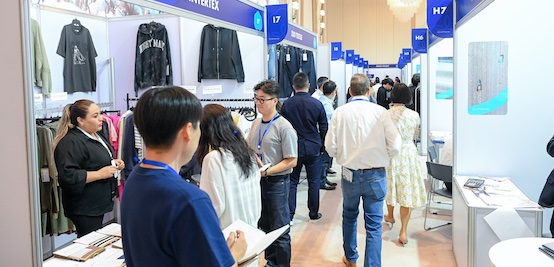
COTTON USA™ strengthened its position as a global connector in sustainable U.S. cotton textile sourcing at its recent Sourcing Fair in Bangkok, Thailand, drawing over 300 top brand, retailer, manufacturer, and mill representatives from 13 countries.

#Natural Fibers

Global cotton industry converges in Guangzhou as Cotton Council International (Cci) champions U.S. Cotton’s sustainability

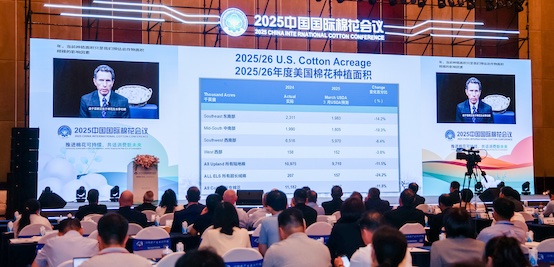
Cotton Council International (CCI) joined nearly 400 industry leaders at the 2025 China International Cotton Conference in Guangzhou to engage in critical discussions on the future of cotton.

#Natural Fibers

Indian textile leaders explore U.S. cotton’s advantages at Cotton Usa™ seminars

Cotton Council International (CCI) hosted its inaugural COTTON USA™ seminars in Ahmedabad and Hyderabad, highlighting the competitive advantages of U.S. cotton to nearly 100 representatives from Indian textile mills. The events are part of the growing collaboration between the U.S. cotton industry and India’s textile sector.

#Natural Fibers

Innovative sustainable fashion leader Liz Hershfield named Cotton Council International (CCI) Executive Director

Fashion industry veteran and sustainability expert Liz Hershfield will lead Cotton Council International (CCI), the export promotion arm of the National Cotton Council of America (NCC), as its new Executive Director. Hershfield succeeds Bruce Atherley, who retired at the end of March.

More News on Research & Development

#Research & Development

Reducing development times for technical textiles by accelerated thermo-oxidative aging in a high-pressure autoclave

Synthetic polymers used in technical textiles can be effectively protected against degradation caused by heat, oxygen, and water through the use of stabilizer systems. This enables service lives of several decades, extending to more than 50 years. As the use of durable technical textiles continues to grow, so does the demand for reliable methods to predict their service life within economically feasible testing periods. For the first time the German Institutes of Textile and Fiber Research Denkendorf (DITF) developed methods for robust service life prediction for textiles in an IGF research project.

#Research & Development

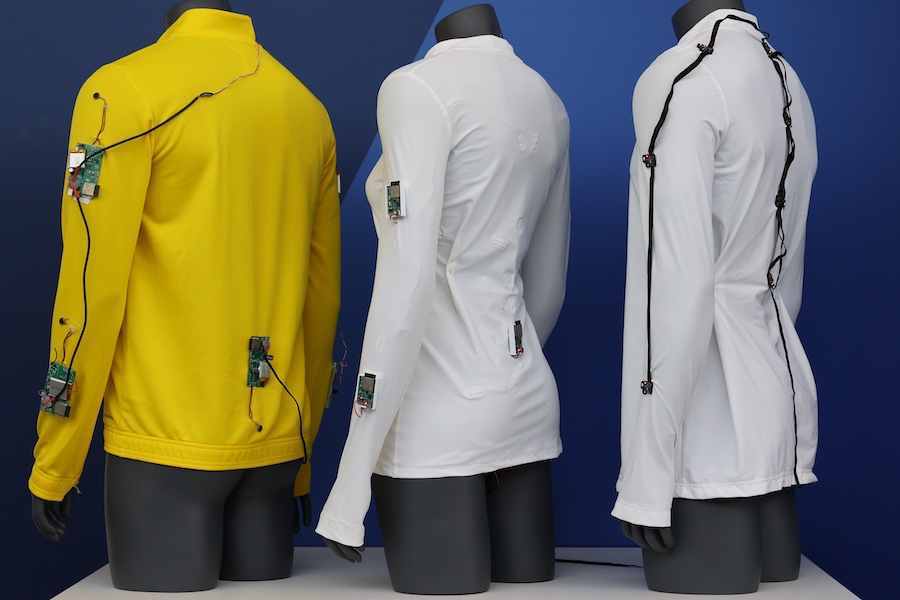
ITA has developed a washable digital smart jacket with real-time feedback and an AI-powered app for rehabilitation

As part of the PhysioTaix research project, the Institut für Textiltechnik (ITA) of RWTH Aachen University is developing a digital smart jacket with integrated sensors. The jacket is washable and reusable; it tracks movements during rehabilitation exercises in real time and transmits the data to an app.

#Research & Development

ADD-ITC 2026 highlights strong industry participation

The Aachen-Dresden-Denkendorf International Textile Conference (ADD-ITC) 2026 will place a strong focus on the exchange between textile research and industry when it takes place on November 26–27, 2026, at the International Congress Center Dresden. According to the preliminary conference program, more than two-thirds of all presentations will be contributed by companies or jointly presented by industry and research institutions.

#Recycling / Circular Economy

2. RETRAKT EU Conference - „Join the Circle“: Turning challenges of the textile sector into chances

On 19 November 2026, the second RETRAKT EU Conference – “Join the Circle” will take place in Brussels. The event, which focuses on the transformation of the textile sector towards a circular economy, will be held under the motto: “Turning Challenges in the Textile Sector into Chances.”

Latest News

TOP