[pageLogInLogOut]

#Research & Development

Pioneer of the first hour: Michael Carus steps down after more than 30 years from nova-Institute’s Management
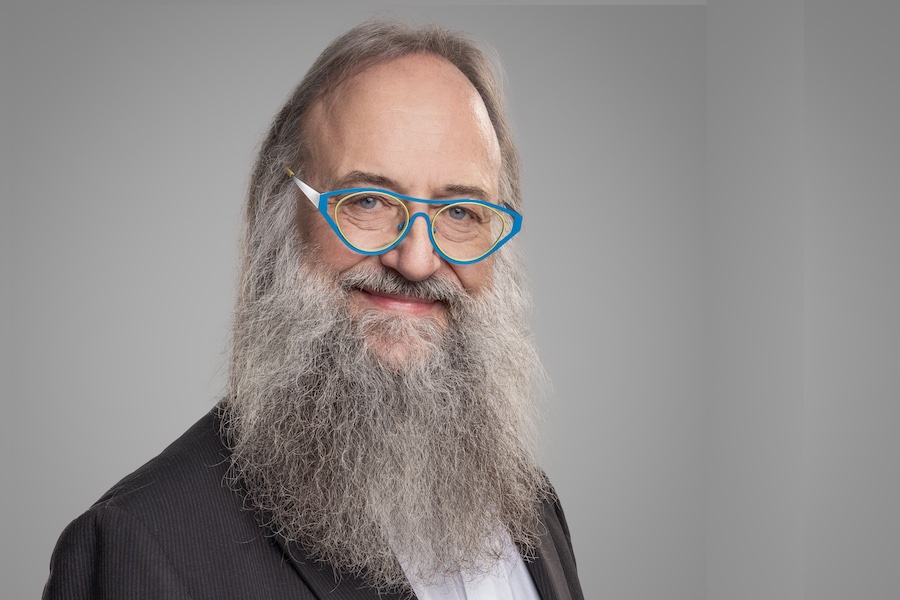
After more than three decades at the helm, founder and CEO Michael Carus is set to step down as head of the Renewable Carbon division on 1 March 2026. Lars Börger as the new CEO, will take over this key position of the nova-Institute together with COO Linda Engel, while Carus will remain with the research and consulting company as a senior advisor and shareholder. This change takes place after a one-year transition phase, as planned.

This change in leadership marks a new chapter for nova-Institute: the transition from founder Michael Carus to his successor Lars Börger represents both continuity and a fresh start. The internationally renowned institute, a pioneer in the use of renewable carbon sources, will place an even stronger focus on practical research and consultancy projects intended to drive the industry's transition to climate-neutral materials and processes. 

“After more than 30 years of hard work, I am delighted to hand over my management responsibilities to Lars Börger. During our one-year transition phase, we have carefully prepared for this change and positioned nova-Institute for a secure future. In my new role as Senior Advisor, I will support the new Renewable Feedstock department and continue to devote all my energy to the decarbonisation of the chemical, materials, and plastics industries,” Michael Carus explains.

Carus developed the nova-Institute from a start-up of six people into an internationally leading think tank for renewable carbon, employing around 50 scientists. Originally from Cologne, the physicist began his career in IT and as a science journalist before moving into solar technology and working at a renowned environmental institute. There, he headed the resources department before founding nova-Institute with other scientists in 1994. From the outset, he focused on the industrial use of biomass in the construction and automotive sectors, and then more specifically in the plastics and chemical industries. He later incorporated CO2 utilisation and recycling into his work. These developments led to the concepts of 'renewable carbon' and 'defossilisation', which provide a basis for overcoming dependence on fossil raw materials.

As Managing Director of the European Industrial Hemp Association (EIHA) and a member of numerous European Commission working groups, Carus has shaped the political and economic development of the bioeconomy for many years. In 2020, he initiated the Renewable Carbon Initiative, which has grown into a network of almost 80 companies and is driving the transformation from fossil to renewable carbon. Since 2021, he has also been responsible for the Renewable Materials Conference, which attracts 400–500 participants from around the world each year. This event has developed into the global gathering for the renewable carbon economy and will take place again in Siegburg from 22–24 September 2026.

“Michael Carus laid the foundation for the success story of nova-Institute with his pioneering work. We are very grateful for his extraordinary commitment, foresight and responsible handover. We look forward to continuing to develop ideas together and putting our pioneering spirit into practice in the future,’ says Lars Börger, CEO of nova-Institute. “Industrial transformation is more urgent than ever today, and at the same time it represents a great opportunity. As an independent, science-based catalyst and thought leader, we will actively shape this change. Success requires a combination of strategic vision and detailed analysis of sustainability, technology, politics, the market and economic efficiency. That is exactly what nova stands for.” 

The nova-Institute has an interdisciplinary team of around 50 scientists who support international innovation projects and offer scientifically sound management and strategy consultancy. The team takes a holistic approach, analysing technologies and raw materials in terms of their suitability, market potential, legal framework, sustainability and marketing opportunities. Based on these analyses, the team develops strategies for transitioning from fossil to renewable carbon. 

The nova-Institute will expand its expertise in the defossilisation of the economy with Lars Börger on board. He previously held senior positions at BASF (Germany/China) and Neste (Finland), and was a member of the European Bioplastics board. The nova-Institute will now place an even stronger focus on advising companies, associations and political decision-makers on strategies and solutions based on biomass, direct CO2 utilisation (CCU) and recycling.

“The nova-Institute's success story spans more than 30 years and stands for independent research and scientifically sound consultancy for a sustainable chemical and materials industry. With Lars Börger as CEO and Michael Carus as Senior Advisor, we are well placed for the future,” says Linda Engel, COO of nova-Institute.

The nova-Institute is divided into three business areas, which were previously overseen by four managing directors: Michael Carus, Lars Börger, Linda Engel and Dirk Schubert. Michael Carus stepped down as a managing director on 1 March 2026, but will remain a shareholder and act as a senior advisor to the Renewable Carbon business area.
More News from nova-Institut für politische und ökologische Innovation GmbH

#Recycling / Circular Economy

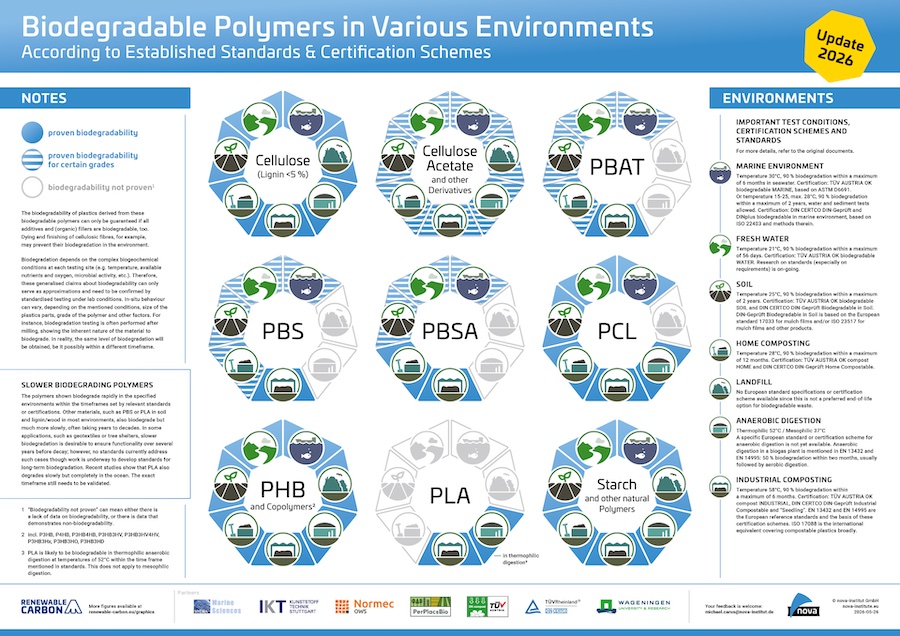
Advanced Recycling Conference 2026 to showcase innovations – Call for abstracts

The call for abstracts is now open for the Advanced Recycling Conference (ARC) 2026, taking place on 17–18 November 2026 in Cologne, Germany, and online. Europe’s leading platform for advanced recycling brings together hands-on solutions and cutting-edge research on recycling technologies for various waste streams like plastics, polymers, textiles or automotive, highlighting progress towards a circular renewable carbon economy.

#Recycling / Circular Economy

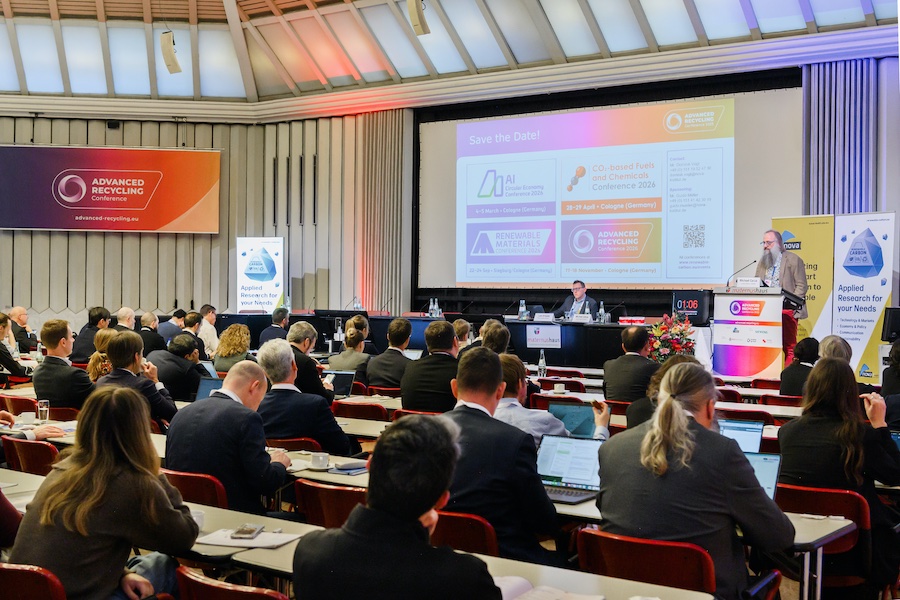
AI Circular Economy Conference 2026 fuels innovation at the intersection of AI and Circular Economy

The AI Circular Economy Conference 2026, organised by nova-Institute, brought together 116 participants from 15 countries in Cologne and online to explore the transformation of the chemical and materials industry supported and accelerated by artificial intelligence. During the two-day event, leading experts from industry, research, start-ups and the investment community discussed how AI can maximise the potential of renewable carbon creating efficient circular value chains. The conference featured 24 presentations and multiple panel discussions, highlighting the growing convergence of digital technologies and circular material systems. It demonstrated how artificial intelligence is progressing from the experimental stage to real industrial implementation within the circular economy.

#Sustainability

The nova-Institute establishes new Renewable Feedstock Department to lay the groundwork for industrial defossilisation

The transition from fossil-based to renewable carbon – sourced from biomass, CO₂ utilisation and recycling – is the cornerstone of a climate-neutral chemical industry. The nova-Institute’s new department is dedicated to providing the essential data, analyses and strategic roadmaps required to secure a reliable future feedstock supply and make this transition a commercial and ecological reality.

#Recycling / Circular Economy

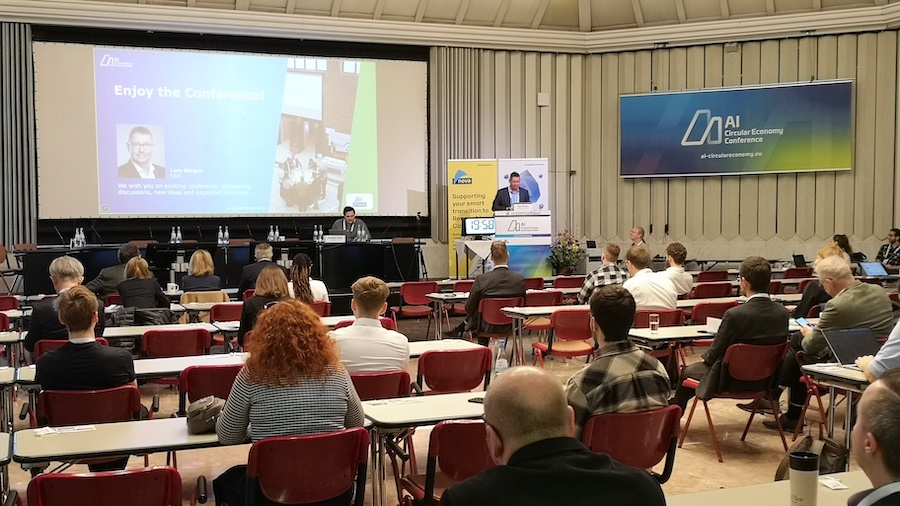
Advanced Recycling Conference 2025 fuels innovation across key waste streams

The Advanced Recycling Conference (ARC) 2025 brought together nearly 220 experts from 28 countries to spotlight pioneering advancements and foster industry collaboration in recycling across diverse waste streams including plastics, textiles, automotive and other materials.

More News on Research & Development

#Research & Development

Textile climate control system in workwear – exhibition at the 2026 SME Innovation Day!

Conventional protective workwear often reaches its limits during strenuous physical activity. In particular, the transport of sweat and excess body heat poses a problem. The German Institutes of Textile and Fiber Research (DITF) conducted research on flow-optimized, air-conducting textile structures that enable targeted climate control directly on the body. These structures can be integrated straight into protective work garments. The textile climate control system supports the body’s natural thermoregulation. This contributes to improved workplace safety and comfort.

#Research & Development

Elastic yarns to become more recyclable and environmentally friendly in future

On 29 April 2026, ITA student Tobias Dickmeiß was awarded a sponsorship prize by the Wilhelm Lorch-Stiftung for his innovative approach, to replacing conventional elastane with elastic yarns made from thermoplastic copolyester elastomers (TPC). Thanks to their thermoplastic nature and compatibility with typical polyesters used in the textile industry, elastic TPC yarns offer improved recyclability. Furthermore, the use of the melt-spinning process in yarn production eliminates the need for solvents that are harmful to the environment and human health.

#Research & Development

Walter Reiners Foundation Prize awarded to three ITA graduates

Sabina Dann, Lukas Balon and Annegret Storm from the Institut für Textiltechnik (ITA) of RWTH Aachen University were awarded the Walter Reiners Foundation Prize by the German Engineering Federation (VDMA) for their master’s and bachelor’s theses. Peter Dornier, Chairman of the Walter Reiners Foundation, presented the awards during Techtextil at the VDMA stand in Frankfurt am Main, Germany.

#Techtextil 2026

Young talents honoured – 60 years Walter Reiners Foundation

At the Techtextil trade fair in Frankfurt at the end of April, Peter D. Dornier, chairman of the VDMA’s Walter Reiners Foundation, presented awards to five successful young engineers. Promotion and sustainability awards were presented in the categories of bachelor’s/project theses and diploma/master’s theses. Academic theses are eligible for the sustainability awards if, for example, they develop solutions for resource-efficient products and technologies.

Latest News

#INDEX 2026

“We clearly see that reliability, flexibility, service and total cost of ownership are becoming increasingly important again.”

The nonwovens industry continues to face a challenging market environment. Nevertheless, AUTEFA Solutions reports successful projects, new line sales and growing demand for energy-efficient and flexible solutions. In this interview, André Imhof of AUTEFA Solutions talks about competitiveness against Chinese suppliers, new service and recycling concepts, the growing importance of application development and the opportunities created by countercyclical investments.

#INDEX 2026

“Needle punching technology is more universal and sustainable than ever!”

Needle punching technology was long regarded as a rather traditional and comparatively slow technology within the nonwovens industry. In this interview, Johann Philipp Dilo explains why needle punching is more relevant than ever today – ranging from energy efficiency and resource conservation to hygiene applications, new machine concepts and design-oriented nonwoven solutions.

#Nonwovens

PET spunbond from China – EDANA welcomes imposition of provisional anti-dumping measures

On 13 May 2026, after eight months of investigation, the European Commission imposed provisional anti-dumping duties of 45.6-50.0% on imports of PET spunbond from China. EDANA welcomes this expression of the Commission’s clear determination to protect EU industries from the unfair trade practices of Chinese producers.

#INDEX 2026

ANDRITZ at INDEX ’26: Driving sustainability with next-generation nonwoven technologies

From May 19-22, ANDRITZ Nonwoven & Textile is presenting its innovative solutions for the nonwoven & textile industry in Geneva, Switzerland. ANDRITZ will focus on technologies for sustainable and durable nonwovens, converting, sustainable fiber processes, textile recycling, and life-cycle services on booth 2114 in hall 02.

TOP