[pageLogInLogOut]

#Recycling / Circular Economy

Managed workwear services are providing a blueprint for the circular textile economy
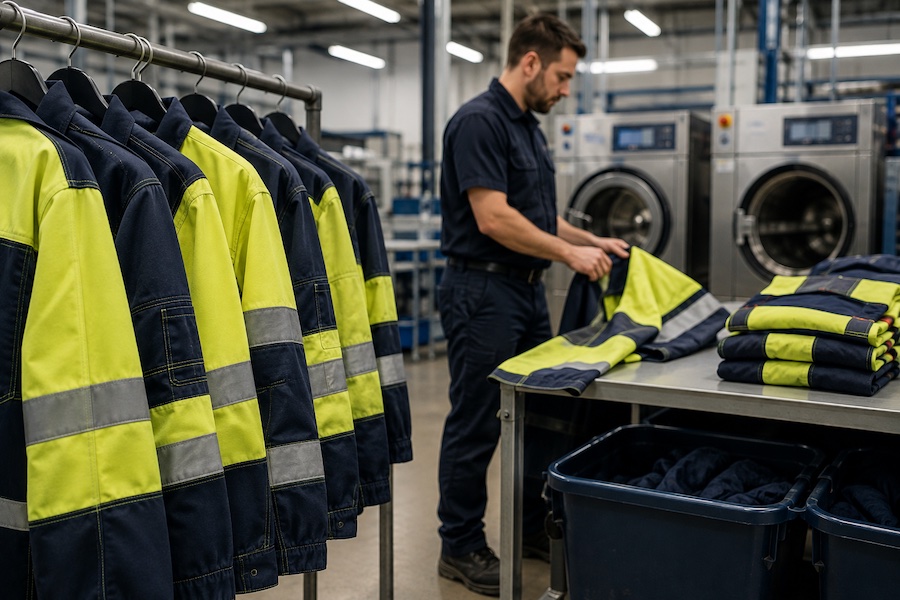
Workwear services © 2026 TexData International
Managed workwear service providers are demonstrating how commercial success and circularity can go hand in hand by extending garment lifespans through repair, laundering, reuse and recycling, according to “Managed workwear services—a circular textile economy ahead of the game”, a new 14‑page report from the global business information company Textiles Intelligence.


Across Europe, a number of companies have transformed workwear from a manufacturing business into one based on managed services. Rather than just supplying garments, these companies retain ownership of the garments throughout their working lives, taking responsibility for tracking, laundering, repairing, replacing and, ultimately, recycling.

As a result, these companies have created one of the textile industry’s most mature examples of a circular business model.

Unlike conventional apparel manufacturers, managed workwear service providers generate value by extending the useful life of every garment for as long as possible. Consequently, garments are designed to withstand hundreds of industrial laundering cycles, to provide comfort, to maintain compliance with safety standards, and to be easy to repair.

At the same time, managed workwear service providers have evolved into highly sophisticated logistics businesses. Technologies such as radio frequency identification (RFID), automated sorting systems and digital inventory management enable garments to be tracked throughout their service lives, thereby helping to maximise garment longevity, reduce operating costs and minimise environmental impact.

By retaining ownership of garments from manufacture to end-of-life recovery, managed workwear service providers have developed a complete business model for traceability, maintenance and recycling in a form which much of the wider apparel industry is only just beginning to establish. Actively driving this business model are several leading European companies, including Alsico, CWS Workwear, Elis, Fristads, Lindström, Mascot and Mewa.

As a result, managed workwear services provide one of the clearest examples of how circularity can be achieved on a commercial scale. And while this business model is not directly applicable to every sector of the apparel industry, it demonstrates that retaining ownership of garments creates strong commercial incentives to maximise durability, facilitate repair and recover valuable materials.

“Managed workwear services—a circular textile economy ahead of the game” is available for purchase from the global business information company Textiles Intelligence and costs £198 (UK), Euro355 (Europe, Middle East or Africa) or US$465 (Americas or Asia Pacific). For further information or to purchase this report, visit https://bit.ly/4fFEEVT 

More News from Textiles Intelligence Ltd

More News on Recycling / Circular Economy

#Recycling / Circular Economy

Textiles Recycling Expo USA 2027 opens registration and expands with manufacturing exhibition

The second edition of Textiles Recycling Expo USA will take place on 7–8 April 2027 in Charlotte, North Carolina. Following a debut that attracted more than 1,800 visitors and 95 exhibitors, the event will expand its exhibition and conference programme and will be held alongside the new Textiles Manufacturing Expo.

#Recycled Fibers

Recover launches global campaign highlighting industrial-scale recycled cotton solutions

Under the motto “REAL. Today, Not Someday.”, Recover aims to shift attention towards recycling technologies already operating at commercial scale. In 2025, the company's recycled cotton was used in more than 200 million garments worldwide.

#Recycling / Circular Economy

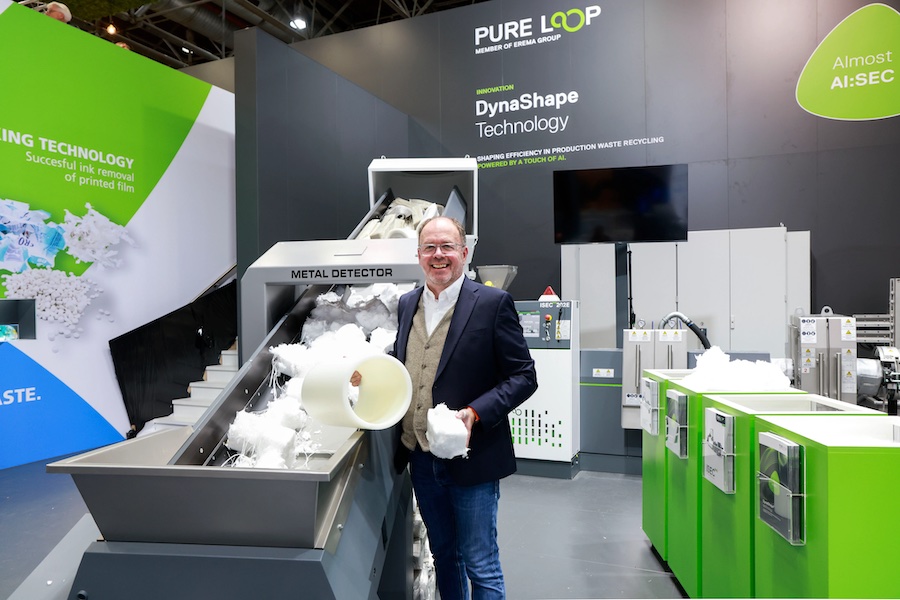
PURE LOOP's DynaShape® automation increases recycling productivity by up to ten percent

The intelligent automation solution for the ISEC evo recycling machine automatically adjusts operating parameters to changing input materials, improving throughput, melt quality and process stability while reducing operator workload.

#Recycling / Circular Economy

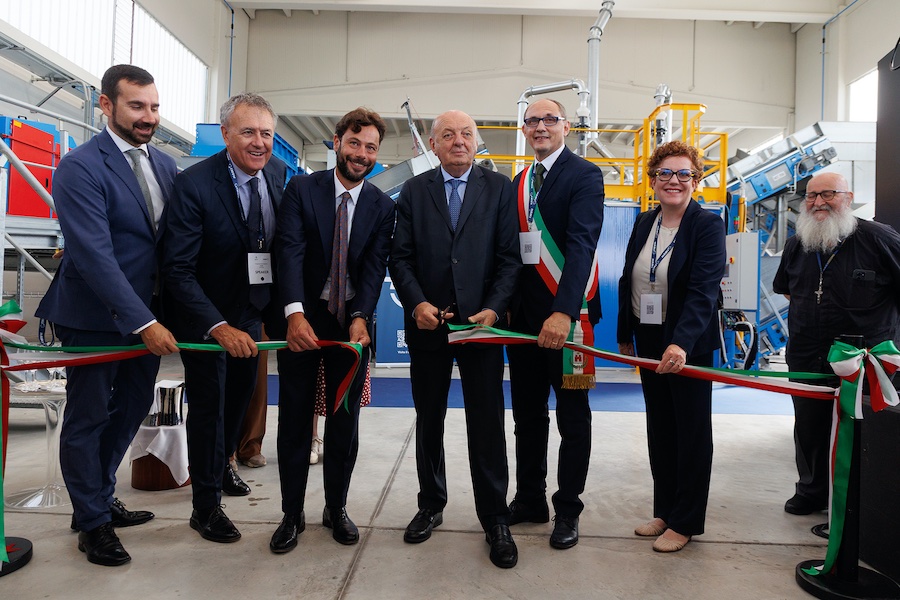
From textile waste to spinning-grade fiber: STADLER Group engineers integrated sorting solution for IGERS in Italy

As technology partner, STADLER worked alongside IGERS on its new plant in San Pietro Mosezzo, Novara, from the first process discussions to the final layout – integrating key treatment equipment into one system and supplying the fully automated sorting line. Together, the two companies have taken IGERS' patented textile recycling process from vision to industrial reality.

Latest News

#ITMA Asia + CITME 2026

KARL MAYER expands TM WEFT capabilities for fashion fabrics at ITMA ASIA 2026

A new E 36 gauge, an EL pattern drive and improved yarn tension regulation extend the application possibilities of KARL MAYER's TM WEFT warp knitting machine. At ITMA ASIA 2026, the company will demonstrate the developments alongside a collection of woven-like warp knitted fabrics for fashion and apparel.

#Research & Development

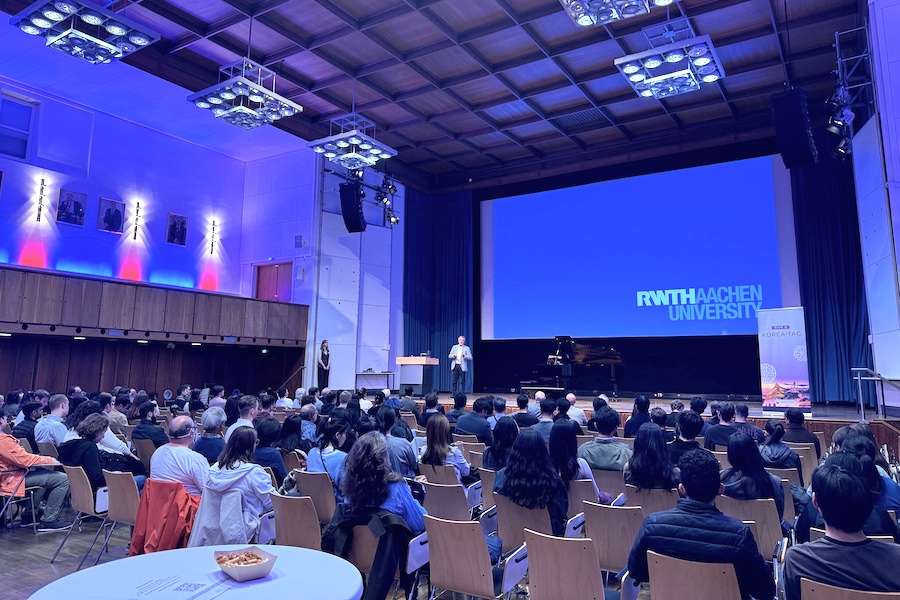
First "Korea Day" at RWTH Aachen attracts more than 300 participants

The inaugural Korea Day in Aachen brought together representatives from science, business and Korean institutions to strengthen German-Korean cooperation in research, technology and education. The Institut für Textiltechnik (ITA) of RWTH Aachen University was among the participating organisations.

#Textiles & Apparel / Garment

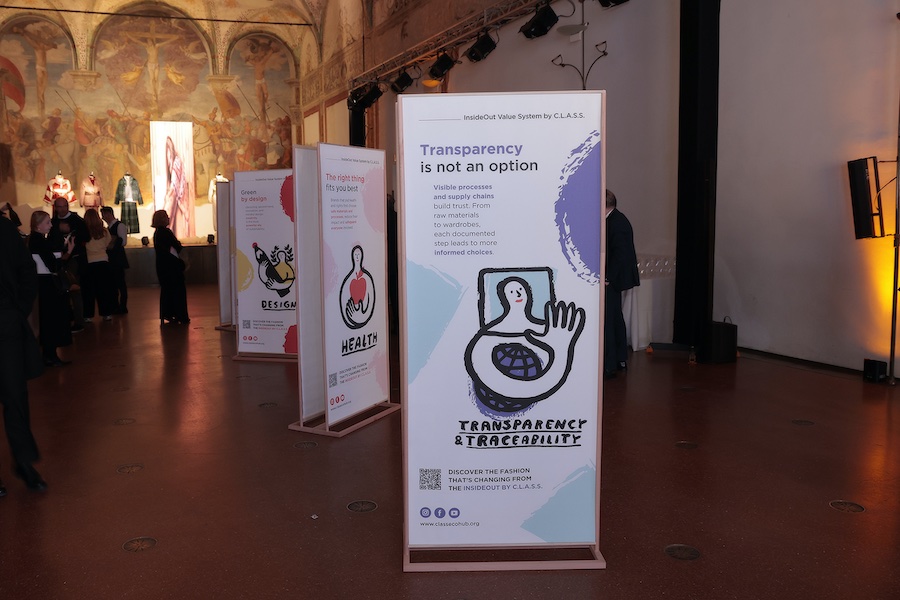
MarediModa highlights transparency and traceability with InsideOut by C.L.A.S.S.

The InsideOut by C.L.A.S.S. exhibition at MarediModa 2026 in Cannes focused on transparency, traceability and the measurable values behind fashion products. Its Decalogue of Values aims to make environmental, social and production-related information more accessible throughout the textile supply chain.

#Industry 4.0 / Digitalization

White House reduces production planning time by up to 80% with Coats Digital’s FastReactPlan

Indian garment manufacturer White House has reduced its production planning cycle by 60–80% following the implementation of Coats Digital’s FastReactPlan software. The integrated planning solution provides greater visibility across production, capacity and material requirements while supporting faster decision-making and improved delivery performance.

TOP