[pageLogInLogOut]

#Recycling / Circular Economy

Holma and ReSpin establish Sweden’s first industrial spinning line for recycled textile fibres
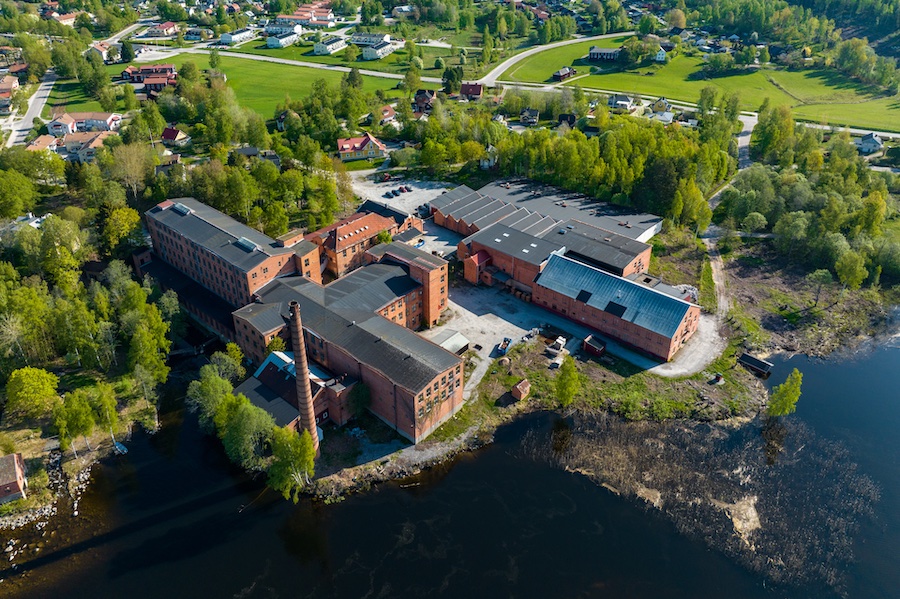
Holma Helsingland © 2026 Holma Spinning Mill
Holma Spinning Mill AB has been granted up to SEK 77.3 million in funding through the Swedish Environmental Protection Agency’s Climate Leap initiative (Klimatklivet) to establish Sweden’s first industrial spinning line for recycled textile fibres.


The company is owned through Holma Helsingland Förvaltning AB, in which ReSpin, developer of technology for mechanical fibre-to-fibre recycling of textiles, is a co-owner.

The initiative combines Holma Helsingland’s long industrial experience in spinning, twisting, dyeing and yarn production with ReSpin’s technology for mechanically recycling textile waste into new fibres without water or chemicals, using low energy consumption and with a strong focus on preserving fibre quality.

The project, titled “From Waste to Yarn”, will enable large-scale production of new fibres and yarns from textile waste and contribute to the development of circular textile flows in Sweden and Europe.

Globally, the textile industry accounts for significant greenhouse gas emissions and extensive use of virgin raw materials. Developing circular material flows and fibre-to-fibre recycling is therefore considered a critical part of the transition toward a more sustainable textile industry.

“This is an important investment for the Swedish textile industry. By combining our established spinning expertise with new recycling technology, we are creating new opportunities for the future of circular textile production. We also see this initiative strengthening Gävleborg’s role as an industrial hub for sustainable textile manufacturing,” says Pär Eriksson, CEO of Holma Helsinglands.

“This investment is an important step in scaling fibre-to-fibre recycling industrially and demonstrating that circular textile materials can be produced on a larger scale with low climate impact. For us, this is about building the next generation textile industry, where recycling and production are integrated into the same value chain,” says Åsa Strandberg, CEO of ReSpin AB.

Klimatklivet (The Climate Leap) is the Swedish Environmental Protection Agency’s investment support programme for local and regional initiatives that reduce greenhouse gas emissions. The programme supports investments with substantial climate benefits and strong potential for technology diffusion and industrial transition. In its decision, the Swedish Environmental Protection Agency highlights the project’s potential to contribute both to technology dissemination and market introduction within the climate transition.

The project is scheduled to be completed no later than 31 December 2028.


More News from ReSpin

More News on Recycling / Circular Economy

#Recycling / Circular Economy

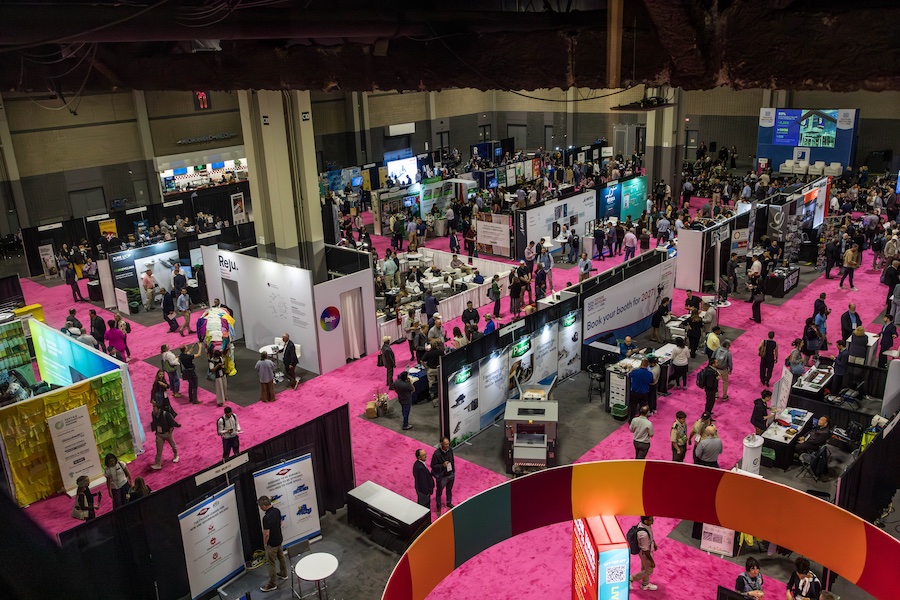
Textiles Recycling Expo USA 2027 opens registration and expands with manufacturing exhibition

The second edition of Textiles Recycling Expo USA will take place on 7–8 April 2027 in Charlotte, North Carolina. Following a debut that attracted more than 1,800 visitors and 95 exhibitors, the event will expand its exhibition and conference programme and will be held alongside the new Textiles Manufacturing Expo.

#Recycled Fibers

Recover launches global campaign highlighting industrial-scale recycled cotton solutions

Under the motto “REAL. Today, Not Someday.”, Recover aims to shift attention towards recycling technologies already operating at commercial scale. In 2025, the company's recycled cotton was used in more than 200 million garments worldwide.

#Recycling / Circular Economy

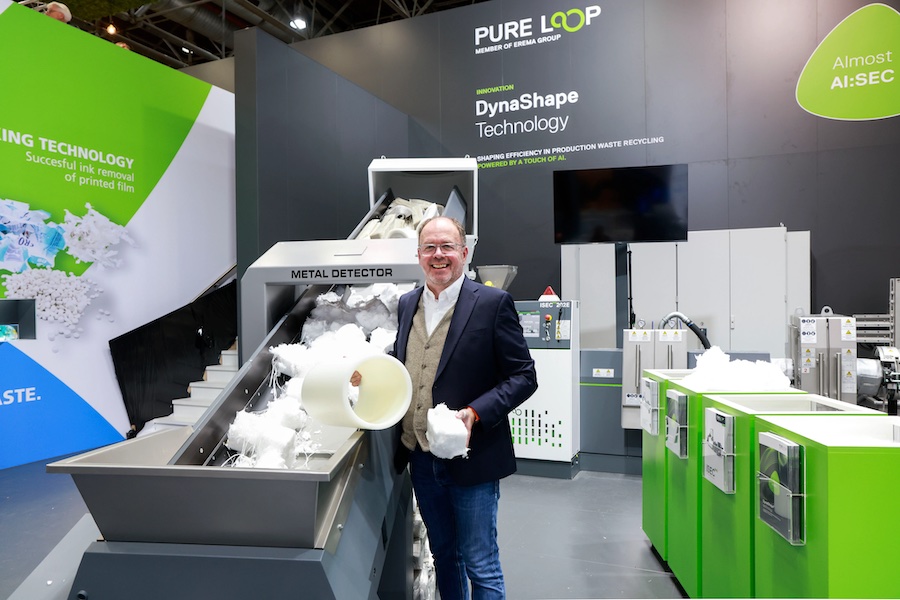
PURE LOOP's DynaShape® automation increases recycling productivity by up to ten percent

The intelligent automation solution for the ISEC evo recycling machine automatically adjusts operating parameters to changing input materials, improving throughput, melt quality and process stability while reducing operator workload.

#Recycling / Circular Economy

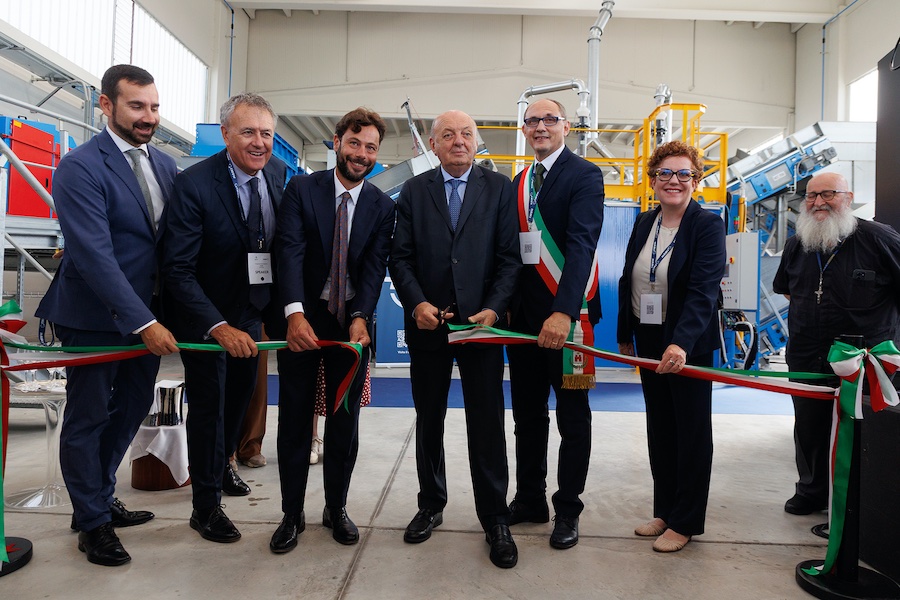
From textile waste to spinning-grade fiber: STADLER Group engineers integrated sorting solution for IGERS in Italy

As technology partner, STADLER worked alongside IGERS on its new plant in San Pietro Mosezzo, Novara, from the first process discussions to the final layout – integrating key treatment equipment into one system and supplying the fully automated sorting line. Together, the two companies have taken IGERS' patented textile recycling process from vision to industrial reality.

Latest News

#ITMA Asia + CITME 2026

KARL MAYER expands TM WEFT capabilities for fashion fabrics at ITMA ASIA 2026

A new E 36 gauge, an EL pattern drive and improved yarn tension regulation extend the application possibilities of KARL MAYER's TM WEFT warp knitting machine. At ITMA ASIA 2026, the company will demonstrate the developments alongside a collection of woven-like warp knitted fabrics for fashion and apparel.

#Research & Development

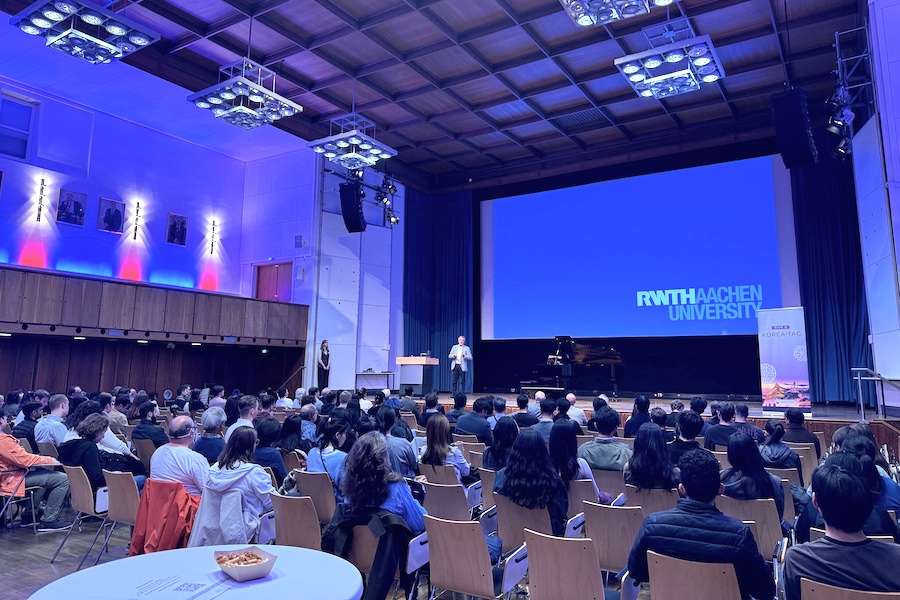
First "Korea Day" at RWTH Aachen attracts more than 300 participants

The inaugural Korea Day in Aachen brought together representatives from science, business and Korean institutions to strengthen German-Korean cooperation in research, technology and education. The Institut für Textiltechnik (ITA) of RWTH Aachen University was among the participating organisations.

#Textiles & Apparel / Garment

MarediModa highlights transparency and traceability with InsideOut by C.L.A.S.S.

The InsideOut by C.L.A.S.S. exhibition at MarediModa 2026 in Cannes focused on transparency, traceability and the measurable values behind fashion products. Its Decalogue of Values aims to make environmental, social and production-related information more accessible throughout the textile supply chain.

#Industry 4.0 / Digitalization

White House reduces production planning time by up to 80% with Coats Digital’s FastReactPlan

Indian garment manufacturer White House has reduced its production planning cycle by 60–80% following the implementation of Coats Digital’s FastReactPlan software. The integrated planning solution provides greater visibility across production, capacity and material requirements while supporting faster decision-making and improved delivery performance.

TOP