[pageLogInLogOut]

#Recycling / Circular Economy

Companies in Japan initiate demonstration to expand the automotive recycling process

DENSO CORPORATION and other partners have been chosen by an industry-government-academia collaborative project aiming to expand the recycle content for automobile in the fiscal year 2023 supported by Ministry of the Environment, Japan.

The project, titled "Demonstration of Manufacturing-and-Recycling Integrated Process for Horizontal Cycle* Enabled by Automated Sophisticated Dismantling of ELVs, (end-of-life vehicles)" has begun in early March and is scheduled to conclude by the end of January 2025.

Project participants include REVER CORPORATION, DIC Corporation, UACJ Corporation, Kaneshiro Sangyou, KYUSHU METAL INDUSTRY CO., LTD., SUMITOMO CHEMICAL COMPANY, Daido Steel Co., Ltd., Toray Industries, Inc., Toyoda Gosei Co., Ltd., TOYOTA BOSHOKU CORPORATION, Nomura Research Institute, Ltd., Furukawa Electric Co., Ltd., MATEC Inc., Mitsui Chemicals, Inc., Waseda University and others.

In recent years, the automotive industry has sought to transition to a circular economy to achieve a more sustainable society. In the effort, it is necessary to significantly expand the use of recycled materials in automotive products, helping reduce the need for freshly cultivated natural resources.

Even so, current global processes often involve shredding ELVs and separating the remaining materials for use in recycled products, a process that can make acquiring high-purity material a challenge. Further compounding the issue is a lack of shared standards between the manufacturing and recycling industries. Moreover, the recycling industry responsible for ELV processing faces business challenges such as severe labor shortages and the need to optimize work environments. Addressing these challenges requires a shift towards new processing methods for ELVs that not only solve these issues but also ensure the quality and quantity of recycled materials.

In this project, participating companies such as ELV dismantling and shredding operators, dismantling system providers, material manufacturers, automotive parts manufacturers, and research institutions are collaborating to realize a new ELV processing method based on automated sophisticated dismantling and conduct a technology demonstration of an integrated process.

Through this demonstration, the group will identify the challenges involved in implementing this integrated ecosystem that combines manufacturing and recycling industries within society. Specifically, the project will include the technology demonstration of the automated sophisticated dismantling process, the high-purity and re-resource processes for various materials extracted through advanced dismantling, and the prototyping and evaluation of parts made from these recycled materials. Additionally, the project will verify the sustainability of the whole process, evaluating how much carbon output it can reduce compared to current processes.


More News from Toray Engineering Co. Ltd.

#Man-Made Fibers

Toray develops AURLIST™ polyester filament fiber with luxurious luster and ultra-fine structure

Toray Industries has developed AURLIST™, a new polyester filament fiber designed to combine luxurious luster, soft loft and a subtle fibrillated surface texture. The company primarily targets applications in women’s apparel such as tops, bottoms and dresses.

#Recycling / Circular Economy

Toray develops recycling technology that retains carbon fiber strength and surface quality

Toray Industries, Inc., announced today that it has developed a recycling technology that can decompose diverse carbon fiber reinforced plastics (CFRP) made from thermosetting resins while retaining the strength and surface quality of those fibers. The company drew on this technology to create a nonwoven fabric employing recycled carbon fibers.

#Composites

HEAD launches more sustainable(1) BOOM RAW racquet on Earth Day by using Toray’s bio-circular carbon fibers

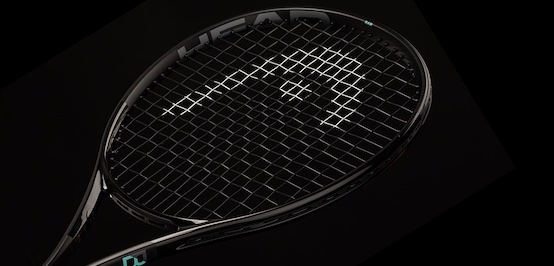
HEAD continues to innovate with the launch of the BOOM RAW tennis racquet, an encouraging development in the search for a more sustainable future for racquet sports. All of the carbon fibers are bio-circular carbon fibers in the limited-edition and highly innovative BOOM RAW racquet, which offers the same explosive power - along with the same fun, feel and easy playability - as the regular, in-line BOOM racquet. The bio-circular carbon fibers are manufactured by Toray and its subsidiary Toray Carbon Fibers Europe.

#Yarn & Fiber

Toray develops durable reverse osmosis membrane

Toray Industries, Inc., announced today that it has developed a highly durable reverse osmosis (RO) membrane (see glossary note 1). This innovative offering guarantees the long-term provision of high-quality water. It also maintains the superior removal performance of Toray’s existing membranes vital for reusing industrial wastewater and treating sewage.

More News on Recycling / Circular Economy

#ITM 2026

BB Engineering unveils new, patented “Val-uePack” spin pack at ITM

At the upcoming ITM in Istanbul, taking place June 9–13 at the Tüyap Fair Convention and Congress Center in Hall 7, Booth 702B, BB Engineering will once again be represented at a joint booth with its parent company, Barmag, and its representative, Tekstil Servis. The German machine manufacturer will show-case its expertise in man-made fiber and recycling technology, presenting its entire product portfolio, which includes compo-nents such as extruders and filters, as well as complete sys-tems for spinning synthetic fibers, air-texturing, and PET recy-cling.

#Recycled Fibers

Syre expands partnership with Target to advance next-generation recycled materials at scale

Advancing next-generation materials to support scalable circular solutions across global retail Stockholm, May 2026 — Syre, the textile impact company hyperscaling textile-to-textile recycling today announced an expanded collaboration with Target to accelerate the adoption of next-generation recycled materials across retail at scale.

#Recycling / Circular Economy

Project REWEAR investigates diverse economies of rewear as a global practice of circularity

Every year, European households discard millions of tonnes of clothing. Around a quarter of what gets separately collected is exported, much of it classified as rewearable. A significant share ends up in markets like Kantamanto in Accra, Ghana, where an estimated 15 million garments arrive every week. New research published today reveals what happens when that clothing arrives.

#Recycling / Circular Economy

RE&UP contributes to Global Fashion Summit 2026 circularity discussion

RE&UP contributed to the global conversation on textile circularity at Global Fashion Summit 2026 in Copenhagen, where Fatih Konukoğlu, Chairman of RE&UP and Vice Chairman of Sanko Holding, took part in both the keynote session “The New Rules” and the panel discussion “A Reckoning and Renewal for Circular Horizons”, alongside leaders from H&M Group, Looper Textile Co. and Sourcing Journal.

Latest News

#INDEX 2026

“We clearly see that reliability, flexibility, service and total cost of ownership are becoming increasingly important again.”

The nonwovens industry continues to face a challenging market environment. Nevertheless, AUTEFA Solutions reports successful projects, new line sales and growing demand for energy-efficient and flexible solutions. In this interview, André Imhof of AUTEFA Solutions talks about competitiveness against Chinese suppliers, new service and recycling concepts, the growing importance of application development and the opportunities created by countercyclical investments.

#INDEX 2026

“Needle punching technology is more universal and sustainable than ever!”

Needle punching technology was long regarded as a rather traditional and comparatively slow technology within the nonwovens industry. In this interview, Johann Philipp Dilo explains why needle punching is more relevant than ever today – ranging from energy efficiency and resource conservation to hygiene applications, new machine concepts and design-oriented nonwoven solutions.

#Research & Development

Textile climate control system in workwear – exhibition at the 2026 SME Innovation Day!

Conventional protective workwear often reaches its limits during strenuous physical activity. In particular, the transport of sweat and excess body heat poses a problem. The German Institutes of Textile and Fiber Research (DITF) conducted research on flow-optimized, air-conducting textile structures that enable targeted climate control directly on the body. These structures can be integrated straight into protective work garments. The textile climate control system supports the body’s natural thermoregulation. This contributes to improved workplace safety and comfort.

#Nonwovens

PET spunbond from China – EDANA welcomes imposition of provisional anti-dumping measures

On 13 May 2026, after eight months of investigation, the European Commission imposed provisional anti-dumping duties of 45.6-50.0% on imports of PET spunbond from China. EDANA welcomes this expression of the Commission’s clear determination to protect EU industries from the unfair trade practices of Chinese producers.

TOP