[pageLogInLogOut]

#Recycled Fibers

Worn Again Technologies unveils the Accelerator
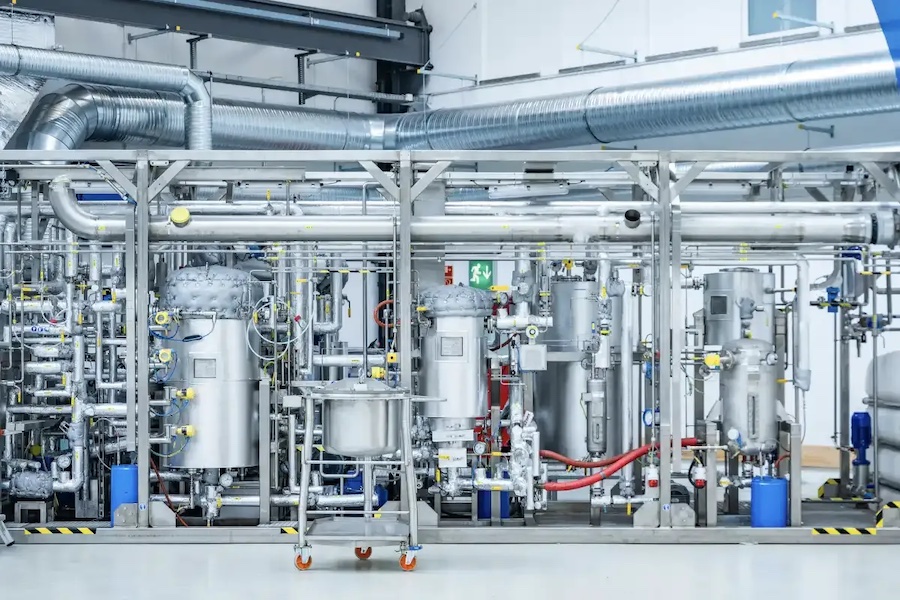
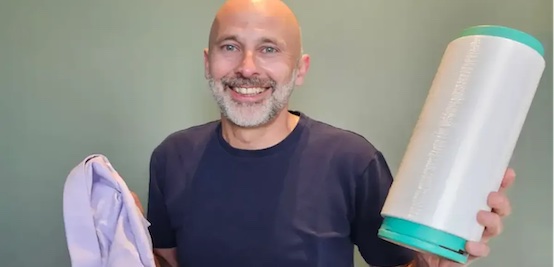
The Accelerator fiber recycling system by Worn Again Technologies © 2026 Worn Again Technologies
Worn Again Technologies unveils the Accelerator, the next major step towards commercialising its pioneering Textile-to-Fibre recycling process and proving the technical and economic feasibility of polycotton recycling.

A Textile-to-Fibre Accelerator plant – which the company has started up in Winterthur, Switzerland – showcases Worn Again’s proprietary chemical recycling technology at scale, providing a real-world validation of a process that recovers and regenerates polyester and cellulose from end-of-life textiles. This marks a significant milestone in Worn Again’s journey to transform textile waste into circular fibres.

Less than 1% of clothes are recycled. Meanwhile, textile production already exceeds a staggering 120 million tonnes per annum, a figure that continues to grow, exacerbated by consumer demand for fast fashion. The time is now to scale solutions designed to tackle the textile waste crisis.

“The fashion industry is at a pivotal point,” said Michael Weiss, CEO of Worn Again Technologies. “Blended polycottons, once nearly impossible to recycle efficiently, are now being reimagined through our groundbreaking process. This technology maintains material value, minimises waste, and unlocks significant economic opportunities.”

From laboratory to scaled application

The Accelerator represents the evolution from laboratory innovation to industrial demonstration. In recent years, Worn Again has refined the process chemistry and engineering design – optimising solvent systems and separation techniques – to enable efficient, high-purity recovery of polyester and cellulose fibres. Crucially, the process recovers over 95% of solvents used, reinforcing environmental responsibility.

The technology’s multi-solvent approach allows effective separation of complex materials, including dyes and elastane, which are major challenges for traditional recycling methods. Since 2024, the company achieved breakthroughs by successfully spinning fibres from recovered outputs, reaching new heights in product purity and quality – critical milestones underpinning the deployment of larger-scale operations.

Ongoing scale-up engineering activities continue to enable process efficiencies that weren’t feasible in the laboratory – enhancing the value proposition of the recycling technology as it scales.

The Accelerator plant is being delivered in modules. The first module is to recover spinnable polyester from waste textiles, including post-consumer polycotton blends sourced from Switzerland, the EU & UK. The recovered, Circular Polyester, will soon be available for downstream piloting & product application testing. The next module (which has entered detailed engineering) will produce Next-Gen Cellulosic Fibres and other advanced cellulosic materials.

Advancing towards commercial deployment

The Accelerator provides a platform for testing the technology’s real-world applications. Partner companies will be able to evaluate their feedstocks and validate the process across diverse textile streams, generating critical data to refine and scale operations.

Worn Again is progressing towards a full-scale manufacturing facility designed to process significant volumes of textile waste and produce high-value circular products. “The Accelerator is a critical asset for building towards our first commercial plant.” said Toby Moss, Chief Commercial Officer, “Testing at this scale will expand our solutions to a broader range of feedstocks, ensuring that we stay ahead by valorising more material streams and creating a growing portfolio of high-value, downstream product applications.”

Worn Again has gathered a growing network of strategic partners who will now receive priority access the Accelerator plant and its circular products. As production capacities continue to grow, it will further develop these partnerships and new ones to deliver binding commitments for supply and offtakes of a planned first commercial scale production plant. With the Accelerator now operational, Worn Again is open for business and ready to work with brands, manufacturers and waste handlers to “clean up fashion”.

Delivery of the Worn Again Textile-to-Fibre Accelerator plant in Winterthur, Switzerland © 2026 Worn Again
More News from Worn Again

More News on Recycled Fibers

#Research & Development

Elastic yarns to become more recyclable and environmentally friendly in future

On 29 April 2026, ITA student Tobias Dickmeiß was awarded a sponsorship prize by the Wilhelm Lorch-Stiftung for his innovative approach, to replacing conventional elastane with elastic yarns made from thermoplastic copolyester elastomers (TPC). Thanks to their thermoplastic nature and compatibility with typical polyesters used in the textile industry, elastic TPC yarns offer improved recyclability. Furthermore, the use of the melt-spinning process in yarn production eliminates the need for solvents that are harmful to the environment and human health.

#Recycled Fibers

Syre expands partnership with Target to advance next-generation recycled materials at scale

Advancing next-generation materials to support scalable circular solutions across global retail Stockholm, May 2026 — Syre, the textile impact company hyperscaling textile-to-textile recycling today announced an expanded collaboration with Target to accelerate the adoption of next-generation recycled materials across retail at scale.

#Recycling / Circular Economy

RE&UP contributes to Global Fashion Summit 2026 circularity discussion

RE&UP contributed to the global conversation on textile circularity at Global Fashion Summit 2026 in Copenhagen, where Fatih Konukoğlu, Chairman of RE&UP and Vice Chairman of Sanko Holding, took part in both the keynote session “The New Rules” and the panel discussion “A Reckoning and Renewal for Circular Horizons”, alongside leaders from H&M Group, Looper Textile Co. and Sourcing Journal.

#Recycling / Circular Economy

Europe’s textile future at a turning point: New 2030 Circularity Blueprint aims to scale recycling and unlock investment opportunities

The EU textile system is at a critical crossroads. Today, less than 1% of discarded garments are recycled into new garments, despite EU-wide obligations for separate collection. In response, Global Fashion Agenda (GFA) is launching the 2030 Circularity Blueprint, in partnership with ReHubs. This ambitious initiative is designed to support the transformation of the EU textile ecosystem to advance textile-to-textile recycling and drive the transition to a circular economy.

Latest News

#INDEX 2026

“We clearly see that reliability, flexibility, service and total cost of ownership are becoming increasingly important again.”

The nonwovens industry continues to face a challenging market environment. Nevertheless, AUTEFA Solutions reports successful projects, new line sales and growing demand for energy-efficient and flexible solutions. In this interview, André Imhof of AUTEFA Solutions talks about competitiveness against Chinese suppliers, new service and recycling concepts, the growing importance of application development and the opportunities created by countercyclical investments.

#INDEX 2026

“Needle punching technology is more universal and sustainable than ever!”

Needle punching technology was long regarded as a rather traditional and comparatively slow technology within the nonwovens industry. In this interview, Johann Philipp Dilo explains why needle punching is more relevant than ever today – ranging from energy efficiency and resource conservation to hygiene applications, new machine concepts and design-oriented nonwoven solutions.

#Research & Development

Textile climate control system in workwear – exhibition at the 2026 SME Innovation Day!

Conventional protective workwear often reaches its limits during strenuous physical activity. In particular, the transport of sweat and excess body heat poses a problem. The German Institutes of Textile and Fiber Research (DITF) conducted research on flow-optimized, air-conducting textile structures that enable targeted climate control directly on the body. These structures can be integrated straight into protective work garments. The textile climate control system supports the body’s natural thermoregulation. This contributes to improved workplace safety and comfort.

#Nonwovens

PET spunbond from China – EDANA welcomes imposition of provisional anti-dumping measures

On 13 May 2026, after eight months of investigation, the European Commission imposed provisional anti-dumping duties of 45.6-50.0% on imports of PET spunbond from China. EDANA welcomes this expression of the Commission’s clear determination to protect EU industries from the unfair trade practices of Chinese producers.

TOP