[pageLogInLogOut]

#Recycled Fibers

matterr at K – Where innovation meets industry

At this year’s K trade fair, matterr took the stage to showcase its technology and demonstrate how it drives circular polyester at an industrial scale. Insightful conversations, strong new connections, and great energy — all together reminds how powerful it is when innovation meets industry. The momentum from Düsseldorf shows: circular transformation is no longer a vision — it’s happening.


The cleantech company matterr was part of this year’s K — The World’s No. 1 Trade Fair for Plastics and Rubber, introducing its patented depolymerization technology to a global audience. At the booth and during its sessions the company shared insights into its first small-scale industrial plant, to be built at Chemiepark Knapsack, which will serve as a blueprint for future large-scale facilities.

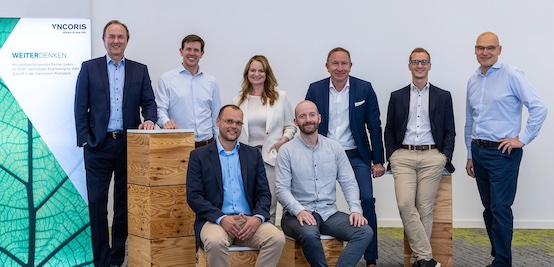
On day two, matterr hosted a press briefing together with Ralf Müller and Christoph Kappenhagen from the management board of YNCORIS, and Monika Beck, Head of Business Unit D-A-CH / Spain / Portugal at NRW.Global Business. The message was clear: industrial innovation can start in Germany — and scale across borders.

“With the EU funding and BESTSELLER’s investment, we have reached two important milestones toward building a small-scale industrial depolymerization plant at Chemiepark Knapsack. Our decision to scale in Germany is intentional: the technology was developed here, and we will keep the value creation here. This ensures strategic independence in a key technology driving the global circular transformation in the textile and packaging industries", states Melanie Hackler, CEO of matterr


Project and regional impact

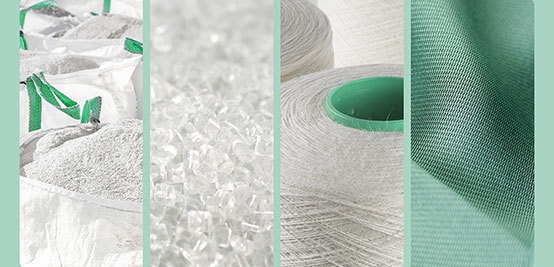
The planned facility, with an annual capacity of around 10,000 tons, will convert hard-to-recycle polyester streams — from textiles to multilayer packaging — into virgin-quality, drop-in feedstock. The technology is specifically designed to handle complex material streams that mechanical recycling cannot handle.

By recovering polyester captured in mixed waste streams currently sent to landfill or incineration, matterr advances decarbonization across the polyester value chain, and contributes to EU circular economy and climate targets – while reinforcing Germany’s role as a hub for industrial innovation.

Scaling up, matterr aims to prove that fossil-free circular solutions work at industrial scale and to set a new benchmark for regenerative supply chains across industries.


“Chemiepark Knapsack offers ideal conditions: infrastructure, energy networks, skilled workforce, and proximity to strong partners across the value chain. For us as a team, it is also about establishing standards and processes that enable fast replication and international roll-out, says Benjamin Rump, COO of matterr. 


More News from matterr GmbH

More News on Recycled Fibers

#Research & Development

Elastic yarns to become more recyclable and environmentally friendly in future

On 29 April 2026, ITA student Tobias Dickmeiß was awarded a sponsorship prize by the Wilhelm Lorch-Stiftung for his innovative approach, to replacing conventional elastane with elastic yarns made from thermoplastic copolyester elastomers (TPC). Thanks to their thermoplastic nature and compatibility with typical polyesters used in the textile industry, elastic TPC yarns offer improved recyclability. Furthermore, the use of the melt-spinning process in yarn production eliminates the need for solvents that are harmful to the environment and human health.

#Recycled Fibers

Syre expands partnership with Target to advance next-generation recycled materials at scale

Advancing next-generation materials to support scalable circular solutions across global retail Stockholm, May 2026 — Syre, the textile impact company hyperscaling textile-to-textile recycling today announced an expanded collaboration with Target to accelerate the adoption of next-generation recycled materials across retail at scale.

#Recycling / Circular Economy

RE&UP contributes to Global Fashion Summit 2026 circularity discussion

RE&UP contributed to the global conversation on textile circularity at Global Fashion Summit 2026 in Copenhagen, where Fatih Konukoğlu, Chairman of RE&UP and Vice Chairman of Sanko Holding, took part in both the keynote session “The New Rules” and the panel discussion “A Reckoning and Renewal for Circular Horizons”, alongside leaders from H&M Group, Looper Textile Co. and Sourcing Journal.

#Recycling / Circular Economy

Europe’s textile future at a turning point: New 2030 Circularity Blueprint aims to scale recycling and unlock investment opportunities

The EU textile system is at a critical crossroads. Today, less than 1% of discarded garments are recycled into new garments, despite EU-wide obligations for separate collection. In response, Global Fashion Agenda (GFA) is launching the 2030 Circularity Blueprint, in partnership with ReHubs. This ambitious initiative is designed to support the transformation of the EU textile ecosystem to advance textile-to-textile recycling and drive the transition to a circular economy.

Latest News

#INDEX 2026

“We clearly see that reliability, flexibility, service and total cost of ownership are becoming increasingly important again.”

The nonwovens industry continues to face a challenging market environment. Nevertheless, AUTEFA Solutions reports successful projects, new line sales and growing demand for energy-efficient and flexible solutions. In this interview, André Imhof of AUTEFA Solutions talks about competitiveness against Chinese suppliers, new service and recycling concepts, the growing importance of application development and the opportunities created by countercyclical investments.

#INDEX 2026

“Needle punching technology is more universal and sustainable than ever!”

Needle punching technology was long regarded as a rather traditional and comparatively slow technology within the nonwovens industry. In this interview, Johann Philipp Dilo explains why needle punching is more relevant than ever today – ranging from energy efficiency and resource conservation to hygiene applications, new machine concepts and design-oriented nonwoven solutions.

#Research & Development

Textile climate control system in workwear – exhibition at the 2026 SME Innovation Day!

Conventional protective workwear often reaches its limits during strenuous physical activity. In particular, the transport of sweat and excess body heat poses a problem. The German Institutes of Textile and Fiber Research (DITF) conducted research on flow-optimized, air-conducting textile structures that enable targeted climate control directly on the body. These structures can be integrated straight into protective work garments. The textile climate control system supports the body’s natural thermoregulation. This contributes to improved workplace safety and comfort.

#Nonwovens

PET spunbond from China – EDANA welcomes imposition of provisional anti-dumping measures

On 13 May 2026, after eight months of investigation, the European Commission imposed provisional anti-dumping duties of 45.6-50.0% on imports of PET spunbond from China. EDANA welcomes this expression of the Commission’s clear determination to protect EU industries from the unfair trade practices of Chinese producers.

TOP