[pageLogInLogOut]

#Nonwovens

EU imposes definitive anti-dumping duties on Chinese PET spunbond imports

The European Commission has introduced definitive anti-dumping duties ranging from 39.8% to 48.1% on imports of PET spunbond from China. The measures, which entered into force on 31 October 2026, will remain in place for five years and are intended to address unfairly priced imports that have caused injury to European manufacturers. The EU market for these nonwoven materials is valued at approximately €200 million.


The decision follows an anti-dumping investigation initiated by the European Commission in September 2025. The investigation concluded that PET spunbond originating in China was being imported into the European Union at dumped prices, causing material injury to the EU industry, which has production facilities in Germany, Italy and France.

Provisional anti-dumping duties ranging from 45.6% to 50% had already been introduced in May 2026. The definitive measures now establish duties between 39.8% and 48.1% for a period of five years.

Investigation initiated following complaints by European manufacturers

The investigation was launched following a complaint submitted on 8 August 2025 by Freudenberg Performance Materials and Johns Manville, two major manufacturers of PET spunbond in Europe.

During the investigation, the European Commission examined dumping practices, their impact on European producers and the economic interests of the European Union. The investigation covered the period from 1 July 2024 to 30 June 2025, while the assessment of injury trends extended back to January 2022.

The Commission's findings confirmed that the conditions for imposing anti-dumping measures had been met.

PET spunbond plays an important role in construction applications

PET spunbond is a nonwoven material manufactured from continuous polyester filaments that are mechanically bonded through needling. Depending on the application, the material can also be reinforced with glass fibres.

One of its principal applications is as a carrier material for waterproofing membranes, particularly bituminous roofing membranes used in the construction industry. The nonwoven structure provides mechanical stability and reinforcement for these products.

According to the European Commission, the EU market for PET spunbond is worth approximately €200 million.

The definitive anti-dumping duties are intended to address the injury caused by dumped imports and restore fair competitive conditions for European manufacturers.

The measures form part of the European Union's trade defence framework, which allows the Commission to intervene when investigations establish that dumped imports are causing material injury to EU industries.
More News from European Commission

#Europe

The Digital Product Passport registry is now live

On 20 July, the European Commission launched the Digital Product Passport Registry together with a testing environment, marking an important milestone in making the Digital Product Passport (DPP) a practical reality for businesses placing products on the EU market.

#Europe

EU ban on destroying unsold clothing and footwear now in force

The European Union's ban on the destruction of unsold clothing, clothing accessories and footwear has entered into force. Since July 19, 2026, large companies across the EU have been prohibited from destroying unsold textile products, while medium-sized companies will be required to comply with the same rules from 2030.

#Recycling / Circular Economy

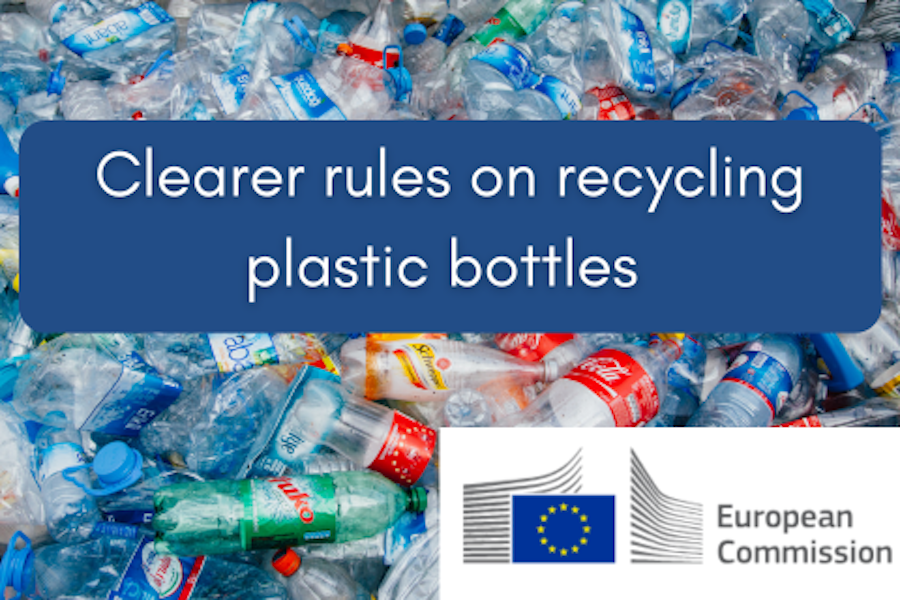
Commission clarifies rules on plastic bottles recycling

The European Commission today adopted new rules on recycling of single-use plastic beverage bottles made primarily of polyethylene terephthalate (PET bottles). These rules establish, for the first time, a methodology to calculate, verify and report chemically recycled content. This is part of the Commission’s December 2025 plastics package.

#Europe

EU and Australia strengthen relations with Security and Defence Partnership and Trade Agreement

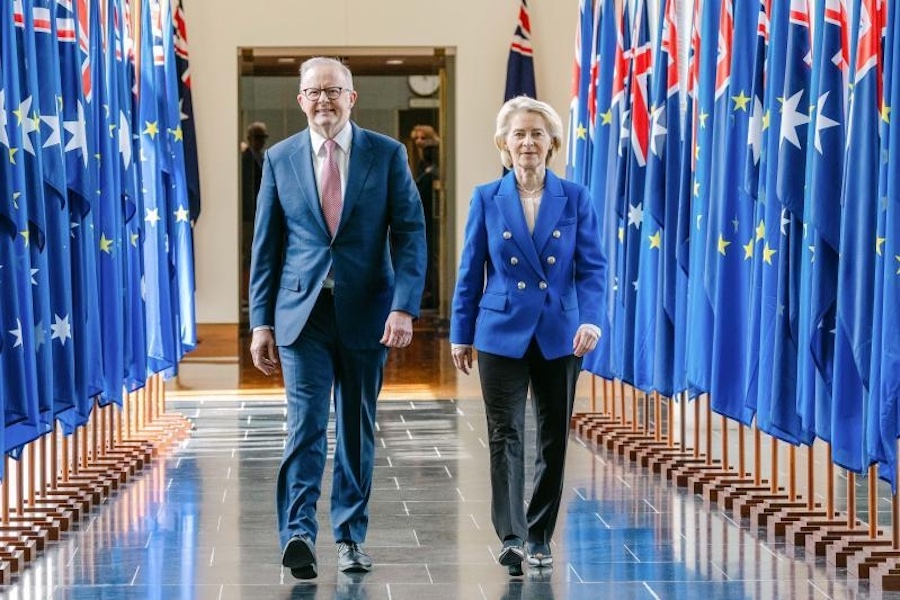
The EU and Australia have today announced the adoption of a groundbreaking Security and Defence Partnership. They have also concluded negotiations for an ambitious and balanced free trade agreement (FTA) and agreed to launch formal negotiations for the association of Australia to Horizon Europe, the world's largest funding programme for research and innovation. With these steps, the EU and Australia are delivering mutually beneficial outcomes and further reinforcing their already close relations in a time of geopolitical uncertainty.

More News on Nonwovens

Latest News

#Spinning

Georg Stausberg, a veteran of the textile machinery industry, takes over as Rieter Group CEO

Georg Stausberg, one of the most experienced executives in the international textile machinery industry, has been appointed Chief Executive Officer of the Rieter Group with immediate effect from 4 November 2026. With more than three decades of industry experience and a long-standing leadership career at Barmag, Stausberg brings extensive technological expertise, international market knowledge and an established network across the global textile industry to his new position.

#Industry 4.0 / Digitalization

Jeanologia and BCome connect factory data with Life Cycle Assessment and Digital Product Passports

A new white paper by EIM by Jeanologia and BCome demonstrates how primary environmental data from denim finishing processes can be integrated into a garment's Life Cycle Assessment (LCA) and prepared for use in a Digital Product Passport (DPP). A comparative case study highlights significant improvements at the production stage while also showing how these translate into the environmental performance of the finished garment.

#Denim

Inside the Making connects denim and sportswear supply chains at Ecomondo 2026

Six European companies are joining forces at Ecomondo 2026 in Rimini to demonstrate how different stages of denim and sportswear production are interconnected. The new initiative, Inside the Making, highlights the importance of cooperation across the textile supply chain in addressing sustainability challenges, from reducing resource consumption to improving transparency and the reliability of environmental claims.

#India ITME 2026

Monforts ready for India’s next phase of textile growth at ITME 2026

Advanced finishing, coating and energy-efficient processing will be highlighted by Monforts at India ITME 2026, as the region’s textile manufacturers increasingly look beyond volume production towards higher-value fabrics. The German finishing machinery specialist sees considerable potential in India as investment continues in conventional apparel and home textiles alongside rapidly developing markets for technical textiles, activewear, sportswear, filtration and automotive applications.

TOP