[pageLogInLogOut]

#Man-Made Fibers

ARMEDANGELS to develop more sustainable products with SPINNOVA® fibre

ARMEDANGELS has signed non-binding Letter of Intent (LOI) to secure access to SPINNOVA® fibre volumes in the future. The LOI outlines an important step in Spinnova’s ambitions to create an ecosystem (consortium) to enable the availability of sustainable SPINNOVA® fibre in the textile materials market.


ARMEDANGELS places strong emphasis on sustainable and ethical production. Their clothing is made from innovative, sustainable materials, with a transparent supply chain and a firm commitment to fair working conditions. Every product begins with a careful selection of materials, evaluated against strict criteria: origin, processing, durability, and impact on people and the environment. Guided by these principles, ARMEDANGELS will develop future collections using SPINNOVA® fibre.

“We are incredibly proud to announce our partnership with ARMEDANGELS, a brand that stands at the forefront of sustainable and responsible fashion. As we build the ecosystem to support the scale-up of SPINNOVA® fibre, it is essential to collaborate with partners who share our values and vision for a more sustainable textile industry," says Pedro Brito, the Senior Commercial Manager at Spinnova.

“At ARMEDANGELS, we make products people love with the least harm to the planet. Our Impact* Roadmap constantly pushes us to explore new materials that can lower our footprint — and that’s exactly why SPINNOVA® fits so well with our vision. Their fibre-making approach is fundamentally different and shows real potential as an alternative to cotton. Introducing new materials takes time, but once we commit, we go all in. Together, we want to explore the role SPINNOVA® can play in our future collections,” says ARMEDANGELS Innovation & Circularity Manager, Päivi Eräpuu.
More News from SPINNOVA PLC

#Raw Materials

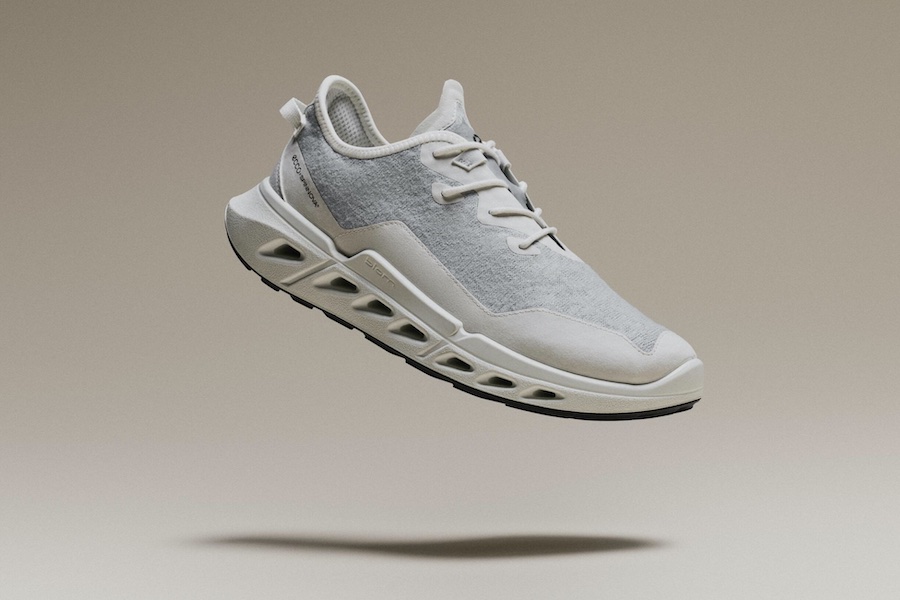
ECCO introduces first shoe featuring innovative protein-based fibre

ECCO, in partnership with Spinnova, announces the launch of the limited edition ECCO BIOM® 720, a first-of-its-kind shoe utilising an often overlooked leather by-product, transformed into a protein-based fibre. The fibres are produced using patented technology that advances material innovation while reducing waste and supporting full resource use across the leather and textile industry.

#Man-Made Fibers

Swiss industrial engineering and manufacturing company Sulzer joins Spinnova’s ecosystem

Sulzer, a Swiss industrial engineering and manufacturing company, has joined Spinnova’s ecosystem (consortium) to enable the availability of SPINNOVA® fibre in the textile materials market. Sulzer will contribute its expertise to support Spinnova’s development work.

#Recycling / Circular Economy

Textile‑to‑textile recycling leader Circulose joins Spinnova’s ecosystem to accelerate technology scale‑up

Textile‑to‑textile recycling leader Circulose joins Spinnova’s ecosystem (consortium) to help advance the scale‑up of Spinnova’s technology. Spinnova has actively sought partners to accelerate commercial scale‑up, and Circulose, as a key player in textile recycling, strengthens the ecosystem by providing a raw material that is in high demand across the industry.

#Yarns

Yarn spinning partner Tearfil continues to support Spinnova’s fibre and technology

Spinnova Plc has signed non-binding Letter of Intent (LOI) with Portuguese yarn spinning company, Tearfil Textile Yarns to secure access to SPINNOVA® fibre volumes.

More News on Man-Made Fibers

#Research & Development

Elastic yarns to become more recyclable and environmentally friendly in future

On 29 April 2026, ITA student Tobias Dickmeiß was awarded a sponsorship prize by the Wilhelm Lorch-Stiftung for his innovative approach, to replacing conventional elastane with elastic yarns made from thermoplastic copolyester elastomers (TPC). Thanks to their thermoplastic nature and compatibility with typical polyesters used in the textile industry, elastic TPC yarns offer improved recyclability. Furthermore, the use of the melt-spinning process in yarn production eliminates the need for solvents that are harmful to the environment and human health.

#Texprocess 2026

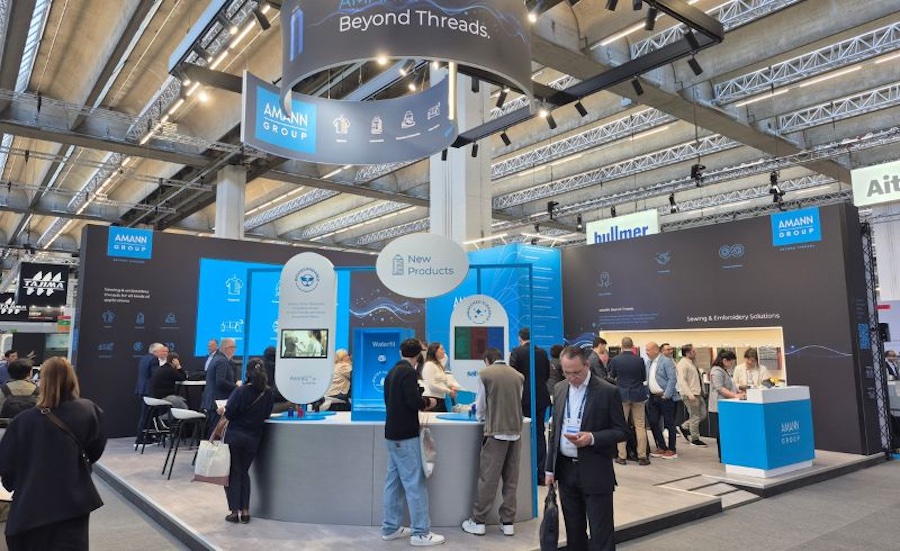
AMANN reviews successful Texprocess 2026 and highlights innovations for circularity and performance

AMANN Group has drawn a positive conclusion following four successful days at Texprocess 2026 in Frankfurt. The company highlighted the many inspiring discussions, valuable exchanges, and new connections established with partners, customers, and industry experts during the event.

#Man-Made Fibers

The LYCRA Company strengthens sustainability leadership, appoints Alistair Williamson as VP of Product Sustainability

The LYCRA Company has appointed longtime executive Alistair Williamson as vice president of product sustainability, reaffirming its commitment to developing sustainable solutions for apparel and personal care products. In this role, he will guide the company’s next chapter of sustainability strategy and oversee all initiatives aimed at reducing environmental impact across products, operations, and innovation platforms.

#Raw Materials

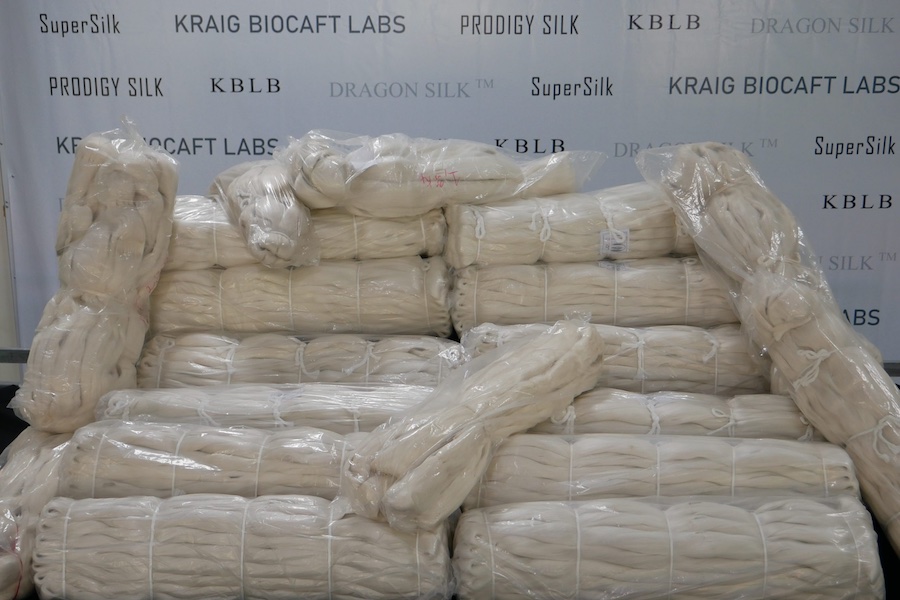
Kraig Biocraft Laboratories reports major progress converting record-setting spider silk cocoon production into reeled silk

Kraig Biocraft Laboratories, Inc. (OTCQB: KBLB) (“the Company”, “Kraig Labs”, or “Kraig’s”), a world leader in spider silk technology*, today announced significant progress in the processing of its recently produced recombinant spider silk cocoons into reeled silk.

Latest News

#INDEX 2026

“We clearly see that reliability, flexibility, service and total cost of ownership are becoming increasingly important again.”

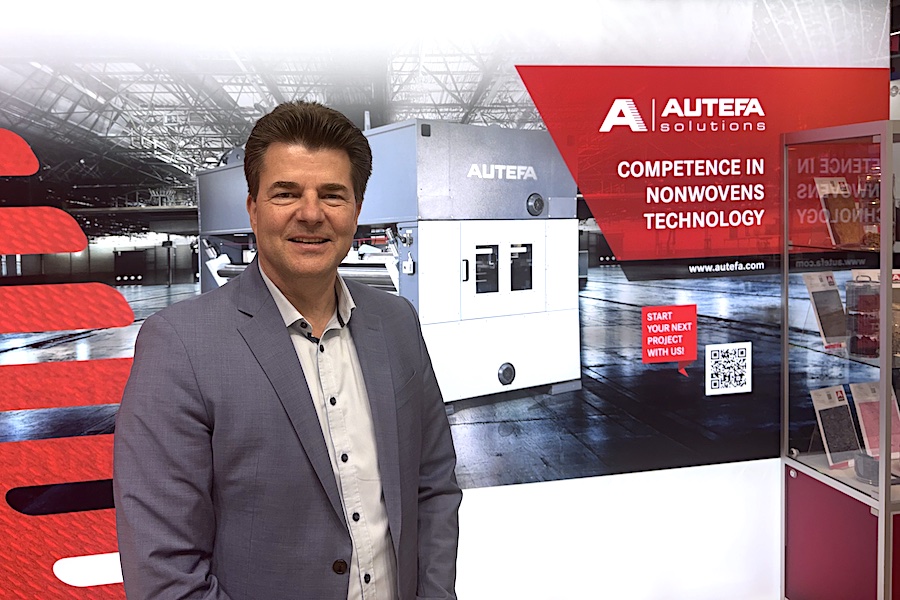
The nonwovens industry continues to face a challenging market environment. Nevertheless, AUTEFA Solutions reports successful projects, new line sales and growing demand for energy-efficient and flexible solutions. In this interview, André Imhof of AUTEFA Solutions talks about competitiveness against Chinese suppliers, new service and recycling concepts, the growing importance of application development and the opportunities created by countercyclical investments.

#INDEX 2026

“Needle punching technology is more universal and sustainable than ever!”

Needle punching technology was long regarded as a rather traditional and comparatively slow technology within the nonwovens industry. In this interview, Johann Philipp Dilo explains why needle punching is more relevant than ever today – ranging from energy efficiency and resource conservation to hygiene applications, new machine concepts and design-oriented nonwoven solutions.

#Research & Development

Textile climate control system in workwear – exhibition at the 2026 SME Innovation Day!

Conventional protective workwear often reaches its limits during strenuous physical activity. In particular, the transport of sweat and excess body heat poses a problem. The German Institutes of Textile and Fiber Research (DITF) conducted research on flow-optimized, air-conducting textile structures that enable targeted climate control directly on the body. These structures can be integrated straight into protective work garments. The textile climate control system supports the body’s natural thermoregulation. This contributes to improved workplace safety and comfort.

#Nonwovens

PET spunbond from China – EDANA welcomes imposition of provisional anti-dumping measures

On 13 May 2026, after eight months of investigation, the European Commission imposed provisional anti-dumping duties of 45.6-50.0% on imports of PET spunbond from China. EDANA welcomes this expression of the Commission’s clear determination to protect EU industries from the unfair trade practices of Chinese producers.

TOP