[pageLogInLogOut]

#Man-Made Fibers

Lenzing AG: Stable revenue and improved EBITDA despite market headwinds
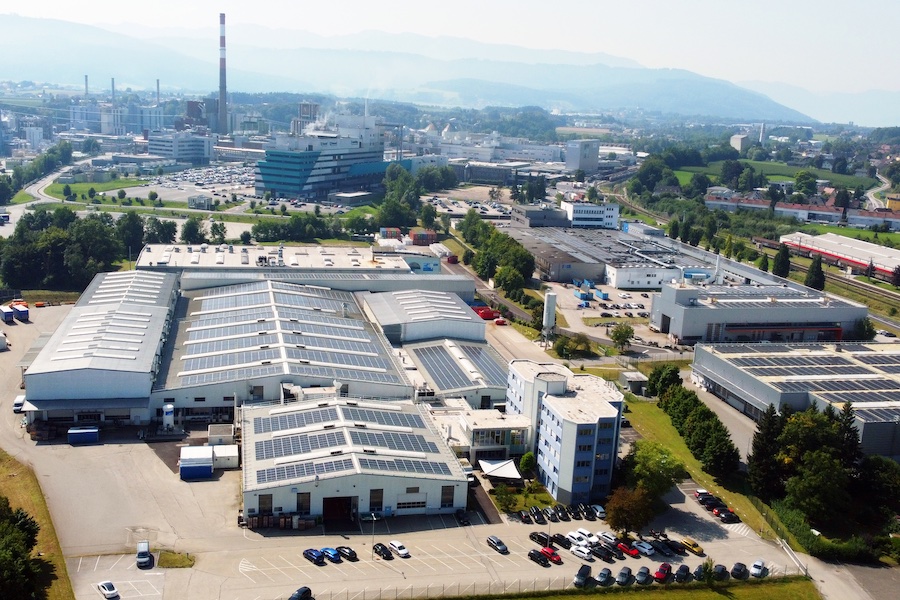
Aerial view Lenzing AG © 2025 Lenzing AG/Robert Pichler
In the first nine months of 2025, Lenzing AG recorded revenue growth and higher EBITDA, but a market-driven volatile third quarter. This performance reflects the effects of ongoing market volatility, tariffs and geopolitical uncertainties. Nevertheless, the medium to long-term outlook remains positive.

The revenue generated by Lenzing AG rose by 0.7 percent to EUR 1.97 bn (prior-year period: EUR 1.96 bn) in the first nine months. EBITDA grew by 29.1 percent to EUR 340.4 mn (prior-year period: EUR 263.7 mn), including effects from the sale of surplus emission allowances and the valuation of biological assets. The EBITDA margin improved to 17.3 percent (prior-year period: 13.5 percent). Earnings before interest and tax (EBIT) amounted to EUR 20.6 mn (prior-year period: EUR 38.3 mn), which corresponds to an EBIT margin of 1 percent (prior-year period: 2 percent). This result includes asset impairments of EUR 82.1 mn in Indonesia. Earnings before tax (EBT) amounted to EUR minus 98.7 mn (prior-year period: EUR minus 33.4 mn).

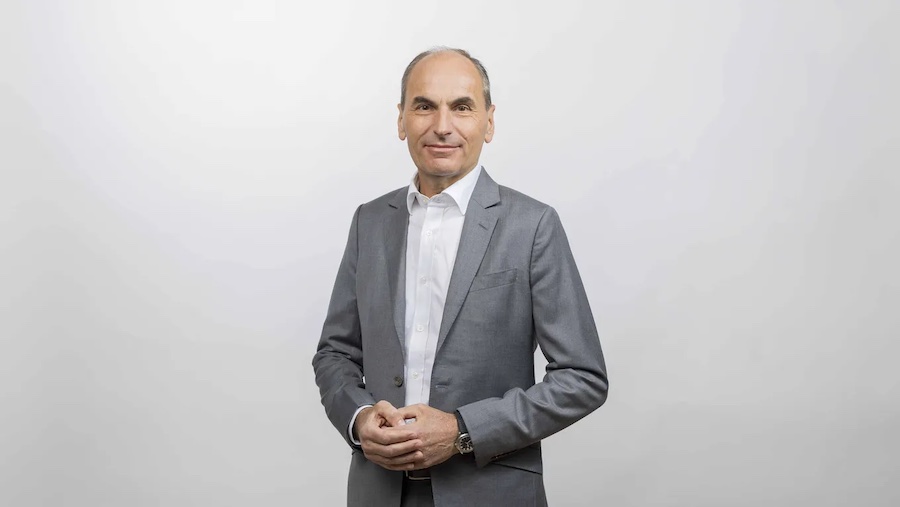
“We see these challenging times also as an opportunity. We are increasingly building on our strengths and are continuing to focus on what we excel at: strong brands, precise execution and bold innovation,” notes Rohit Aggarwal, CEO of Lenzing AG.

Strategic development

Lenzing AG pursues a holistically adapted strategy with a clear focus on value-generating growth. Key pillars of this strategy include enhancing operational efficiency, optimizing production sites, and targeting high-margin premium products such as TENCEL™, VEOCEL™, and LENZING™ ECOVERO™. Additional growth potential is expected particularly in the fields of hygiene, packaging, filtration, as well as medical and industrial applications.

To sustainably secure this growth and strengthen long-term competitiveness, the company has initiated a strategic review of its production site in Indonesia. The planned measures – including adjustments to administrative functions – are expected to generate additional annual savings of approximately EUR 45 mn by the end of 2027. For the current reporting year, the Management Board anticipates cost savings exceeding EUR 180 mn. Furthermore, the company is investing over EUR 100 mn in its sites in Lenzing and Heiligenkreuz and aims to achieve holistic energy optimization of more than 5 percent across all production locations. Strategic options for the site in Indonesia are being evaluated, including a potential sale.

The Supervisory Board also made personnel decisions during the reporting period: The Managing Board mandate of Christian Skilich, Chief Pulp & Chief Technology Officer, was extended until May 2029. Mathias Breuer, currently Senior Vice President and responsible for the performance program, will become CFO from January 1, 2026, and succeed Nico Reiner, who is due to step down from his position at the end of 2025.

Solid financial position in a difficult environment

Thanks to its strong focus on cash management, Lenzing succeeded in leaving no doubt about its adequate liquidity position during the reporting period. As of September 30, 2025, the company held liquidity cushion of EUR 993 mn. The capital structure was strengthened by a EUR 500 mn hybrid bond and a EUR 545 mn syndicated financing facility. Net financial debt was reduced by 8.5% to EUR 1.4 bn as of the reporting date. With total assets of EUR 4.80 bn, this corresponds to an adjusted equity ratio of 30.7% as of September 30, 2025.

Cash flow from operating activities amounted to EUR 284.6 mn (prior-year period: EUR 319.4 mn). Free cash flow was also positive at EUR 110.9 mn. (prior-year period: EUR 194.0 mn) Furthermore, unlevered free cash flow amounted to EUR 192.1 mn (prior-year period: EUR 228.6 mn).

Capital expenditure amounted to EUR 93.2 mn (prior-year period: EUR 93.3 mn).

Outlook

The global environment remains volatile. The International Monetary Fund (IMF) expects growth of 3.2 percent in 2025, but warns of trade conflicts and financial instability. Consumer sentiment is subdued, and higher tariff costs could further weigh on demand in 2026. Based on the business performance to date and the current market outlook, the Managing Board expects year-on-year growth in EBITDA in 2025. In addition, the Managing Board aims for EBITDA of around EUR 550 mn by 2027. The actual business performance may nevertheless diverge from current expectations depending on geopolitical and economic factors as well as the cyclical nature of the industry. Any assessment of economic development is therefore subject to forecasting risks.

The report on the third quarter of the year can be downloaded here:

https://www.lenzing.com/investors/reporting-and-capital-market-update/


More News from Lenzing

#Denim

TENCEL™ Lyocell - HV100 achieves global denim availability in six months; Vol. 2 debuts at Kingpins Amsterdam

When TENCEL™ Lyocell - HV100 debuted at last year’s Kingpins Amsterdam in October, 17 mill partners across five countries presented fabrics featuring the new fiber. Just six months on, participation has more than doubled, evolving into a global network that spans nine countries and four continents, signaling both strong industry momentum and growing demand.

#Techtextil 2026

Lenzing unveils three-tier cellulosic fiber portfolio for next generation protective wear

The Lenzing Group, a leading supplier of regenerated cellulosic fibers for the textile and nonwovens industries, today introduces Lenzing Solutions for Protective Wear. This integrated three-tier portfolio is anchored by LENZING™ FR fibers at the highest protection tier for inherent flame resistance and brings together complementary solutions including TENCEL™ Lyocell fibers, both EU Ecolabel-certified² and derived from certified or controlled wood sources³, within a unified protective wear architecture for the first time. The launch marks the most significant expansion of Lenzing’s protective wear business since the company pioneered inherently flame-resistant cellulosic fiber in 1977, and comes as the global personal protective equipment (PPE) market accelerates toward an estimated USD 130 billion by 2033⁴.

#Man-Made Fibers

Lenzing commissions 14 MW power‑to‑heat facility, strengthening grid stability and heat management

The Lenzing Group has successfully commissioned a new power‑to‑heat (P2H) facility with an electrical capacity of 14 megawatts. The installation converts renewable electricity directly into process heat, is fully integrated into the existing heat network at the industrial site, and represents a key building block for a fossil‑free heat supply. As project partner, VERBUND was responsible for the energy‑market integration and will operate the facility for balancing energy marketing, enabling it to respond flexibly to short‑term fluctuations in the power grid.

#Nonwovens

VEOCEL™ Lyocell production expands to Asia – Launching a new chapter for nonwovens in the region

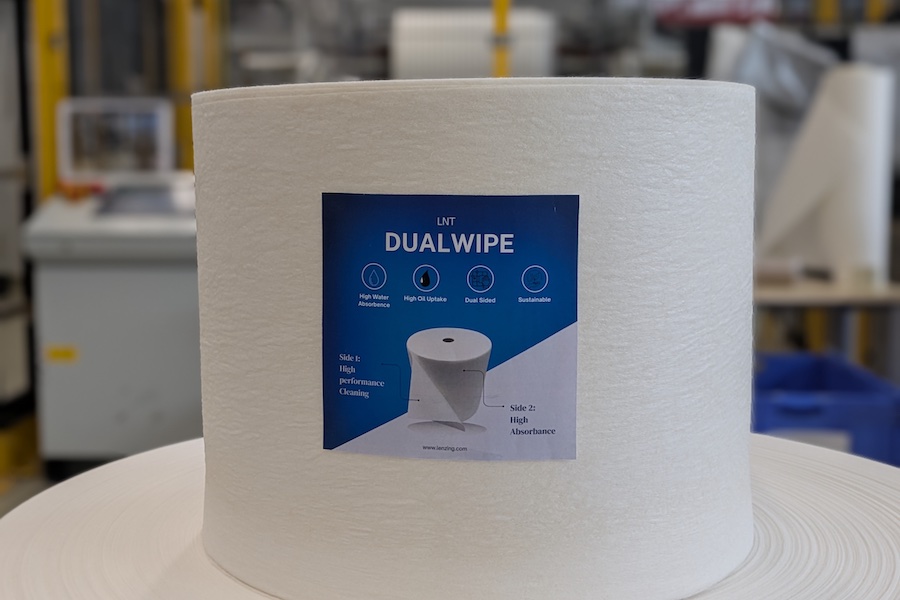
VEOCEL™, Lenzing's flagship specialty nonwovens brand, expands production at its Thai plant in Prachinburi. This is the first-ever production of its nonwoven-grade lyocell fibers in Asia. Built in 2022 with a 100,000-ton annual production capacity, the facility - previously focused on fibers for textile applications - now can directly meet the demand for VEOCEL™’s biodegradable¹, wood-based lyocell fibers for nonwovens products. These fibers are an essential ingredient for high-quality nonwovens products, ranging from baby wipes to facial sheet masks and everyday personal hygiene items.

More News on Man-Made Fibers

#Research & Development

Elastic yarns to become more recyclable and environmentally friendly in future

On 29 April 2026, ITA student Tobias Dickmeiß was awarded a sponsorship prize by the Wilhelm Lorch-Stiftung for his innovative approach, to replacing conventional elastane with elastic yarns made from thermoplastic copolyester elastomers (TPC). Thanks to their thermoplastic nature and compatibility with typical polyesters used in the textile industry, elastic TPC yarns offer improved recyclability. Furthermore, the use of the melt-spinning process in yarn production eliminates the need for solvents that are harmful to the environment and human health.

#Texprocess 2026

AMANN reviews successful Texprocess 2026 and highlights innovations for circularity and performance

AMANN Group has drawn a positive conclusion following four successful days at Texprocess 2026 in Frankfurt. The company highlighted the many inspiring discussions, valuable exchanges, and new connections established with partners, customers, and industry experts during the event.

#Raw Materials

ECCO introduces first shoe featuring innovative protein-based fibre

ECCO, in partnership with Spinnova, announces the launch of the limited edition ECCO BIOM® 720, a first-of-its-kind shoe utilising an often overlooked leather by-product, transformed into a protein-based fibre. The fibres are produced using patented technology that advances material innovation while reducing waste and supporting full resource use across the leather and textile industry.

#Man-Made Fibers

The LYCRA Company strengthens sustainability leadership, appoints Alistair Williamson as VP of Product Sustainability

The LYCRA Company has appointed longtime executive Alistair Williamson as vice president of product sustainability, reaffirming its commitment to developing sustainable solutions for apparel and personal care products. In this role, he will guide the company’s next chapter of sustainability strategy and oversee all initiatives aimed at reducing environmental impact across products, operations, and innovation platforms.

Latest News

#INDEX 2026

“We clearly see that reliability, flexibility, service and total cost of ownership are becoming increasingly important again.”

The nonwovens industry continues to face a challenging market environment. Nevertheless, AUTEFA Solutions reports successful projects, new line sales and growing demand for energy-efficient and flexible solutions. In this interview, André Imhof of AUTEFA Solutions talks about competitiveness against Chinese suppliers, new service and recycling concepts, the growing importance of application development and the opportunities created by countercyclical investments.

#INDEX 2026

“Needle punching technology is more universal and sustainable than ever!”

Needle punching technology was long regarded as a rather traditional and comparatively slow technology within the nonwovens industry. In this interview, Johann Philipp Dilo explains why needle punching is more relevant than ever today – ranging from energy efficiency and resource conservation to hygiene applications, new machine concepts and design-oriented nonwoven solutions.

#Research & Development

Textile climate control system in workwear – exhibition at the 2026 SME Innovation Day!

Conventional protective workwear often reaches its limits during strenuous physical activity. In particular, the transport of sweat and excess body heat poses a problem. The German Institutes of Textile and Fiber Research (DITF) conducted research on flow-optimized, air-conducting textile structures that enable targeted climate control directly on the body. These structures can be integrated straight into protective work garments. The textile climate control system supports the body’s natural thermoregulation. This contributes to improved workplace safety and comfort.

#Nonwovens

PET spunbond from China – EDANA welcomes imposition of provisional anti-dumping measures

On 13 May 2026, after eight months of investigation, the European Commission imposed provisional anti-dumping duties of 45.6-50.0% on imports of PET spunbond from China. EDANA welcomes this expression of the Commission’s clear determination to protect EU industries from the unfair trade practices of Chinese producers.

TOP