#Man-Made Fibers
Lenzing AG refines strategy and strengthens competitiveness for a challenging environment

“For us, 2025 is the year of continued execution. We have demonstrated that we can increase our profitability even in a challenging environment. It is important to further strengthen the agility, resilience and cost position of Lenzing with the aim of long-term value creation in order to reinforce the company’s position as global market leader in sustainable cellulosic fibers”, says Chairman of the Managing Board and CEO Rohit Aggarwal. “We are building on our strength as an innovation leader while optimizing our structures and processes to realise cost savings and further strengthen our competitiveness.”
In the first half of 2025, the company achieved continued increase in earnings and profitability with strong cash flow generation. Despite this positive development, Lenzing anticipates that the global environment will remain volatile and uncertain. Trade conflicts, subdued consumer sentiment, rising costs, and increasing competition from Asia continue to shape a challenging market environment. The company’s refined strategy prepares it to succeed in challenging market conditions: leaner, more agile, more resilient – with any market recovery as an upside.
Strategic priority: Focus on premium products to grow in high-value end markets
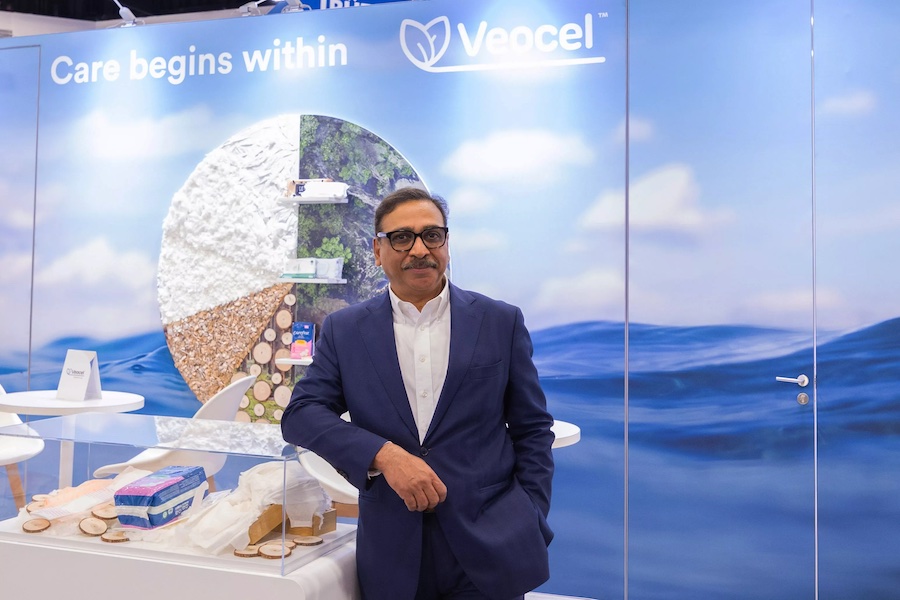
Premium branded fibers with higher margins – TENCEL™, VEOCEL™, LENZING™ ECOVERO™ – will take center stage, with a gradual withdrawal from lower-margin commodity segments. In line with this premiumization strategy, the company started a strategic review including a potential sale of its Indonesian production site.
Growth will not only be targeted in established applications such as denim, home textiles, and menswear, but also through expansion in hygiene, packaging, filtration, medical, and industrial applications. In addition, production capacities will be selectively shifted from textile to nonwoven applications in order to capture the growing demand for renewable nonwoven fibers. Application driven innovation through strategic partnerships with customers will be pursued with greater intensity by strengthening Lenzing’s application innovation centers.
The refined focus of resources will expand Lenzing's technological leadership and strengthen the regional sales organization.
Additional measures to improve cost competitiveness
The weak market recovery (e.g. due to tariff uncertainties), low generic fiber prices in China, and rising costs in personnel, energy, and raw materials require additional measures to ensure long-term competitiveness. To further strengthen operational efficiency, Lenzing plans to reduce costs with a series of efficiency measures. This includes a reduction in headcount in the Lenzing-based headquarter. Jobs, particularly in overhead, will be reduced by approximately 300 employees, thereof 250 until the end of 2025 with an objective to make administrative areas of Lenzing leaner and more efficient. This is expected to result in annual savings of over EUR 25 mn from 2026 onwards. At the same time, the company will strengthen its international presence in Asia and North America, moving closer to its customers in key textile and nonwoven markets. This internationalization move will result in another headcount reduction at the Lenzing site of approximately 300 employees by end of 2027, with both measures leading to total annual savings of more than EUR 45 mn, latest fully effective before end of 2027. Lenzing is aware of its responsibility towards its employees, and all necessary measures will be implemented in accordance with a new social plan already agreed with the works council representatives.
Additional efficiency measures include a systematic energy optimization in all plants to reduce energy consumption by more than five per cent, bringing both cost and sustainability benefits. Another lever to drive labor and asset productivity is a continued relentless focus on an operational excellence program.
Lenzing COO Georg Kasperkovitz comments: ”The refinement of the strategy has – despite social plan and additional support – tough but unavoidable implications for around 600 out of more than 3,500 Austrian employees. However, cutting labor cost is just one of several elements to increase profitability and unlock Lenzing’s value. Lenzing will remain a major industrial company in Austria, also strengthened by intended local investments exceeding EUR 100 mn.”
More than EUR 100 mn in intended strategic investments at Austrian sites Lenzing and Heiligenkreuz, further investments in preparation
To strengthen competitiveness and lasting site profitability in Austria, an investment package has also been put together for the Lenzing and Heiligenkreuz sites. More than EUR 100 mn are intended to be invested at both sites until end of 2027. Heiligenkreuz will strengthen its global leadership position as the most environmentally friendly production facility of specialty fibers and the hub to drive innovation through targeted investments in new technologies. At the Lenzing site, further investments with strategic partners are in preparation to support Lenzing’s premiumization strategy.
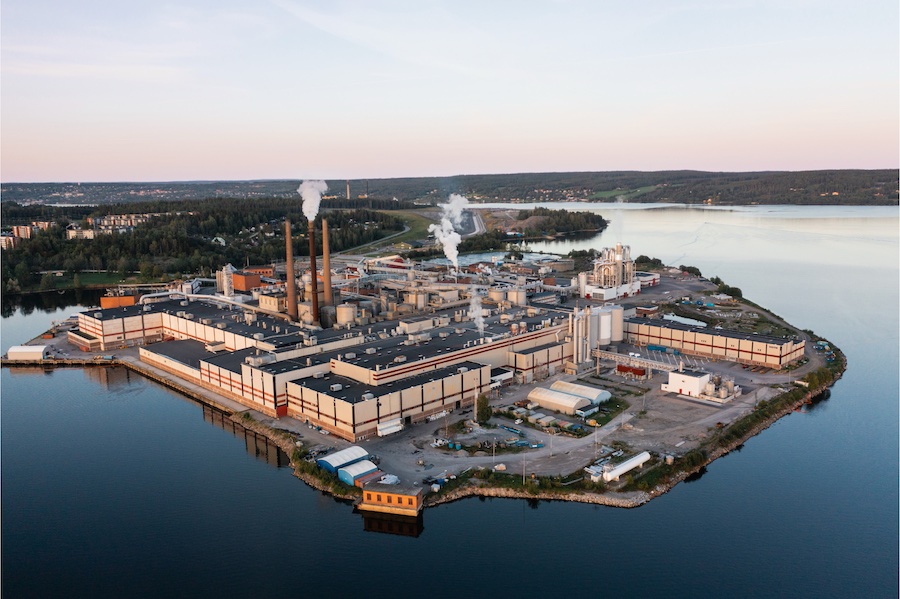
The Management Board decided to start a review of strategic options including a potential sale for the Indonesian production site, which supports Lenzing’s strategic focus on branded high-performance fibers with higher margins. Accordingly, Lenzing AG expects to recognize impairment losses of the non-current assets, especially property, plant and equipment of up to EUR 100 mn in 2025. This non-cash charge impairment has a negative impact on consolidated EBIT and consolidated net income but no impact on Lenzing’s EBITDA.
International markets with growth prospects
The global demand for regenerated cellulosic fibers is forecasted to grow at 5 to 6 percent per year over the next five years. A growing global population, increasing purchasing power, global constraints of cotton supply and increasing willingness to pay for sustainability drive this volume growth. With growth rates above the general market, Lyocell and Modal are relatively small but attractive segments. Lenzing is a leader in these high-growth market segments and will focus resources to capture this profitable growth potential, thereby reducing exposure to the mature Viscose standard fiber market and shifting resources to the growing TENCEL™ and VEOCEL™ branded applications.
With the refined strategy Lenzing aims to achieve a balanced distribution both of revenues across the world and between textile and nonwoven business, thereby also strengthening its pulp business.
Outlook
With the measures initiated, the company is further strengthening its position as a premium supplier of regenerated cellulosic fibers. The goal is to secure value creating growth despite a challenging market environment and to enhance resilience – with any market recovery as an upside.
The Management Board of Lenzing confirms the “above previous year” EBITDA guidance for the financial year 2025. Based on the refined strategy and defined measures, Lenzing’s management targets an EBITDA of around EUR 550 mn for 2027, subject to unchanged market conditions and geopolitical stability.