[pageLogInLogOut]

#Man-Made Fibers

ADVA®terra – A biodegradable Polyester fibre from ADVANSA brings eco-conscious comfort to home textiles

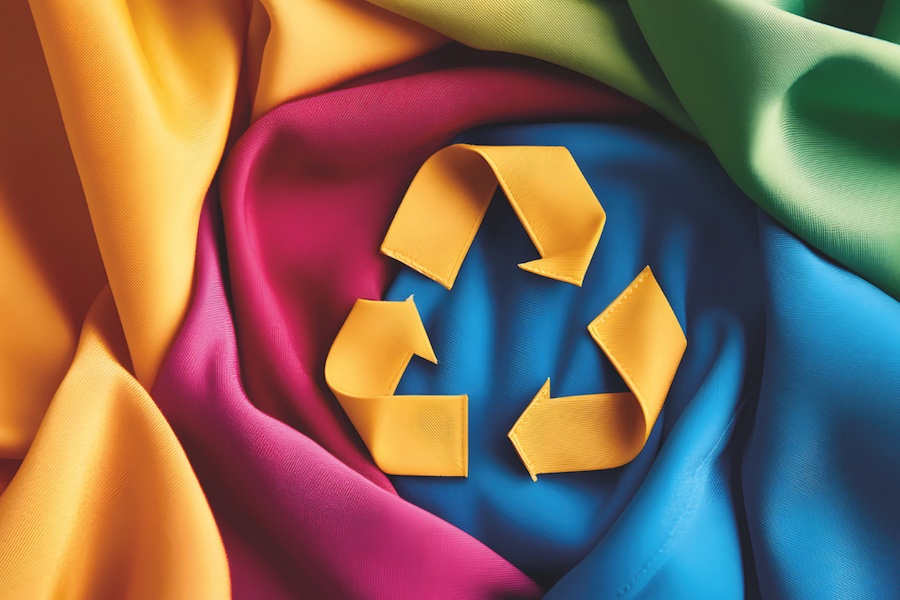
As global concern over synthetic textile pollution and microplastic accumulation in landfills and oceans continues to rise, initiatives like Plastic Free July and World Nature Conservation Day (July 28) are calling for urgent action. In response, ADVANSA is proud to highlight ADVA®terra – a polyester filling fibre that is made from 100% recycled materials, fully recyclable and biodegradable.
© 2025 ADVANSA
© 2025 ADVANSA


COMFORT MEETS SUSTAINABILITY

Designed for use in pillows, duvets, and mattresses, ADVA®terra combines environmental responsibility without compromising comfort. Engineered for pillows, duvets, and mattresses, ADVA®terra delivers exceptional comfort, durability, and breathability - while offering the added benefits of being machine-washable and dryer-safe. 

What sets ADVA®terra apart is its ability to biodegrade in biologically active environments, including landfills and marine ecosystems. According to independent laboratory tests (ASTM D5511 / D6691), the fibre achieves:

+ Over 90% degradation in landfill conditions within 2 years 

+ More than 85% degradation in marine environments within 5 years?- rates comparable to natural fibres.

By offering a sustainable alternative to conventional synthetic fillings, ADVA®terra directly addresses the challenge of microplastic pollution and the environmental impact of synthetic textiles which escape collection and recycling systems. Unfortunately, textile recycling at scale is not yet available in most communities and end-of-life polyester can often end up in landfills or - via fibre shedding in laundry - end up as microplastic pollution in our oceans.

CERTIFIED RESPONSIBILITY

Certified by OEKO-TEX®, the Global Recycled Standard (GRS), and compliant with REACH, ADVA®terra guarantees full traceability and environmental integrity throughout its production chain. ADVANSA also supports responsible marketing and transparent labelling practices, empowering brands and consumers to make informed, sustainable choices. With ADVA®terra, businesses can offer products that promote a restful, eco-conscious sleep - and contribute to a cleaner, healthier planet.

More News from ADVANSA

#Functional Fabrics

Advansa launches Allerban®+ – biocide-free dust mite allergen protection for bedding

German fibre manufacturer Advansa has introduced Allerban®+, a new generation of bedding fibre designed to provide dust mite allergen protection without the use of biocides. The development reflects a growing market shift towards healthier and more sustainable home textile solutions.

#Recycling / Circular Economy

ADVANSA launches ADVA®tex: A new step toward textile-to-textile recycling

ADVANSA has introduced ADVA®tex, a new filling fibre made entirely from recycled pre-consumer textile waste, positioning the material as a significant step forward in textile-to-textile (T2T) recycling. The fibre is designed for use in duvets, pillows, mattresses, and furniture applications and is available in three versions.

#Sustainability

Over 200,000 plastic bottles kept out of the Mediterranean thanks to Aerelle® Blue

ADVANSA, in collaboration with Plastic Bank, has successfully prevented more than 200,000 plastic bottles from entering the Mediterranean Sea in just one year. This achievement is made possible through Aerelle® Blue, a sustainable comfort fibre made from recycled plastic bottles.

#Recycling / Circular Economy

ADVA®TEX 100% textile-to textile recycling 100% sustainable comfort

ADVA®tex is a comfort filling fibre made entirely from recycled textile scraps from the textile industry. The fibres help minimize CO2 emissions during the production of mattresses, cushions, and printed duvets. This significantly reduces dependency on new raw materials and plastics - without compromising on quality or comfort.

More News on Man-Made Fibers

#Man-Made Fibers

Selenis and Kintra Fibers partner to scale 100% bio-based synthetic fiber technology

Selenis, a leading global specialty polyester manufacturer, today announced a strategic manufacturing partnership with materials science company Kintra Fibers to scale Kintra’s patented fiber-grade PBS resin - a 100% bio-based and biodegradable material designed for textile applications.

#Man-Made Fibers

Swiss industrial engineering and manufacturing company Sulzer joins Spinnova’s ecosystem

Sulzer, a Swiss industrial engineering and manufacturing company, has joined Spinnova’s ecosystem (consortium) to enable the availability of SPINNOVA® fibre in the textile materials market. Sulzer will contribute its expertise to support Spinnova’s development work.

#Research & Development

Fraunhofer IAP paves the way for "Green" carbon fibers

A new pilot plant in Guben is set to enable the production of bio-based carbon fibers. The plant is part of the Carbon Lab Factory Lausitz and will make an important contribution to the transformation of the Lausitz region—from a traditionally raw material- and basic industry-oriented region to a hub for innovative high-performance materials. The German federal government and the state of Brandenburg are providing the Fraunhofer Institute for Applied Polymer Research IAP with 53.3 million euros for this purpose.

#Nonwovens

VEOCEL™ Lyocell production expands to Asia – Launching a new chapter for nonwovens in the region

VEOCEL™, Lenzing's flagship specialty nonwovens brand, expands production at its Thai plant in Prachinburi. This is the first-ever production of its nonwoven-grade lyocell fibers in Asia. Built in 2022 with a 100,000-ton annual production capacity, the facility - previously focused on fibers for textile applications - now can directly meet the demand for VEOCEL™’s biodegradable¹, wood-based lyocell fibers for nonwovens products. These fibers are an essential ingredient for high-quality nonwovens products, ranging from baby wipes to facial sheet masks and everyday personal hygiene items.

Latest News

#Raw Materials

New study shows low environmental impact by Cotton made in Africa Organic Cotton from Tanzania

Today, the Aid by Trade Foundation (AbTF) is announcing the results of a comprehensive life-cycle analysis (LCA) for cotton produced in Tanzania under the Cotton made in Africa Organic (CmiA Organic) standard. The study emphasises the small ecological footprint of CmiA Organic verified cotton. This can largely be traced back to the absence of synthetic pesticides, artificial fertilisers, and artificial irrigation. Consequently, CmiA Organic cotton can help the textile industry meet regulatory requirements as well as science-based targets. The results also show that the consequences of climate change threaten the livelihoods of these cotton farmers, even though the type of agriculture they practise barely contributes to climate change.

#Raw Materials

Better Cotton Initiative strengthens regenerative focus in standard update

The Better Cotton Initiative (BCI) has strengthened the regenerative focus of its field-level standard with the launch of a new version of its Principles & Criteria (P&C), which marks the next step in the organisation’s journey to becoming a regenerative standards system.

#Functional Fabrics

PERFORMANCE DAYS proves its relevance as the industry’s key meeting point

Held on March 18–19, 2026, PERFORMANCE DAYS once again confirmed its position as a leading international platform for functional textiles. A total of 3.366 trade visitors and around 560 exhibitors gathered in Munich, with the event already kicking off successfully on DAY 0, which received highly positive feedback for its interactive format. Despite challenging conditions caused by the public transport strike in Munich, the event saw strong attendance and a consistently high level of activity across both exhibition days.

#Recycling / Circular Economy

Reju secures €135 Million in Dutch NIKI Funding for industrial-scale textile-to-textile regeneration hub at Chemelot Industrial Park, the Netherlands

Reju™, the progressive textile-to-textile regeneration company, has been awarded €135 million in funding under the Netherlands’ Nationale Investeringsregeling Klimaatprojecten Industrie (NIKI) program. The funding will support Reju’s planned industrial-scale Regeneration Hub at Chemelot Industrial Park in Sittard-Geleen, covering both the investment phase and ongoing operations, and represents a critical milestone on the path toward final investment decision.

RETECH expert at drawing your fibers to perfection
TOP