[pageLogInLogOut]

#Dyeing, Drying, Finishing

Eight out of ten denim mills prefer Monforts
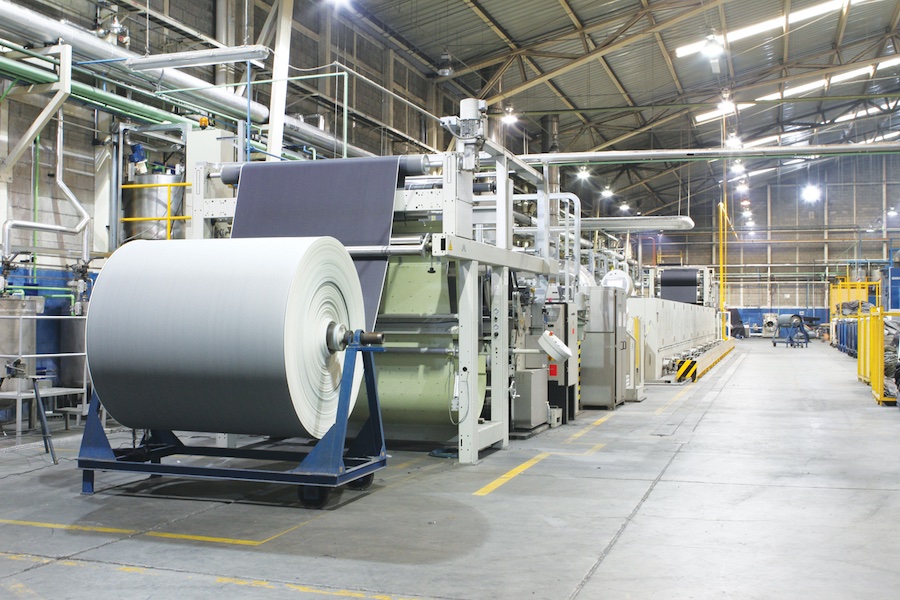
Monforts denim customers were very much to the forefront at the latest Kingpins Amsterdam exhibition held from April 16-17 at the city’s Sugar Factory. It’s no accident, for example, that the advanced denims which have dominated the show’s Most Sustainable Product (MSP) displays over the past four years are from mills employing resource-efficient Monforts technologies including MONTEX stenters, MONFORTEX Shrinking ranges, ECO LINE denim finishing systems and THERMEX dyeing ranges.
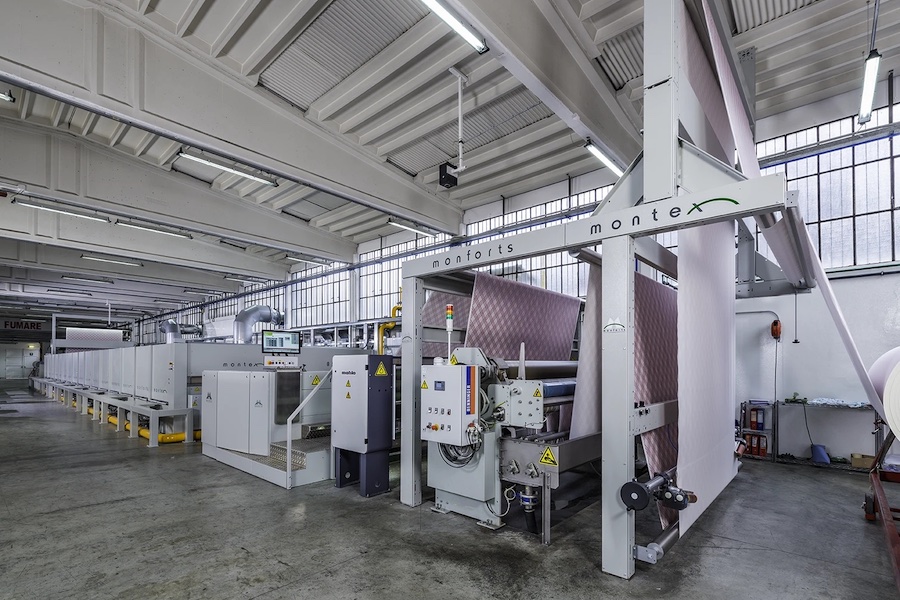
Denim in production on an integrated Monforts range © 2025 Monforts


“Monforts MONTEX stenters are the industry standard in denim finishing and many of the over 900 Monforts THERMEX dyeing systems operational in the main textile producing countries are also devoted to this sector,” says Monforts Head of Denim Hans Wroblowski. “New performance and lifestyle denims are achieving success on the market by exploiting multifunctional spray coating and thermo-stretch and skew technologies on our ranges for more efficient production and significant increases in energy savings.”

While the Kingpins MSP is not a competition, these fabrics are singled out both for their thoughtful and eco-conscious construction and ease of converting into fully-fashioned denim jeans. 

Eight of the ten fabrics in the 2025 MSP showcase were manufactured by the Monforts companies Arvind (India), Diamond Corduroy (Pakistan), Isko (Turkey), Naveena Denim (NDL), Orta (Turkey), Saitex (Vietnam), Soorty (Pakistan) and Textil Santanderina (Spain).

Stretch Yourself

Seven of the world’s most progressive denim mills – all of them Monforts customers – also provided the advanced denim fabrics for a design exploration project by 30 fashion students at the House of Denim Foundation’s Jean School in Amsterdam – the first and only denim educational institution in the world – in cooperation with The Lycra Company.

This project resulted in the ‘Stretch Yourself’ exhibition at Kingpins 2025, with fabrics supplied by Turkish companies Bossa, Calik and Orta, Naveena and Soorty from Pakistan, DNM Denim in Egypt and China’s Advance Denim.

“What excited me about this project was that we started with an educational segment on sustainability and innovation involving all the mills and kept it open for the students to design whatever they felt like,” said Mariette Hoitink, co-founder of the House of Denim. “The mills provided the students with super special fabrics and the students worked day and night to come up with the final results and took a totally unexpected take on stretch denim.”
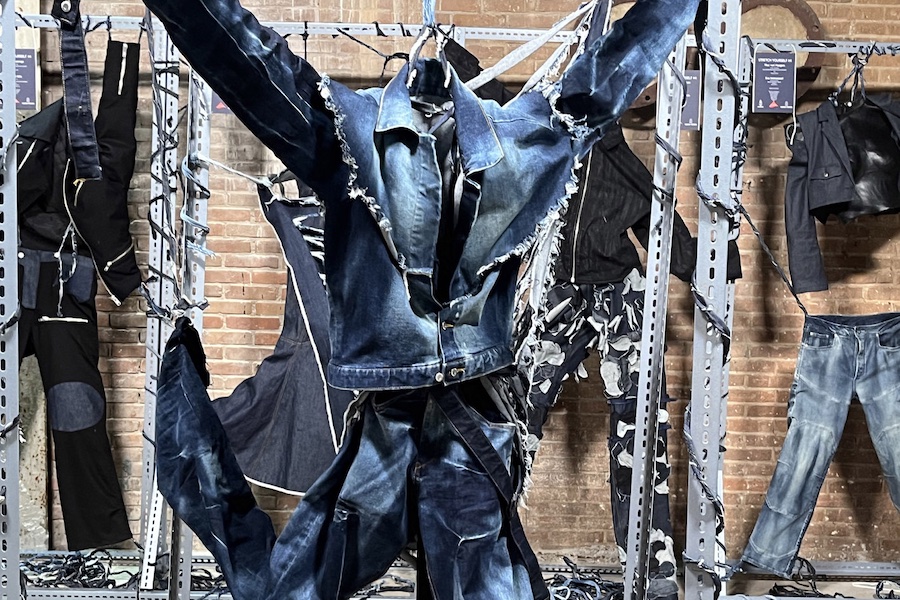
Bowie Klassens design in the House of Denim’s ‘Stretch Yourself’ exhibition © 2025 Monforts


Cellulosics

Cotton remains king in denim production, but Lenzing’s Tencel and Ecovero cellulosic fibres are increasingly finding favour in denims for providing soft hand feel fabrics.

In Amsterdam, Lenzing Hong Kong showcased its Application Innovation Collection 25 developed with mill partners including a variety of sustainable new styles from Monforts customers including Advance Denim, Naveena, Soorty, TCE Jeans (Vietnam) and US Denim Mills (Pakistan).

“Our team continues to communicate with the industry – from supply chain partners to brands and designers – to exchange marketing information and participate in trend developments,” said Dennis Hui, business development manager at Lenzing Hong Kong. “This latest collection is based on meeting demand from global brands with a variety of outfits with different wash effects.”
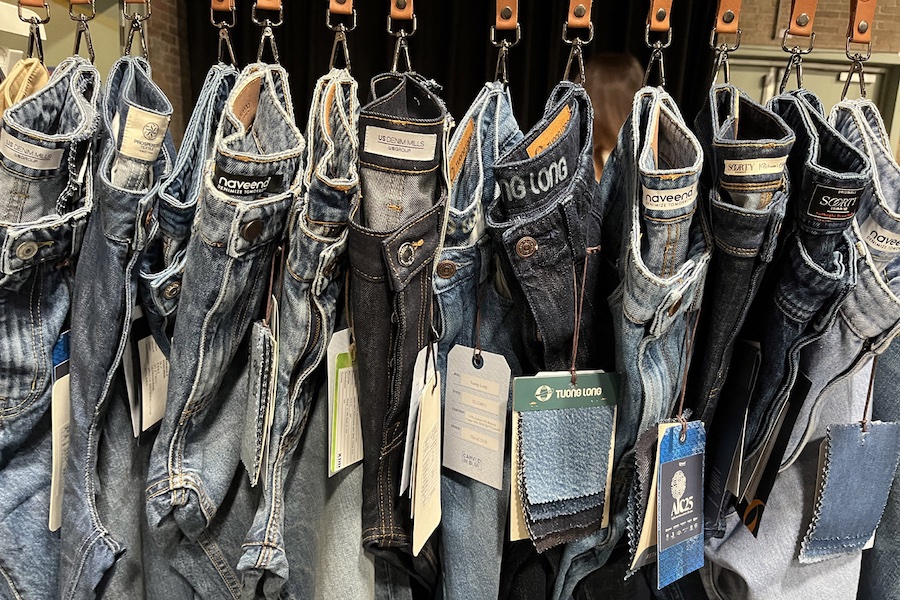
Lenzing’s Application Innovation 25 Collection © 2025 Monforts


Sensitive fibres

Monforts ECO LINE range concepts for denim enable the processing of high-quality and reproducible fabrics which are stretched and skewed far more gently than with conventional range combinations, which is advantageous in processing more sensitive fibres.

The ‘double rubber’ version of a Monforts Denim ranges comprises two compressive shrinkage units and two felt calenders in line, for super elastic and bi-elastic materials. Additionally, the combined drying, stretching and skewing functions for denim fabric are possible with the ThermoStretch unit, which can also include a Monforts EcoApplicator unit for the minimum application of necessary finishing chemicals.
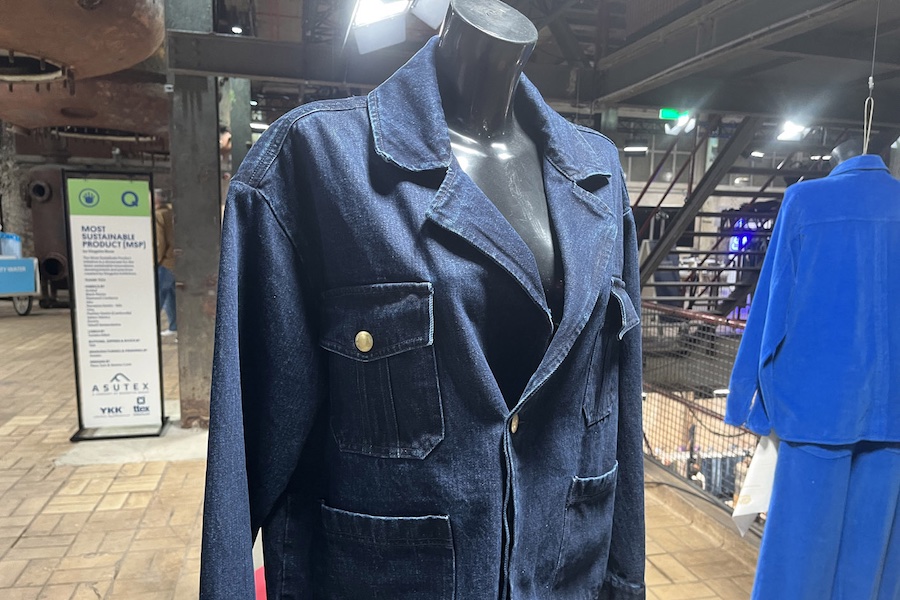
Naveena Denim 100% recycled cotton garment in the Kingpins Most Sustainable Product (MSP) display © 2025 Monforts


Econtrol®

Monforts denim customers are also reaping the benefits of the Econtrol®* and Econtrol®* TC-A continuous process for the dyeing of woven cotton, cotton/synthetics and cellulosic like Tencel fabrics in which reactive and other dyestuffs are fixed into the fabric in a one-step dyeing and drying operation with a controlled combination of steam and air. 

The entire pad-dry process takes just two-to-three minutes at a temperature of between 120-130°C and a relative humidity volume of 25-30%.

“Many of our denim customers are now using their existing Monforts technologies within integrated finishing mills to develop new in-house processes and further improve their ecological performance,” observes Hans Wroblowski. “We continue to work closely with them on a variety of interesting new projects that eventually result in many of the forward looking denim jean styles that are to be found at successive Kingpins shows around the world.”

* Econtrol® is a registered mark of DyStar Colours Distribution GmbH, Germany.
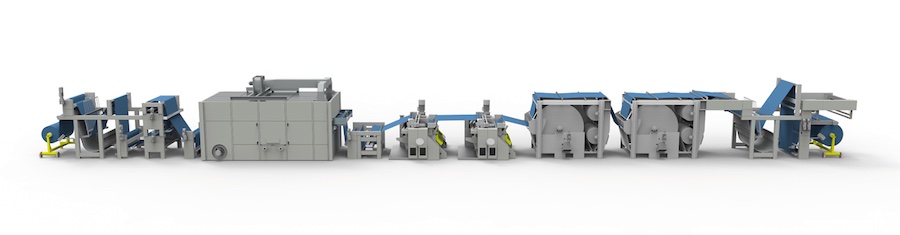
Typical Monforts denim line configuration © 2025 Monforts


More News from A. Monforts Textilmaschinen GmbH & Co. KG

More News on Dyeing, Drying, Finishing

#Advertorial

New Gravimax MMX-R X-ray sensor platform opens up new application fields

The demands placed on quality control in web-based production processes are increasing: materials are becoming more complex, basis weights are varying more widely, and at the same time, pressure is growing to make processes more efficient and transparent. Precise measurement data across the entire web width has therefore become a key factor in ensuring stable production processes. With its new Gravimax MMX-R sensor platform, Mahlo introduces a radiometric measurement solution designed to set new standards in determining basis weight and material composition. The platform combines advanced X-ray technology with newly developed signal processing, enabling measurement tasks that previously often required multiple sensor technologies.

#Techtextil 2026

BW Converting to present its Baldwin TexCoat® G4 at Techtextil 2026

BW Converting will present its Baldwin TexCoat® G4 precision spray finishing system at Techtextil Frankfurt 2026, taking place April 21-24 at Messe Frankfurt. Visitors to Hall 12, Booth C56B, will have the opportunity to explore how this advanced spray technology helps textile manufacturers improve finishing quality, increase efficiency and reduce resource consumption across a wide range of applications.

#Techtextil 2026

Smart sensors, smart savings - Reducing energy and cost in textile finishing

As energy prices, sustainability requirements and quality expectations continue to rise, manufacturers of technical textiles face increasing pressure to optimize efficiency while ensuring process reliability. At the same time, skilled labor shortages require production systems that are intuitive, automated and easy to manage. PLEVA addresses these challenges with robust, maintenance-friendly sensor technologies combined with intelligent process control.

#Dyeing, Drying, Finishing

Navis TubeTex and Fibroline announce upcoming Innovation Days

Navis TubeTex and Fibroline LLC announced their upcoming Innovation Days, a collaborative 3-day event designed to showcase advancements in product development technologies, and next-generation sustainable manufacturing solutions.

Latest News

#Raw Materials

New study shows low environmental impact by Cotton made in Africa Organic Cotton from Tanzania

Today, the Aid by Trade Foundation (AbTF) is announcing the results of a comprehensive life-cycle analysis (LCA) for cotton produced in Tanzania under the Cotton made in Africa Organic (CmiA Organic) standard. The study emphasises the small ecological footprint of CmiA Organic verified cotton. This can largely be traced back to the absence of synthetic pesticides, artificial fertilisers, and artificial irrigation. Consequently, CmiA Organic cotton can help the textile industry meet regulatory requirements as well as science-based targets. The results also show that the consequences of climate change threaten the livelihoods of these cotton farmers, even though the type of agriculture they practise barely contributes to climate change.

#Raw Materials

Better Cotton Initiative strengthens regenerative focus in standard update

The Better Cotton Initiative (BCI) has strengthened the regenerative focus of its field-level standard with the launch of a new version of its Principles & Criteria (P&C), which marks the next step in the organisation’s journey to becoming a regenerative standards system.

#Man-Made Fibers

Selenis and Kintra Fibers partner to scale 100% bio-based synthetic fiber technology

Selenis, a leading global specialty polyester manufacturer, today announced a strategic manufacturing partnership with materials science company Kintra Fibers to scale Kintra’s patented fiber-grade PBS resin - a 100% bio-based and biodegradable material designed for textile applications.

#Functional Fabrics

PERFORMANCE DAYS proves its relevance as the industry’s key meeting point

Held on March 18–19, 2026, PERFORMANCE DAYS once again confirmed its position as a leading international platform for functional textiles. A total of 3.366 trade visitors and around 560 exhibitors gathered in Munich, with the event already kicking off successfully on DAY 0, which received highly positive feedback for its interactive format. Despite challenging conditions caused by the public transport strike in Munich, the event saw strong attendance and a consistently high level of activity across both exhibition days.

TOP