[pageLogInLogOut]
You can feel it's Benninger!

#Dyeing, Drying, Finishing

Monforts customers make strong showing at Heimtextil 2026
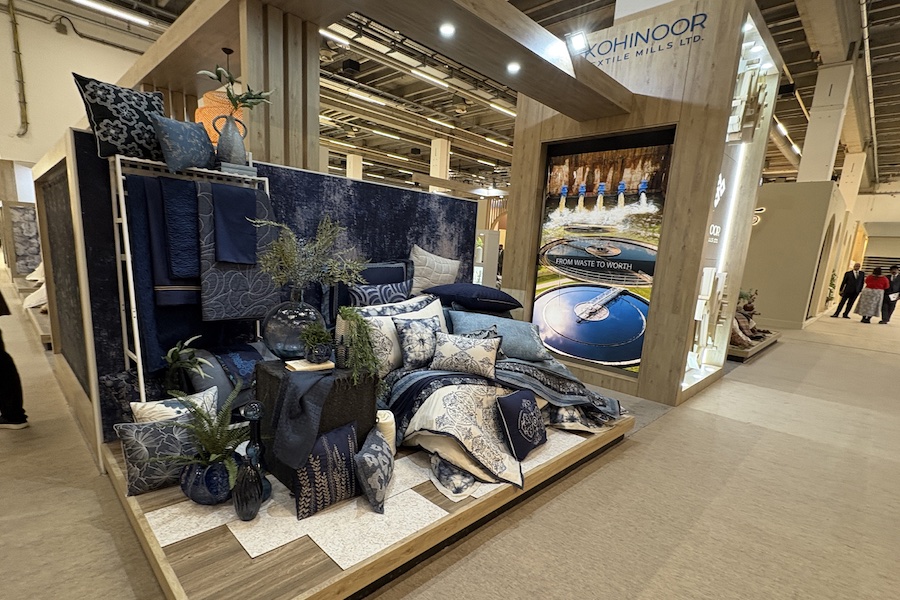
Kohinoor at Heimtextil 2026. © 2026 Monforts
Monforts dyeing and finishing technology customers from Pakistan had a formidable presence at the Heimtextil 2026 home and contract textiles exhibition which attracted over 48,000 visitors to Frankfurt in Germany this month (January 13-16).


They included key home furnishings suppliers such as Crestex, Faisal, Gohar, and Kausar Processing, all based in the Faisalabad region of the country, Karachi-based Al Karam, Adamjee, Liberty, Lucky and Rainbow, and Kohinoor, Nishat Chunian and Sapphire of Lahore, to name but a few.

Strategic importance

For these vertically integrated manufacturers, Europe remains one of the most strategically important end markets for home textiles, not simply for volume, orders but because of what Europe represents in terms of standards, stability and long-term positioning. European buyers, whether retailers, brand owners or contract textile specialists, have historically set the benchmark for quality, safety and consistency in bedding, towelling and decorative home fabrics. Supplying this market therefore anchors Pakistani mills at the higher end of the global value chain and provides a reference point that strengthens their credibility in other markets.

Pakistan is also one of the world’s few countries with large-scale vertical integration across cotton raw materials, spinning, weaving, knitting, wet processing, finishing and making up, all concentrated within single groups or closely linked clusters. This allows mills to respond to European buying models that favour fewer, larger suppliers capable of controlling quality from fibre to finished product. 

In addition European customers increasingly want traceability, process transparency and consistency across multiple seasons, not opportunistic buying. Vertically integrated Pakistani mills are able to offer this by aligning yarn selection, fabric construction, finishing and made-up production within one controlled industrial ecosystem.
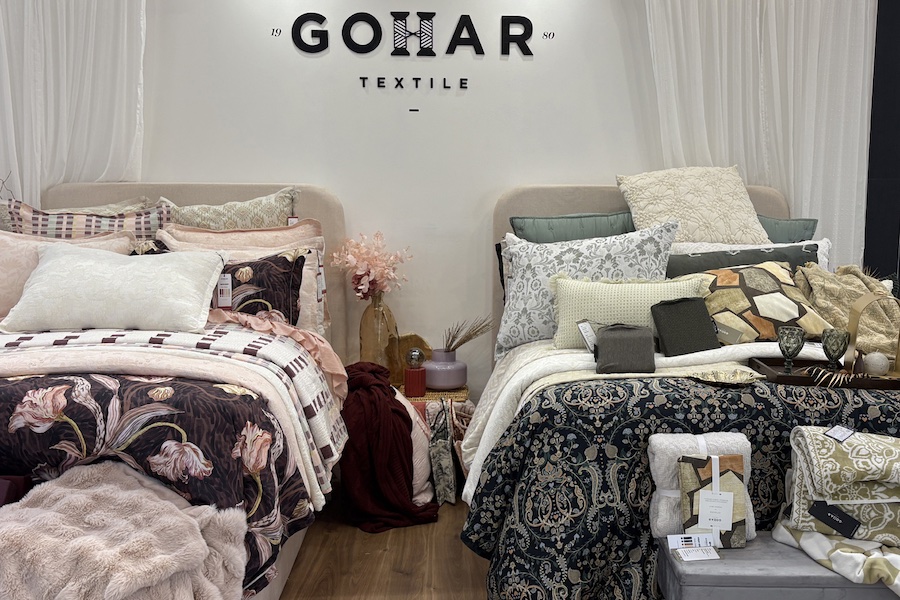
Gohar’s Heimtextil 2026 stand. © 2026 Monforts


European norms

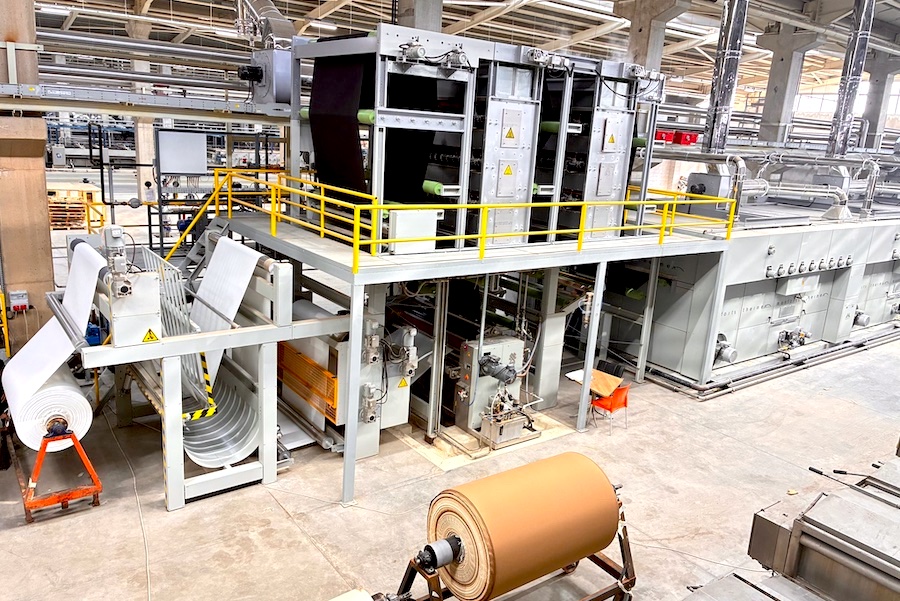
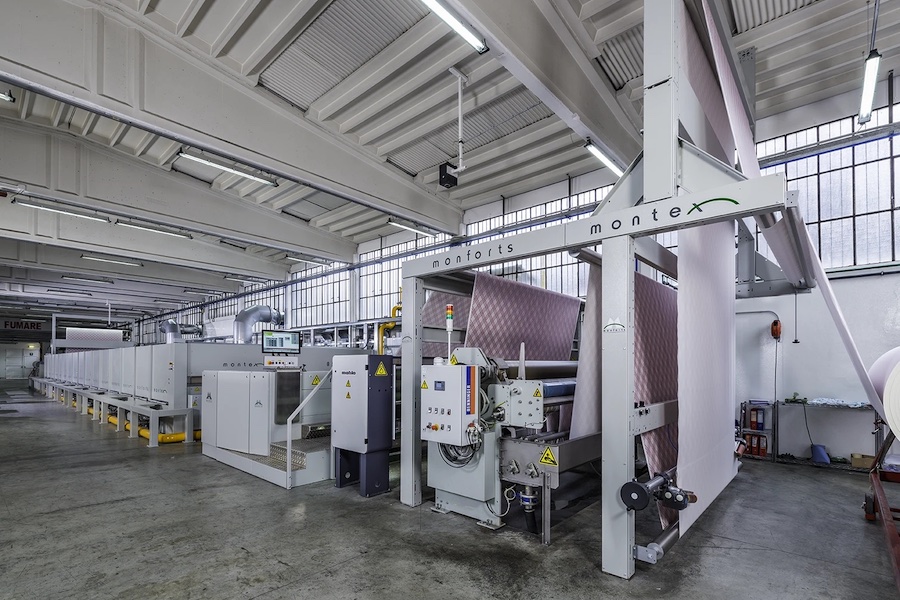
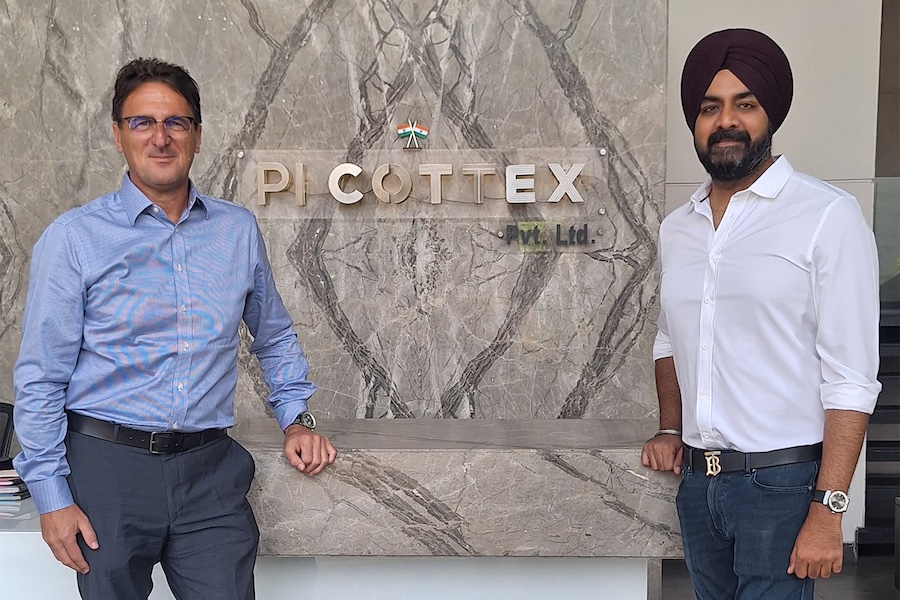
“Pakistan offers relatively predictable shipping routes to Europe and crucially, a manufacturing culture already shaped by European norms,” says Monforts Area Sales Manager Manfred Havenith. “These companies rely on our established technologies including MONTEX stentering equipment, MONFORTEX sanforizing units and THERMEX dyeing ranges. We continue to assist them with trials and optimised processing parameters in developing advanced fabrics for a wide range of end-uses, both at their own plants and at our Advanced Technology Centre (ATC) in Germany.

“We have also worked with Al Ameen, our valued partner in Pakistan for over 40 years and this close cooperation, along with constant R&D and machine innovations – both in terms of productivity and energy savings – has allowed Monforts to build an 80% market share for stenters in Pakistan and to retain it for a number of decades. We remain dedicated to the ongoing success of our valued customers in Pakistan.”
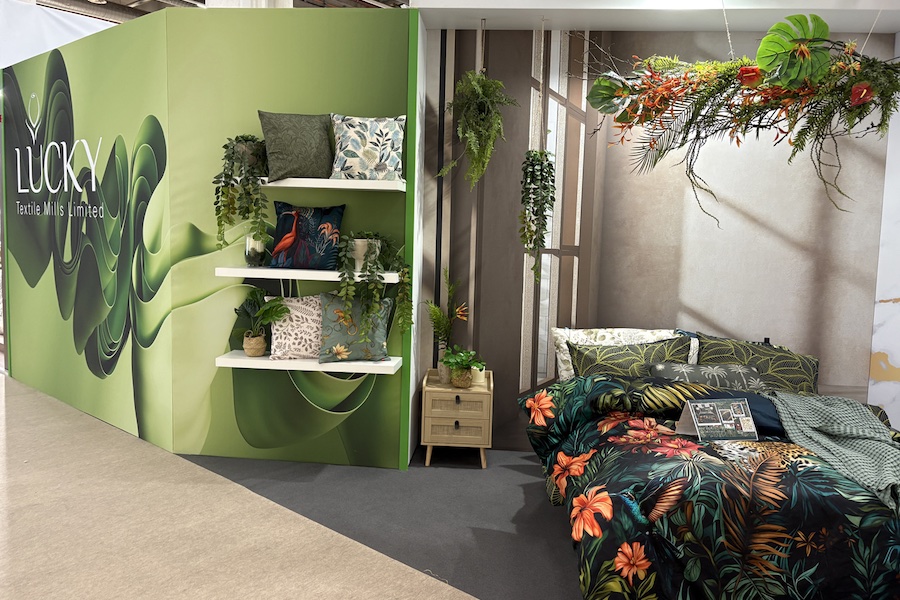
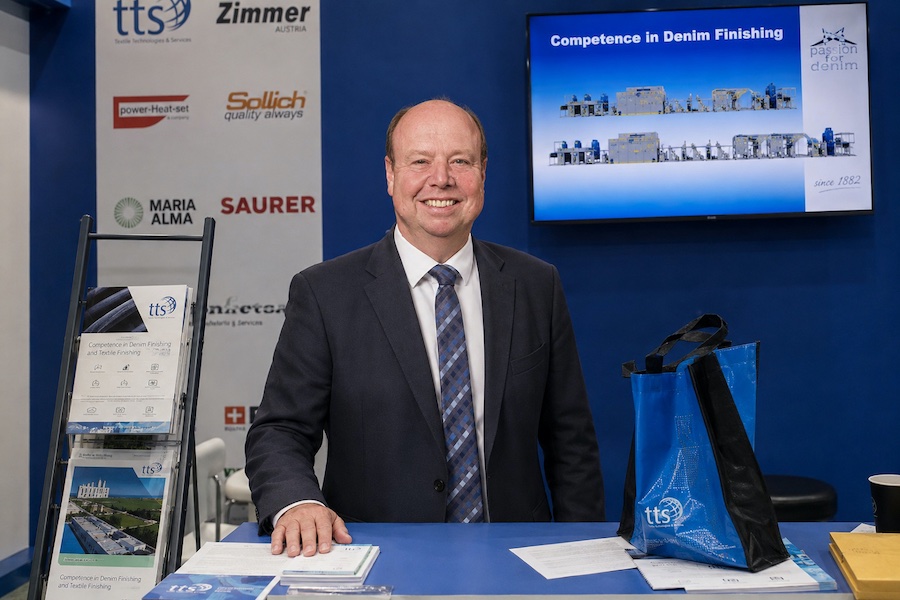
Lucky Textile Mills at the Frankfurt show. © 2026 Monforts


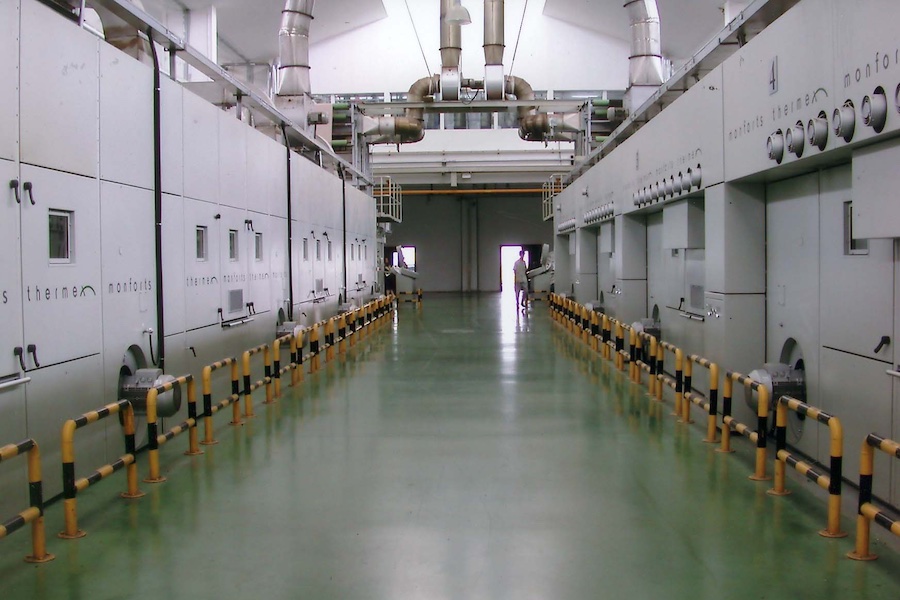
Monforts THERMEX dyeing ranges at Lucky Textile Mills. © 2026 Monforts


More News from A. Monforts Textilmaschinen GmbH & Co. KG

More News on Dyeing, Drying, Finishing

#Dyeing, Drying, Finishing

Smart Quality Control for Technical Textiles

In the end, what matters is the result: a filter that performs reliably, a membrane that remains stable in storm conditions, a composite material with precisely defined properties. But the path to achieving this is demanding. In the production of technical textiles, numerous parameters interact – and even the smallest deviations can have major consequences.

#ITM 2026

The address for environmentally friendly dyeing and finishing systems: ITM 2026

Dyeing and finishing technologies, one of the most critical and value-added areas of the textile sector, have gained strong growth momentum on a global scale. Technologies that are pioneers of this transformation focused on sustainability, quality and efficiency will meet with sector professionals at the ITM 2026 International Textile Machinery Exhibition. Dyeing and Finishing Hall (11–12) will host the latest technologies that increase efficiency, optimize resource use and reduce environmental impact in textile finishing processes.

#Techtextil 2026

iNTERSPARE presents latest developments and upgrade solutions for technical textile finishing at Techtextil

iNTERSPARE Textilmaschinen GmbH will present its latest solutions for technical textile finishing at Techtextil 2026 in Frankfurt (VDMA joint stand, Hall 12 / Stand C55A). The focus will be on further developments within the Krantz, Artos and Babcock (BTM) product lines, in particular the Krantz K30 stenter as well as the reintroduction of the Artos Vari-Flex foulard. The presentation will be complemented by modular solutions for upgrading existing installations and new approaches in automation and digitalization.

Latest News

#INDEX 2026

“We clearly see that reliability, flexibility, service and total cost of ownership are becoming increasingly important again.”

The nonwovens industry continues to face a challenging market environment. Nevertheless, AUTEFA Solutions reports successful projects, new line sales and growing demand for energy-efficient and flexible solutions. In this interview, André Imhof of AUTEFA Solutions talks about competitiveness against Chinese suppliers, new service and recycling concepts, the growing importance of application development and the opportunities created by countercyclical investments.

#INDEX 2026

“Needle punching technology is more universal and sustainable than ever!”

Needle punching technology was long regarded as a rather traditional and comparatively slow technology within the nonwovens industry. In this interview, Johann Philipp Dilo explains why needle punching is more relevant than ever today – ranging from energy efficiency and resource conservation to hygiene applications, new machine concepts and design-oriented nonwoven solutions.

#Research & Development

Textile climate control system in workwear – exhibition at the 2026 SME Innovation Day!

Conventional protective workwear often reaches its limits during strenuous physical activity. In particular, the transport of sweat and excess body heat poses a problem. The German Institutes of Textile and Fiber Research (DITF) conducted research on flow-optimized, air-conducting textile structures that enable targeted climate control directly on the body. These structures can be integrated straight into protective work garments. The textile climate control system supports the body’s natural thermoregulation. This contributes to improved workplace safety and comfort.

#Nonwovens

PET spunbond from China – EDANA welcomes imposition of provisional anti-dumping measures

On 13 May 2026, after eight months of investigation, the European Commission imposed provisional anti-dumping duties of 45.6-50.0% on imports of PET spunbond from China. EDANA welcomes this expression of the Commission’s clear determination to protect EU industries from the unfair trade practices of Chinese producers.

TOP