[pageLogInLogOut]

#Associations

Textile PRO Forum calls for greater harmonisation of textile EPR systems across Europe

New analysis shows strong differences in registration, reporting and invoicing requirements for textile producers

The Textile PRO Forum has published a new analysis highlighting the need for greater harmonisation of textile Extended Producer Responsibility systems across Europe. The document, Toward harmonised Textile EPR Systems in Europe: analysis and recommendations, presents the results of work carried out by Workstream 1 of the Textile PRO Forum, led by Dr. Eng. Viola Corbellini, Strategic Development and Innovation Expert at Erion Textiles, and Eng. Luca Campadello, General Director at Erion Textiles. The workstream focused on reducing administrative burden for textile producers by identifying areas where procedures could be better aligned across countries.

The analysis is based on input from 12 Producer Responsibility Organisations covering 11 countries. It compares how emerging and existing textile EPR systems deal with producer registration, reporting of products placed on the market, invoicing, payments, producer identification and the role of digital tools.

The findings show that textile EPR systems are developing at different speeds and with different operational models across Europe. Registration may take place through online portals, direct contact with PROs, public authority systems or mixed models. Reporting frequencies also vary significantly, ranging from annual to monthly declarations. Requirements for Placed on the Market data, product categories, reporting units and invoicing practices are not yet aligned.

This fragmentation risks creating additional administrative complexity for companies operating in several European markets, especially SMEs, cross-border sellers and online operators. It may also reduce data comparability and make enforcement more difficult.

The analysis identifies several priority areas for harmonisation, including a minimum common EU-aligned dataset for registration, more consistent reporting calendars, clearer rules on producer identification, simplified reporting options for small producers, predictable invoicing and payment rules, and interoperable digital systems.

The Textile PRO Forum stresses that harmonisation does not mean eliminating all national specificities. Rather, it means defining a common core of rules, data and processes on which coherent national systems can be built.

The findings will be discussed at next week’s Textile PRO Forum plenary meeting, where participating PROs will take stock of the work carried out so far and consider next steps towards practical guidance and recommendations.

“Textile EPR is becoming a reality across Europe, but implementation must be workable for producers and effective for authorities. This analysis shows that harmonisation is not an abstract policy goal; it is a practical necessity to reduce administrative burden, improve data quality and support a well-functioning Single Market” says Anais De Bergeyck, Policy Officer at EURATEX.

The full analysis is available at Textile PRO Forum.


More News from European Apparel and Textile Confederation (EURATEX)

#Associations

European and Canadian textile associations call for stronger transatlantic cooperation

Ahead of the EU–Canada Summit in Montréal on 29–30 October 2026, EURATEX, the Canadian Textile Industry Association (CTIA) and the Canadian Apparel Federation (CAF) have issued a joint statement calling for closer industrial cooperation, improved implementation of the CETA trade agreement and stronger partnerships in innovation, sustainability and advanced textile technologies.

#Associations

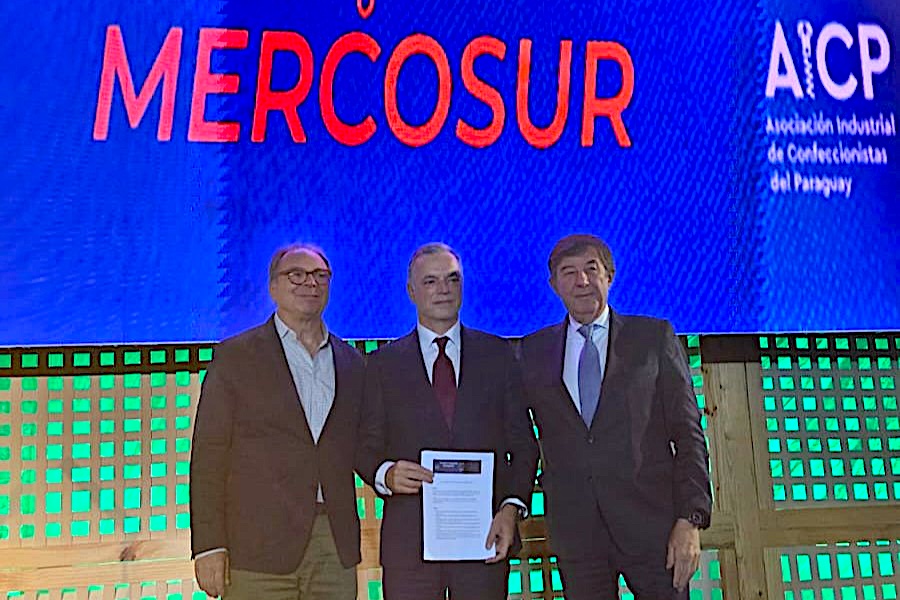
EU and Mercosur textile industries launch new Textile and Apparel Dialogue

EURATEX, ABIT and FITA have launched the EU–Mercosur Textile and Apparel Dialogue (TAD), a new industry platform aimed at strengthening cooperation between the European and Mercosur textile and apparel sectors.

#Associations

EURATEX urges Member States to prioritise competitiveness in the next EU budget

Ahead of crucial discussions among EU Member States on the next Multiannual Financial Framework (MFF) for 2028–2034, EURATEX, the European Apparel and Textile Confederation, calls on European leaders to safeguard ambitious funding for industrial competitiveness and ensure that these resources translate into concrete investment support in European companies.

#Associations

EURATEX calls for urgent action on industrial competitiveness

EURATEX, the European Apparel and Textile Confederation, welcomes today’s State of the Union Address by European Commission President, Ursula von der Leyen, and in particular her recognition of Europe’s need to rebalance unfair trade, cut red tape, and strengthen its industrial and strategic autonomy.

More News on Associations

#Associations

China and India: Different market dynamics create opportunities for Swiss textile machinery

Ahead of ITMA Asia + CITME in Shanghai and India ITME in Greater Noida, Swiss Textile Machinery highlights the contrasting industrial structures, investment priorities and technological requirements of two of the world's most important textile manufacturing markets.

#Associations

Italian textile machinery orders rise 7% in Q3 2026 as export demand strengthens

Order intake for Italian textile machinery manufacturers increased by 7% in the third quarter of 2026 compared with the same period of 2025. Growth was driven by international markets, where orders rose by 8%, while domestic demand remained weak, declining by 4%.

#Associations

Data and skills, not algorithms, hold back AI adoption in textiles, finds ITMF and ITA white paper

The International Textile Manufacturers Federation (ITMF) and the Institut für Textiltechnik of RWTH Aachen University (ITA) have published a new white paper entitled AI in the Textile Value Chain: A Strategic Guide to Artificial Intelligence for the Global Textile Industry. The study concludes that the main barriers to artificial intelligence adoption in the textile and apparel industry are not technological limitations, but poor data integration, skills shortages and gaps in governance. According to the authors, further progress will depend on coordinated efforts to develop capabilities across the industry.

#Associations

Brazil: The Italian textile and textile-machinery sector takes centre stage at two workshops

From 19 to 24 October 2026, Brazil will host a mission showcasing Italian excellence in the textile and textile machinery sectors, with two workshops scheduled for 20 October in the state of Santa Catarina and 22 October in São Paulo. The initiative will bring together Italian companies specialising in textile machinery, yarns, fabrics and clothing accessories, with the aim of strengthening commercial and industrial ties between the two countries and opening up new opportunities for collaboration.

Latest News

#ITMA Asia + CITME 2026

KARL MAYER expands TM WEFT capabilities for fashion fabrics at ITMA ASIA 2026

A new E 36 gauge, an EL pattern drive and improved yarn tension regulation extend the application possibilities of KARL MAYER's TM WEFT warp knitting machine. At ITMA ASIA 2026, the company will demonstrate the developments alongside a collection of woven-like warp knitted fabrics for fashion and apparel.

#Recycling / Circular Economy

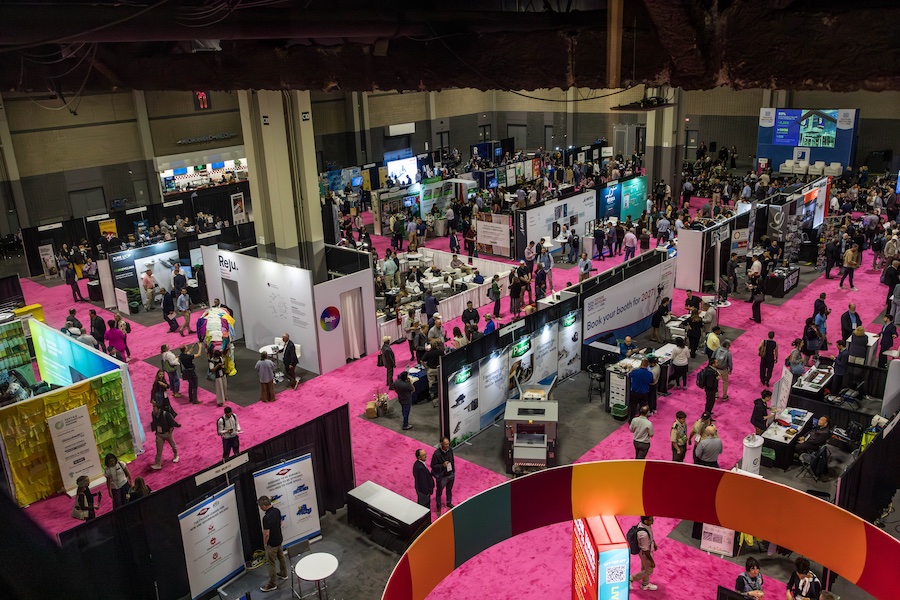
Textiles Recycling Expo USA 2027 opens registration and expands with manufacturing exhibition

The second edition of Textiles Recycling Expo USA will take place on 7–8 April 2027 in Charlotte, North Carolina. Following a debut that attracted more than 1,800 visitors and 95 exhibitors, the event will expand its exhibition and conference programme and will be held alongside the new Textiles Manufacturing Expo.

#Research & Development

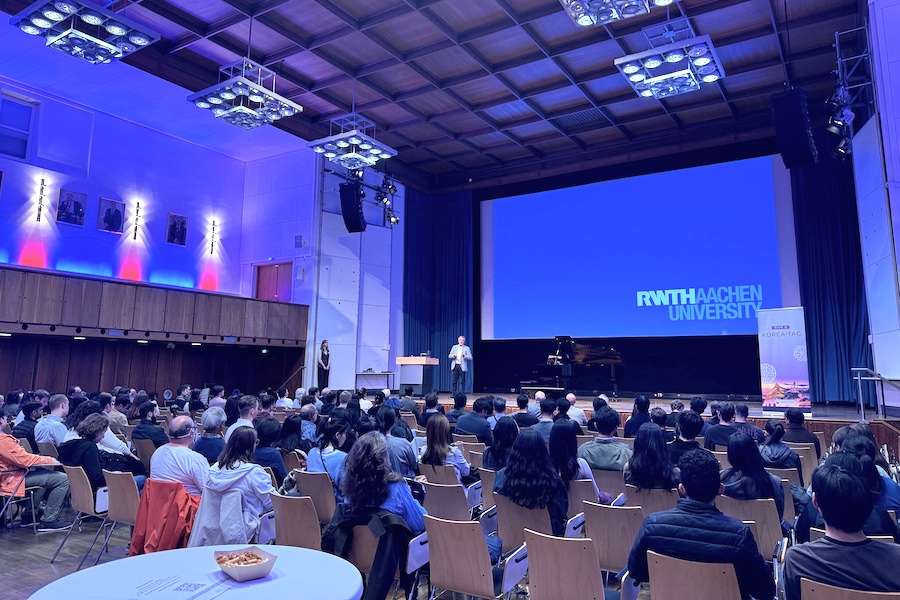
First "Korea Day" at RWTH Aachen attracts more than 300 participants

The inaugural Korea Day in Aachen brought together representatives from science, business and Korean institutions to strengthen German-Korean cooperation in research, technology and education. The Institut für Textiltechnik (ITA) of RWTH Aachen University was among the participating organisations.

#Textiles & Apparel / Garment

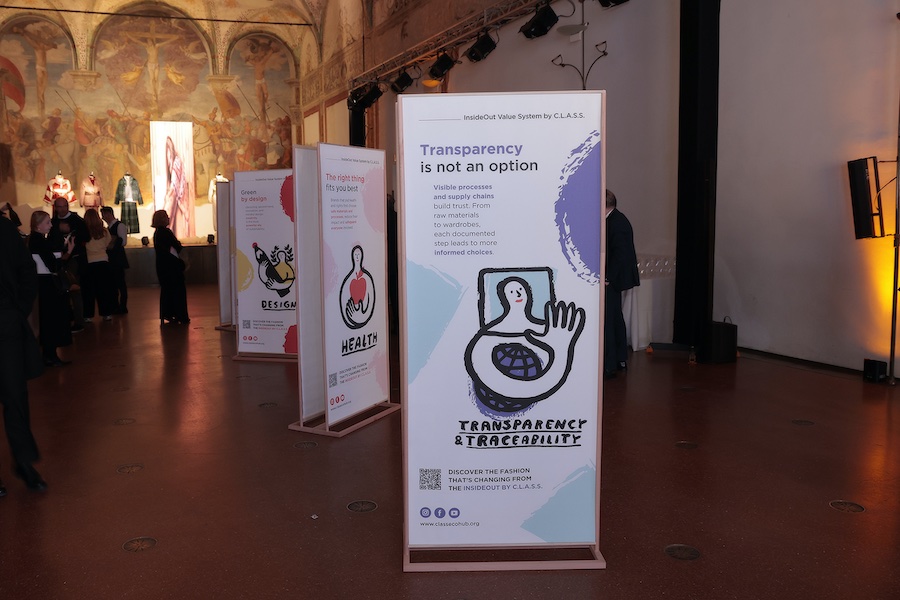
MarediModa highlights transparency and traceability with InsideOut by C.L.A.S.S.

The InsideOut by C.L.A.S.S. exhibition at MarediModa 2026 in Cannes focused on transparency, traceability and the measurable values behind fashion products. Its Decalogue of Values aims to make environmental, social and production-related information more accessible throughout the textile supply chain.

TOP