[pageLogInLogOut]
CONNECTED BY NARROW FABRICS.

#

Samsara Eco survey highlights link between garment durability and brand loyalty

A survey of more than 5,200 circularity-conscious consumers identifies fabric damage, seam failure and pilling as major quality concerns, while highlighting growing expectations for material transparency.

Samsara Eco has published its 2026 Circular-Conscious Consumer Report, examining how garment quality, durability and material transparency influence purchasing decisions and brand loyalty. The survey, conducted among 5,208 predominantly young, circularity-conscious consumers across 120 countries, suggests that poor garment performance can have consequences for brands beyond direct product complaints and returns.

According to the findings, 27.7% of respondents would turn away from a brand following a disappointing garment experience. Of these, 15.8% indicated they would not purchase from the brand again, while 11.9% would switch to a competitor. Only 5.9% would return the item, and just 2.3% would replace it with another product from the same brand.

The results suggest that conventional return and complaint data may not fully reflect consumer dissatisfaction with garment quality.

Fabric durability and construction quality are key concerns

The survey identifies several material-related problems that particularly frustrate respondents. Fabric thinning or the development of holes was cited by 62%, followed by seams splitting or unravelling (55%) and fabric pilling (50%).

These findings underline the relevance of textile durability, fabric construction and finishing quality in meeting consumer expectations. They also point to the importance of testing methods that reflect garment performance during everyday use.

Dr. Katy Stevens, Head of ESG at the European Outdoor Group, highlights the importance of translating consumer expectations into measurable product performance: “Understanding what consumers expect from their clothing, and how they respond when it fails, is essential to helping the industry make better products. These findings bring a valuable consumer perspective to the work of quantifying durability, helping us identify which failures matter most and how testing can better reflect real-world use. Translating that insight into better design and measurable performance is fundamental to a circular future.”

Material transparency influences consumer confidence

More than 80% of respondents consider information about the materials used in their clothing important. When asked which factors would most increase their confidence in garment quality, material information and evidence of long-term performance together accounted for 63% of first-place votes.

Independent certification ranked last among five options, receiving 6.6% of first-place votes. The findings suggest that respondents place particular value on accessible material information and evidence of product durability.

Cost-of-living pressures are also influencing purchasing behaviour. More than 88% reported changes in how they buy clothing, with approximately one-third purchasing fewer garments while expecting more from each item. Meanwhile, 43% reported buying second-hand clothing.

More than half of respondents (54%) considered brands primarily responsible for garment quality, compared with 27% who pointed to government regulation.

Durability as a requirement for circular textiles

For Samsara Eco, the findings reinforce the relationship between product durability and circular material systems.

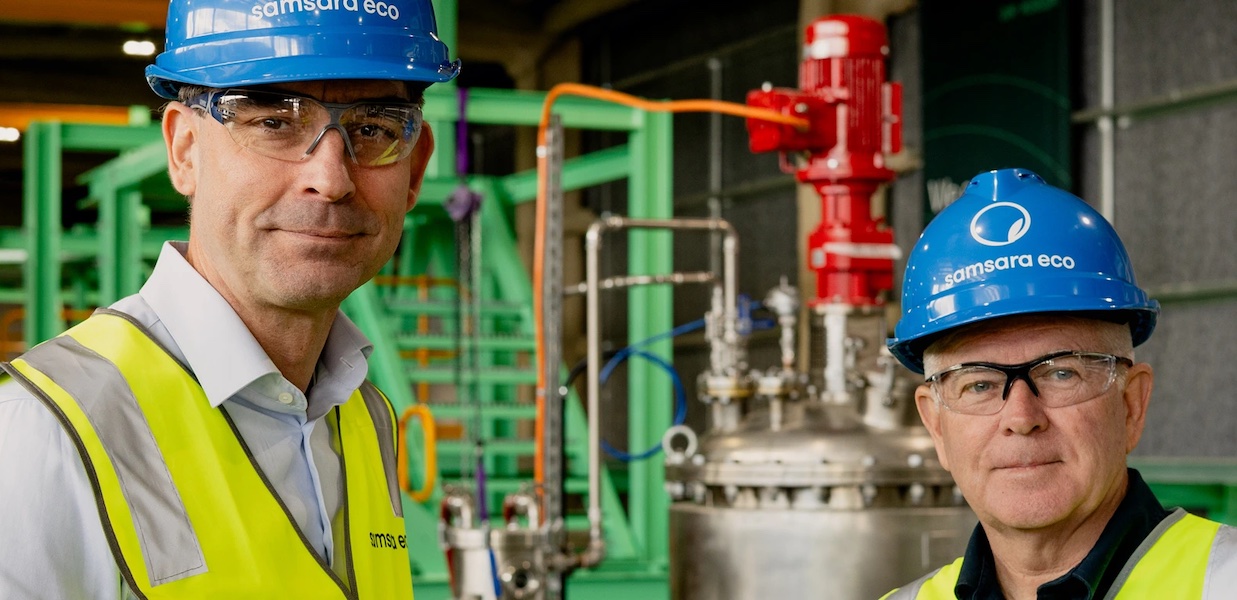
Dr. Lars Kissau, General Manager at Samsara Eco, emphasizes the importance of maintaining material value throughout a product's life cycle: “Circularity means keeping materials in circulation at their highest possible value – not their lowest available use. That's why durability matters so much. A garment has to last to be worn again, resold, handed on. And when it genuinely can't be worn any longer, it should become clothing again, not something lesser. Downcycling only slows the linear model. It doesn't stop it.”

He also points to the commercial and regulatory implications: “Durability has always been a question of quality. It's now a retention question, and in Europe it's becoming a compliance one – both showing up on the bottom line.”

The report's findings will also feature in The Pulse, Samsara Eco's new publication bringing together perspectives from organizations including Deakin University, Debrand, the European Outdoor Group, LSKD, Seamless and The LYCRA Company. The publication is scheduled to launch on October 13 at the Textile Exchange Conference in Vancouver.

About the survey

The 2026 Circular-Conscious Consumer Report was conducted online between July 22 and August 23, 2026, among 5,208 participants from Samsara Eco's global Sam for Change community.

The sample was predominantly young, with 86.7% of respondents aged 18–24, and 75.8% identifying as female. Participants were self-selected and already interested in circularity and sustainability.

The results therefore reflect the views of an engaged consumer community and should not be interpreted as representative of the general population.

For further information, visit
Samsara Eco – The Pulse.


More News from Samsara Eco

#Recycled Fibers

Samsara Eco and European Outdoor Group launch the Nylon Materials Collective

Australian biotech, Samsara Eco and the European Outdoor Group (EOG) today launched the Nylon Materials Collective, a collaboration designed to make high-performance, virgin-identical recycled nylon accessible to more outdoor brands and accelerate the industry’s shift toward a truly circular textiles future.

#Recycling / Circular Economy

Samsara Eco appoints first General Manager of Asia to lead expansion

Samsara Eco has announced the appointment of Dr Lars Kissau as its first General Manager of Asia. Based in Singapore, Kissau will lead the company's expansion across Asia as it scales operations and sprints towards the opening of the company's first commercial nylon 6,6 facility in 2028.

#Recycling / Circular Economy

Samsara Eco opens first plant to scale circular plastics

Australian biotech innovator, Samsara Eco, has today opened its first plant, representing a significant milestone in the fight against plastic waste. The new plant will exponentially increase the company’s ability to produce virgin-identical, low-carbon circular materials like recycled nylon 6,6 and polyester with broad applications across apparel, packaging and automotives, at scale.

#Recycling / Circular Economy

KBR selected as key commercialization partner for Samsara Eco’s first-of-a-kind enzymatic recycling plant

KBR (NYSE: KBR) announced today it will support biotech innovator, Samsara Eco, to design its first-of-a-kind plastics and textile enzymatic recycling plant, due for completion in early 2028.

More News on

#Dyeing, Drying, Finishing

Brazilian market leader Cedro Têxtil focuses on greater efficiency, sustainability, and product quality with Brückner

After more than 150 years of company history, Cedro Têxtil is once again embracing the challenges of a changing industry. Widely recognized as the largest manufacturer of workwear fabrics in Latin America, the Brazilian textile company continues to invest in the modernization of its production facilities. A key milestone in this process was the decision to install a state-of-the-art Brückner stenter frame just over a year ago.

#Recycling / Circular Economy

The Or Foundation, adidas, BESTSELLER, H&M Group, and Inditex launch Apparel Recovery Coalition, responding to impacts of post-consumer textile exports

adidas, BESTSELLER, H&M Group, Inditex and The Or Foundation, with support from Circle Economy, unveiled the Apparel Recovery Coalition (ARC). The coalition will explore how producer responsibility systems can support circular pathways such as reuse, upcycling, recycling, and responsible waste management in countries that receive large volumes of exported secondhand apparel.

#Digital Printing

Growth at the speed of demand: Kornit Digital brings digital textile innovation to PERFORMANCE DAYS 2026

Kornit Digital Ltd. (NASDAQ: KRNT) (“Kornit”), a global pioneer in on-demand digital fashion and textile production, will showcase the possibilities of digital, on-demand production at PERFORMANCE DAYS 2026, October 13–14 at Messe München, Hall 6, Booth E08.

Latest News

#Denim

Officina39 and Gold Girl Co. explore unconventional materials in denim at Kingpins Amsterdam

Officina39 and Gold Girl Co. will present their experimental collaboration “Renegade Renaissance” at Kingpins Amsterdam on October 14–15, 2026. The project brings together the creative direction of Marta and Glenda Goldschmied, founders of Gold Girl Co., with Officina39's expertise in textile chemistry and material development.

#IGATEX 2026

Impressive savings with Monforts’ stand-alone air/air heat exchanger

Having maintained an 80% share of Pakistan’s new stenter market with MONTEX machines for over 20 years and additionally now installed over 40 THERMEX dyeing ranges in the country, Monforts will highlight the benefits of its latest Universal Energy Tower at IGATEX 2026.

#Denim

MK SONS Denim Research to make its debut at Kingpins Amsterdam

MK SONS Denim Research, a specialist denim development and manufacturing division of Pakistan-based textile and garment manufacturer MK SONS, will make its debut at Kingpins Amsterdam on October 14–15, 2026. The company will present its approach to integrating denim product development with industrial manufacturing at stand T in the Green Area.

#Recycling / Circular Economy

Syre appoints Tim King as CEO

Syre has appointed Tim King as its new Chief Executive Officer, succeeding Dennis Nobelius, who has decided to leave the company after more than three years as CEO to pursue new opportunities in another industry. King, who has been with Syre since its early days, has been responsible for the company's industrial development and the execution of its strategy.

TOP